dailynewsnblog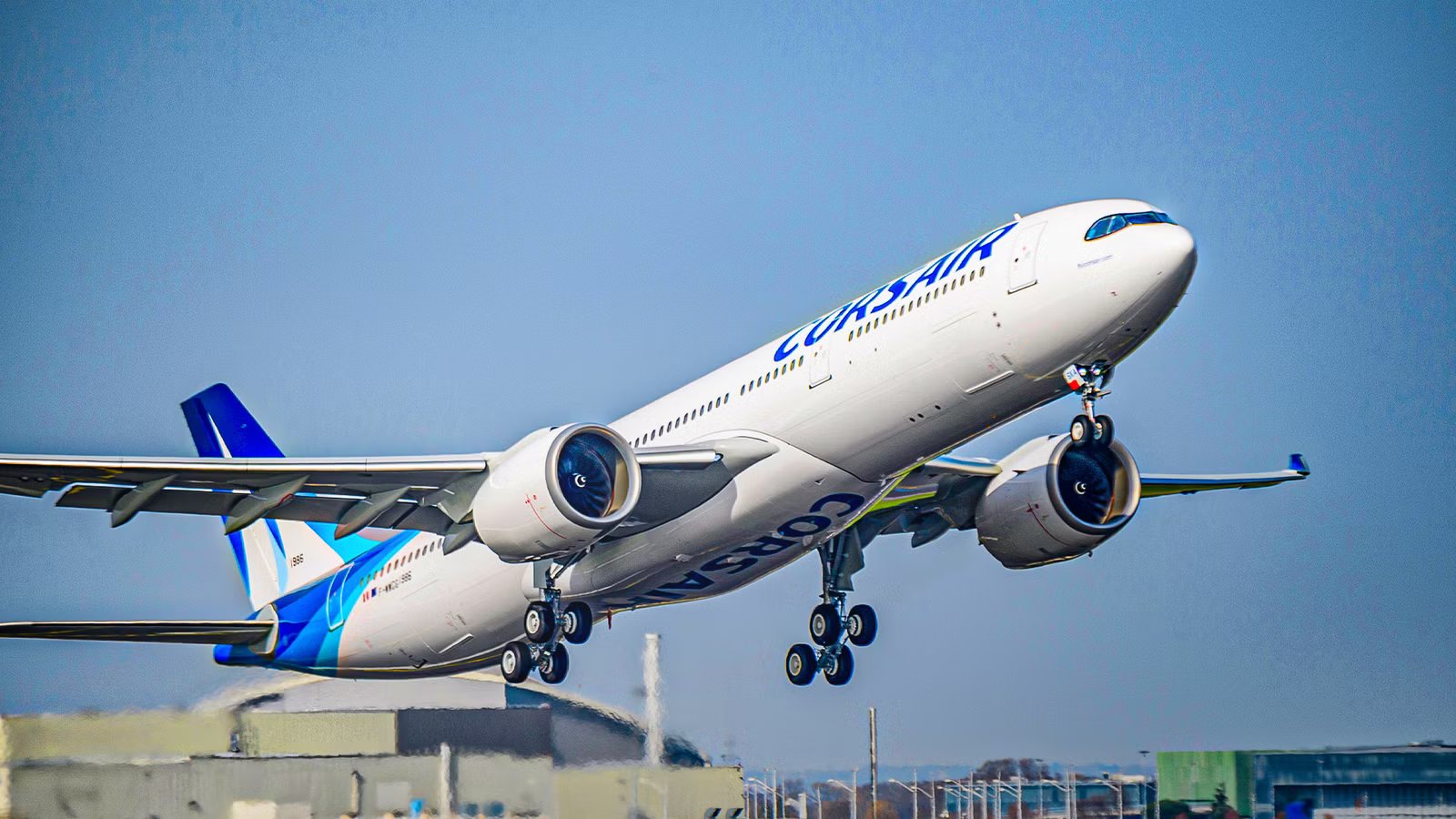
In the world of aerospace engineering, weight is traditionally viewed as the primary adversary. However, in some cases, more weight can actually be beneficial. In the case of the Airbus A330neo, many wonder whether its new wings are heavier than those of its predecessor, the A330ceo. To understand the A330neo, it’s important to look at how Airbus evolved a 30-year-old platform into a 21st-century competitor. While the neo is famous for its Rolls-Royce Trent 7000 engines, which provide a significant leap in reliability and thrust, the most visible structural change is the massive 64-meter wingspan.
This article will explore the specific engineering choices, from high-span composite sharklets to the necessary internal reinforcements that contribute to the aircraft’s physical mass. We will clarify whether the increased weight of these advanced wings is an operational penalty or a calculated investment in superior long-haul performance.
Interesting Tradeoff

The short answer is that the wings of the Airbus A330neo are significantly heavier than those of the original A330ceo. While the exact structural weight of the wing as a standalone component is a closely guarded proprietary figure, the impact on the aircraft’s operating empty weight is clear. An A330-900 typically has an OEW approximately 5,000 kg higher than a comparable A330-300. While the larger Rolls-Royce Trent 7000 engines, with their massive 112-inch fans and new nacelles, account for a significant portion of this structural increase, the bare engine itself is only about 285 kg heavier than the legacy Trent 700.
The weight increase is primarily a byproduct of the A330neo’s vastly improved lift-to-drag ratio. To achieve this, Airbus extended the wingspan from 60.3 meters to 64 meters, utilizing A350-inspired technology to create a more efficient high-span profile. By adding nearly four meters to the total span and replacing the old wingtip fences with massive, curved sharklets made of carbon fiber reinforced polymer, Airbus fundamentally changed the wing’s physics. These extensions provide more lift, but they also act as longer levers, requiring the internal wing box and spar to be reinforced with extra material to manage the increased bending moments at the wing root.
Historically, this represents a shift in philosophy for the A330 program. The original A330 wing was designed in the late 1980s with a focus on structural simplicity and weight minimization for mid-range operations. In contrast, the A330neo wing is an exercise in aerodynamic optimization. Engineers accepted the weight penalty of a heavier, reinforced metallic wing structure and composite tips because the resulting lift reduces the fuel burn by 14% per seat, directly attributed to aerodynamic and propulsive gains. In essence, the wing is heavier on the scales, so that it can be lighter on the airline’s fuel budget.
Taking A Classic To The Future

To transform the A330 into its new era of modernity, engineers had to account for significantly higher physical stresses than the original 1980s-era airframe was ever intended to handle. This necessitated a holistic reinforcement of the wing structure, where every kilogram of added metal or composite material serves a specific purpose in maintaining structural integrity while maximizing lift.
The wing span extension to 64 meters naturally requires more physical material, but more importantly, it necessitates a strengthened internal wing box and thicker spars to manage the increased lever effect at the tips. Also, the Rolls-Royce Trent 7000 engines, which are nearly 3 tonnes heavier than the legacy Trent 700s, require entirely new, reinforced pylons and localized strengthening of the wing’s leading edge. Crucially, the introduction of massive composite sharklets adds a fixed mass to the furthest point of the wing. Carbon fiber reinforced polymer was the material of choice and is lightweight for its size, but still, these 3D-curved structures are several meters tall and require robust attachment points.
As highlighted in technical data from Airbus, these modifications allow the aircraft to reach an aspect ratio of 11, the highest of any commercial twin-jet in service. This high-efficiency profile allows the A330neo to glide more effectively during the cruise phase. This aerodynamic refinement ensures that the engines don’t have to work as hard to maintain speed once at altitude, and, importantly, further reduces the fuel cost of carrying that extra structural weight over long distances.

7 Ways Airbus Made The A330neo Different From The Original A330
The A330neo represents progress in seven key areas compared to the older A330ceo.
The Ultimate Evolution?

When it comes to the heavy wing debate, the consensus among airline executives and aeronautical experts is that the trade-off is a mechanical necessity for the current era of high-fuel-cost aviation. A common point raised in aircraft discussions is that the A330-900’s increased mass is offset by its superior climb performance and cruise efficiency. Pilots have also noted that while the A330neo feels planted and significantly heavier during the initial rotation, it handles cleaner at high altitudes thanks to the reduced induced drag provided by the 64-meter span.
Airbus emphasizes that the A330neo wing is essentially a 787-style aerodynamic profile, executed on a proven metallic airframe, that delivers noticeable performance upgrades. By opting for a heavier reinforced aluminum wing rather than a full clean-sheet composite wing, Airbus was able to bring the aircraft to market faster and at a lower capital cost for airlines. This is a key selling point for middle market carriers who need the efficiency of a 64-meter wing but don’t want the complex maintenance overhead associated with full-composite structures.
The real-world implication of this wing design is that the A330neo thrives on 8-to-12-hour routes, where the fuel savings from the wing’s efficiency eventually pay off the initial weight. For airlines, the decision to fly the NEO is a vote of confidence in the physics of lift over the simplicity of lightness. It is likely that, as carbon taxes and fuel prices continue to rise, the heavy wing architecture will be seen as the definitive bridge between legacy metallic designs and the ultra-efficient wings of the future.
A Familiar Feel

When evaluating the A330neo’s wing weight, the most obvious comparison is the Boeing 787, which utilizes a clean-sheet, all-composite wing design. Even though the 787 wing is lighter due to its high carbon-fiber content, the A330neo takes a hybrid approach, keeping a traditional aluminum wing box while adding composite sharklets. This creates a fascinating divergence in engineering philosophy.  Boeing optimized for the lowest possible structural mass, whereas Airbus optimized for a balance between aerodynamic gain and lower manufacturing complexity.
The pros of the A330neo’s heavier metallic wing lie in its known maintenance profile and lower capital cost. Airlines often find that aluminum structures are easier and cheaper to repair after minor ground incidents compared to the specialized equipment and controlled environments required for major composite repairs. However, the con is unavoidable physics, as the A330-900 will always be heavier than a 787-9 of similar capacity, meaning it requires more thrust, and therefore more fuel, simply to stay aloft before the aerodynamic benefits of the 64-meter span begin to tilt the scales in its favor.
Feature | Airbus A330neo | Boeing 787-9 | Outcome |
Wing Material | Aluminum + CFRP Tips | All-Composite (CFRP) | 787 is lighter NEO is easier to repair |
Wingspan | 64.0 Meters | 60.1 Meters | NEO has a higher aspect ratio for cruise |
Engine Choice | Rolls-Royce Only | RR or GE | 787 offers more engine flexibility |
Design Basis | Evolution of A330ceo | Clean sheet | NEO has lower development/purchase cost |
Ultimately, the A330neo wing serves as a middle ground between the legacy all-metal wings of the 1990s and the shiny new composite wings of the Airbus A350. By choosing to reinforce a metallic wing rather than building a new one from scratch, Airbus created something that can compete with the 787 on efficiency without the multi-billion-dollar price tag of a brand-new aircraft design. This makes the A330neo the pragmatic choice for airlines that already have A330 infrastructure and don’t want to retrain their entire engineering team for an all-composite fleet.

Why The Airbus A330neo Is A Backbone In Long-Haul Travel
The aircraft plays a major role in many carriers’ long-haul fleets.
New Territory Means New Challenges

The A330neo’s wing is a masterpiece of aerodynamic refinement, but it is not a universal upgrade. In reality, its increased mass and physical footprint create specific operational penalties. The most significant drawback is found on short-haul shuttle routes. On these routes, the aircraft spends a larger percentage of its flight time climbing, where the weight penalty and the massive Trent 7000 engines act as a pure fuel drag. In these scenarios, an older, lighter A330-300ceo can actually be more cost-effective because the 64-meter wing doesn’t have enough time to pay off the weight debt.
The 64-meter wingspan also introduces logistical constraints at the airport. The A330neo sits at the very limit of ICAO Annex 14 Code E, which spans up to 65 meters. While it technically shares the same category as the original A330, its extra 4 meters of width can create tight fits at older terminal gates designed for the 60-meter span of the 767 or A330ceo. Ground controllers must be more precise with taxiway clearances, and some regional airports may require specialized gate-blocking procedures in which an adjacent stand must remain empty to accommodate the NEO’s massive sharklets.
Scenario | Impact of Heavy Wing | Technical Reason |
Short-Haul ( | Higher Fuel Burn | Weight penalty outweighs aero-gains during climb |
Regional Airports | Gate Restrictions | 64m span pushes the limits of Code E stands |
High-Cycle Ops | Increased Fatigue | High-span metallic wings face greater root stress |
Payload Limits | Reduced Margin | Higher OEW can eat into cargo capacity on max-range |
The A330neo uses a reinforced aluminum spar rather than carbon fibre. This means that increased bending moments from the 64-meter span put more cyclic stress on the wing root over thousands of flights. While Airbus has mitigated this with weight-neutral reinforcements in the 251-tonne variant, operators must still adhere to rigorous inspection schedules. For airlines, the risk is that the very wing which saves them fuel may require more intensive structural monitoring as the airframe reaches the 20-year mark.
Continuous Refinement

Analyzing the construction of the Airbus A330neo is a lesson in the strategic use of mass. By accepting roughly 5,000 kg of additional structural and engine weight, Airbus created a platform that generates enough extra lift to slash fuel consumption by 14% on the missions that matter most. For the modern airline, the heavy wing is a tool that transforms a 30-year-old airframe into a range-extended powerhouse capable of competing with the most advanced composite jets in the sky.
The A330neo represents a pragmatic middle ground in aerospace evolution, proving that aerodynamic enhancements can prolong the life of a metallic airframe well into the 2040s. While it may face a weight penalty on short-haul hops or at tight regional gates, its performance on 8-to-12-hour routes is where the engineering truly shines.
As Airbus continues to refine the platform with increased MTOW variants, we are seeing the absolute limit of what metallic wing technology can achieve. The A330neo proves that if you get the physics of lift right, the numbers on the scale become secondary to the numbers on the fuel receipt. It is a bold statement that in the world of widebody aviation, a bit of extra weight can be the most efficient choice an engineer ever makes.