dailynewsnblog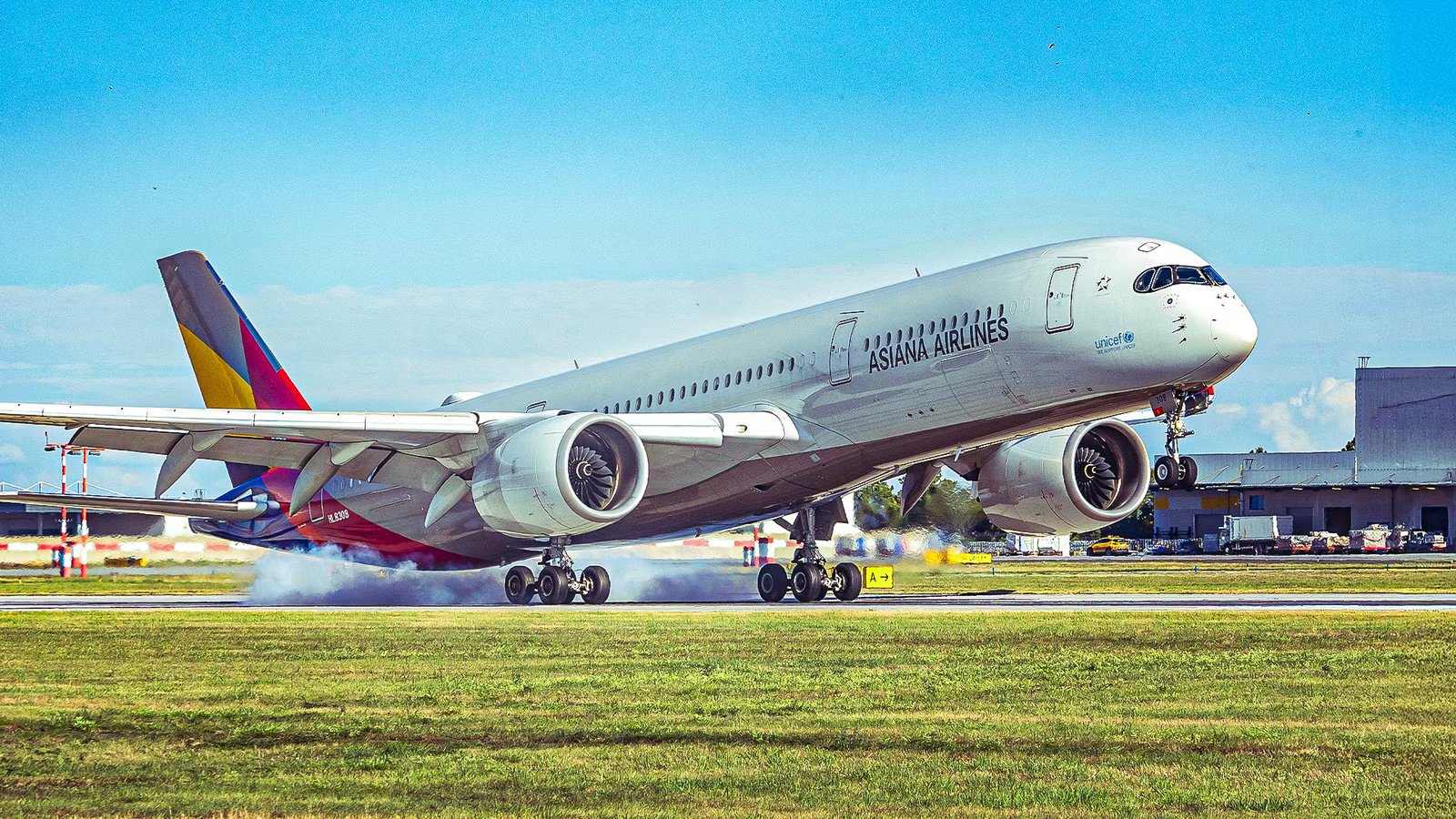
According to the pilots who fly the Airbus A350, it has a noticeably low landing speed for its size, although it isn’t enough of a difference to make it much of an outlier for widebody aircraft. The larger A380 has a higher landing speed than the A350, but not as much as one would expect for such a massive aircraft. The real outlier when it comes to commercial aircraft landing speed is the MD-11 trijet, which is fast to the point it requires more pilot training to operate safely.
With the end of the A380 program, the A350 is now Airbus’ flagship product. The aircraft is sized between the Boeing 787 and the upcoming Boeing 777X. The Boeing 777-9 is designed to compete with the stretched A350-1000 for higher capacity long-haul routes. The A350-900 mostly competes with the very popular 787-9. Note that numbers in this article are approximate and ballpark, with sources often providing contradictory information. Here is what you need to know about the A350 and its landing speeds.
What Influences Landing Speed

Landing speed typically refers to Vref, which is 1.3 X the stall speed in landing configuration. This is determined at the current landing weight, flap setting, and gear down. The actual touchdown speed is slightly slower due to the flare. The landing speeds of commercial aircraft are influenced by a complex interplay of factors. Typical touchdown speeds range from 130 knots to around 153 knots.
Key factors affecting the landing speed include wing design, aircraft weight, high-lift systems, environmental conditions, and pilot techniques. For example, if there is a strong or gusty crosswind, the aircraft may need to fly faster to maintain control. The altitude of the airport and the temperature also play a role; these factors make the air thinner or thicker.
Airports like Denver or Mexico City have hot air or high-altitude, and aircraft typically land slightly faster at these airports. As a rule, heavier aircraft land faster than lighter aircraft. Additionally, newer aircraft sometimes have a slightly higher Vref in exchange for cruise efficiency and handling.
The A350 Has A Slow Landing Speed

The Airbus A350 is generally regarded by pilots as having slow approach and landing speeds, given the aircraft’s size. Senior Captain and Line Operations Manager Evan Summerfield with Cathay Pacific says of the A350, “Yes, it’s very fast at altitude but because of the way that the wings have been designed as well as its flaps – which extend the surface area – it has a very low approach speed for landing.”
The A350-900 is a modern widebody twin-engined aircraft comparable in size to the larger Boeing 787 Dreamliner family variants. It is designed specifically for long-haul efficiency. The biggest factor influencing the A350’s landing speed is its mass. As the aircraft burns through its fuel, it becomes lighter, and it can land at slower speeds.
Another factor is the aircraft’s high-aspect-ratio wings and the fact that those wings are made of Carbon Fiber Reinforced Polymer that twists and flexes in flight, allowing for slower approach speeds. It uses “Adaptive Drooped Hinge Flaps,” which extend to increase the wing’s surface area, also allowing slower speeds. The Airbus A350 has a typical landing speed (Vref) of around 140 to 145 knots.

Is An Airbus A350 Heavier Than A Boeing 787 Dreamliner?
By comparing the A350 and 787, we investigate why size matters in the long-haul widebody market.
Comparison With Other Airbus Aircraft

If we start comparing the A350’s Vref with other aircraft, it is on the slower end of the scale, but not an outlier. The narrowbody A320 family has a typical Vref of around 130 to 140 knots, making it slower than the A350. Notably, the stretched A321 tends to sit at the higher end of this range.
The older A330 has a touchdown speed of around 140 to 145 knots, with the newer A330neo changing the Vref by a couple of knots compared with the older CEO. Overall, it’s similar to the A350 and has similar handling laws. The A330neo competes with smaller Dreamliners, and the NEO comes with redesigned and lengthened wings with a higher aspect ratio than the CEO.
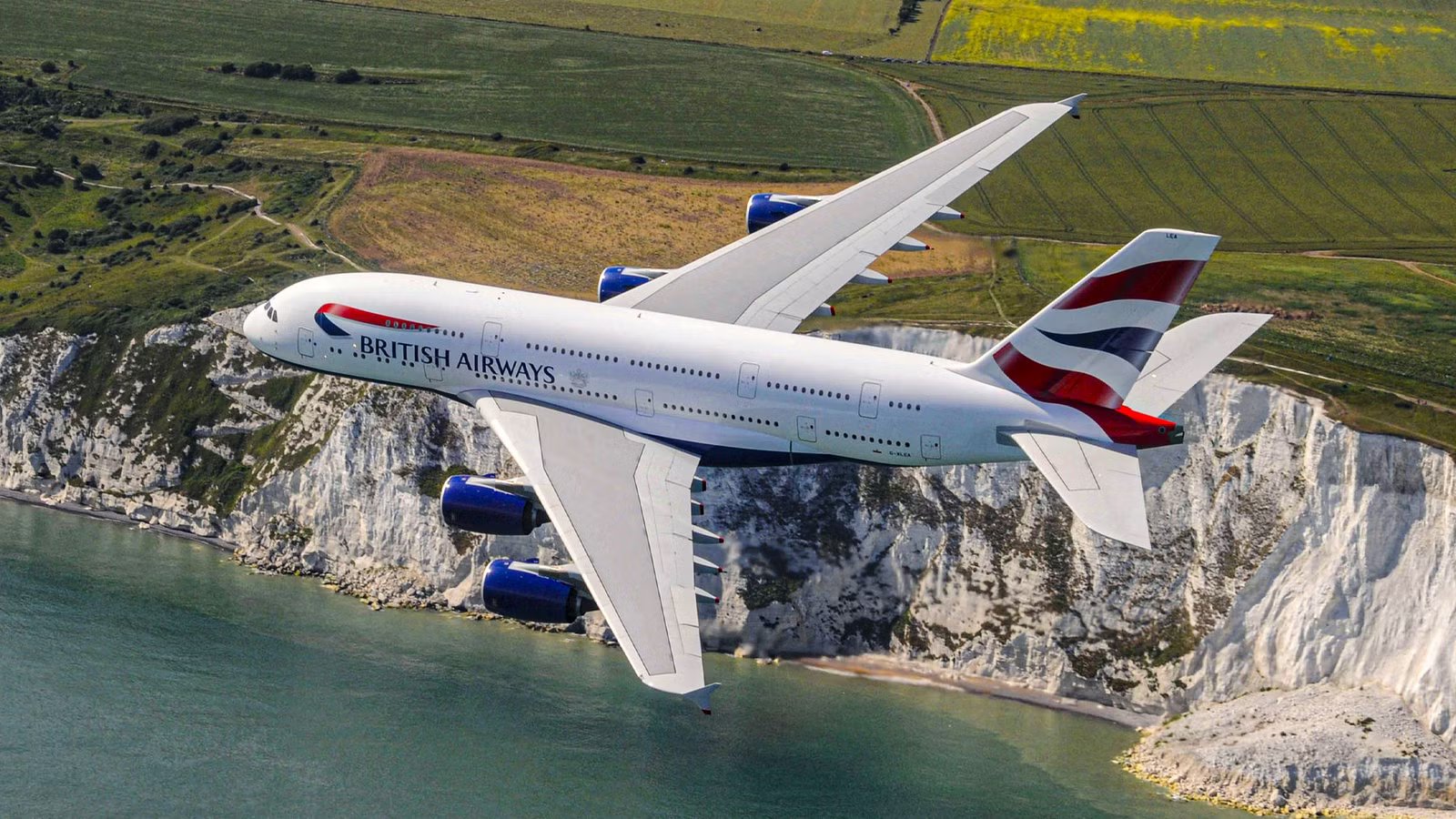
Perhaps a bigger story is the comparatively slow approach speed of the massive Airbus A380 Superjumbo. Despite its large size, the double-decker typically has a Vref of around 140 to 150 knots, making it only a little faster than the A350. This is due to the aircraft’s large surface area. The A380 was only built in a single variant, the A380-800, but its wings were optimized for a larger, stretched A380-900 variant that was never built.
Comparison With Boeing Aircraft

The old 1960s-era Boeing 737 family has hotter landings due to its wing design, typically landing at around 140 to 150 knots. The 737 has more of a compact design and a higher wing loading, which has the effect of increasing its stall speed. Separately, the 737 famously has a short landing gear design that limits its ability to carry larger modern engines, and its fuselage is now the narrowest in its six-abreast class. The Boeing 757 narrowbody is notable for its slower landing speed of around 135 to 145 knots, as it was built for short runway performance.
The Boeing 777 family varies by variant with Vrefs of between 135 and 160 knots. Pilots sometimes describe the -300ER as being a fast lander compared with the -200 variant. A 777-300ER aborting its mission and returning to the airport soon after takeoff with its fuel can have a Vref over 160 knots. A commonly cited figure for the Boeing 777-200ER is around 137 knots.
The Boeing 747-8 was the final variant of the Jumbo family, and it comes with one of the fastest modern commercial landing speeds. When it comes to the Boeing 787 Dreamliner, the two aircraft are broadly comparable due to the aircraft being built with similar design philosophies at the same time and with extensive use of lightweight materials.

Is A Boeing 777-300ER Bigger Than An Airbus A380?
Which aircraft is bigger? Airbus A380 or Boeing 777? Discover the surprising facts and specs behind these two iconic jumbos in our full comparison.
Airbus A350 Vs Boeing 787

The A350 comes in two variants, the A350-900 and the stretched A350-1000. Arguably, the best comparison for the A350’s Vref is that of the Boeing 787 Dreamliner, although the -1000 overlaps with the 777X. The longer and heavier A350-1000 has a Vref around seven knots greater than that of the -900. Notably, the -1000’s wing is modified with an extended trailing edge. The Boeing 787 has three variants, all of which share the same wingspan.
This means the 787-10 has a higher wing loading than the smaller variants and so has the highest landing speed. The shorter 787-8 has a typical Vref of around 140 knots, rising to 145 knots for the 787-9, and 150 knots for the 787-10. By comparison, the A350-900 typically lands at around 142 knots and the A350-1000 at 147 knots. These numbers are very approximate, and estimates vary significantly. That has the effect of changing the relative A350 and 787 rankings.
|
A350 vs 787 (per Airbus, Boeing) |
Airbus A350-900 |
Airbus A350-1000 |
Boeing 787-8 |
Boeing 787-9 |
Boeing 787-10 |
|---|---|---|---|---|---|
|
Range |
8,500 nautical miles |
9,100 nautical miles |
7,305 nautical miles |
7,565 nautical miles |
6,330 nautical miles |
|
Length |
219 feet (66.8 meters) |
242 feet (73.8 meters) |
186 feet (57 meters) |
206 feet (63 meters) |
224 feet (68 meters) |
|
Passenger |
300-350 (3-class) |
350-410 (3-class) |
248 |
296 |
306 |
Takeaways with a significant amount of certainty are that the Vref increases with each aircraft as the aircraft is stretched and that the A350-900 is slower for its size. Of the A350 and 787 variants, the A350-900 is considered to have the slowest or second-slowest landing speed of these aircraft, depending on how one reckons the 787-8 landing speed.
The A350 Is Faster, But Not Much

The overall takeaway is that the Airbus A350, and especially the A350-900, may sit at the lower end of Vref for its size, but is not out of place. Its landing speed is still fairly typical; the A350-900 may or may not have a slower landing speed than the Boeing 787-8. In the real world, there is a lot of overlap between these classes of aircraft.
The A350-900 may land faster than a 787–8 one day, but not the next, depending on factors like the amount of fuel on board, crosswinds, air temperature, and more. The outlier may not be the A350 landing slowly, but the McDonnell Douglas MD-11 landing fast. The MD-11 trijet famously (or infamously) has a fast landing speed (150–170 knots), and this causes a series of issues for its operations and requires extra pilot training.
It is important for pilots to get the landing speeds right. Airbus says, “An aircraft flying at cruise altitude, and at its cruise speed, has a lot of energy to dissipate before reaching its destination airport and to land with an appropriate speed. Incorrect management of the speed in descent can result in excess-energy in final approach phase. This is shown to be a major cause of runway overrun events.” It then proceeds to instruct pilots on how to calculate safe landing speeds.