dailynewsnblog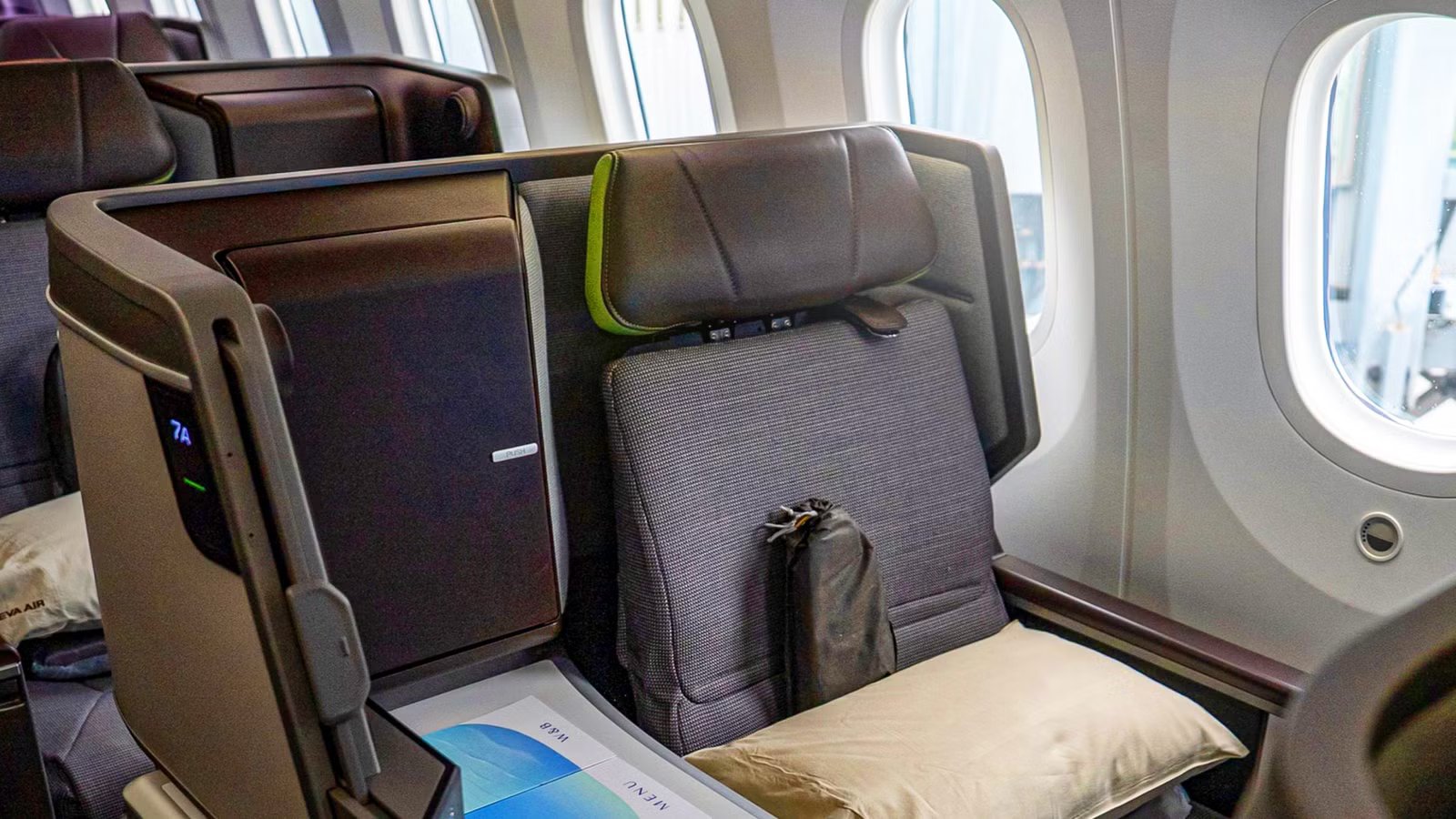
A widebody airliner typically contains both cabins, but flying business class is almost nothing like traveling in economy. An economy ticket essentially provides the basics for travel: a seat with regular meal service and some essential amenities on long-haul flights. In essence, flying in economy is similar to traveling on a long-distance bus or train, but in the skies. Business class, on the other hand, provides a significantly upgraded experience.
Business class on long-haul flights usually includes a lie-flat seat, which often offers direct aisle access and sliding privacy doors. The screens are much larger, while the service is significantly improved, with multi-course meals and full amenity kits. What’s more, business class passengers get airport lounge access. It’s a luxury product, and this also means that what business class passengers do aboard their flights can be very different from how economy passengers spend their time in the air.
Changing Into Pajamas
Provided by the airline for better sleep

This is more common in first class, but several airlines also give business class passengers complimentary pajamas on longer flights. The stage-length threshold for this amenity varies by airline, and the list is larger than you’d expect. Pajamas are offered by Emirates, Etihad Airways, and Qatar Airways, but also by Virgin Atlantic, Qantas, American Airlines, United Airlines, Air India, EVA Air, Starlux Airlines, Oman Air, Air Serbia, and Gulf Air, while they’re not offered in business class by other top carriers like Singapore Airlines.
These can typically be kept after the flight and are quite beneficial for keeping a passenger’s set of clothes fresh rather than having to remain in them for 10, 13, or 16 hours straight. Airlines may offer one or two sizes, and they’re sometimes given proactively by the crew, while they’re only available on request on other airlines. Some airlines partner with clothing brands to offer onboard pajamas, and they may also feature distinctive designs as a point of differentiation.
In addition to the previously mentioned airlines, JetBlue and Condor offer pajamas to passengers traveling in their ‘business class plus’ products (JetBlue Mint Studio and Condor Prime), while  Lufthansa provides pajama tops, but not bottoms, to business class passengers. All Nippon Airways and Japan Airlines provide cardigan sweaters on long-distance flights, but these have to be returned at the end of the flight, which is unusual as most other airlines allow guests to keep pajamas.
Skipping Meals To Sleep Instead
Different priorities than in economy

In economy, essentially everyone receives their meals shortly after reaching cruising altitude, and then goes to sleep on an overnight flight. During the flight, it’s common to wake up for the mid-flight snack and before-landing meal. There’s not much to do other than eat or sleep, and it’s ultimately not easy to sleep well in an economy seat with only a few inches of recline. In business class, however, the single biggest selling point is the lie-flat seat, enabling passengers to sleep horizontally.
Since the point of flying in business class is to sleep, many passengers may often skip some of the meal services. Not everyone desires the meals offered by airlines, but the opportunity to rest is invaluable, especially considering that most premium customers are flying for business purposes. On overnight flights, the lie-flat seat allows passengers to fly out after work, get their night’s sleep on the plane, and then wake up in time to begin the workday again. The meals are nice, but some would rather just sleep as soon as possible.
Widebody Aircraft | Economy Configuration | Typical Business Class Configuration |
|---|---|---|
Airbus A330/A340 | 2-4-2, 3-3-3 | 2-2-2, 1-2-1 |
Airbus A350 | 3-3-3, 3-4-3 | 2-2-2, 1-2-1 |
Airbus A380 | 2-4-2 (upper deck) 3-4-3 (main deck) | 2-2-2, 1-2-1 (upper deck) |
Boeing 747 | 3-3 (upper deck) 3-4-3 (main deck) | 2-2, 1-1 (upper deck) 2-3-2, 2-2-2, 1-2-1 (main deck) |
Boeing 767 | 2-3-2, 2-4-2 | 2-2-2, 2-1-2, 1-2-1, 1-1-1 |
Boeing 777 | 3-3-3, 3-4-3 | 2-3-2, 2-2-2, 1-2-1 |
Boeing 787 Dreamliner | 2-4-2, 3-3-3 | 2-2-2, 1-2-1 |
Of course, while some prefer to maximize their sleep on the plane, airlines do provide significantly upgraded meals for business class passengers. The food itself is meant to be upscale, and some carriers collaborate with accomplished chefs to design premium menus, while airlines tend to serve large portions with multiple courses. What’s more, the meals are also presented with thick tablecloths, fine china, and metal cutlery, while airlines offer passengers an extensive list of beverage options as well.
Eating On Your Own Schedule
Dine-on-demand

Some carriers offer dine-on-demand in business class, which essentially allows passengers to eat any meal they want on their own schedule. This is generally the expectation in first class, but can be challenging to execute effectively in business class due to the much larger cabin sizes. As such, it’s not common, and passengers don’t always respond positively depending on how the service is managed. When executed well, however, it’s the most flexible service process from a passenger standpoint.
Catch what other flight trackers miss
Emergency squawks, holds, NOTAMs — live signals, no signup.
Open tracker
Catch what other flight trackers miss
Emergency squawks, holds, NOTAMs — live signals, no signup.
Open tracker
As previously mentioned, dine-on-demand (also referred to as ‘à la carte’ dining) allows passengers to eat on their own time. Given that passengers traveling on long flights may be in different time zones and have different plans on how to spend the flight, this process is ideal for accommodating different passenger needs. In addition, it can make the service feel much more personalized than the ‘assembly line’ that you see in economy or in some business class cabins.
 Etihad Airways and
  Qatar Airways are the two airlines best known for offering dine-on-demand in business class, and it’s also offered by
  Turkish Airlines. These carriers are generally known for providing excellent catering, but the downside is that it’s very intense for crews. What’s more, dine-on-demand produces a significant amount of food waste, and it’s not uncommon for certain meal choices to run out. It’s the preferred method of service for small first class cabins, but there are more downsides with large business class cabins.
Turndown Service
Sleeping in true comfort

Passengers traveling on a long-haul flight in economy can expect to find a blanket at their seat and not much else. In business class, however, airlines typically provide a mattress pad, along with a duvet/blanket and pillows. Flight attendants provide turndown service for passengers, who then sleep in what almost feels like a real bed. This is especially true when flying on an airline that also provides pajamas, while some also give eye masks or ear plugs for the flight.
While it’s not otherwise regarded as an industry-leading product, United Airlines’ Polaris is known to offer among the best bedding in the entire world for business class. Upon request, the Chicago-based carrier provides Polaris passengers with a standard pillow, a cooling gel pillow, a duvet, a day blanket, and a standard mattress pad. In addition to the quantity, the airline’s bedding is also renowned for the quality of each item and was developed in collaboration with Saks Fifth Avenue.
Airline | Bedding Partner |
|---|---|
Air France | Sofitel MY BED |
American Airlines | Nest Bedding |
Cathay Pacific | Bamford |
Etihad Airways | Armani/Casa |
Delta Air Lines | Missoni |
United Airlines | Saks Fifth Avenue |
Several other leading airlines invest heavily in their bedding, which helps make it far easier for passengers to sleep on the flight. Once a passenger wakes up, the flight attendants will then remove the bedding for passengers. It’s a far cry from the experience of sleeping upright with a thin blanket in economy, and it further differentiates business class. Of course, this is also necessary in a way, given how expensive business class tickets can be and the fact that it’s meant to provide customers with a good night’s sleep.
Figuring Out Every Function
There are more features and services in business class

An economy seat on a long-haul aircraft comes with a screen in many cases, a headrest, a footrest on some airlines, and can recline. In business class, however, the seats themselves are quite complex. There’s the screen, which is much larger than in economy but fundamentally the same, while the actual seat itself usually reclines fully flat, which may be controlled using buttons or a screen. Some seat models incorporate a massage function and may include pre-set recline positions as well.
Many business class seats today incorporate a sliding door (which is typically manual), and you’ll also find a lamp in most models, while Lufthansa’s new Allegris seat includes climate controls. Then, there’s also the service, which may be scheduled or dine-on-demand, while customers are also greeted by substantial amenity kits in many cases. There’s a lot to take in, especially for a first-time business class passenger.
In such a situation, the crew is vital in helping a passenger navigate their seat and to form expectations for the flight. The flight attendant points out various features of the seat, while also explaining the on-request amenities, like pajamas. In addition, the flight attendant will explain the service flow and answer any questions. The comparatively small size of business class cabins also generally enables more personalized service, whereas in economy, passengers simply sit down and rarely see the crew outside of service.