dailynewsnblog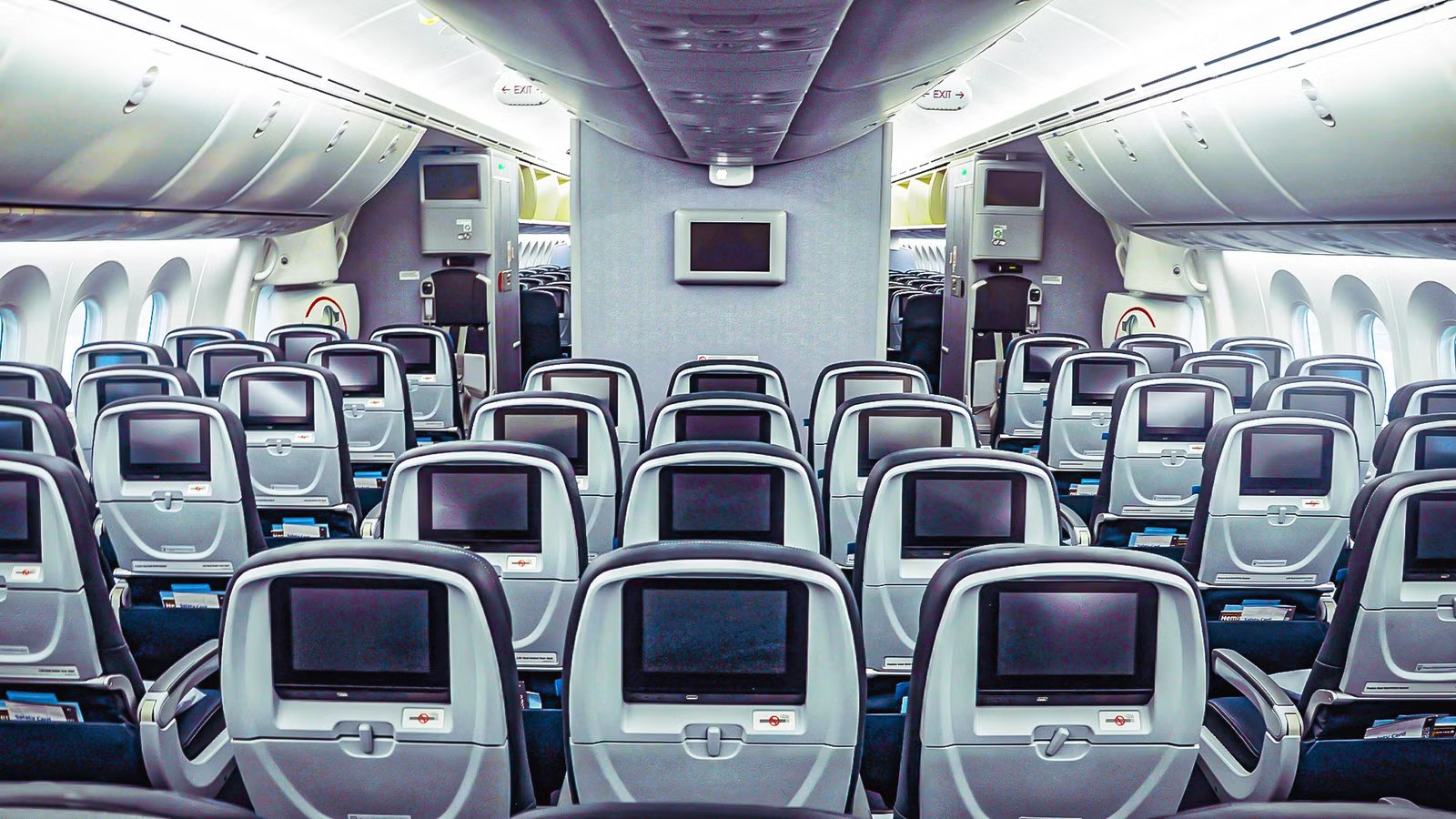
Passengers can improve their economy class experience by booking overlooked economy class seats. Flying economy class may not be anyone’s first choice, but there are hacks people can do to improve the experience. Some of these things are possible to do for free when booking the cheapest flights, while others are upgrades offered by the airline. Some things come with almost universally accepted benefits, like the extra legroom of emergency exit rows. Other things are more of a personal taste, like whether window seats or aisle seats are better.
It is not possible to list all the underappreciated economy seats, some of which are airline-specific. For example, JetBlue has the highest seat pitch in the US of 32 to 34 inches (at least until it completes its reconfiguration), Breeze’s A220 fleet offers excellent width, and Japan Airlines offers JAL SKY WIDER. Japan Airlines is one of the few airlines to configure its Boeing 777s nine abreast, even in economy class. Here are some things to know about the five most underrated economy class seats you can book today.
Window Seats In Front Of Economy
Rows 6-15 have lower turbulence

One of the parts of flying that many people loathe is aircraft turbulence. But the felt effect of the turbulence is not equal across the cabin, with those located closer to the aircraft’s center of gravity enjoying a smoother ride. The center of gravity for an aircraft is typically near the wing box, just a little forward of the wing root. The seats located just ahead of the wing experience less vertical acceleration during turbulence, while those further back in the cabin have a greater effect. This is something similar to a seesaw, with those closer to the pivot having a smaller swing.
It can also be better to take the window seat, as one can then rest against the fuselage and better brace during strong turbulence. Without the fuselage wall, those in the aisle seats may experience more side-to-side motion. Another benefit of these seats is that they are quieter. The seats located in front of the engines are quieter than those behind the engines. This is why the back half of the cabin is typically noisier than the front half by several decibels.
The best seats in widebody aircraft (like the Boeing 777 and 787, and Airbus A330 and A350) are Rows 6 to 15. In a narrowbody aircraft, like the Boeing 737-800, it’s the Rows 7 to 12. That said, one may need to book early as the window seats in Rows 7 to 9 are some of the most popular seats and are booked early for their great views and relative comfort. Naturally, this varies by airline and configuration, and how much of the aircraft has been taken up by premium seating.
Window Seats For Napping
Boeing 787 has 10.7-inch by 18.4-inch windows

Broadly speaking, passengers are either window seat people or aisle people, with almost no one being a middle seat person. Those who like the aisle typically like the perceived freedom of being able to get up and walk about the cabin or go to the lavatory without having to interrupt passengers and ask them to get up. Some taller passengers flying in economy may also like aisle seats, as they give the chance to spread their legs toward the aisle.
Be this as it may, there are benefits to a window seat, besides the obvious benefit of having a window and therefore a view. One benefit is being able to rest against the fuselage. Window seats are typically the best for people wanting to get some sleep on the flight. Not only does it allow more possible angles to doze off, but it also means one’s sleep will not be interrupted by other passengers getting up.
Window seats are also further away from the foot traffic going up and down the aisle, as well as galley activity and the lavatory doors. An aisle passenger has one passenger potentially leaning on them and traffic on the other side. A middle seat passenger may be encroached upon by passengers from both sides. A window seat passenger only needs to be worried about being encroached upon on one side. As a side point, the aircraft that offer the largest windows are the Boeing 787 Dreamliner, the upcoming Boeing 777X, and the Airbus A220.

The Airlines With The World’s Superior Premium Economy Class Seats In 2025
We look at the top four airlines with impressive premium economy products.
Buy The Adjacent Seat

Occasionally, the cost of an economy class seat can be almost nothing. Ryanair has seats on sale for £16.99 or $24.40. These ultra-low-cost fares are common across Europe’s ultra-low-cost airlines, with easyJet currently offering flights from London-Luton to the Canary Islands for just £14.49 ($20). It has been common in recent years for these airlines to offer fares at just 10 euros ($11) or even less. There have been sales for fares at one pound.
When the price is this low, the cost of airport transfers could easily be higher. For example, the cost of taking the metro to London-Heathrow ranges from £5.50 ($7.50) on the Tube to around £13.90+ ($19) on the Elizabeth line. The Heathrow Express costs £10+ ($13.80) in advance or £25 ($35) on the day. The cost of the train ticket to London-Luton starts at £10 ($13.80) one-way. When the airfares start exceeding that of the taxi to the airport and rivaling the cost of taking mass-transit public transportation to and from the airport, it’s tempting to just purchase the adjacent seat to ensure no one is encroaching on one’s very limited personal space.
To do this, Ryanair says passengers need to purchase two full-fare flight tickets. One needs to be booked in the passenger’s name. Ryanair instructs, “enter ‘EXTRA’ as the first name and ‘COMFORT SEAT’ as the last name. ‘EXTRA COMFORT SEAT’ will then be added to your reservation. When checking in online, the same travel document details will be added for you and your extra seat.” When the fares are that cheap, it can be worthwhile to purchase two seats.
Exit Row/Bulk Head Row
Enjoy 35 inches of economy seat pitch

Exit row and bulkhead row economy class seats are not underrated, as they are typically the first thing spoken about. Still, it’s worth pointing out the benefit of the extra legroom to be found on exit rows and bulkhead rows. This can matter a lot to taller passengers flying on squishy low-cost airlines. There is no specific and universally mandated minimum seat pitch for exit rows set by the FAA, although airplane makers must show that passengers exit the aircraft in accordance with the 90-second evacuation rule.
For example, Ryanair is the world’s largest ultra-low-cost carrier, and its seats are set with just 29 inches of seat pitch. The emergency exit rows are typically set at 35 inches. Of course, the airline is aware of this, and so it markets them (Rows 16 and 17) as having extra legroom. This is also true of the bulkhead seats 29A and 29F on the Boeing 737 MAX 8-200.
Another tip for extra room is to book with airlines operating specific types of aircraft. The Boeing 737 was built in the 1960s as the narrowest possible 6-abreast seated aircraft. The A320 was designed in the 1980s. The Airbus A320 has an internal cabin width of 12 feet and two inches (3.7 meters) compared with the Boeing 737’s 11 feet and seven inches (3.54 meters). This makes it about 6.3 inches (16 cm) wider than the 737. That means the A320 provides passengers with around one more inch of lateral personal space. The five-seat A220 is 10 feet and nine inches (3.28 meters) wide, giving even more room.

Flying Air France Boeing 777s? These Economy Seats Offer More Comfort & Legroom
Whether it’s extra legroom, more privacy, or an overall quieter flight, these seats offer a better experience – while still on a budget.
Business Disguised As Economy
Business class-like fares for $371

If economy class were to include premium economy, then there are some airlines, typically low-cost airlines, that offer almost business-class-like premium economy fares. A few airlines may list their fares as premium economy to avoid paying taxes associated with the higher class. In 2024, Norse Atlantic CEO Bjørn Tore Larsen stated the airline’s premium economy seat designation is “misleading” as otherwise the airline would have to pay ” business class tax at certain airports, Paris or London, for example.”
Norse Atlantic offers low-cost flights between Europe and a number of US destinations with its fleet of Boeing 787 Dreamliners. The seats are now called “Biz Premium.” These fares are typically very affordable, with one-way flights from New York-JFK to London-Gatwick from $371 in February 2026 (regular economy class from $154). For reference, Delta’s comparable fares start at around $285 for Economy Light, $460 for Economy Delight, and $1,163 for Premium.
There are some other low-cost long-haul airlines that offer enhanced front-cabin seats without explicitly calling them “business class.” Examples include Japan Airlines’ subsidiary ZIPAIR and the low-cost French carrier French Bee. ZIPAIR’s premium cabin has lie-flat seats marketed as “ZIP Full-Flat” but not marketed as business class. French Bee also has recliner seats that are marked as an upgrade from economy. These offer business-class-like experiences at budget prices.