dailynewsnblog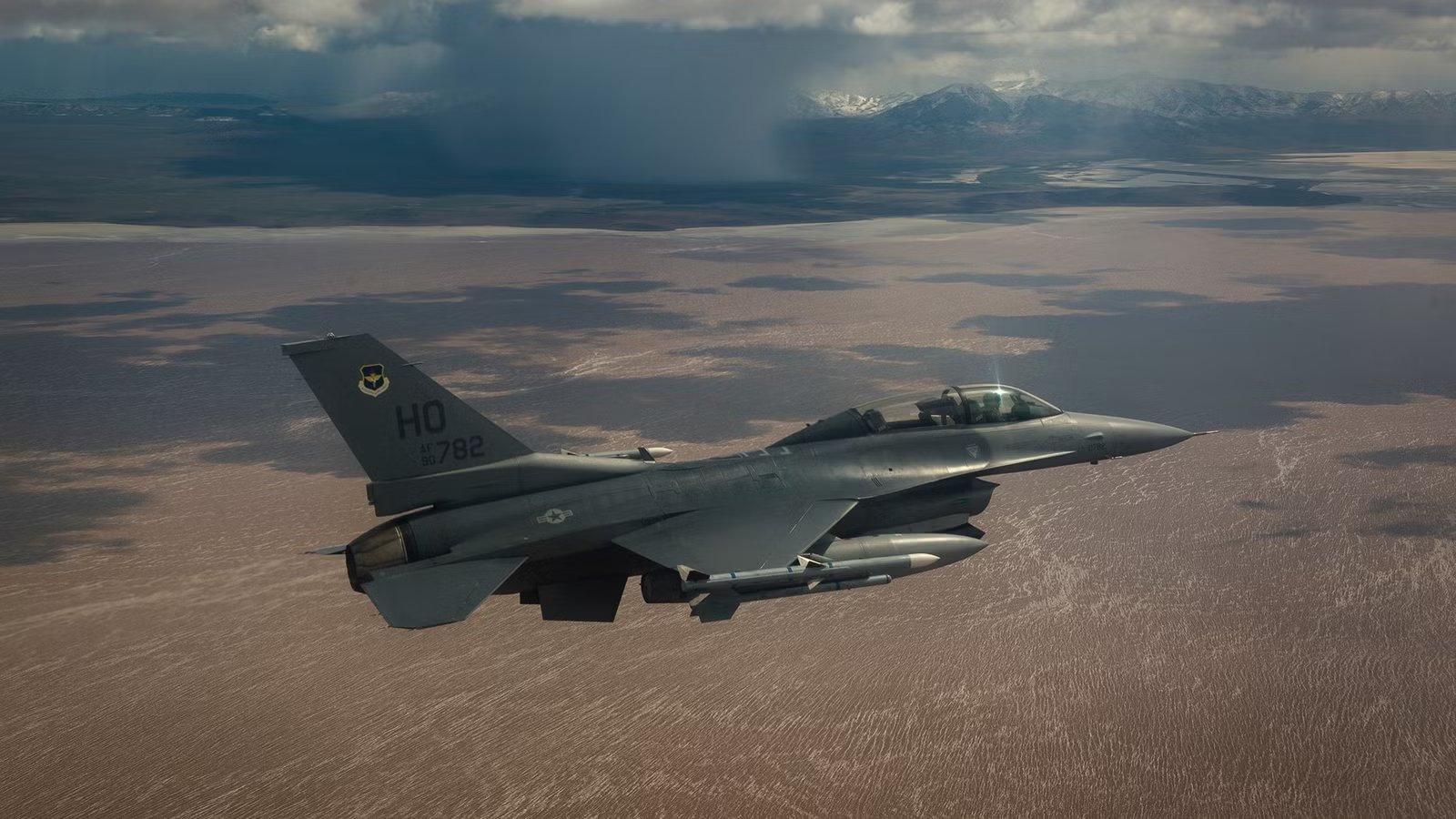
A Cessna 210L repeatedly ignored air traffic control above New Jersey on Monday. The aircraft stopped responding to ATC during a temporary flight restriction over Bedminster, put in place for President Donald Trump’s visit to his Trump National Golf Club in Bedminster.
Despite multiple attempts to contact the small aircraft, an F-16 with the callsign Noble 22 was sent to intercept it. Once nearby, the Cessna made contact with the fighter jet, and the aircraft then made its way to Central Jersey Regional Airport without further incident.
Stopped Responding To Air Traffic Control

On Monday, September 2, the Cessna bearing registration N2160S ignored air traffic control’s multiple attempts to advise they were breaching a temporary VIP flight restriction over Trump’s New Jersey golf course. An F-16 was deployed to intercept the small aircraft after the Cessna continued into the restricted airspace. After multiple attempts, including through the emergency Guard frequency, warnings were ignored. During the incident, forceful warnings were issued, including:
“You are entering restricted airspace and being intercepted by armed defense fighters. If you do not turn south you may be fired upon.”
As the F-16 was deployed, controllers began vectoring other air traffic away from the Cessna, where all other aircraft on the frequency continued to hear the firm warnings that went ignored.
Prompted NORAD To Deploy an F-16

Despite continued warnings, controllers repeatedly attempted to contact the aircraft. As the plane breached the temporary flight restriction zone, the final severe warning outlined that the plane could be fired upon. As the F-16 reached the Cessna, it was in an area above the George Washington Bridge before the small aircraft changed course.
The pilot of the Cessna finally responded to repeated radio transmissions and was subsequently escorted out of the restricted airspace without any further concern before it landed at Central Jersey Regional Airport (JVI) in Somerset County. It remains unclear if the pilot of the Cessna was spoken to by authorities once he had deplaned.
Interception of general aviation aircraft with the use of military jets is usual protocol if pilots fail to respond to Notice to Air Missions (NOTAMs), or there is lost radio contact during VIP temporary flight restrictions. As the F-16 reached the Cessna, it conducted a ‘headbutt’ maneuver, where the military aircraft would fly in front of the civilian aircraft before rocking its wings to attract the pilot’s attention.
Cessna Involved: N2160S
Reviewing the Federal Aviation Administration registry identifies the Cessna 210L as a 41-year-old fixed-wing, single-engine airplane that received its airworthiness certificate in December 1984. The plane’s registered owner is identified as being from Edison, New Jersey. Further characteristics in the table below:
Registration | N2160S |
|---|---|
Hex Code | A1D235 |
Serial Number | 21061121 |
Model | Cessna 210L |
Certificate Issue Date | December 17, 1984 |
Engine Model | IO-520 Series |
NORAD is instructed to deploy military aircraft into restricted no-fly zones if civilian or hostile pilots break these rules. The no-fly zone is a legal rule on maps, and the military is expected to assess the risk and then force the aircraft out of the area. Jets will fly close to see if the pilot poses a danger, has a broken radio, or could be lost. If the civilian pilot forgets to check their flight maps, or does not answer repeated radio calls, intercept jets use visual signs to get the aircraft’s attention.
Should the civilian aircraft refuse to leave the no-fly zone, the military is in a position to then intercept or neutralize the threat to ensure safety for the protected target. Donald Trump was at his National Golf Club in Bedminster on Monday, where he spent the long weekend having arrived on Friday. On Monday morning, there was executive time scheduled before he returned to Washington from Morrison Municipal Airport (MMU) on Air Force One that evening.