dailynewsnblog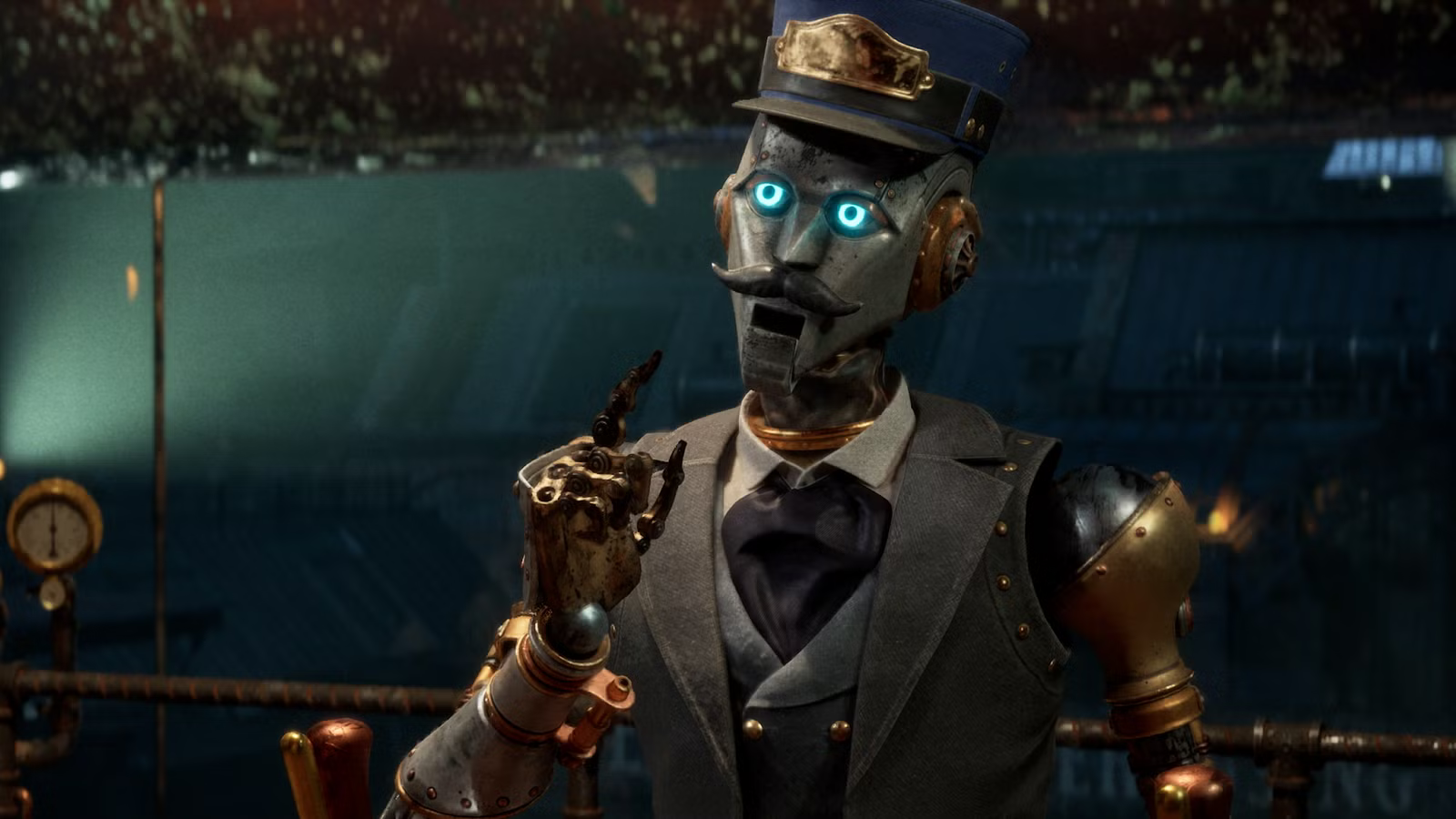
At the Xbox Games Showcase on Sunday, Microsoft announced the partial return of the Xbox console exclusive. Gear of War E-Day and inXile’s steampunk role-playing game Clockwork Revolution will not be coming to PlayStation 5 (or Nintendo Switch 2), reversing a recent strategy that has seen Microsoft publish first-party games like Forza Horizon 5, The Outer Worlds 2, and Indiana Jones and the Great Circle on rival platforms.
For the avoidance of doubt, Microsoft confirmed that “these are not timed exclusives.” These two games will never be released on PS5. They will have PC versions, though; Microsoft remains committed to the increasing interchangeability of Xbox gaming across console and Windows.
However, Microsoft also said that “games already announced for multiplatform releases will stick to that plan.” Notably, this means that Forza Horizon 6, Halo: Campaign Evolved, and Fable — three of Xbox’s first-party jewels — are still PS5-bound. What Microsoft’s cautious toe-dip back into the world of exclusivity means for the future of these and other Xbox-owned franchises is still very unclear.
New Xbox CEO Asha Sharma had been signaling a change in policy on exclusives for a while. Posting about E-Day and Clockwork Revolution, she wrote, “We want people to choose Xbox because of great games and experiences. That also means giving you something that was made for Xbox.” Something, but far from everything.
Sharma’s second-in-command, chief content officer Matt Booty, laid it out as clearly as he could in an interview with Gamertag Radio. “Our big multiplayer games and live-service games are going to continue to be multiplatform,” he said, in an echo of Sony’s recent policy to make narrative single-player games PS5-exclusive but pursue multiplatform launches for the likes of Bungie’s Marathon. This automatically rules out a lot of Microsoft’s portfolio from any form of exclusivity, including Call of Duty, Blizzard games like Diablo 4 and Overwatch, and arguably the Halo and Forza series, too.
“If we’ve promised something to players already, we’re going to honor that promise,” Booty said, in reference to the announced PS5 Forza, Fable, and Halo releases. “And then, we’re going to make the right decision and not the fastest decision — we’re going to keep thinking about this going forward… and our principle is, when we announce the date, we announce the platforms. So, it’s going to be case-by-case, but we’re going to be clear.”

Booty’s statement is far from definitive. “Case-by-case” is the key term here. As I explained in my analysis of Sony’s decision to pull back from PC versions of its single-player games, the rising cost of game production, stagnant growth in the games market, and the fracturing of players’ attention between other media and long-running live-service games like Fortnite and Roblox have undermined the economics of exclusivity for everyone but Nintendo. It’s clearly important for platforms to have exclusives, but which games this makes sense for is highly conditional.
Shortly before the Xbox Showcase, Sharma spoke about exclusives at a Bloomberg event and allowed that it was “a tough topic.” Essentially, she said that Microsoft was in a bind: Its sheer size as a publisher made it imperative to reach the biggest possible audience, but its position as a platform holder made exclusives a must. “I think that we have to be very thoughtful about each title, on how we want to think about it, and learn from similar cases in the industry,” she said.
What can we learn from the choice of Gears of War: E-Day and Clockwork Revolution to lead the console-exclusive charge? Distressingly little. Microsoft’s determination not to go back on promises it had already made to deliver PS5 versions of Halo: Campaign Evolved and Fable tied its hands on titles that it might have wanted to reconsider as part of the new push, and considerably weakens the effect of the announcement. Two exclusives out of the 15 first-party titles shown in the Showcase — 10 from Xbox Game Studios, three from Bethesda, and two from Activision — doesn’t send a conclusive message. On the other hand, E-Day is out as soon as early October, and work on a PS5 version was presumably advanced, so it seems Microsoft has been willing to scrap investment and pivot strategically on one game where it had the freedom to.

This isn’t the case throughout Xbox’s slate, however. The Showcase included a couple of other games that satisfy all of Booty’s conditions for exclusivity — not multiplayer games, not previously announced for PS5 — that are still getting multiplatform releases: Senua from Ninja Theory and Activision’s Spyro: A Realm Beyond. This reinforces just how conditional and case-by-case Microsoft’s new policy is.
Spyro remaining multiplatform makes sense: Microsoft has yet to enforce exclusivity on any Activision Blizzard game after regulatory pressure on its acquisition of the publisher, while Spyro‘s producers will want access to the Nintendo Switch 2 market, as well as PlayStation gamers who grew up with the character. Senua, though? It’s hard to say what makes this game different from E-Day and Clockwork Revolution. Perhaps it’s because the series originated with a multiplatform game, before Microsoft acquired Ninja Theory — or because its audience is small and tenuous enough not to work financially as an exclusive.

Microsoft is clearly keen to send a message to the Xbox community with the return of console exclusives; it’s telling that Booty referred to them as a way to “reward” long-term fans. But it’s also clear that, for a variety of reasons, self-imposed or otherwise, Microsoft’s options in this arena are extremely limited, and it’s unwilling to make drastic choices. It remains caught between a rock and a hard place, and much tougher decisions lie ahead — notably, what to do about Bethesda’s The Elder Scrolls 6, by far the biggest single-player prospect on Microsoft’s slate.
Sharma and Booty’s team will be studying the performance of E-Day and Clockwork Revolution extremely closely for clues as to what to do next. But their impact is necessarily dulled by the limited nature of the experiment. Without more data, it will be hard for Microsoft to know if exclusivity is working as anything more than a PR exercise.
So, for now, a PR exercise it remains. And there also remains a yawning gap between Sony and Microsoft’s stances on exclusivity, despite their apparent similarity on paper. From PlayStation, the pitch is clear: If you want to play Marvel’s Wolverine, God of War Laufey, or any of their ilk, you need a PS5 to do it. It’s not a reward; it’s a requirement. Until Xbox can muster the courage to offer that much clarity, with the games to match, it will never catch up.
Every big announcement from Xbox Games Showcase 2026
All the trailers, news, and updates from Xbox’s big summer showcase