dailynewsnblog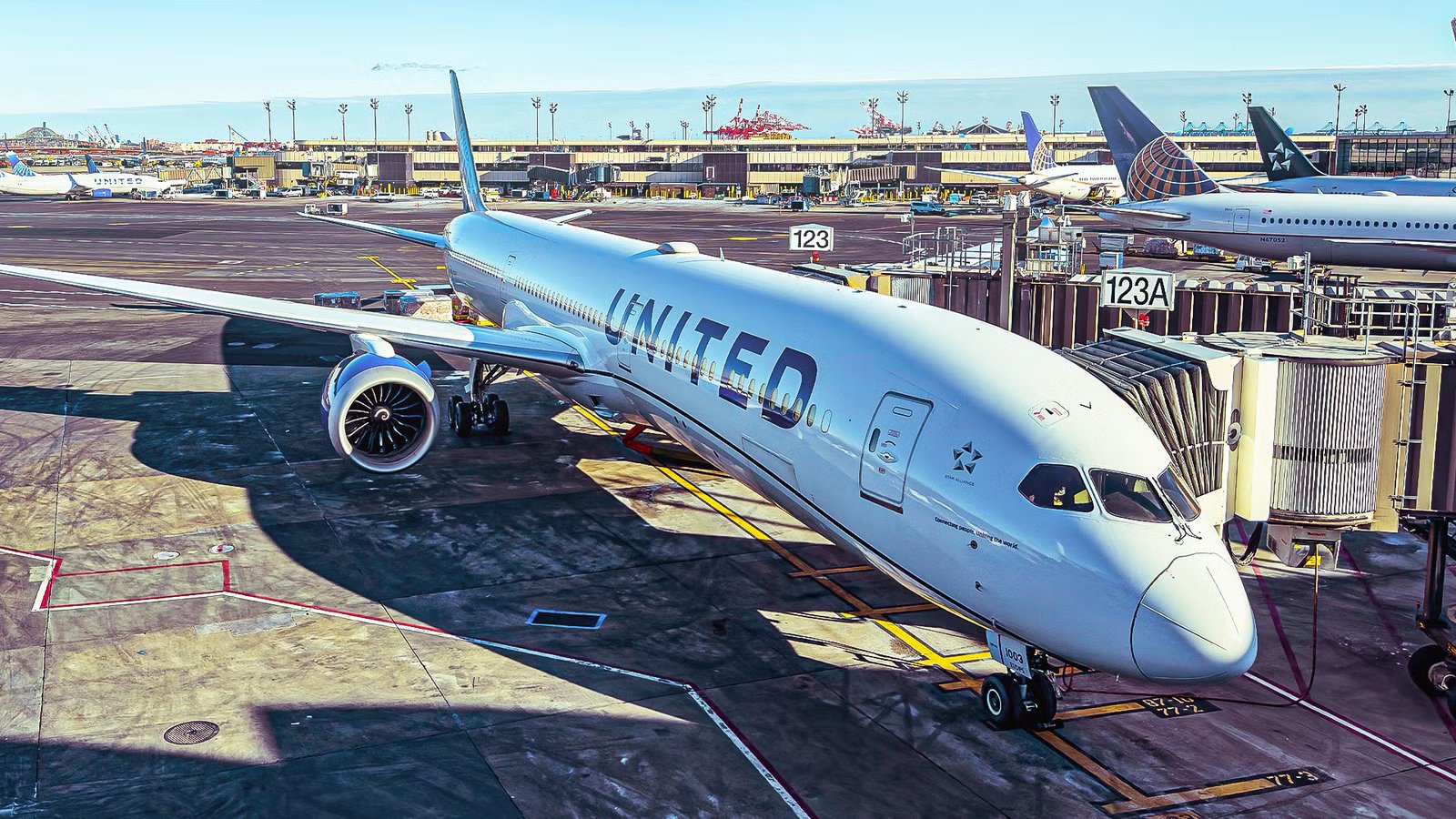
Conventional wisdom suggests that airlines should always prefer aircraft with the greatest possible range. Longer reach appears to offer maximum flexibility, broader route options, and greater protection against operational constraints. Yet a recent decision by  United Airlines reveals a different reality. The carrier has increasingly embraced the Boeing 787-10, the shortest-range member of the Dreamliner family, even as it operates some of the world’s most extensive long-haul networks.
At first glance, the strategy seems counterintuitive. The Boeing 787-9 can fly approximately 1,200 nautical miles further than the -10 variant. In exchange, the 787-10 gains a fuselage stretch and capacity for approximately 40 additional passengers. For airlines pursuing ultra-long-haul missions, that trade-off may appear difficult to justify. United, however, is not buying the 787-10 to fly the longest routes imaginable. The airline is buying it because range is not the primary constraint on many of its most important international services. The carrier’s longest scheduled 787-10 route in 2026, between Chicago O’Hare (ORD) and Tokyo Haneda (HND), covers approximately 6,306 miles. That distance sits comfortably within the aircraft’s operational capabilities while allowing United to maximize passenger capacity and improve economics on one of its most strategically important markets.
The decision highlights a broader truth about airline fleet planning: aircraft are not selected based on headline specifications alone. They are chosen according to how effectively they generate revenue on specific routes. In United’s case, the shorter-range Dreamliner has become a critical tool for serving high-demand international markets where additional seats matter more than additional range.
The 787-10 Was Designed Around Capacity Rather Than Maximum Range

To understand United’s strategy, it is necessary to examine the design philosophy behind the Boeing 787-10. The original Dreamliner family was developed to improve fuel efficiency and enable airlines to operate long-distance routes with lower operating costs than previous-generation widebody aircraft. Boeing introduced multiple variants to address different market requirements.
The Boeing 787-8 focused on efficiency and medium-capacity long-haul operations. The Boeing 787-9 expanded both capacity and range, becoming the most versatile member of the family. The Boeing 787-10 followed a different path. Rather than extending the range further, Boeing lengthened the fuselage by approximately 5.5 meters (18 feet), creating space for roughly 40 additional passengers compared with the 787-9. That additional capacity came with a compromise. The larger airframe reduced maximum range. On paper, the reduction appears substantial. In practice, many international routes do not require the extra capability.
Dreamliner Family Payload and Range Comparison | |||
|---|---|---|---|
787-8 | 787-9 | 787-10 | |
Payload | 90,500 pounds (41,100 kilograms) | 116,000 pounds (53,000 kilograms) | 126,300 pounds (57,277 kilograms) |
Range (nautical miles) | 7,305 | 7,900 | 6,700 |
The distinction reflects a fundamental principle of commercial aviation. Every aircraft design involves tradeoffs between payload, range, efficiency, and operating costs. Airlines rarely need an airplane that excels at everything. Instead, they seek aircraft optimized for specific missions. The 787-10 was created for carriers operating dense long-haul routes between major population centers. These markets often generate sufficient demand to fill additional seats while remaining short enough to avoid range limitations. In those circumstances, the larger aircraft can generate significantly more revenue without requiring substantially higher operating costs. For United, that profile aligns closely with several core international markets.
Chicago To Tokyo Demonstrates Why Range Is Not The Key Metric

United’s  Chicago O’Hare International Airport (ORD) to
  Tokyo Haneda Airport (HND) route illustrates the logic behind the 787-10 better than any technical specification. At approximately 6,306 miles, the route is the airline’s longest scheduled 787-10 service in 2026. Because the aircraft’s published range comfortably exceeds the distance involved, the route does not require the greater capabilities of the 787-9. This reality challenges a common misconception about fleet planning. Airlines do not purchase aircraft based on the most extreme missions they might theoretically operate. They purchase aircraft that maximize profitability on the routes they actually fly.
Chicago and Tokyo represent two major economic centers connected by substantial business and leisure demand. The market benefits from strong corporate travel flow, extensive alliance connectivity, and significant tourism traffic. These characteristics create consistent demand for seats rather than demand for additional range. If an aircraft already possesses sufficient capability to complete the mission, excess range provides limited economic value. Additional seating capacity, by contrast, can directly increase revenue generation. Every extra passenger seat represents a potential source of income. When an airline operates routes with strong and consistent demand, increasing capacity can improve profitability without requiring additional airport slots, additional crews, or additional flight frequencies.
This consideration is especially important at airports such as HND, where slot availability remains highly constrained. Airlines cannot simply add unlimited flights when demand increases. Consequently, larger aircraft are an attractive means of expanding capacity. The ORD-HND route demonstrates that aircraft selection often revolves around market characteristics rather than technical extremes. United does not need the longest-range Dreamliner to serve this route effectively. It needs the Dreamliner that produces the strongest economic outcome.
United Airlines’ Longest Nonstop Routes With The Boeing 787 Dreamliner In 2026
An aircraft that has proven its capability across all corners of the globe for a powerhouse of aviation. Here is where United operates the Dreamliner.
United Is Building A Fleet Around High-Density International Markets

The airline’s recent fleet decisions reveal that the 787-10 is becoming central to a broader network strategy. United recently converted 56 existing Boeing 787-9 orders into 787-10 aircraft. This move represented one of the most significant indicators yet that the carrier sees the larger Dreamliner as a cornerstone of its future international operations. Such a conversion is notable because airlines typically value flexibility. The 787-9 can operate on a wider range of missions thanks to its superior range capability. Choosing the 787-10 instead signals confidence that future growth will be concentrated in markets where capacity matters more than extreme reach.
The airline’s current route structure supports that conclusion. In addition to ORD-HND, United operates the 787-10 on routes such as Newark-Tel Aviv, which spans approximately 5,692 miles, and Los Angeles-HND, which covers roughly 5,488 miles. These services connect major hubs with significant passenger demand while remaining comfortably within the aircraft’s operating envelope. Many of United’s most important international markets fit this pattern. They involve large business centers, strong alliance partnerships, and substantial connecting traffic. Such routes benefit from larger aircraft because airlines can spread operating costs across more passengers while maximizing available revenue.
Catch what other flight trackers miss
Emergency squawks, holds, NOTAMs — live signals, no signup.
Open tracker
Catch what other flight trackers miss
Emergency squawks, holds, NOTAMs — live signals, no signup.
Open tracker
The strategy also aligns with broader industry trends. Airlines increasingly prioritize aircraft capable of generating strong per-seat economics rather than pursuing maximum range for its own sake. While ultra-long-haul routes attract headlines, they represent a relatively small portion of global air travel. Most international passengers travel between large metropolitan areas where demand is high. Aircraft optimized for those markets often deliver stronger financial returns than aircraft designed primarily around exceptional range capability. United’s growing commitment to the 787-10 suggests the airline believes future profitability will depend heavily on serving these dense international corridors efficiently.
Replacing Aging Widebodies Requires A Different Approach

Another reason behind United’s enthusiasm for the 787-10 involves fleet replacement. For years, the airline has relied extensively on Boeing 767s and older Boeing 777-200 aircraft across its international network. Although these airplanes remain capable, many examples are approaching the later stages of their economic lives. Replacing aging widebody fleets is not simply a matter of finding a newer aircraft with similar specifications. Airlines use replacement opportunities to rethink network strategy, improve efficiency, and optimize capacity.
The 787-10 offers substantial advantages in this context. Its fuel efficiency significantly exceeds that of older-generation aircraft, reducing operating costs on long-haul routes. At the same time, its larger cabin allows United to accommodate more passengers without increasing flight frequency. This capability is particularly valuable on transatlantic services and selected transpacific routes where demand remains strong, but airport infrastructure limits expansion opportunities. Adding frequencies is often difficult because airports face slot constraints, gate limitations, and air traffic restrictions. Deploying a larger aircraft can achieve similar growth objectives while avoiding those obstacles.
The economics become even more compelling when fuel consumption is considered on a per-seat basis. Although the 787-10 consumes more fuel overall than smaller aircraft, the additional capacity helps reduce fuel burn per passenger. This improvement enhances profitability while supporting environmental objectives. Consequently, the 787-10 functions as more than a replacement aircraft. It serves as a tool to increase efficiency, expand capacity, and modernize United’s international network simultaneously.

The Real Reason Why United Airlines Won’t Retire Its Boeing 767 Fleet Yet
Have you ever wondered why the carrier is still flying aircraft up to 30 years old?
The Real Advantage Is Revenue Per Flight

Ultimately, the rationale behind United’s 787-10 strategy comes down to a simple business question: how much revenue can each departure generate? Airlines earn money by transporting passengers and cargo. If a route consistently experiences strong demand, increasing capacity can improve financial performance significantly. The additional seating on the 787-10 creates opportunities to capture more revenue from every flight. On routes where demand already exceeds available supply, larger aircraft can produce meaningful gains without increasing operational complexity.
This advantage becomes particularly important in premium-heavy markets such as the title one here. Business travelers, corporate contracts, and premium leisure customers often generate substantial revenue. A larger aircraft enables United to offer more premium seats alongside additional economy capacity. The airline can therefore grow revenue while maintaining existing schedules. From a network planning perspective, this outcome is highly attractive because it avoids many of the costs associated with launching additional frequencies.
The strategy also reflects changing realities within global aviation. Aircraft manufacturers once emphasized range as the ultimate competitive metric. Today, airlines increasingly focus on economics. If an airplane possesses enough range to complete its assigned mission, further capability may deliver limited commercial benefit. For United, the 787-10 occupies a sweet spot. It offers sufficient range for key international routes while maximizing passenger capacity and operational efficiency. The aircraft may not be capable of flying every conceivable mission, but it excels at the missions that matter most to the airline.
Pictured above is United’s new elevated Polaris cabin on the 787-9. Included to show commitment to premium segments.
In Summary

United’s decision to invest heavily in the 787-10 reflects a sophisticated understanding of how modern airline economics work. The carrier selected the aircraft because the routes driving its international strategy do not require the extra range offered by the 787-9. The ORD to HND route provides the clearest example. It represents United’s longest scheduled 787-10 service in 2026, yet it remains well within the aircraft’s capabilities.
The 787-10’s larger fuselage, greater seating capacity, and strong per-seat economics make it well-suited for dense hub-to-hub markets. Those characteristics align closely with United’s international network, particularly as the airline replaces older 767s and 777-200s while expanding service between major global cities. The recent conversion of 56 Boeing 787-9 orders into 787-10s underscores the scale of that commitment. Rather than prioritizing maximum technical capability, United is prioritizing operational efficiency and revenue generation.
In that sense, the airline’s fleet strategy holds an important lesson about commercial aviation. The best aircraft is not necessarily the one that flies the farthest. The best aircraft is the one that creates the most value on the routes an airline actually operates. For United’s busiest long-haul markets, the shorter-range Dreamliner increasingly appears to be exactly that aircraft.