dailynewsnblog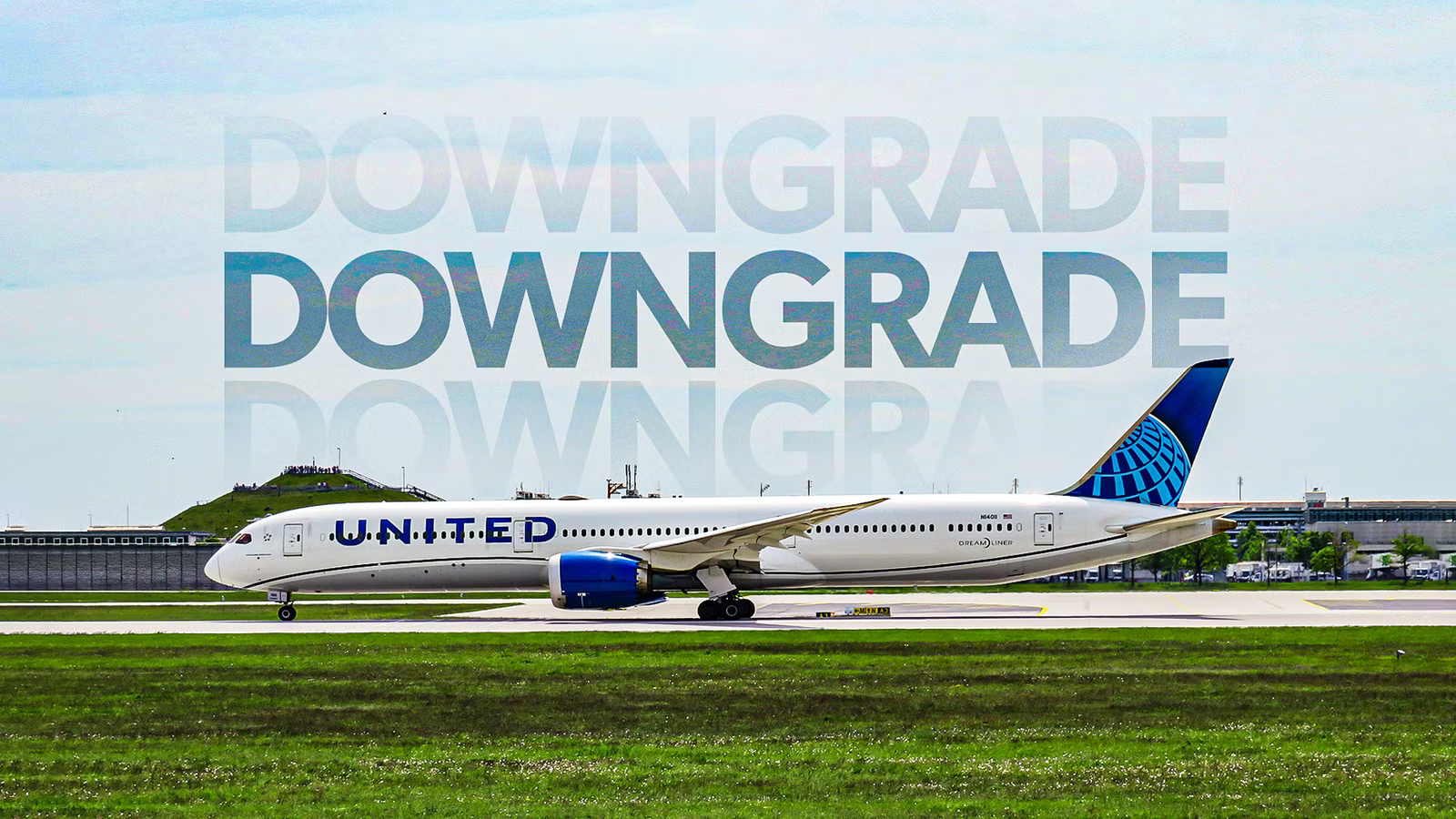
 United Airlines just made its largest single widebodyorder change in years, and it seems more of a downgrade dressed up as an upgrade. The airline has converted 56 Boeing 787-9 orders into the larger Boeing 787-10, but the 787-10 flies roughly 1,135 to 1,200 nautical miles (2,102 to 2,222 km) less than the 787-9 it replaces on the order sheet. But United is giving up range for a reason: it needs more seats on the routes where its aircraft are already constrained by limited gates and slots.
The obvious question is why an airline would deliberately shrink the range of dozens of incoming widebodies rather than simply order more of the jet it already had. The answer sits where United is running out of room: not in the air, but on the ground, at gates it cannot expand and slots it cannot add. To see how a range cut became the more valuable order, start with exactly what United changed.
What United Actually Changed

United confirmed it converted 56 outstanding Boeing 787-9 orders into the larger 787-10 variant, with deliveries of the converted jets beginning in 2028, as first reported by The Air Current. Before the change, every outstanding Dreamliner order on United’s books was booked as a 787-9. After it, the backlog splits into roughly 84 to 85 additional 787-9s and 56 787-10s.
That backlog sits on top of the 80 to 81 Dreamliners United already flies: 12 787-8s, 47 to 48 787-9s, and 21 787-10s, according to OneMileAtATime’s breakdown of the order. Once every order is delivered, United’s eventual Dreamliner fleet lands at roughly 132 787-9s and 77 787-10s, one of the largest twin-aisle Dreamliner portfolios operated by any airline in the world. That scale gives United considerable flexibility, allowing the two variants to cover different missions rather than forcing one aircraft to do everything.
The shift is also notable for how it reverses the pattern that has defined the Dreamliner program for a decade. The 787-9 has long been Boeing’s best-selling variant by a wide margin, representing the majority of all 787 orders industry-wide, while the 787-10 has historically trailed as the smallest share of the three variants. United converting 56 jets in the opposite direction, from the workhorse variant to the niche one, is a bet that its own network no longer looks like the industry average. 56 converted jets is a big number, but what makes the size of the order notable is what United gave up to place it.
The Range Trade Behind The Bigger Jet

Boeing rates the 787-9 at approximately 7,565 nautical miles (14,010 km) of range, while the larger 787-10 is rated at roughly 6,430 nautical miles (11,910 km), a difference of about 1,135 nautical miles (2,100 km), per Simple Flying’s own range comparison of the two variants.
That gap exists because the 787-10’s stretched fuselage adds roughly 40 more seats than the 787-9 without adding fuel capacity or engine thrust to match, so more of the aircraft’s weight budget goes to payload instead of range. That makes the 787-10 particularly attractive when an airline can fill those additional seats without needing the 787-9’s longer legs.
On paper, converting 56 long-range jets into 56 shorter-range jets looks like United trading away capability. In practice, it only costs the airline something on the routes where 7,565 nautical miles (14,010 km) of range was ever the point, and United’s conversion was never aimed at those routes. The 787-10s United is adding are earmarked for a different job entirely, one where the extra 1,135 nautical miles of range was going unused anyway. And, according to Simple Flying, it is also the fastest jet in the United fleet.
Why United Is Fine Giving Up Range It Doesn’t Need There

United’s ground infrastructure, not its route map, is driving the upgauge. Slot and gate constraints at hubs like  Newark Liberty International Airport (EWR) and
  Chicago O’Hare International Airport (ORD) are forcing the airline to add capacity per departure rather than add more departures, as detailed by Fleet-Wire’s reporting on the strategy shift. In that environment, a bigger jet on the same number of daily slots is the only lever left to pull for growth. That matters especially at constrained hubs, where adding another widebody departure can be far harder than filling a larger aircraft already assigned a gate.
The 787-10 also has a specific retirement job to do: it is the natural successor to United’s aging, Pratt & Whitney-powered Boeing 777-200ERs and Boeing 767s on transatlantic, South American, and North Asian trunk routes, where absolute maximum range is not required, as Live and Let’s Fly outlined in its analysis of the shift. That retirement job has urgency behind it: United has already had to send 777-200s into long-term storage as parts shortages hit its Pratt & Whitney-powered fleet, a strain that fleet mix decisions like this one are meant to relieve. That same fleet math extends to the crews flying these jets, since United’s 787 and 777 pilots are not paid identically, and our reporting for Simple Flying found that United’s senior 787 captains out-earn 777 captains by nearly $30 an hour, meaning a bigger 787-10 fleet does not just change which jet flies a route; it changes the cost base behind it too.
The 787-9s United kept in the order book, by contrast, are staying exactly where the extra range matters: on the airline’s thinner ultra-long-haul routes, the market segment United already dominates among US carriers. The variant split is not a retreat from long haul. It is a decision about which jet does which job. The 767 fleet faces the same underlying pressure, just on a slower clock. United’s Boeing 767-300ERs and Boeing 767-400ERs are, on average, the oldest widebodies in its fleet, and the airline has already signaled that both the 767s and the remaining Boeing 777-200ERs are meant to phase out well before 2030.
A larger, more available pipeline of 787-10s gives United a single, modern airframe capable of absorbing that retirement wave on routes where an ultra-long-haul jet was never required in the first place. The result is a fleet plan built around replacing older capacity efficiently, rather than preserving maximum range on every replacement aircraft.
The Engine Decision Still Hanging Over The Order

One major variable in the 56-jet order remains unresolved: United has not yet selected an engine for these aircraft, setting up a competitive bake-off between incumbent GE Aerospace and challenger Rolls-Royce, as AirproNews reported following the conversion.
Rolls-Royce faces an uphill battle to win the 56-engine order. United’s existing 787 fleet is powered by GE Aerospace’s GEnx, giving GE an obvious advantage in fleet commonality and maintenance. Rolls-Royce’s Trent 1000, meanwhile, has had a difficult history on the 787, with earlier durability problems hurting its position against the GEnx, as previously examined by Simple Flying.
56 firm airframes with no named engine is a meaningful data point for either manufacturer to win, and it means the true operating cost of United’s decision to shift toward the larger 787-10, particularly in fuel burn and maintenance, will not be settled until that contract is signed. For an order this large, the engine choice could ultimately influence the economics of the fleet for decades after the first deliveries arrive.
United Isn’t Alone In Betting Bigger Over Farther

2025 was, by a wide margin, the best year on record for 787-10 orders: six airlines ordered a combined 150 of the type, led by  Qatar Airways ‘ 75-aircraft commitment, alongside
  British Airways, Korean Air, and
  Turkish Airlines, as Simple Flying’s own coverage of the order wave detailed. Delta placed its own 787-10 order for 30 aircraft, plus options for 30 more, just days before United’s conversion became public, the Atlanta-based carrier’s first-ever direct order for the Dreamliner.
That timing is less a coincidence than a shared conclusion. Airlines across very different networks are independently deciding that the 787-10’s per-seat economics are worth more than the 787-9’s extra reach on the specific routes each plans to fly. United’s conversion is the largest single example of that logic, not an outlier.
It also lands against a backdrop United cannot ignore: the airline was planning to order some Airbus A350s for the next decade, aircraft with more range than either 787 variant, though the order has stalled so far, as covered by Simple Flying. That order would give United a release valve for whichever routes genuinely need more capability than even the 787-9 can offer, which is part of why converting 56 jets to the shorter-range 787-10 was a low-risk bet rather than a gamble on the airline’s long-haul reach overall. United has several aircraft sizes and range capabilities available, making the 787-10 a complement to its long-haul fleet rather than a replacement for every mission.
What This Locks In For The Next Decade

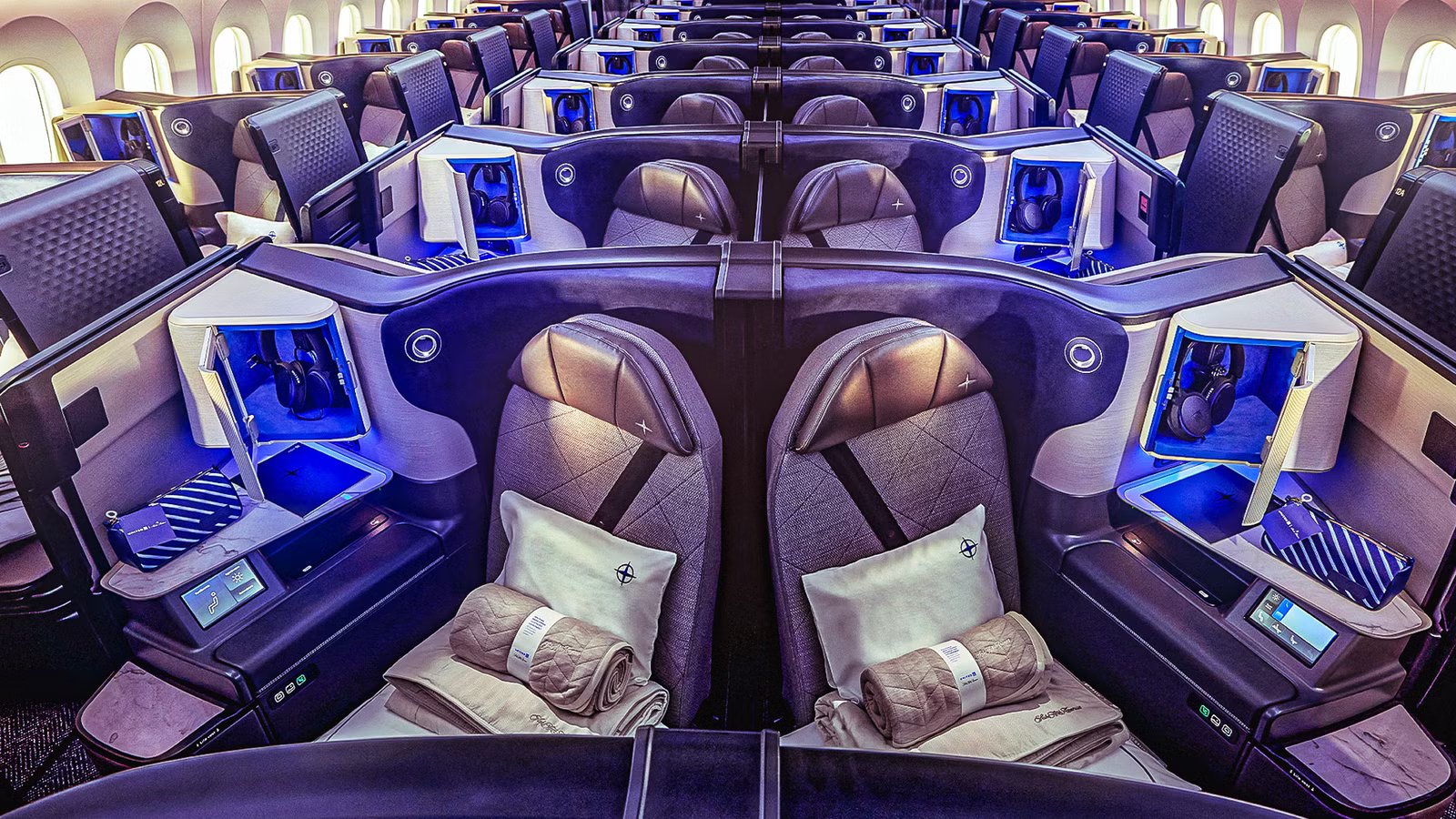
The cabin United is putting on these jets makes its intentions explicit. The converted 787-10s are configured at 318 seats, including 44 Polaris business class seats and 21 Premium Plus seats; per TheBlueBoard’s seating breakdown, a premium-heavy layout built to densify inventory on exactly the trunk routes the 787-10 is meant to serve.
United drew the map of which routes get bigger, more premium-heavy airplanes through 2028, and which routes stay tied to the longer-legged 787-9 because they still need every one of its extra 1,135 nautical miles(2,100 km). The 132-to-77 split between the two variants is the clearest tell of where United thinks its network is actually growing.
What is not yet decided is which engine sits on that map. A GE win keeps United’s cost structure where it already is. A Rolls-Royce win would be the clearest evidence yet that the Trent 1000s durability turnaround has changed a major US carrier’s calculus, not just an engine maker’s balance sheet. Either way, the airframe decision is already made. The engine decision is the one still worth watching.
Catch what other flight trackers miss
Emergency squawks, holds, NOTAMs — live signals, no signup.
Open tracker
Catch what other flight trackers miss
Emergency squawks, holds, NOTAMs — live signals, no signup.
Open tracker