dailynewsnblog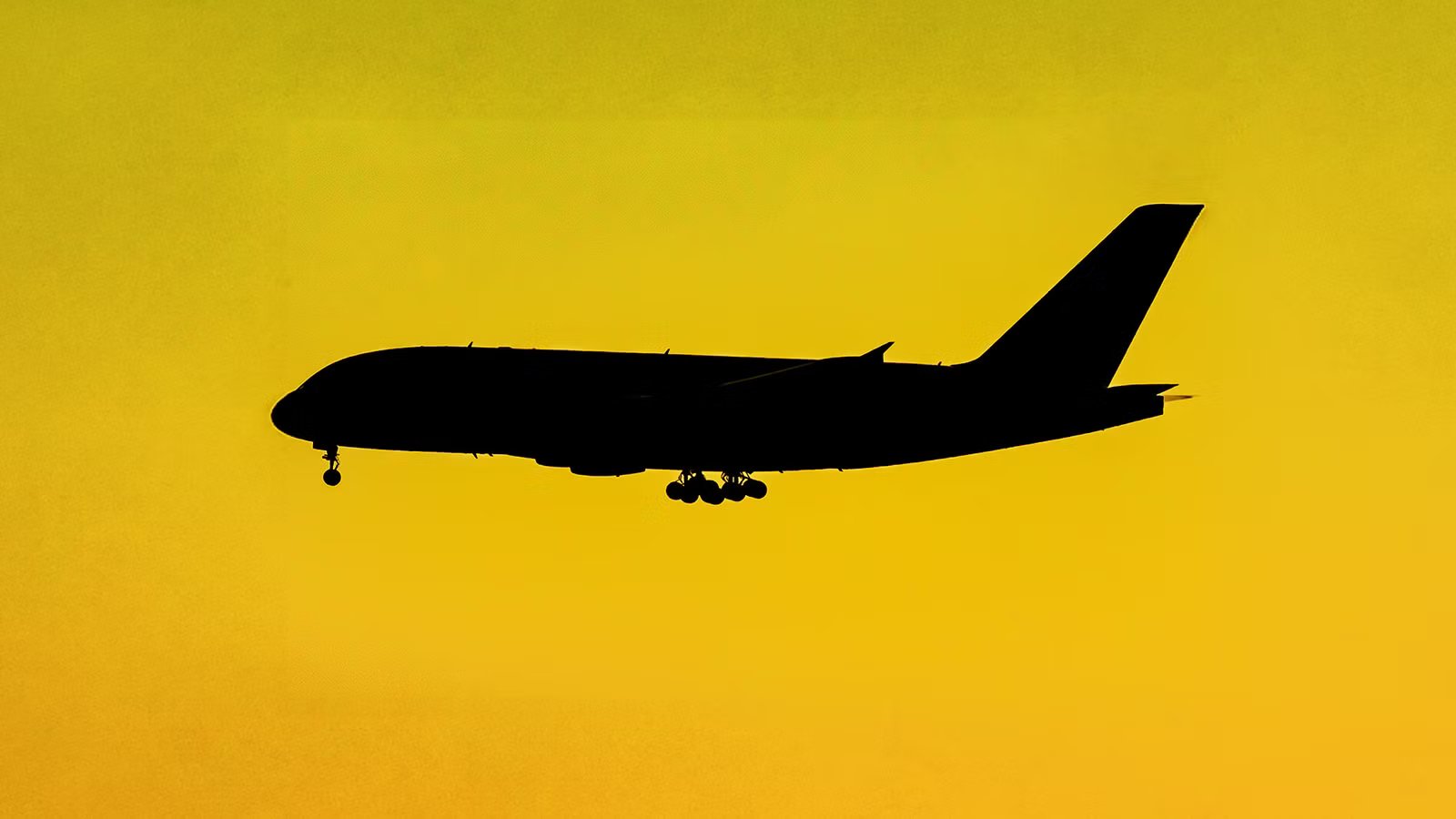
Nearly twenty years after becoming the launch customer of the Airbus A380, Singapore Airlines still uses the superjumbo on some of its longest and most strategically important routes because the aircraft continues to do something few others are capable of. The jet combines enormous amounts of premium capacity with an unusually strong ability to generate profits on a per-seat basis. The clearest reason is overall product differentiation.
Singapore Suites, the airline’s most exclusive and highest-profile cabin, exists only on the Airbus A380, giving the jet an outsized role on marquee routes where high-yielding demand matters the most. Beyond that, the A380 is a practical solution at heavily constrained airports like London Heathrow Airport (LHR) and Dubai International Airport (DXB). These are all places where adding frequency is difficult or impossible, making larger aircraft the best overall way to grow.
This ultimately matters quite a lot because  Singapore Airlines does not deploy the A380 everywhere. Rather, it uses the jet selectively on dense trunk routes where premium demand, high load factors, and corporate or luxury leisure traffic can support the economics of such a large aircraft. In that context, the A380 is less of a nostalgic flagship and more of a precision network tool. The carrier’s expanded Summer 2026 A380 schedule reinforces that point, showing that the type can remain commercially relevant rather than just ceremonial.
The Largest Commercial Airliner Ever Built

The Airbus A380 is the largest passenger airliner ever developed, and it remains one of the most distinctive aircraft in commercial aviation today. The jet itself was designed by Airbus as a high-capacity answer to growing congestion at major global hubs. It is a full-length double-deck, four-engine widebody built to move very large numbers of passengers over long distances. This makes the aircraft an exceptional tool for carriers of all kinds, especially those that focus on premium travel.
Airlines over the years have managed to configure the jet in multiple different ways. However, the aircraft became especially famous for enabling spacious premium cabins, onboard bars, showers, and suites that no smaller jet was capable of easily replicating. Its overall appeal has always rested on operations at scale. That said, its economics are incredibly route-specific. It is expensive to operate if loads are weak.
However, it can be very lucrative to operate on dense trunk markets with strong amounts of premium traffic, according to Aviation Analysis. Over time, smaller and more fuel-efficient twin-engine aircraft such as the Airbus A350 and Boeing 787 became the industry norm, leading many carriers to retire or shrink their A380 fleets. Even so, the aircraft still fills an important niche. Where airport slots are scarce, overall demand is thick, and premium travelers are willing to pay for a flagship experience, the A380 remains a commercially relevant aircraft rather than just an aviation icon.
How Does This Jet Fit Into Singapore’s Commercial Lineup?

The diverse Singapore Airlines fleet strategy is built around using different aircraft types in an extremely deliberate manner rather than attempting to treat every long-haul route as fundamentally the same. The airline’s modern long-haul fleet includes aircraft such as the Airbus A350 and the  Boeing 777, both of which are designed to provide maximum flexibility, efficiency, and range across a wide variety of markets.
Within that dynamic market structure, the A380 plays a much more specialized but still highly important role. Singapore Airlines does not keep the type out of nostalgia. Rather, the airline keeps it because the plane performs a job that other fleet types are not capable of fully replicating. This is a unique element of any long-haul fleet. The jet’s impressive capacity and ability to serve any other kind of route makes it a one-of-a-kind platform. Most importantly, the airline’s flagship Singapore Suites product exists only on the A380, giving the jet unique value on routes where ultra-premium demand is at its strongest.
The aircraft also fits naturally on slot-constrained, high-volume routes such as London Heathrow, Sydney, and Dubai, all places where bigger gauge can be more useful than additional frequency. In effect, the A380 sits at the top of Singapore Airlines’ network hierarchy. It is an aircraft reserved primarily for markets where capacity, prestige, and premium revenue all converge. That makes it strategically relevant even within a diversified fleet, as it serves as both a revenue-maximizing tool and a branding asset on the airline’s most important long-haul sectors.

It’s 2025, But Why Do Some Airlines Still Love The Airbus A380?
Popular with passengers but airlines have gradually phased them out.
What Is Singapore’s Current A380 Product Lineup?

Singapore Airlines’ current Airbus A380 product is built around turning the aircraft into a flagship rather than just a high-capacity people mover. The centerpiece of this rapidly-growing fleet is the airline’s latest-generation Singapore Suites, available only on the A380 and designed as a class above conventional first class. There are just six of these Suites on every aircraft, making the cabin exclusive intentionally by nature.
Each suite offers an absolutely massive amount of personal space, a separate swiveling recliner and fold-down bed, privacy doors, and a massive entertainment screen. In the center section, selected Suites can be combined into a double suite with a shared bed, giving the airline one of the most distinctive premium products in commercial aviation. The premium emphasis shapes the rest of the onboard proposition as well. Singapore Airlines has retrofitted its active A380 fleet with its 2017 long-haul cabin products.
This means that the aircraft now consistently represents the airline’s most polished and up-to-date widebody experience. The result is not just a luxury halo at the very top end, but a broader brand sentiment. The A380 is where Singapore Airlines showcases space, privacy and prestige most clearly. On routes where premium demand is the strongest, that matters enormously, because the A380 offers an onboard experience that smaller aircraft in the fleet simply have no ability to match.
What A380 Destinations Does Singapore Airlines Serve In 2026?

Singapore Airlines’ Airbus A380 network in 2026 is concentrated, deliberate, and clearly built around a handful of high-demand trunk routes rather than broad, symbolic deployment. By the summer of 2026, the airline will operate roughly 126 weekly A380 flights, a notable increase from 98 weekly flights in Summer 2025, showing that the superjumbo is being expanded rather than phased out altogether.
The network centers on markets where Singapore Airlines can reliably fill a very large aircraft with a strong mix of premium and economy demand. The most important A380 routes in 2026 include London Heathrow, Sydney, Frankfurt, and Dubai, all of which fit the aircraft’s ideal profile. Major international gateways, dense traffic flows, and strong premium demand are all places where the aircraft excels.
London remains an almost central location, reflecting both demand and Heathrow’s overall slot constraints. Dubai is one of the clearest signs of the aircraft’s renewed relevance, primarily because Singapore Airlines is not only introducing regular daily A380 service there but also extending it beyond a seasonal operation into the Northern Winter 2026-27 season.

Where Qatar Airways Will Fly Its High-Capacity Airbus A380s This Winter
The aircraft offers some exceptional long-range capabilities.
What Future Plans Does Singapore Airlines Have For Its A380 Fleet?

The future of the Singapore Airlines’ Airbus A380 fleet now looks much clearer than many expected it to a few years ago, but it is still selective rather than open-ended. In the near term, the aircraft is clearly attempting to remain relevant in the market. Singapore is operating over 100 weekly flights of the type this summer, up from just 98 last summer.
The airline has also elected to extend seasonal A380 service to Dubai into a longer-running deployment. This shows that the aircraft is still genuinely providing commercial value in the type on marquee routes. The fleet is also large, and there are enough spare models available to help manage any network disruptions. Nonetheless, the aircraft will eventually have to be retired as it is continuing to age in a market dominated by high fuel prices and the need for improved efficiency.
Singapore Airlines is hoping to see the delivery of its first Boeing 777-9 in 2027. The airline has indicated that these large models will be used to replace the A380, although they really do not come close to matching the aircraft’s overall profile. Therefore, it will not be surprising to see the A380 remain a marquee flagship through the late 2020s.
What Is Our Bottom Line When It Comes To The Singapore Airlines A380?

At the end of the day, the Airbus A380 is an incredibly dynamic and capable flagship aircraft, absolutely built to last. The jet was designed to be the flagship of the future, but Airbus did ultimately fall short of its sales objectives. The type proved very much to be a good long-haul aircraft, but not one that had the ability to serve more than just the highest-volume routes.
This stands in sharp contrast to something like the Boeing 777, which was designed to be an all-purpose flagship for all kinds of reasonably important routes between high-profile destinations. The A380’s niche eventually emerged in just slot constrained routes where the aircraft’s ability to serve as just one jet on a route was valuable.
Therefore, the model is one of the most impressive and capable on the market. Singapore Airlines was not only the launch customer for the type, but it also remains a key player in the A380 landscape today. The airline remains dedicated to using the aircraft to deploy its most premium products.