dailynewsnblog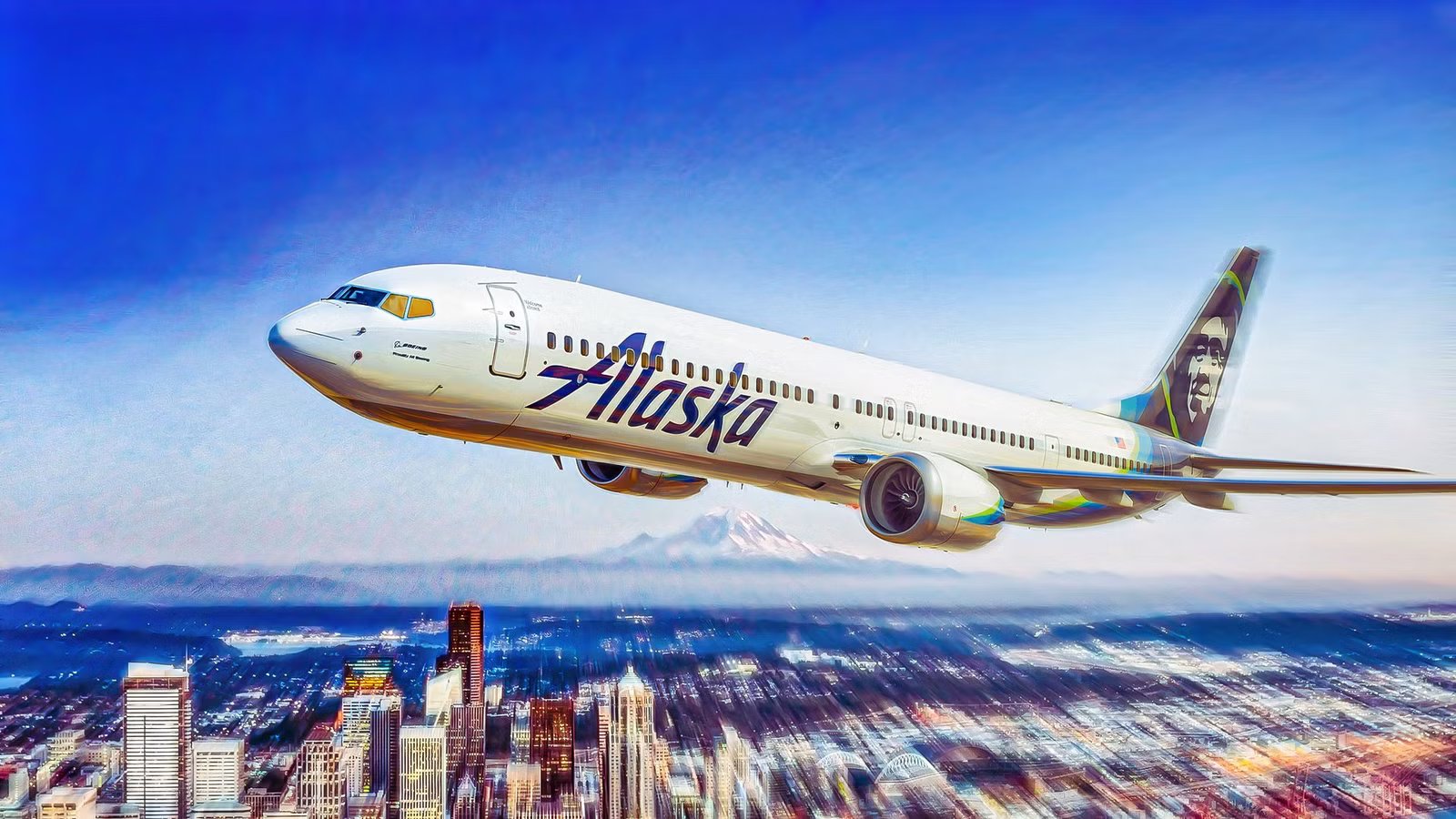
In 2025,  Alaska Airlines carried 47.1 million passengers, which was the carrier’s best year to date. According to the US Department of Transportation, traffic rose by the smallest of margins—just over 10,000 passengers—to exceed the prior record, which was held in 2019. Some 3.4 million passengers flew internationally, which was also another record.
The year 2026 will be pivotal to Alaska. All flights using Hawaiian’s HA IATA code will disappear on April 21, in favor of Alaska’s AS code. This will increase Alaska’s passenger volume significantly. And the airline will begin long-haul routes to Europe later this month, with its first transatlantic Boeing 737 MAX 8 service taking place shortly thereafter.
This Route Had Alaska’s Lowest Load Factor Last Year

US DOT data was used to examine all the  oneworld member’s routes last year. In that period, the airline’s average load factor—technically, seat factor—was 82.9%. This was because of operations to, from, and within Alaska. If that state is excluded, the airline filled 83.6% of available seats. Still, that was only its 14th-best year since 1990, although it is always about how it was achieved. This is why it should not be considered in isolation from other factors.
In this article, Alaska’s operations within Alaska are excluded, although interstate flights are included. Assuming a minimum of 1,500 round-trip passengers, the DOT indicates that Seattle-Vail was the worst-performing route in this sense. It filled a ridiculous 39.4% of seats, which was even lower than for Southwest’s international routes. Some 2,348 passengers traveled.
Alaska inaugurated the service, which covers 817 nautical miles (1,513 km), in December 2024. Until then, no airline had ever had nonstop service. Flights existed through March 2025 and returned in December last year. In other words, it had only just begun, and barely operated. Such a poor load speaks volumes. It is highly improbable that yields were so dramatic as to offset most seats being unfilled. However, Cirium Diio data shows the route is scheduled to return in December 2026.
Alaska’s Second To Fifth Least Popular Services

 San Diego to Vail was the carrier’s second-worst performing route in this sense. Just 43.7% of seats were filled in 2025, with 2,593 passengers transported. The link to the ever-popular Colorado destination started in December 2024. Before then, no nonstop flights had existed. Given the winter nature of it, the service existed until March 2025 and returned in December. It is scheduled to return in the festive month of 2026. It mirrors its Seattle-Vail route.
In third place was San Diego-Phoenix, which was another new route. The service only began in August 2025, initially with three daily flights but four daily from November. This is why it is always important to consider the wider context. It is perhaps unfair to include markets that had only just started. The E175, 737-800, 737-900ER, and 737 MAX 9 were deployed. In the final few months of the year, Alaska carried 56,908 passengers but only filled 52.4% of seats. The Southern California airport has been a hotbed of expansion for the carrier recently.
Despite being served since 2020, San Diego-Jackson Hole was fourth, with a load of 55.1% (5,993 passengers). This was its worst result (in this sense) since 2021, which is because the number of seats rose to the highest level since 2021. The relationship between capacity, demand, and traffic is critical. In fifth place was Santa Rosa-Palm Springs, with 60.8% (4,251 passengers). This short route only began last October. Alaska replaced Avelo on this desert route, which operated between November 2022 and June 2025.
|
Frequency* |
Palm Springs-Santa Rosa** |
Santa Rosa-Palm Springs*** |
|---|---|---|
|
Five weekly |
9:11 am-11:03 am |
3:16 pm-4:55 pm/3:18 pm-4:57 pm |
|
* April 14-20, 2026 |
** April 14-20, 2026 |
*** April 14-20, 2026 |

15 New Routes In 7 Days: See Where Southwest, United & Breeze Fly Now
From small, rural airports to popular tourist destinations, these 15 new routes span the country.
Rounding Out Alaska’s Remaining Ten Routes With The Lowest Loads

In sixth place was San José-Kahului (61.0%; 6,935 passengers), followed by San Diego-Denver (61.4%; 38,405 passengers), Boise-Bozeman (61.6%; 15,078 passengers), Seattle-Nassau (61.9%; 7,041 passengers), and Kansas City-Puerto Vallarta (62.0%; 2,429 passengers).
Seattle-Nassau was Alaska’s worst-performing international route in terms of seat factor. This city pair, which covers 2,509 nautical miles (4,647 km) each way, welcomed its first flight in December 2023. Initially, flights operated three times a week, but reduced to two weekly departures at particular times. The final flight was in April 2025.