dailynewsnblog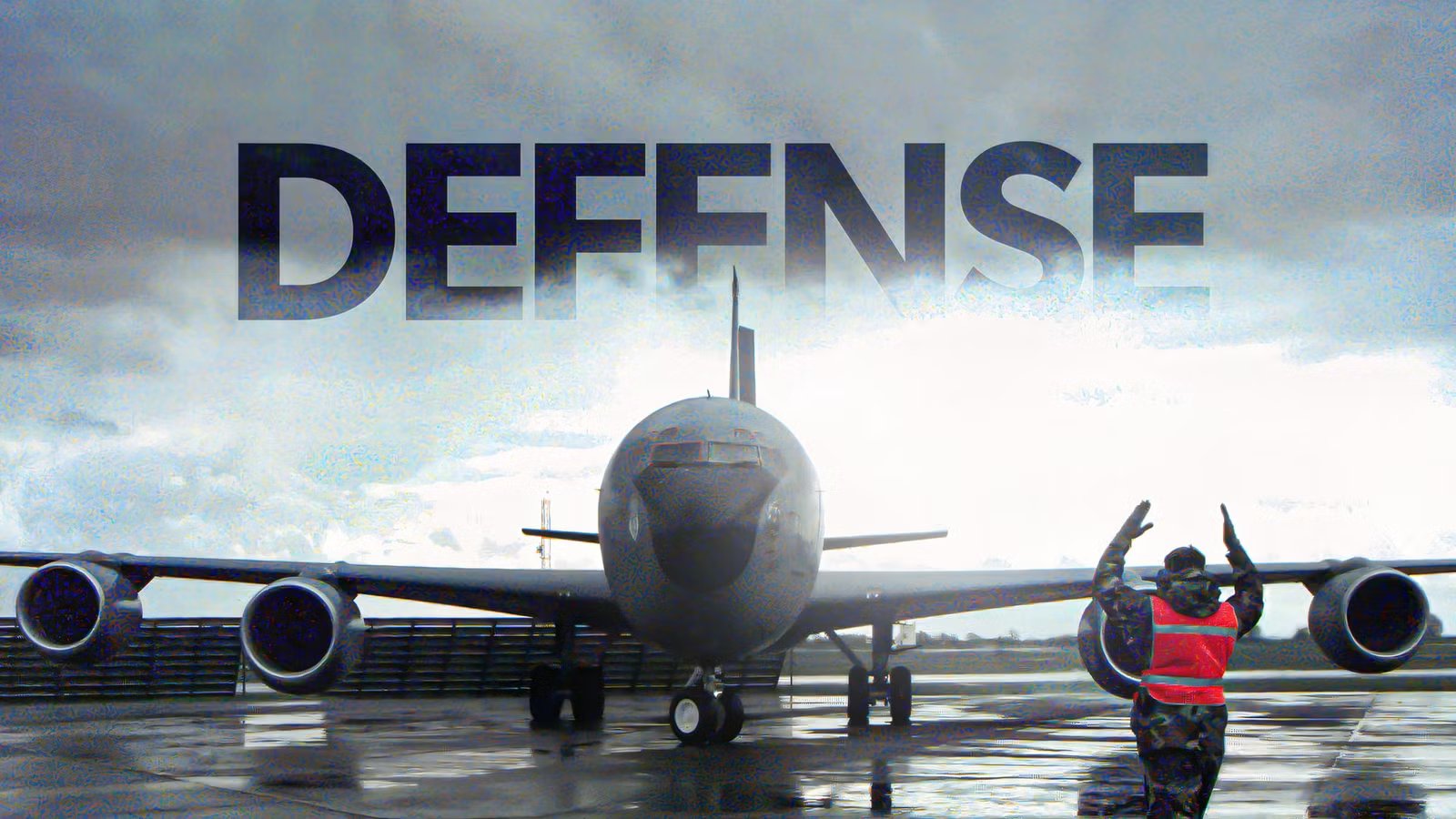
Aerial refueling is a cornerstone of the United States’ (US) global reach and power projection. America’s refueling fleet is a critical asset that enables the US to deploy forces to distant locations on short notice. In combat operations, refueling aircraft allow strike platforms to remain on station for extended periods, providing sustained close air support or maintaining a continuous air campaign. Additionally, aerial refueling enables dedicated intelligence, surveillance, and reconnaissance aircraft to monitor targets, combat units, or individuals for extended—and, in some cases, effectively continuous—periods.
In the not-too-distant past, the US military could generally count on permissive environments in which to operate. Since the Vietnam War and the post–Cold War period, the United States Air Force (USAF) has largely been able to operate in relatively uncontested airspace. Presently, the proliferation and increased range of not only air defense missiles but also drones have heightened the risk to large, slower, and less stealthy refueling aircraft. This poses a risk not only to the crews of these aircraft but also to the USAF’s ability to effectively transport vital personnel and equipment to forward areas under combat conditions, or to provide extended close air support.
To counter these issues, the USAF intends to invest in enhanced defensive features to protect its aerial refueling fleet. The primary aircraft used for refueling missions are the  Boeing KC-135 Stratotanker and the Boeing KC-46A Pegasus. Together, these aircraft are crucial to current and future tactical and strategic operations.
The USAF Is Investing In Enhanced Countermeasures To Protect Its Tankers

In order to confront the threats to its aerial refueling aircraft, the USAF’s FY2027 budget report details a request for $68 million (£53–£54.4 million) in research, development, testing and evaluation funding for Large Aircraft Survivability Systems (LASS). Furthermore, the air service intends to invest $508 million (£395–£405 million) in the new technology through FY2031.
The LASS program will develop an on-board architecture consisting of a sensor package, processors, and defensive systems (effectors). This platform will be ideally suited for tanker and transport aircraft that will likely be vulnerable in or near a theater of operations between the US and a peer adversary.
According to the FY2027 budget report:
“Large aircraft must have the ability to detect, decide, and defeat the enemy threats organically from onboard the aircraft. Multiple sensors will detect threats, processors will decide what threat is inbound and which aircraft is being targeted, and determine which effector is the best option to defeat the threat…Effector systems may use kinetic and non-kinetic means to defeat the threat.”
Non-kinetic effectors generally fall within the range of electronic warfare capabilities. An example is the ALE-55 Fiber Optic Towed Decoy, which trails behind an aircraft. When deployed, it can suppress, deflect, and draw away an approaching missile or drone. The countermeasure accomplishes this by jamming radar-guided missiles, spoofing them with false signals, and presenting itself as a larger target of opportunity for the inbound missile to lock onto.
Interestingly, the above excerpt also mentions the possible use of kinetic means to destroy a threat to the aircraft. This may take the form of the Miniature Self-Defense Munition (MSDM), which has been under development by the Air Force Research Laboratory since approximately 2015. The munition is reportedly just over three feet long (0.9 meters) and is equipped with a solid-fuel rocket motor for propulsion, as well as an inexpensive seeker for guidance. As of July 2020, Raytheon Missile Systems had been awarded a $375 million (£292.5–£300 million) indefinite-delivery/indefinite-quantity contract covering research, development, and the production of a flight-test-ready missile for the MSDM program.
The two primary refueling fleets expected to receive this new technology are the KC-46 and the KC-135. The former can carry approximately 212,000 pounds (96,162 kg) of fuel and has the ability to transfer more than 1,200 gallons (4,542.5 liters) per minute through its refueling boom. However, the KC-135 remains the workhorse of the US aerial refueling fleet despite having entered service in the late 1950s. With a fleet of approximately 390 aircraft, it can carry up to 200,000 pounds (90,718 kg) of fuel, depending on the configuration.
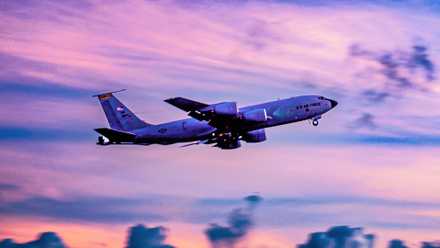
Why Does The US Air Force Still Rely On The KC-135 Stratotanker?
Despite its age, the Stratotanker remains the backbone of the US Air Force’s aerial refueling fleet.
Peer Competition, A Primary Driver For Upgraded Defenses For The Tanker Fleet

In a present-day combat scenario within a contested environment, a single refueling aircraft would support multiple fighters or bombers on a single mission. The loss of one, let alone several, of these critical assets could simultaneously adversely affect multiple sorties, reducing operational reach and disrupting the tempo of an air campaign or tactical operation.
One of the most significant contingencies facing the United States in a large-scale conventional war is a conflict with China. This scenario has numerous fault lines. The most obvious involves a Chinese attempt to invade and subdue Taiwan, which Beijing views as a rogue or secessionist province. Other possibilities include a conflict with Japan over the Senkaku Islands or a Chinese attempt to seize islands that belong to or are claimed by the Philippines. The latter two scenarios would require US intervention under treaty obligations.
Should any of the aforementioned possibilities escalate from a spark into a conventional conflagration requiring US military assistance for a partner state—or from a vague possibility of aid to full-scale kinetic aid, as is the case with Taiwan—USAF tankers would be called into action immediately. In such a scenario, tankers would become even more valuable, as China would almost certainly target US bases throughout the region, potentially including Guam. This is highly likely because China views US regional air power as a major obstacle to accomplishing its objectives, and destroying combat aircraft and their enablers on the ground would be a key element of any offensive campaign. As the table below illustrates, China possesses a deep arsenal of conventional missiles.
Missile Type | Representative Systems | Estimated Missiles | Primary Role | Range |
|---|---|---|---|---|
SRBM (Short-Range Ballistic Missile) | DF-15, DF-16 | ~600 | Taiwan contingency, regional strike | |
MRBM (Medium-Range Ballistic Missile) | DF-17, DF-21 variants | ~1,300 | Precision strike, anti-ship, regional deterrence | 1,000–3,000 km |
IRBM (Intermediate-Range Ballistic Missile) | DF-26 | ~500 | Guam strike, anti-ship, regional strike | 3,000–5,500 km |
Ground-Launched Cruise Missiles (GLCM) | CJ-10 family, CJ-100 | ~300+ | Precision land attack | 1,500–2,500+ km |
Hypersonic Glide Vehicle Systems | DF-17 | Included within MRBM inventory | Rapid penetration of missile defenses | ~1,800–2,500 km |
Beyond a first strike on the US’s main operating bases in the South China Sea region, US tankers could also be targeted by China’s growing fleet of capable guided-missile destroyers. In addition, its fleet of between 200 and 300 J-20 fighters would pose a significant challenge to tanker operations. Chinese military planners understand that if they can damage or destroy these aircraft on the ground, or shoot them down in the air, they can significantly reduce the operational range and effectiveness of US strike aircraft and fighters.
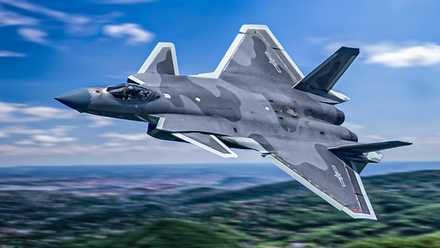
Chengdu J-20: What You Need To Know About The Mighty Dragon
The Chengdu J-20 made quite a splash back in 2011 as the first non-Western stealth fighter. But what are its true capabilities vs. mere hype?
A Brief View Of How Aerial Refueling Has Enabled US Military Missions

During the Vietnam War, aerial refueling became a prominent aspect of tactical combat missions and long-term air campaigns. One notable example was Operation Arc Light (1965–1973), which consisted of B-52 bombing missions targeting Viet Cong strongholds. KC-135s supported the bombers on their round-trip missions between Andersen Air Force Base and Vietnam. Arc Light commenced on June 18, 1965, when 30 KC-135s refueled 27 B-52s en route to targets in Vietnam.
By the end of major US combat operations in Afghanistan, USAF tankers had provided more than 1 billion pounds (454 million liters) of fuel to over 42,000 aircraft across 13,000 sorties, totaling 96,000 flying hours. Additionally, Air Mobility Command states that “…Air Force tankers provided 68 percent of the overall in-flight refueling capability during the combat phase of Operation Iraqi Freedom, flying 7,665 sorties and offloading over 476,000 pounds of fuel to 32,714 receivers.”
Without the services provided by USAF tanker crews, many operations would be impossible due to the distances involved. Alternatively, aircraft would be forced to land to refuel and rearm. The time required to complete these processes would significantly reduce operational efficiency, resulting in missed opportunities and increased risk to personnel due to delays in delivering air support and other critical mission supplies.
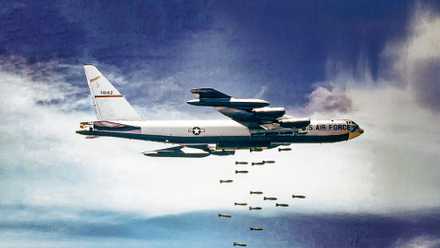
The Real Reason The US Air Force Is Still Flying B-52s Built Before Most Of Its Pilots Were Born
The B-52 is an iconic Cold War aircraft. It was supposed to retire, now lets dive into why it has and will remain in service for decades to come.
Protect The Tankers

Following the Cold War, the US drew down its military presence around the world, as it no longer had to deter a perceived large-scale invasion of Western Europe by the Soviet Union. Since the latter’s dissolution, the US armed forces have maintained an expeditionary focus, with the majority of its units based within the United States.
In times of need, military planners and policymakers can rely on the USAF’s transport aircraft to surge the required combat or support units at scale to virtually any point on the globe within days or weeks. This is made possible not only by the aforementioned transport aircraft, but also by the capabilities of the USAF’s tanker fleet. These aircraft ensure that forces in transit can reach their destination without making any stops if necessary.
Yet this crucial capability is well understood by America’s adversaries. They know that without the tanker fleet, US armed forces would be severely constrained in its ability to deliver crucial supplies to a theater of operations, maintain air support for ground forces, and evacuate the wounded. Tankers are one of the primary enablers of modern military engagements.
The threats to the USAF’s refueling fleet range from guided missiles to drones, both of which are rapidly proliferating across conflict zones around the world. These threats are formidable: missiles are accurate and highly destructive, while drones can be mass-produced at relatively low cost, making them an increasingly attractive weapon for combatants. It is therefore clear that the LASS program is not only necessary, but should also be expedited, given that the threats facing tankers are unlikely to diminish and will only increase over time.