dailynewsnblog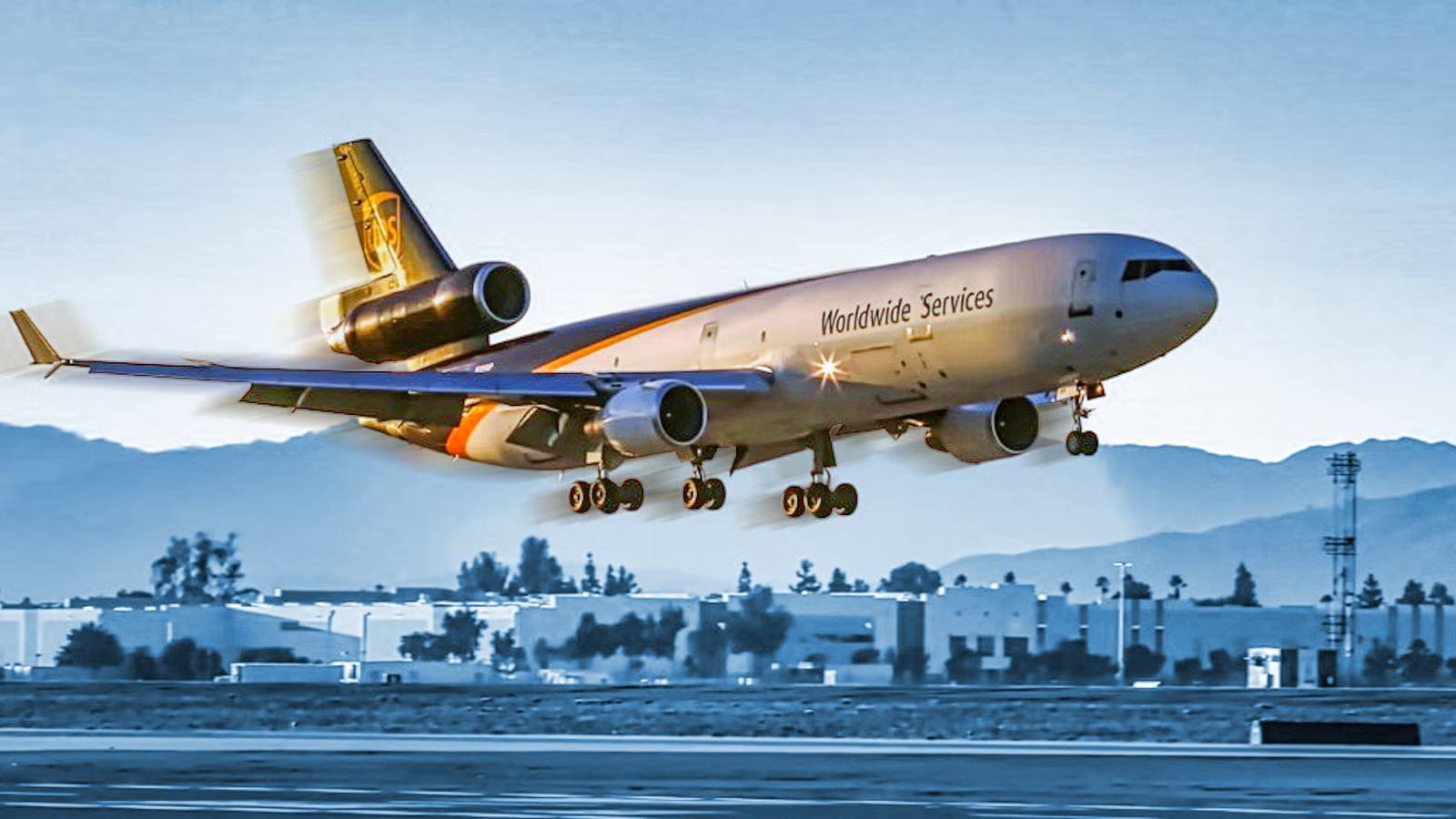
The Douglas Aircraft Company was a titan in commercial aviation before and after the Second World War. The company is most famous for its iconic DC-3, but it also produced the DC-4, DC-6, and DC-7, all of which were quite popular. Its DC-8, too, proved to be a capable and popular jet, and helped move the aviation industry into the Jet Age (though it was outsold significantly by the Boeing 707).
The company then developed the DC-9 for short-range flights, but it became strained by costs relating to the DC-8 and DC-9 programs. Meanwhile, McDonnell Aircraft lacked significant civilian business and struggled when military business was slow. As such, the two companies merged in 1967 to create McDonnell Douglas.
This firm would go on to become a major military contractor while remaining the world’s second-largest commercial aircraft builder. The company is particularly famous for the C-17 Globemaster II, F-4 Phantom II, F-15 Eagle, and the F/A-18 Hornet, but McDonnell Douglas also created some exceptional commercial aircraft before merging with Boeing in 1997.
McDonnell Douglas DC-8
Introducing The Super 70 Series

The DC-8 was Douglas’s first jet-powered airliner, and together with the 707, it helped make jet travel the default method of air transportation. But the 707 dramatically outsold the DC-8 in its early days due to its earlier introduction and a broader offering with three fuselage lengths (including the 720), while Douglas initially offered just one fuselage length for the DC-8.
Later on, however, the company introduced the improved Super 60 series with added range and two new fuselage length options, which proved quite popular. By the time of the merger, work on the Super 60 series had largely been completed, and production of the DC-8 ended in 1972.
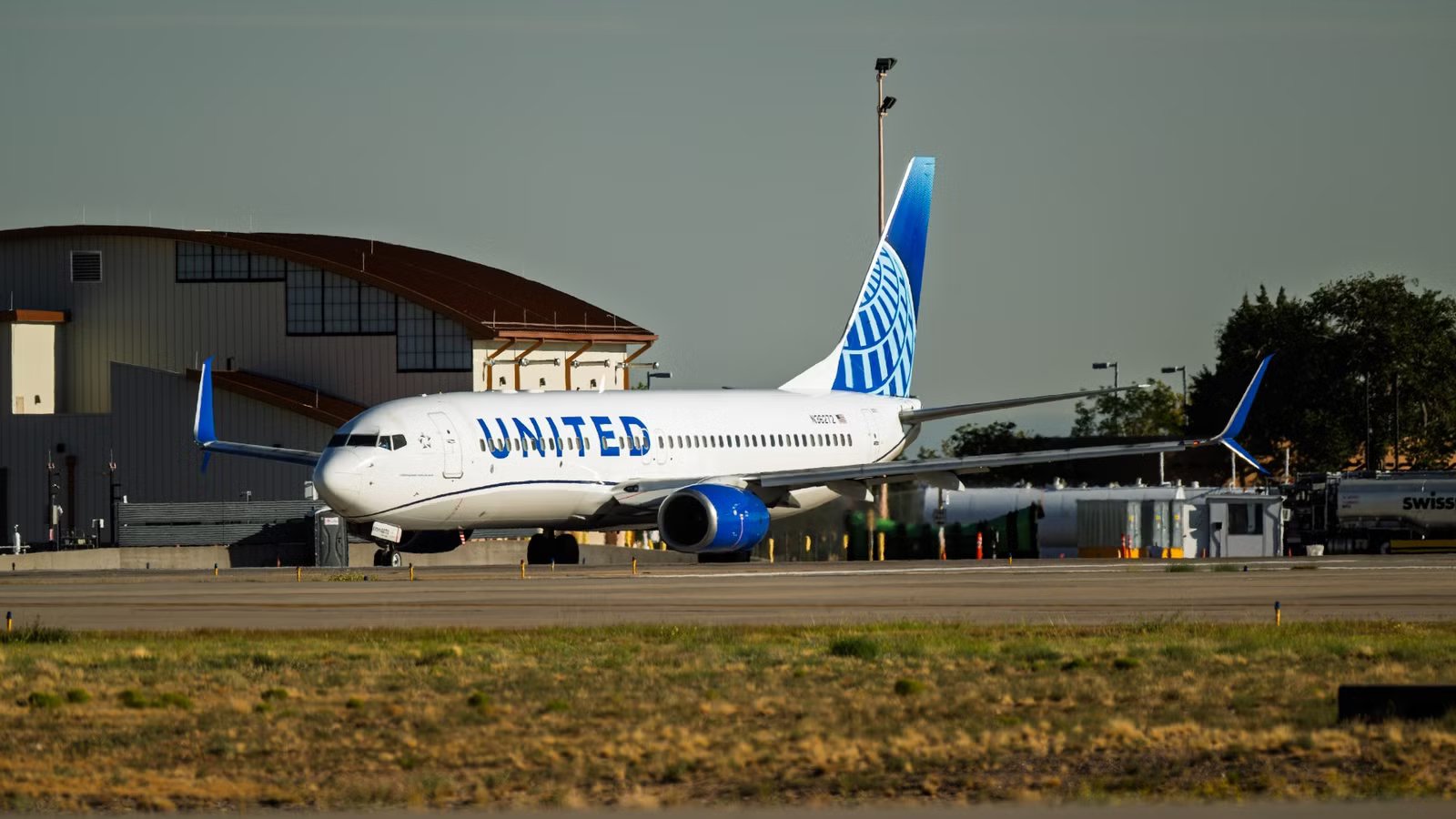
However, in the late 1970s, airlines expressed interest in a new engine option for their relatively young DC-8 Super 60s, in an effort to save on fuel costs and meet stricter noise regulations on the horizon. At the same time, newly-formed CFM (a joint venture between General Electric and Snecma, now Safran) was looking for buyers of its new CFM56 high-bypass turbofan engine. In 1979, United Airlines selected the CFM56-2 to power 30 of its DC-8-61s.
Meanwhile, the engine was also quickly ordered by Delta Air Lines and Flying Tiger Line. In total, McDonnell Douglas reengined over 100 DC-8s into the new ‘Super 70’ series, the majority of which were the DC-8-61/71 and DC-8-63/73 models. This dramatically increased the DC-8’s useful lifespan far beyond that of the 707, while it was a major boost to the CFM56 program. Today, the CFM56 is the most successful commercial jet engine of all time.
McDonnell Douglas MD-80
The End Of The Boeing 727’s Reign

Today, by far the two most successful commercial jet airliner programs are the Airbus A320 and Boeing 737. In the 1960s and 1970s, however, this title belonged to the Boeing 727, which was essentially the default short-to-medium range airliner. The DC-9 and 737 were also available at the time, but these were smaller aircraft with far less range. By the late 1970s, the 727 was looking outdated and inefficient, as it required three pilots while being equipped with three last-generation engines.
Boeing introduced the 757 as a replacement, but McDonnell Douglas beat it to the punch. The MD-80 was a significant overhaul of the DC-9, originally designated as the DC-9-80 and also known as the ‘Super 80’. It featured a fuselage stretch, along with wing improvements, a higher Maximum Takeoff Weight, and upgraded Pratt & Whitney JT9D engines. In practice, the MD-80 was about as capable as the 727 and was of a similar size, while burning less fuel and requiring only two pilots.
Aircraft | Entry Into Service | Number Built |
|---|---|---|
Boeing 727 | 1964 | 1,832 |
McDonnell Douglas MD-80 | 1980 | 1,191 |
Boeing 757 | 1983 | 1,050 |
Boeing 737 Classic | 1984 | 1,988 |
Airbus A320ceo | 1988 | 8,100 |
Boeing 737NG | 1997 | 6,750 |
As such, the MD-80 was well-suited to take the 727’s place in the narrowbody market, and some airlines directly replaced their 727s with the MD-80. The McDonnell Douglas MD-80 wasn’t as efficient or capable as the Boeing 737 Classic or the Airbus A320, but crucially, the MD-80 entered service in 1980. Meanwhile, the 737-300 wouldn’t enter service until 1984, with the larger, more comparable 737-400 only entering service in 1988, the same year as the A320.
The 757 entered service in 1983, and it was a larger plane that was more expensive to fly. The MD-80 was the first aircraft that could take over the dominant 727’s role, doing essentially everything that the 727 could but more economically, and McDonnell Douglas sold nearly 1,200 examples.
Delta To Retire Six 27+ Year-Old Boeing 717s Nearly 4 Years Ahead Of Schedule
The retirement of six aging Boeing 717s by Delta, nearly four years earlier than expected, may mark the beginning of a measured transition strategy.
McDonnell Douglas MD-11
Bringing Down The Cost Of Ultra-Long-Haul Flying

Throughout the 1970s and 1980s, the Boeing 747 was the default aircraft for ultra-long-haul routes. However, although it boasted incredible range, the 747 was a massive plane that was expensive to operate. Boeing attempted to solve the issue with the 747SP, but the 747SP cost almost as much to operate as a 747-200 while having fewer seats, making it an uneconomical aircraft.
As such, McDonnell Douglas, facing declining DC-10 sales and low cash, looked to address the need for an aircraft with 747 range but lower operating costs. The MD-11 was a stretch of the DC-10, featuring updated engines, refined airfoils, winglets, a higher MTOW, additional composite materials, and a glass cockpit.
It was meant to have a range of nearly 7,000 (13,000 km), which would have given it more range than a 747-200, while being smaller and cheaper to operate than any 747. This was a major development in the industry, since it would open up dramatically more long-haul routes that were technically possible with a 747 but lacked the demand to fill the double-decker. Ultimately, the MD-11 missed its fuel-burn projections, and it didn’t have the promised range.
While the MD-11 was bought by several airlines initially, most customers retired their examples early or cancelled their orders entirely. Still, although the MD-11 was outsold by the more economical, more capable Airbus A340 and Boeing 777, it was the first medium-sized ultra-long-haul capable widebody, a segment that has exploded in popularity in recent decades, and the MD-11 also proved to be a capable freighter.
Catch what other flight trackers miss
Emergency squawks, holds, NOTAMs — live signals, no signup.
Open tracker
Catch what other flight trackers miss
Emergency squawks, holds, NOTAMs — live signals, no signup.
Open tracker
McDonnell Douglas DC-10
The First Small Widebody

The Boeing 747 revolutionized commercial aviation through its twin-aisle design, which significantly brought down per-seat operating costs. However, some airlines were concerned about their ability to fill an aircraft as large as a 747, including American Airlines. The carrier requested aircraft manufacturers to design a new aircraft smaller than a 747, but with widebody economics.
American originally wanted a twin-engined plane, but restrictions on twin-engine aircraft operations over water made a twin-jet configuration impractical at the time. The carrier ended up choosing the McDonnell Douglas DC-10 trijet for its needs. This was the first aircraft program developed entirely by McDonnell Douglas, and the company went for a technologically cautious approach to keep costs low.
While the plane was less advanced than the competing Lockheed L-1011 TriStar, it was first to the market and was less expensive to acquire. What’s more, the DC-10 developed a reputation for being a robust, durable airframe with excellent reliability. The DC-10 is infamous for a string of high-profile fatal crashes in its early days of operation, some of which were attributed to the plane’s design.
As time went on, however, the DC-10’s safety record came to be comparable to that of other aircraft of its era. The DC-10’s size and operating costs meant that it was a more versatile aircraft than the massive 747, while the later DC-10-30 and DC-10-40 had true transatlantic capability. However, ultimately, the Airbus A300 proved far more economical than either the DC-10 or L-1011, and neither aircraft was a success while the A300 outsold both.

Why Boeing Only Built 55 Of Its Longest Single-Aisle Jet Ever Made
Only 55? Here is why Boeing only built so few stretched Boeing 757-300 aircraft.
McDonnell Douglas DC-9
Bringing Jets To Small Communities

The DC-9’s initial development was done by Douglas, addressing the need for a small jet-powered airliner to serve destinations with lower demand. The DC-9 competed against the Boeing 737, but it beat the 737 to the market and proved extremely popular. In total, McDonnell Douglas sold 976 examples, whereas Boeing sold just over 1,100 examples of the original 737-100 and 737-200 variants that competed against the DC-9.
Douglas produced the DC-9 for less than two years until the merger with McDonnell Aircraft. In its early years, the DC-9 was initially sold as the DC-9-10 series, while the larger DC-9-30 and DC-9-40 series aircraft quickly followed. In the early 1970s, work began on stretching the DC-9 again into the DC-9-50 series, which also featured more powerful engines and additional minor improvements.
Aircraft | Entry Into Service | Total Built |
|---|---|---|
McDonnell Douglas DC-9 | 1965 | 976 |
McDonnell Douglas MD-80 | 1980 | 1,191 |
McDonnell Douglas MD-90 | 1995 | 116 |
Boeing 717 (McDonnell Douglas MD-95) | 1999 | 156 |
Together with the 737, the DC-9 brought jet travel to smaller communities and helped make jet travel widespread throughout the world. With these two planes, jets simply became the standard rather than a new, novel technology, and these two airframes were subsequently developed into modernized versions that remain in service.
The DC-9 was developed into the successful MD-80, but the later MD-90 and MD-95 (also known as the Boeing 717) were commercial failures. Still, the DC-9 itself stands as the most impactful airliner ever built by McDonnell Douglas.