dailynewsnblog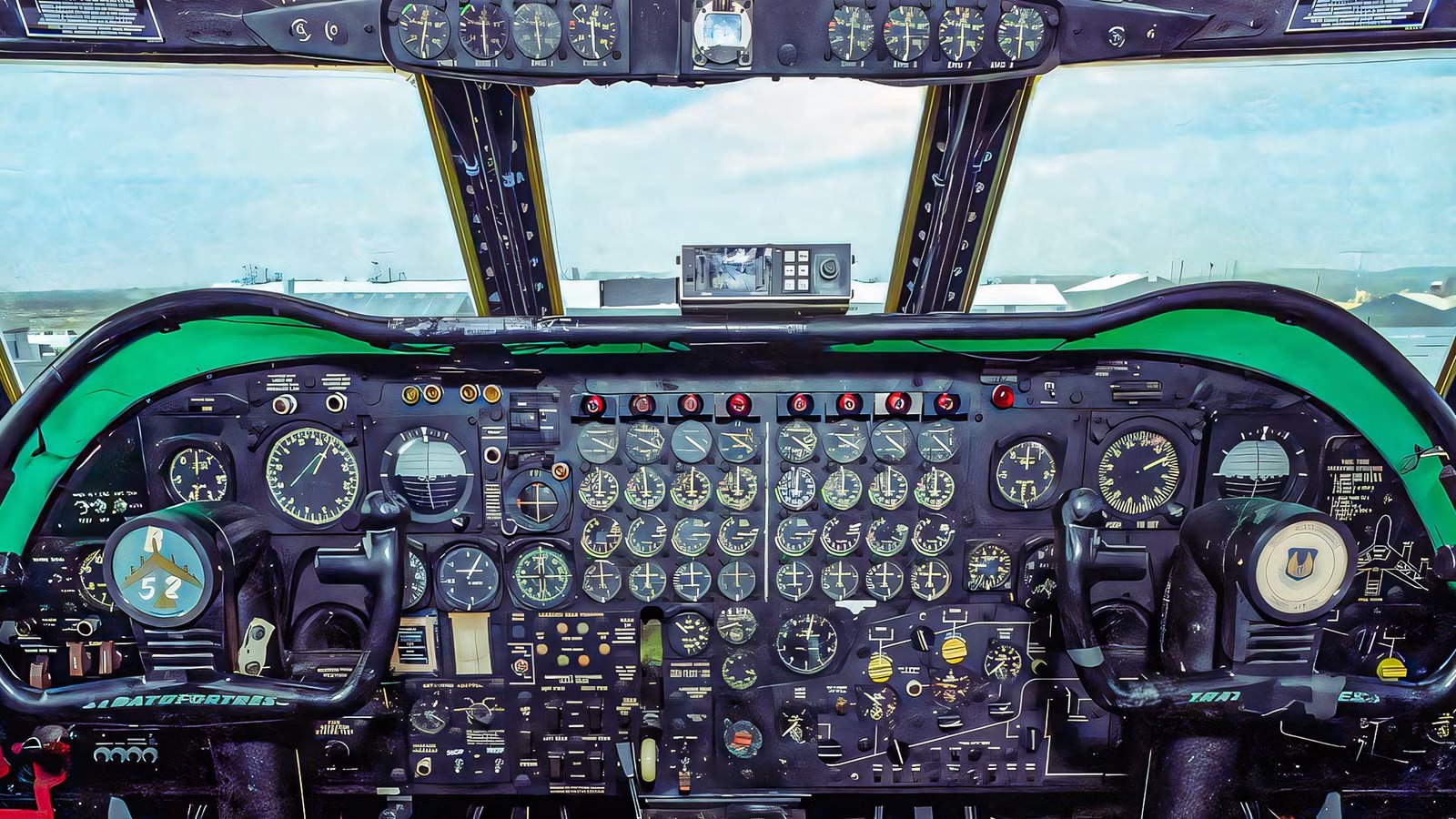
The  Boeing B-52 Stratofortress has been a pillar of United States (US) air power for more than seventy years. Over the course of its long—seemingly supernatural—service life, the aircraft has evolved from a dedicated nuclear strike bomber, occupying the third leg of the nuclear triad, to one primarily employed as a platform for conventional strike missions.
The transition from nuclear to primarily conventional strike missions occurred during the Vietnam War. Since that time, the US Air Force (USAF) has continually maintained and modernized its B-52 fleet to ensure it remains mission capable both structurally and technologically.
Aside from preserving its nuclear capability, the primary driver behind the Stratofortress’s continual enhancement is its ability to deliver large, highly destructive payloads capable of saturating and reducing a targeted area to a smoldering pile of rubble and twisted metal. This conventional capability is one that no other aircraft in the USAF arsenal possesses and is the reason this bomber will likely continue to fly for decades to come.
From Strategic To Tactical Bombing: The Evolution Of The B-52s Mission Focus

By the conclusion of the Second World War, US military planners focused their gaze firmly upon the Soviet Union as mutual distrust brewed between the former allies. The development of nuclear weapons by the Soviets and an increasingly capable and expanding fleet of strategic bombers placed increasing emphasis on nuclear counterstrike capability.
With the first flight of the B-52A on August 5, 1954, the aircraft and the fleet that would follow would fit squarely within US nuclear doctrine. The Stratofortress fleet would focus on strategic strike missions which would be aimed at eliminating Soviet nuclear missile sites, nuclear weapons production and storage sites, strategic bomber bases, air defense infrastructure and more.
To meet the need for a strategic nuclear strike, the commander of Strategic Air Command (SAC), General Curtis LeMay, initiated a rapid build-up of the command’s bomber force beginning in 1947. By 1955, SAC had a highly capable fleet of more than 2,000 Boeing B-47 Stratojets and nearly 750 Boeing B-52s. Regarding personnel, the organization rapidly grew from 262,609 in 1959 to 282,723 by 1962.
The shift from purely nuclear readiness to conventional tactical bombing occurred during the early years of the Vietnam War. The commander of ground operations (Gen William C. Westmoreland) requested of the Joint Chiefs of Staff that he be able to utilize the B-52 for strikes against North Vietnamese and Viet Cong bases. The logic was that the aircraft could effectively deliver a wide and even saturation of ordnance over an enemy area of operations.
The General’s request was given the green light—much to the chagrin of USAF planners—as Operation Arc Light raids were initiated; the B-52s would operate out of Guam, Thailand, and, in some cases, from Kadena Air Base in Okinawa, Japan. The operation, which ran from June 18, 1965, to August 15, 1973, would support US and allied ground forces or missions to interdict the infiltration of North Vietnamese soldiers and supplies making their way south.
According to the USAF, SAC launched 126,615 sorties over the course of Arc Light and, in sum, US aircraft dropped eight million tons of bombs during the air campaign in Southeast Asia. This effort alone cost about $200 billion, which accounted for roughly half of the funding spent on the war.
The USAF Maintains The Stratofortress Because It’s A Flying Arsenal

As was made abundantly clear in Vietnam, the B-52 has an incredible and diverse payload capacity, which has since been increased to 70,000 lb (31,751 kg). To accommodate such a vast ordnance load, the Stratofortress has a weapons bay measuring about 28 ft long and 6 ft wide (8.5 m × 1.8 m). Between its internal storage and wing-mounted pylons, the B-52 can carry nearly any tactical missile or gravity bomb in the US arsenal.
In its conventional bombing role, the B-52 can launch cruise missiles such as the AGM-158 JASSM, the AGM-86C Conventional Air-Launched Cruise Missile (CALCM) (nuclear-capable in other variants), and the AGM-158C Long Range Anti-Ship Missile (LRASM) for striking naval vessels. In terms of conventional bombs, the aircraft’s large bomb bay is capable of carrying 20 2,000 lb (907 kg) JDAMs or 30 1,000 lb (453 kg) JDAMs, in addition to naval mines.
The most recent reported use of the Stratofortress was during Operation Epic Fury over Iran. According to the Center for Strategic and International Studies, within the first 24 hours, US aircraft struck 1,000 targets; by day 10, the pace of daily strikes on Iranian military targets and key infrastructure increased to between 300 and 500 per day. An aspect of these initial strikes was the use of the B-52 in a standoff role; during this phase, the B-52 was utilized as a platform for stand-off munitions such as the 2,250-pound (1,020 kg) AGM-158 JASSM, which can be deployed from a range of 200 nautical miles (370.4 km).
This versatility provides US military planners with the ability not only to directly saturate a target area overhead, but also to hold critical infrastructure at risk from far beyond visual range with standoff weapons. This dual-use capability allows the aircraft to perform missions such as suppression of enemy air defenses and then expand operations through saturation bombing once airspace has largely been opened.
Modularity: A Key Feature Of The B-52’s Long Service Life

While the Stratofortress’s enormous fuselage can accommodate a wide array of ordnance, it also allows the bomber to be fitted with new equipment as it becomes available. Over the past seventy years, the B-52 fleet has evolved from an aircraft largely dependent on analog systems to one equipped with modern digital replacements, including updated communications infrastructure, mission computers, and enhanced networking and data-link hardware. Additionally, Boeing has been awarded a $2 billion contract by the USAF to continue the B-52 Commercial Engine Replacement Program.
This life-extension effort involves installing new Rolls-Royce F-130 commercial engines, along with other critical subsystem upgrades. The mission-critical work will be carried out at Boeing’s San Antonio modification facility in Texas. The new powerplants will improve the efficiency, range, and overall operational life of the B-52, helping ensure the aircraft remains airworthy into or beyond 2050.
In addition to the installation of the F-130 engines, the B-52 fleet will receive a modern Active Electronically Scanned Array (AESA) radar system developed by Raytheon Technologies. Once operational, this new system will provide the Stratofortress fleet with enhanced all-weather navigation and targeting capabilities. Last year, a B-52 successfully completed a ferry flight from Boeing’s San Antonio facility to Edwards Air Force Base in California for the purpose of testing the new radar. Fleet-wide deployment of the system is expected to occur between 2028 and the early 2030s.
The new engines and radar are a key aspect of the B-52 Modernization Program. Upon completion, the remaining 76 aircraft in the B-52 fleet will receive the new designation of B-52J. In addition to the new engines and AESA radar, the USAF has made public that these enhanced bombers will be equipped with new “crew compartments, conventional and nuclear communication systems, avionics, weapons, and other capabilities which will enhance the B-52’s ability to carry out the full spectrum of combatant command and USSTRATCOM-directed missions.”
It Is Very Likely That The B-52 Will Still Be Flying By 2060

The move from a nuclear strategy to a primarily conventional strike utilization of the B-52 reflects the greatly diminished possibility of a massive nuclear war. While its nuclear mission largely ended, the aircraft found great utility in support of ground operations, a utility that has carried over to today, as evidenced by its effective use during Epic Fury.
With its ability to carry every type of conventional ordnance in the US arsenal, combined with its great range, particularly when paired with aerial refueling tankers, the Stratofortress can perform saturation or precision strikes at any point on the globe. This capability is precisely why US military planners and lawmakers have gone to great lengths to keep it flight-worthy. And with its ongoing modernization, the aircraft will likely continue to fly over combat zones for another thirty years.