dailynewsnblog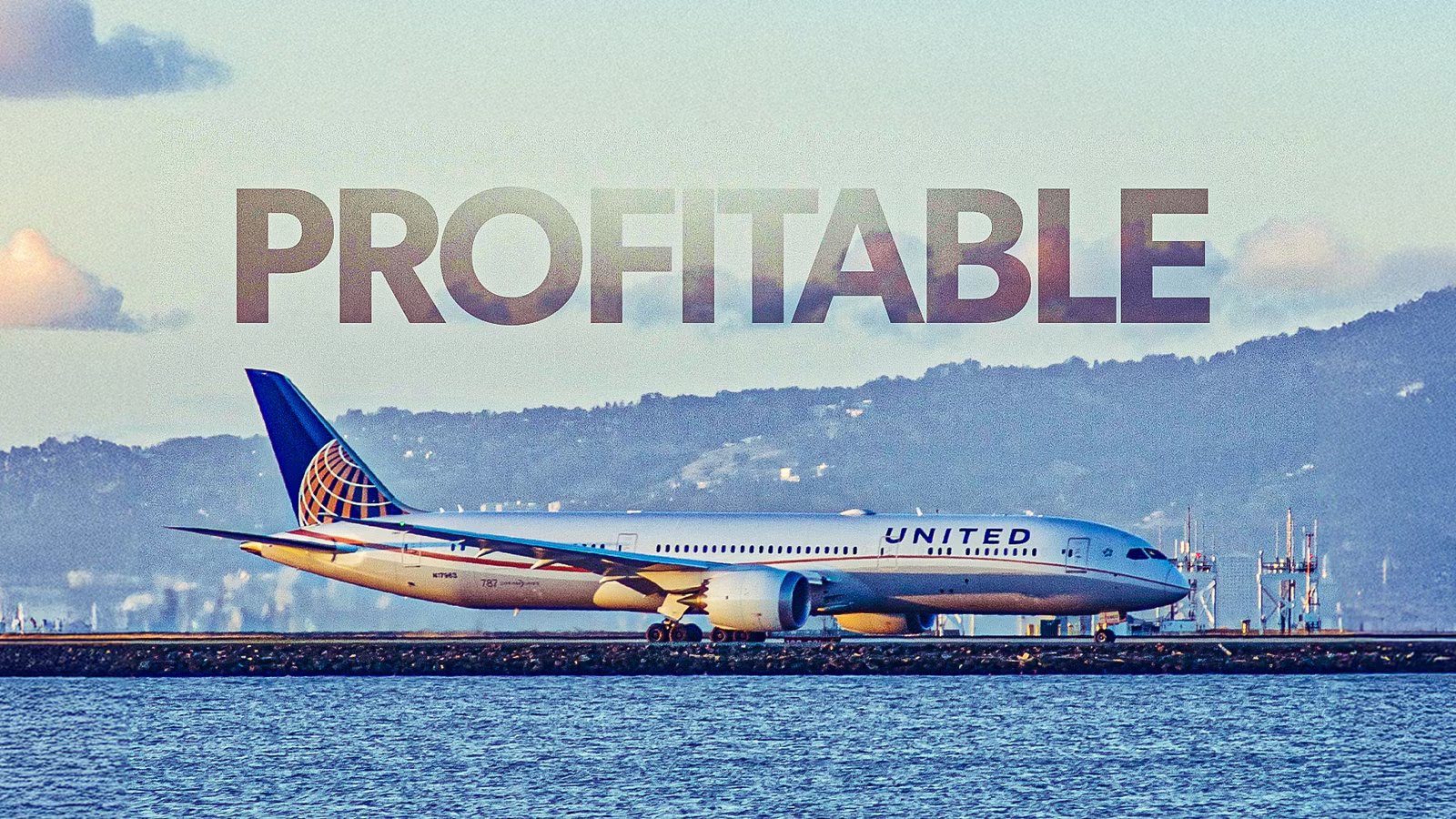
For some time now, industry rumors suggest  United Airlines is about to launch new ultra-long-haul services between
  San Francisco International Airport (SFO) and India specifically,
  Delhi Indira Gandhi International Airport (DEL) and Bengaluru Airport (BLR). These incredibly long routes would cover a distance of 7,706 miles (12,401 km) and 8,701 miles (14,003 km), respectively. For comparison, Qantas’ notoriously long flight between Perth (PER) and London Heathrow (LHR) is only 300 miles (483 km) longer than the latter.
If these new flights were to become a reality, they would complement the existing daily service between San Francisco and Delhi operated by fellow  Star Alliance member
  Air India. This flight currently has a stopover in Kolkata (CCU) due to operational restrictions following several airspace closures. Moreover, the Indian flag carrier also served San Francisco from both
  Mumbai Airport (BOM) and Bengaluru before the routes were suspended by the airline in February this year due to aircraft availability.
Why India Is Such An Attractive Market For United Airlines

As of writing, United Airlines operates one route between the United States and India. This route between  Newark Liberty International Airport (EWR) and Delhi, covering 7,324 miles (11,786 km), has been operating since 2005, with a brief suspension during the pandemic. Moreover, the airline also operated a route between
  Chicago O’Hare International Airport (ORD) and Delhi for a short period of time between 2020 and 2023.
Origin | Destination | Distance |
|---|---|---|
Newark | Delhi | 7,324 miles (11,786 km) |
San Francisco | Delhi | 7,706 miles (12,401 km) |
San Francisco | Bengaluru | 8,701 miles (14,003 km) |
Chicago O’Hare | Delhi | 7,484 miles (12,044 km) |
Note: the great circle distances in the table all cross closed airspace. | ||
The United States and India maintain strong political, economic, and cultural relations, with over 5 million residents of Indian descent living in the country. The largest Indian diaspora anywhere in the world. Unsurprisingly, India has long been an interesting market for US airlines, but the large distance between the two countries has made direct flights challenging.
Older generation aircraft have historically limited the economic and operational feasibility of direct flights between the two countries. However, new highly efficient twin-jets such as the Airbus A350 and Boeing 787 combined with a fast-growing Indian economy and consequent demand growth, have been changing this reality in recent years. Despite this, routes spanning such large distances remain operationally fragile, as proven by recent geopolitical tensions in the region and following capacity cuts.
The Economics Of Ultra-Long Haul Flights

This strong premium demand is also of the utmost importance to the success of an ultra-long-haul flight, as the economics behind such flights are harsh. Because fuel weight increases the amount of fuel burned, a 19-hour flight burns an exponentially higher volume of fuel than two shorter flights combined. As a result, European competitors such as British Airways, Air France, and Turkish Airlines, offering connecting itineraries via their respective hubs, have a competitive edge over most direct flights from a cost perspective.
Catch what other flight trackers miss
Emergency squawks, holds, NOTAMs — live signals, no signup.
Open tracker
Catch what other flight trackers miss
Emergency squawks, holds, NOTAMs — live signals, no signup.
Open tracker
Beyond fuel costs, these long flights also increase crew costs because they require more crew and longer rest periods compared to shorter flights. Furthermore, the capital costs per flight are significantly higher for long flights, regardless of whether a plane is leased or owned. Often, the newest planes are used for long routes, as they are the most fuel-efficient and have the longest range. But since these flights are so long, there are fewer flights to divide the leasing and/or depreciation costs over, thus increasing the cost per flight.
However, when demand for a direct flight is high enough across these distances, revenue can outweigh costs and quickly turn such a route into a profit engine. Additionally, high premium demand reduces the number of economy seats, decreasing total weight and allowing for longer ranges and better overall margins on these long, expensive routes. This is clearly illustrated by Singapore Airlines’ premium-only flights between Singapore, and New York-JFK, and Qantas’ flights between Perth and Europe.
Why Delhi And Bengaluru Might Be Worthwhile

The arguments for United to choose Delhi over any other Indian city for a flight from San Francisco are strong. Delhi is India’s largest city, and its airport is the busiest in the country. In addition, the airport is the largest hub for Star Alliance partner Air India, meaning a vast number of connecting Origin & Destinations (O&Ds) are available. Perhaps the strongest argument for Delhi, however, is the fact that it is geographically closer than most other Indian cities, making it operationally less demanding.
While Delhi is a strong option, the real opportunity for the Chicago-based carrier might be Bengaluru in Southern India. In the 12 months to October 2025, booking data show that 156,000 round-trip passengers flew between the two cities, with an average fare of $1,600 one-way across all cabin classes and airlines, signaling very strong yield potential. Only around 25% of these passengers used the direct Air India service.
The explanation for the strong demand and high yields between San Francisco and Bengaluru lies in the crucial role both cities play in the global technology sector. The cities are strongly connected by developments in Artificial Intelligence (AI), deep tech, and Venture Capital (VC) flows, generating significant business travel demand and predictability through corporate contracts.
Moreover, the Indian-American tech community is a lucrative VFR demographic as they often have above-average spending power. This creates strong demand for premium cabins, which United is strategically targeting by introducing its new “Elevated” Polaris cabin, featuring a massive 64 business class seats on the Boeing 787-9.
What American And Delta Are Doing In India

Nevertheless, United is not alone in seeing opportunity in India, as  American Airlines and
  Delta Air Lines are not sitting still either. In 2021, American resumed flights to India for the first time in nine years by introducing a route between JFK and Delhi. The airline currently serves the route on a daily basis using a 285-seat Boeing 787-9 Dreamliner.
At the time of the route’s commencement, American was also planning a route between  Seattle-Tacoma International Airport (SEA) and Bengaluru, stating that “with its Qatar Airways partnership and previously announced Seattle to Bengaluru, India, route, American will offer customers more ways to fly between the United States and India than any other airline partnership.” However, by December 2023, the route was postponed indefinitely, also as a result of airspace closures following geopolitical conflict, further highlighting how fragile ultra-long-haul operations are.
While American and United have already established their presence in the Indian market, Delta is moving more slowly. In the past, Delta served India in various ways, including direct flights between JFK and Mumbai until 2020 and flights with a stop in Europe. For a short period between 2005 and 2006, the airline even connected Chennai (MAA) with a stop in  Paris Charles De Gaulle Airport (CDG), using a Boeing 767.
Today, such flights no longer exist, and Delta relies on its joint-venture partners Air France, KLM, and Virgin Atlantic to connect US passengers to India via their hubs. Nonetheless, these SkyTeam airlines signed a memorandum of understanding (MoU) with India’s largest airline, IndiGo, for further collaboration and code-sharing. As part of this, Delta also announced it was planning to launch a direct flight between  Hartsfield-Jackson Atlanta International Airport (ATL) and Delhi, a destination the airline has quite surprisingly never served before.
To date, no official launch date for the route has been announced, and airspace closures may also be hindering its commencement. Despite this, it appears to be only a matter of time before the route is officially confirmed, as India’s growth is not expected to slow down anytime soon. Commenting on the new agreement with IndiGo and  SkyTeam partners at the time, Delta CEO Ed Bastian said:
“This agreement is another example of our commitment to making travel more connected, more inclusive and more accessible. Combining our strengths with those of IndiGo, Air France-KLM, and Virgin Atlantic, will enable us to offer unparalleled connectivity and convenience, ensuring that our customers enjoy the highest standards of service and reliability across the globe. We look forward to restarting Delta’s direct service from the U.S. to India in the near future.”
Beyond The Big Three

Besides the big three US airlines, capacity expansion between the United States and India will likely also come from Air India and, in the future, potentially even  IndiGo. Especially for Air India, it appears to be a matter of time, and it is safe to assume that when airspace closures come to an end, fuel prices stabilize, and new aircraft enter the fleet, the carrier will start to grow its US network again.
India’s largest airline, IndiGo, might also eventually enter the US-India market, as the airline, which has recently started its international expansion, has a massive 60 Airbus A350-900s on order. These aircraft are set to enter the carrier’s fleet from 2027. However, it would not be a total surprise for the airline to overlook the United States at first, as IndiGo is a low-cost airline and might not have (or want to have) the ability to capture the premium demand needed for the ultra-long-haul flights.
When looking at other US airlines outside the big three,  Alaska Airlines appears to be the only airline potentially launching a connection to India. As the airline is shifting to hub-based operations from Seattle and has recently introduced its first long-haul services, it is not unthinkable that the airline will jump on the opportunity once identified by American.