dailynewsnblog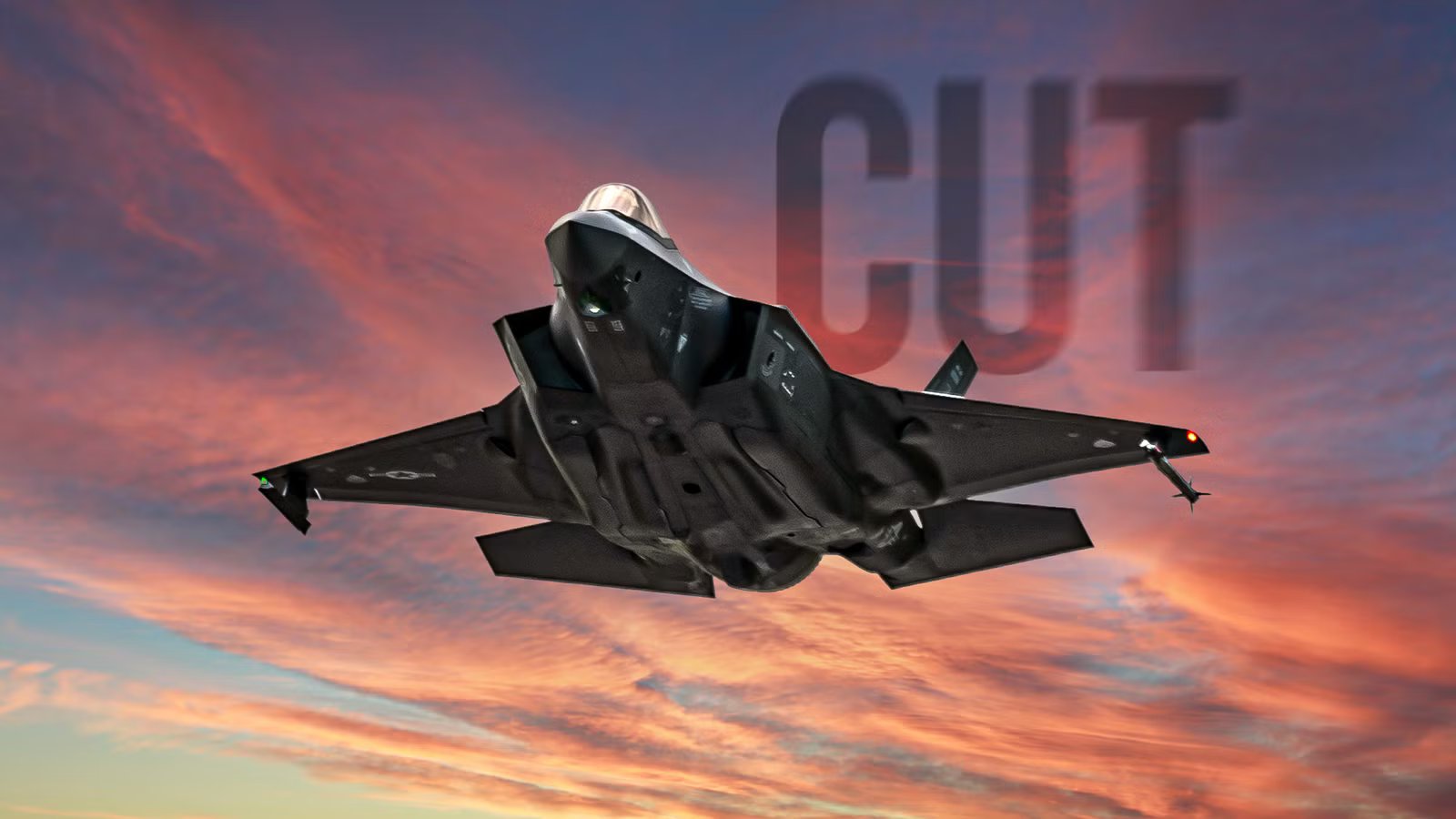
Despite being the latest and greatest fighter jet in the US Air Force, the Lockheed Martin F-35 Lightning II has encountered significant headwinds with the latest batch of upgrades. Difficulties with the Technical Refresh 3 Block Four modernization have led the USAF to slash its order this year by half. The Department of Defense released a damning report showing that virtually all the technology included in the new upgrades was unusable in 2025 and provided no additional combat capability. In fact, the software was detrimental and contributed to degraded mission readiness. Supply chain problems have seen new F-35sdelivered without major hardware, such as the total absence of radar sensors.
The Air Force currently expects that their fleet will not achieve the full capability promised by TR-3 Block Four until 2031. This chronic problem has led the USAF to declare that it will not continue buying aircraft incapable of full combat missions until the technical issues are resolved. At the same time, the US Navy has awarded Lockheed Martin a nearly $1 billion contract to develop electronic warfare systems and other equipment that are likely to remedy many of these issues for the fleet of F-35B short-takeoff-and-landing (STOL) jets and F-35C carrier-capable variants.
A House Divided: One Platform For Many Missions

While the Air Force chose a ‘pause-and-fix’ delivery strategy, the Navy doubled down on funding Lockheed Martin. The divergence between the Air Force and the Navy regarding the F-35 program boils down to different mission requirements, distinct structural bottlenecks, and how each service chose to manage the delays of the TR-3 software. At the same time, the US Air Force is funneling more funding into the Next Generation Air Dominance program for the Boeing F-47. Yet the Navy’s sixth-generation F-XX program has effectively been put on ice to allow the USAF to move forward.
With the Air Force’s existing F-35A mission-capable rates dropping to roughly 51.5%, the service simply refused to accept more buggy, incomplete aircraft when half of its current fleet is already sitting on the tarmac. Unlike the Air Force, which can rely on legacy F-15s and F-16s, the Navy is facing an acute shortage of carrier-capable stealth fighters. By keeping their funding predictable, the Navy is preventing Lockheed’s supply chain from fracturing, ensuring that when the TR-3 software is finally stabilized, the production lines for the carrier-variant F-35C are ready to ramp up immediately.
The Navy, Marines, and international allies finalized a massive $24.3 billion block contract, Lots 18 and 19, with Lockheed Martin. The Navy acts as a major contracting vehicle for the entire joint force. The Navy recently authorized a $250 million contract modification to Lockheed to specifically overhaul and maintain the Autonomic Logistics Information System and the Operational Data Integrated Network. Because these systems manage logistics for the Air Force, Marines, and foreign allies alike, the Navy had to inject money to keep the entire global program’s software architecture from collapsing.
Falling Dominoes At The Joint Program Office

The TR-3 problem has already triggered a huge geopolitical crisis for the Air Forces around the world that operate the F-35. With 20 nations on the list, and potentially more joining any day, problems with software extend to jets in every corner of the world. While there are still thousands of orders for the F-35 on the books, and it’s expected that the global fleet will reach 3,000 strong before the assembly line shuts down, some potential customers have been driven away and others have reduced their orders following problems with the jet and concerns over future reliability.
Canada is currently hedging its bets and may significantly cut its total from 88 down to just two or three dozen. The United Kingdom was hoping to order more F-35B jump jets, but that is increasingly unlikely. While it did order a small number of F-35A land-based jets, the probability of future orders looks dim. Similarly, Portugal has opted out, and Spain is unlikely to purchase any models to replace its AV-8B Harrier jump jets or land-based fighters.
Switzerland has also significantly reduced the number of aircraft it will procure, and instead many European air forces are now buying more of the Tranche 5 Eurofighter Typhoon and investing in sixth-generation programs such as the Future Combat Air System, the Global Combat Air Program, and Tempest. These allied operators around the world have been similarly frustrated by the impact the TR-3 program had on their fleets and on the delivery of their backlogs.
Catch what other flight trackers miss
Emergency squawks, holds, NOTAMs — live signals, no signup.
Open tracker
Catch what other flight trackers miss
Emergency squawks, holds, NOTAMs — live signals, no signup.
Open tracker
Trickle Down Effect: America’s Allies Pay The Price

The intersection of the TR-3 software crisis and the ‘kill switch’ controversy has escalated from a complex technical glitch into a full-scale geopolitical crisis, crippling the defense sovereignty of US allies and directly choking the supply of F-16 fighters desperately needed on the front lines in Ukraine. The TR-3 upgrade was designed to give the F-35 a massively upgraded ‘brain,’ but instead, it became a software nightmare. When the Pentagon halted aircraft acceptances due to unstable coding, over 100 jets sat frozen on the tarmac.
The most critical real-world casualty of this software logjam is the delay in fourth-generation fighter divestment, specifically F-16 transfers to Ukraine. NATO’s ‘F-16 Coalition’ was built on a simple domino theory: As soon as an ally receives a new F-35 from Lockheed Martin, they retire an old F-16 and ship it to Kyiv. Because of TR-3, the domino line completely collapsed.
Denmark, a frontline coordinator for Ukrainian pilot training, managed to send an early batch of F-16s to Ukraine but has been forced to meticulously balance its fleet. The delay in getting fully combat-capable TR-3 F-35s meant Copenhagen had to keep its remaining legacy F-16s operational far longer than planned to maintain its own NATO air policing commitments.
Belgium’s situation has turned into a major diplomatic bottleneck. Under the current revised military timelines, the full delivery of F-16s from Belgium to Ukraine is painfully stretched out, with the final aircraft expected to be delayed until 2029. Belgium pledged a significant fleet of 30 F-16s to Ukraine. However, Belgian military leadership explicitly announced that the transfer timeline has stalled. Because Belgium’s first replacement F-35s were severely delayed by the software freeze, the Belgian Air Component refused to strip its own airfields bare.

The F-35’s Safety Record Nobody Talks About When Comparing It To The F-16
How safe is the American stealth fighter?
Back On Track: Fixing Fifth Generation Fighters

To pull the $2 trillion F-35 Lightning II program out of its tailspin, the Joint Program Office, Lockheed Martin, and global operators are beginning a recovery plan. This recovery roadmap directly intertwines with the US Navy and Marine Corps’ urgent fleet-saving measures, creating a distinct path forward for both the US and international operators. The program has officially transitioned from development to the fielded retrofit phase. Depots are upgrading existing TR-2 airframes to the TR-3 configuration while jets with stable, truncated TR-3 software are delivered for training purposes.
The Pentagon instituted a strict accountability mechanism, withholding up to $5 million per aircraft delivery, as Reuters covered. These funds are incrementally released only as Lockheed meets specific stability and combat-readiness milestones, forcing the contractor to fix the software under immense financial pressure. So, while jets are being delivered minus radar to serve only as training platforms, this still helps clear the backlog and free up production resources to perform retrofits and implement fixes on the next airframes rolling off the line.
The Navy realized that if Lockheed Martin’s production line collapsed under the weight of Air Force cuts, the Navy’s carrier-variant would face catastrophic cost spikes. To prevent this, the Navy stepped in with targeted contract injections, like ODIN. By funding the overarching digital architecture, the Navy is effectively saving its own fleet’s supply chain while simultaneously fixing the very system that allies rely on to manage their spare parts.
Nearly $1 Billion & 6 Years: The New F-35 System Upgrade That Will Reshape The World’s Most Advanced Fighter
The Navy aims to get its jets back on track.
The Marines Rally A Floundering Fleet

The US Marines insulated their F-35Bs from the TR-3 disaster by freezing their active-deployment jets on the older, more stable TR-2 software. The Marines are providing the operational blueprint for the rest of the world. By refining the depot-level upgrade process in North Carolina, they are creating the exact assembly-line framework that European and Asian allies will use to pull their own fleets back into fighting shape.
These efforts, combined with those of the US Air Force and Navy, have allowed Lockheed Martin to clear its massive logjam, delivering a record 191 jets in 2025 to unfreeze the international pilot pipeline. As the program rolls out retrofits, the combat-ready TR-3-patched jets will bring the active fleet to full combat capability. The USMC Fleet Readiness Center East has become one of the major hubs of the global retrofit push.
The Pentagon Declared The F-35’s Most Critical Upgrade ‘Predominantly Unusable’
The problem with the Joint Strike Fighter.
Fixing Block Four: The Road Map To A New Normal

The Air Force intends for the Block Four F-35 to act as a manned ‘quarterback of the sky,’ commanding a fleet of autonomous, uncrewed companion drones called Collaborative Combat Aircraft. TR-3 acts as a high-performance motherboard, integrating an Integrated Core Processor. The processing power is so immense that early software iterations suffered from memory-leak code crashes, causing the pilot’s cockpit displays, synthetic aperture radar, and targeting pods to completely freeze or spontaneously reboot.
The Air Force’s reduction to 24 jets is a temporary budgetary buffer. Total projected costs to develop, buy, operate, and sustain the planned 2,470 F-35 fleet over its 77-year life cycle have officially crossed the $2 trillion mark. The GAO confirmed that Block Four costs have ballooned by more than $6 billion over original estimates, pushing development costs alone past $16.5 billion. To save the program, Congress and the F-35 JPO officially stripped the program apart and instituted a ‘Rebaseline and Descope’ strategy.
Block Four is at least five to six years behind TR-3, which is transforming the F-35 from a standard stealth jet into a software-defined electronic attack powerhouse. The Pentagon slashed the immediate scope of Block Four from over 66 capabilities down to a core group of 31 essential upgrades. The Pentagon scaled back the initial roll-out, prioritizing stable tracking and jamming algorithms while delaying hyperspectral electronic attack code until processing is optimized.
Why The Royal Air Force Can’t Actually Afford To Fill Its New Aircraft Carriers With F-35Bs
A snowball of procurement problems for the RAF.
Bottom Line: No Substitute For Combat Readiness

Full CCA autonomous control has been descoped out of the immediate Block Four block. Every upgrade mentioned above, the supercomputer, the massive EW sensors, and the upcoming AN/APG-85 AESA Radar, draws an unprecedented amount of electrical power and generates a staggering amount of heat. The Pratt & Whitney Engine Core Upgrade and the Honeywell Power and Thermal Management System work as a two-part team to solve the F-35’s cooling crisis by 2029.
Once the engine and cooling upgrades are fully unified and flight-certified, for Honeywell in 2028 and P&W in 2029, the F-35 will finally have the physical power infrastructure to support the full Block Four. The F-35 will initially receive basic data-sharing hooks, pushing full manned-unmanned teaming capabilities out past the 2030 threshold. The Air Force cannot safely resume its standard order of 48+ jets per year until the platform achieves stable, full-rate combat certification.