dailynewsnblog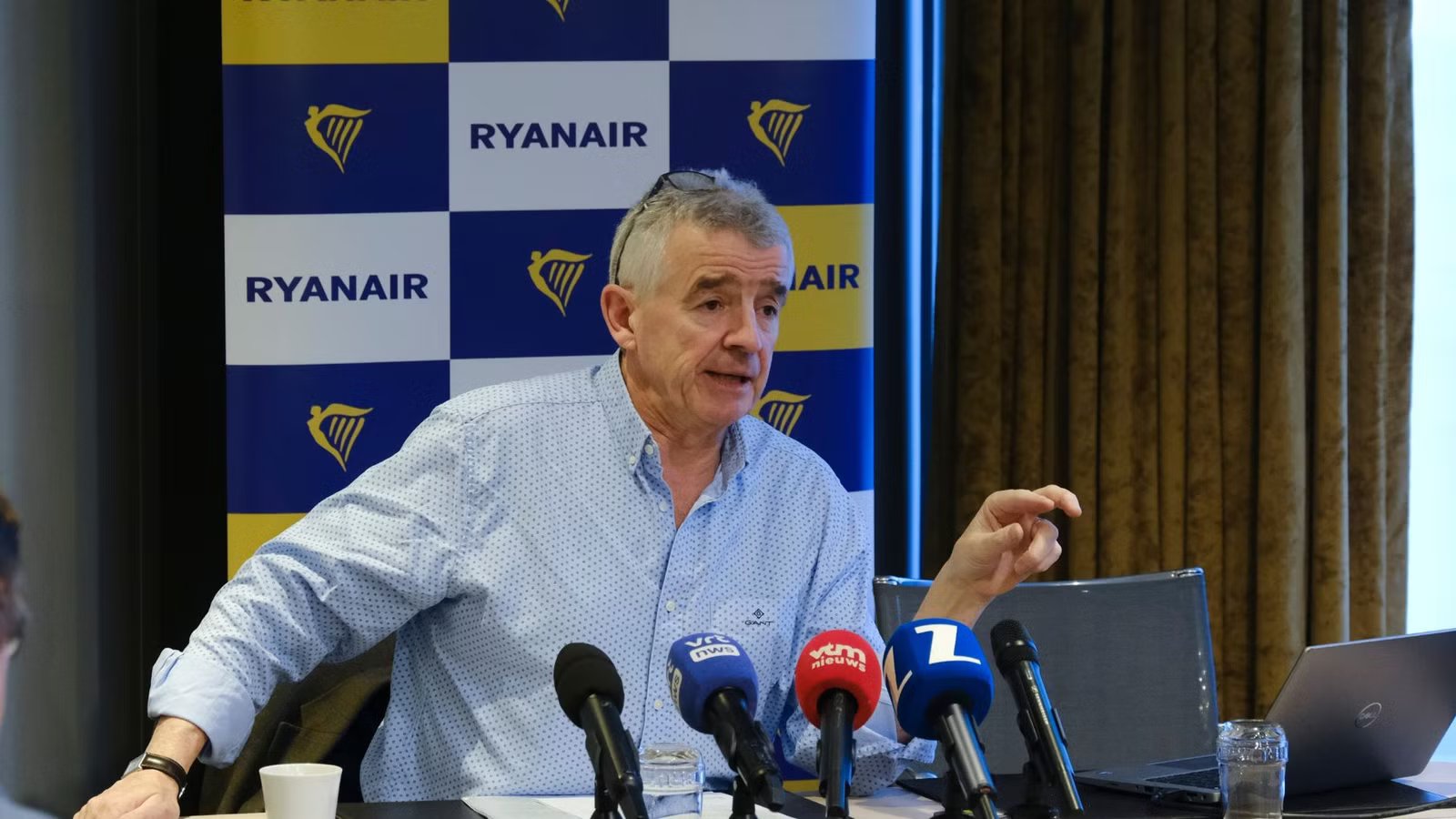
Michael O’Leary will remain at the helm of the Ryanair Group until at least April 2032 after the airline confirmed a new long-term contract extension that could ultimately be worth more than €150 million ($172 million) in performance-linked share options. The agreement, reported by the BBC, reinforces his position as one of the longest-serving chief executives in modern European aviation, with his tenure now stretching close to three decades since he took control of the then-struggling Irish carrier in 1994. By the end of the new deal, O’Leary will have led the Ryanair Group for nearly four decades.
The extension comes at a time when the Ryanair Group continues to dominate European short-haul travel, reporting record financial results and sustained passenger growth. The airline recently posted a full-year post-tax profit of €2.26 billion ($2.59 billion), up around 40% year-on-year, while carrying approximately 208 million passengers across its expanding network. Against this backdrop, the board and major shareholders have backed the extension, linking executive rewards to ambitious long-term profit and share price targets designed to align leadership incentives with sustained growth.
An Extension For Ryanair Group Leadership Stability

Ryanair has grown into Europe’s largest airline by passenger numbers. According to the airline’s website, the group operates a fleet of almost 650 aircraft connecting over 220 airports in 36 countries, completing approximately 3,800 flights per day conducted by a team of 30,000 aviation professionals.
The Ryanair Group has consistently expanded its dominance in the low-cost carrier market, with annual passenger volumes rising from under 20 million in the late 1990s to more than 200 million today. Management forecasts suggest that, supported by Boeing 737 MAX deliveries and network expansion, the group could exceed 300 million passengers annually by the early 2030s, further widening its lead over competitors such as easyJet and Wizz Air.
Despite its scale, Ryanair’s strategy remains tightly focused on cost leadership, ancillary revenue generation, and high aircraft utilization rates. The airline typically achieves load factors of 94% year-round, peaking as high as 95% to 96% during prime summer months, and continues to post some of the strongest margins in European aviation, driven by fuel hedging strategies and disciplined capacity management. The deal’s attractive figure is based on achieving several targets, highlighted next. According to the BBC, in a statement, the airline said:
“Achievement of these very ambitious targets would create substantial additional value for all Ryanair shareholders.”
€150 Million Incentive Structure

The new Ryanair Group remuneration package includes share options covering around 10 million shares, struck at a price of approximately €26.70 ($30.71), but only exercisable if strict performance thresholds are met. These include either achieving €4 billion ($4.6 billion) in annual post-tax profit or sustaining a share price above €42 ($48.30) for 28 consecutive trading days before 2032.
This builds on previous incentive schemes, including one expected to deliver O’Leary around €100 million ($115 million) from an earlier agreement expiring in 2028. Combined, the potential total value of his incentive packages across successive contracts could exceed €250 million ($287.5 million), depending on Ryanair Group performance and market conditions.
Ryanair argues that the structure ensures alignment between executive compensation and shareholder returns, particularly as the group continues to generate record earnings. With FY26 results showing total revenues exceeding €15.54 billion ($17.87 billion) and strong ancillary income approaching €4.99 billion ($5.74 billion) annually, the airline maintains that long-term incentives encourage sustained profitability rather than short-term earnings management.
The Ryanair Paradox: Passengers Say They Hate The Airline, But Keep Booking It Anyway
Ryanair’s no-frills offering may be easy to dislike, but its value for money is hard to ignore.
Ryanair Group Growth Strategy

The Ryanair Group is currently pursuing an aggressive expansion strategy after recently announcing all 620 737s the airline operates are owned outright, essentially making the carrier ‘debt-free’. The intake of its initial 210 Boeing 737 MAX 8-200 “Gamechanger” aircraft is almost complete. The airline is also heavily relying on a landmark firm order for 150 737 MAX 10 jets (with options for an additional 150) to support its capacity growth through the next decade. Delivery delays have temporarily constrained expansion, but the group still expects continued traffic growth in the mid-single digits annually as fleet constraints ease.
Management has repeatedly stated that Ryanair aims to grow toward 300 million annual passengers by around 2034, supported by new bases in lower-cost European markets and selective expansion into North Africa. This growth is underpinned by a strong balance sheet, with the group benefiting from high cash generation and one of the lowest cost bases in the industry.
Simple Flying Quiz
Think you really know Ryanair?
Answer 10 questions and put your knowledge to the test
Think you really know Ryanair?
Answer 10 questions and put your knowledge to the test
Easy (15s)Medium (10s)Hard (5s)
O’Leary’s continued leadership also has wider implications for the European aviation sector, where consolidation pressures and rising operational costs are reshaping competition. Ryanair Group executives have suggested that capacity constraints and higher fuel costs could lead to weaker competitors exiting the market, further strengthening its market share in short-haul European travel over the coming decade.