dailynewsnblog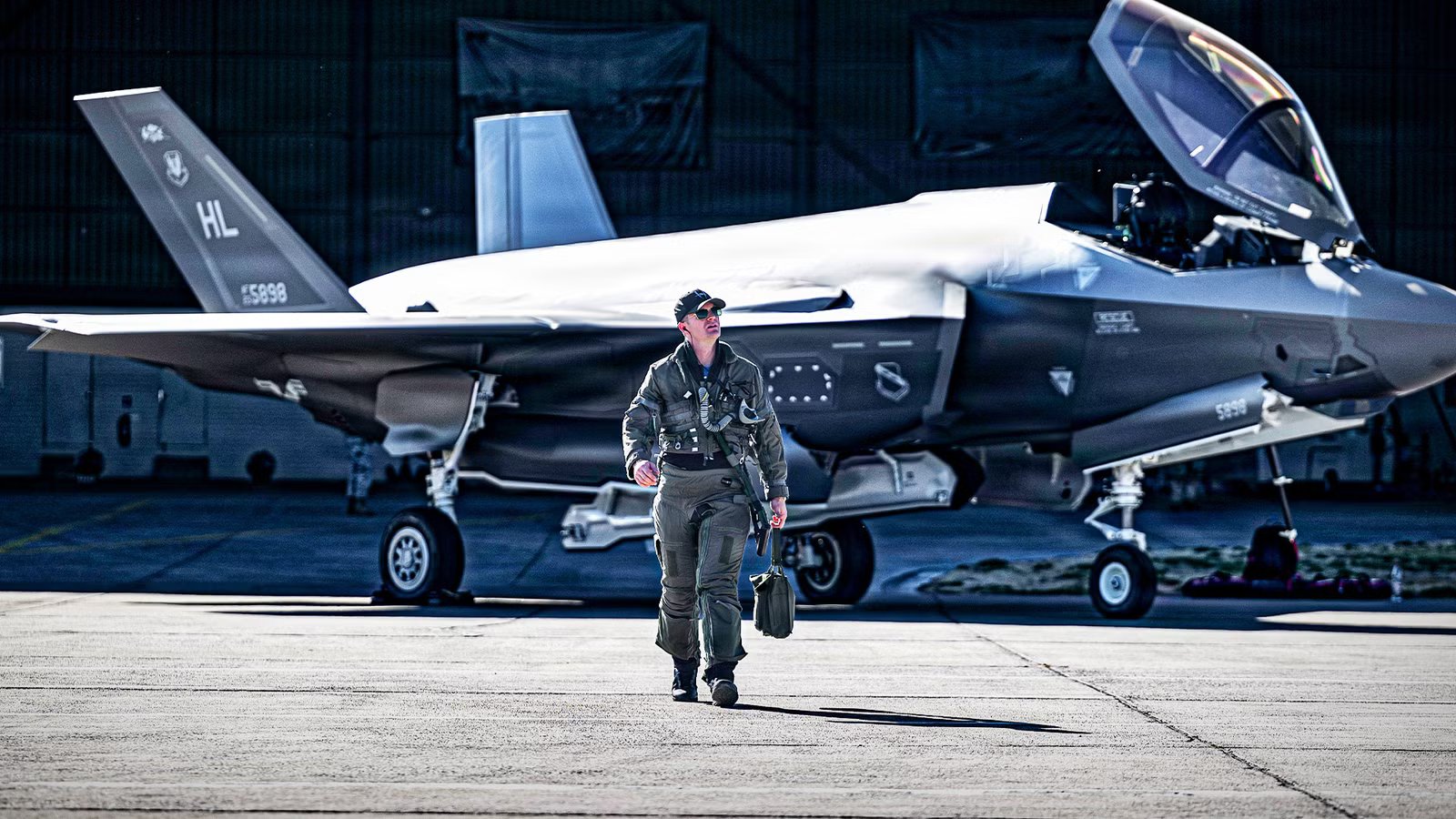
While military officials, world leaders, and armchair generals are all talking about modernizing military air power through autonomy and stealth, the fact is that combat readiness levels are suffering due to a shortage of pilots. The service continues to fall short of recruiting and retention goals, even though it is offering a record $50,000 per year to pilots flying the most in-demand platforms, for a maximum of around $600,000 over the course of their career.
The economics of the aviation industry are simply working against the USAF, with top-earning people bringing home twice as much as senior Air Force pilots, and then some. The USAF is pursuing multiple means of resolving its issue by supplementing the fleet with more advanced drones and streamlining training pipelines, but these efforts take years to fully mature.
For years, a vicious cycle has been eroding force readiness levels at both ends of the spectrum. It consistently falls short of producing 1,500 new pilots per year, and yet the aviators that do reach operational squadrons are slow to fully integrate due to a lack of senior pilots as well. This leaves the USAF roughly 1,000 pilots short of its full force goals every year, and 1,000 of those billets are crucially slated for fighter jets.
Can’t Catch ‘Em Coming or Going: The Air Force’s Pilot Crisis

The US Air Force has a 25% vacancy rate across virtually all combat squadrons due to the current shortfall in retention and recruitment, according to the Mitchell Institute. A large factor driving this significant staffing gap is the service’s inability to keep fighter pilots from quitting at the 10-year mark. Presently, only about 35% to 40% of pilots flying tactical airframes are choosing to stay in the USAF after a decade of service.
The Air Force training pipeline needs to deliver between 350 and 400 new fighter pilots every year to operational units in order to sustain its current force level. The service is currently missing the mark by about half. At the same time, pilots are also flying less because of chronic issues with maintenance delays and parts shortages on aircraft like the Lockheed Martin F-35 Lightning II and slow deliveries of the Boeing F-15EX Eagle II.
One of the major hurdles facing the US Air Force and its efforts to attract more aviators is the simple financial disparity between flying for Uncle Sam or cruising the friendly skies on a commercial air carrier. New Air Force pilots make competitive wages, but senior levels plateau quickly, with the highest pay coming out to around $200,000. That pales in comparison to the $400,000 or more that seasoned widebody captains at legacy air carriers like American, United, and Delta Air Lines can earn.
The Twin-Pronged Pilot Trap: No Way In, No Way To Stay

The paycheck that goes out to every officer in the US military is the same regardless of service branch or job. That looks good to a brand new O-1 second lieutenant in the US Air Force, earning $80,000 or more per year by comparison to his peers on the civilian side. After five to ten years, that difference starts to disappear, and in short order, commercial pilots begin earning compensation packages that are orders of magnitude greater.
Many join the Air Force to fly out of passion, but the knowledge of this fact deters many from making the life-changing commitment to join up. For those who choose the excitement and fulfillment of flying combat aircraft, if they do not perform at the highest level possible compared to their peers, they can find themselves behind a desk instead. Becoming a fighter or bomber pilot is one of the most competitive and exclusive roles in the entire American armed forces.
The vast majority of Air Force pilots will fly a transport or other support platform like a tanker or command and control plane. The ones that do manage to get selected to be a fighter or bomber aircrew will have to compete to stay in an operational unit after several years of service, with senior billets being far fewer. As the years go on and pilots spend less and less time on the stick, the Air Force makes itself less and less attractive to even the most enthusiastic flyers.
How Much Does Pilot Training Cost Before A US Airline First Officer Reaches The Flight Deck?
A closer look at the roadmap to the cockpit.
A Leaky Pipeline: USAF Recruitment And Retention

The US Air Force does offer a reasonably competitive salary to new officers, but more importantly, the service provides young aviators with millions of dollars worth of free training. In return, the USAF demands a decade of service in uniform. Although this was once a game-changing difference, commercial carriers are beginning to provide more financial incentives for trainees and develop more comprehensive in-house training programs that offset that burden. Airlines closing the gap in the barrier to entry is also hurting Air Force recruiting numbers.
Because cash can’t bridge the gap, the Air Force relies on the ‘romance of flying fighters,’ but the day-to-day reality ruins the pitch. A shortage of support staff means senior fighter pilots spend up to 60% of their day on administrative desk jobs. Because the Air Force is short on experienced flight leads and instructors, the senior fighter pilots who do stay are chronically overworked. They are forced to fly double the training missions to qualify rookies, leading to rapid burnout.
The other problem for seasoned Air Force pilots, that likely nags at the back of their minds every time they sit down to complete another stack of admin forms, is what they’re losing every day they stay. Airline career progression is strictly based on the date of hire. Every year a fighter pilot stays in the military past their 10-year mark is a year of lost seniority on an airline, costing them an estimated $2 million to $3 million in lifetime career earnings.
How Much Money Do US Marine Corps Fighter Pilots Earn In 2026?
A closer look at the pay that comes for flying with the Marines.
The Air Force Exodus: Greener Grass Over The Aerodrome

It may sound incomprehensible that an aviator who dedicated decades of their life to being in the cockpit of stealth fighter jets would give it all up to fly a ‘bus in the friendly skies.’ To understand why pilots leave the world’s most advanced stealth fighters and heavy bombers for a mundane commercial airliner, you have to look at the massive gap between the romanticized image of being a military aviator and the daily grind of the actual job.
Catch what other flight trackers miss
Emergency squawks, holds, NOTAMs — live signals, no signup.
Open tracker
Catch what other flight trackers miss
Emergency squawks, holds, NOTAMs — live signals, no signup.
Open tracker
In the civilian world, a pilot’s only job is to fly a plane. In the Air Force, flying is treated as a secondary part-time job. A captain or major flying an F-35 isn’t just a pilot. They are also assigned full-time ground jobs. They might be the squadron’s assistant director of operations, the security officer, the chief of scheduling, or the legal officer. A typical fighter pilot spends 70% to 80% of their week sitting at a computer building PowerPoint slides, tracking training, and writing performance reviews.
A front-line USAF fighter pilot is lucky to get 70 to 120 hours of flight time a year right now, according to the National Interest. A commercial airline pilot routinely flies 70 to 80 hours a month. On top of that, flying advanced aircraft requires an intense operational tempo that breaks families and personal lives, whereas airlines offer a predictable schedule and consistent duties. On a commercial airline, when a pilot lands, they grab their bag, walk off the plane, and go to the hotel. They have zero paperwork, zero subordinates to manage, and zero office hours.
How Military Pilot Salaries Compare Across The US, UK, Japan & China In 2026
How the pay checks stack up in the world’s top air forces.
Choosing The American Dream Over Supersonic Wings

The supreme irony of the modern Air Force is that commercial airline pilots actually get to fly significantly more than stealth fighter pilots. Because B-1s, F-22s, and B-52s are complex and aging, they require virtually constant maintenance. Due to severe shortages in spare parts and mechanics, these elite jets are frequently broken. While the thrill of pulling nine ‘Gs’ in an F-22 is unmatched, it doesn’t pay a mortgage or fund a retirement like airline seniority. Ultimately, elite pilots love the aircraft, but they grow to hate the lifestyle.
Every year, a pilot decides to stay in the Air Force past their initial 10-year commitment to fly an F-35. It is a year they lose at the top of an airline pay scale. The airlines offer a simple, stress-free transaction: show up, fly the plane, get paid triple the salary, and leave the office work behind. In fact, the tactical squadrons of the US Navy and Marine Corps are grappling with the same problems as the Air Force.
It could even be argued that the additional burden of more intensive expeditionary deployments to ships and smaller bases with less infrastructure adds greater hardship that makes both recruitment and retention more difficult. The Navy and the Marines also assign aviators to non-flying jobs, which means they spend even less time in the cockpit doing what they love. Many officers sign up for service to the nation first and passion for flying second, and many will tell you not to join for the money, but after years of the grind, the toll it takes is clearly shown in the force numbers seen today.

![5,100 Miles: Inside The USA’s 11 New Longest Nonstop Domestic Flights [List & Map]](https://dailynewsnblog.com/wp-content/uploads/2026/09/united-airlines-boeing-767-400er.jpg)