dailynewsnblog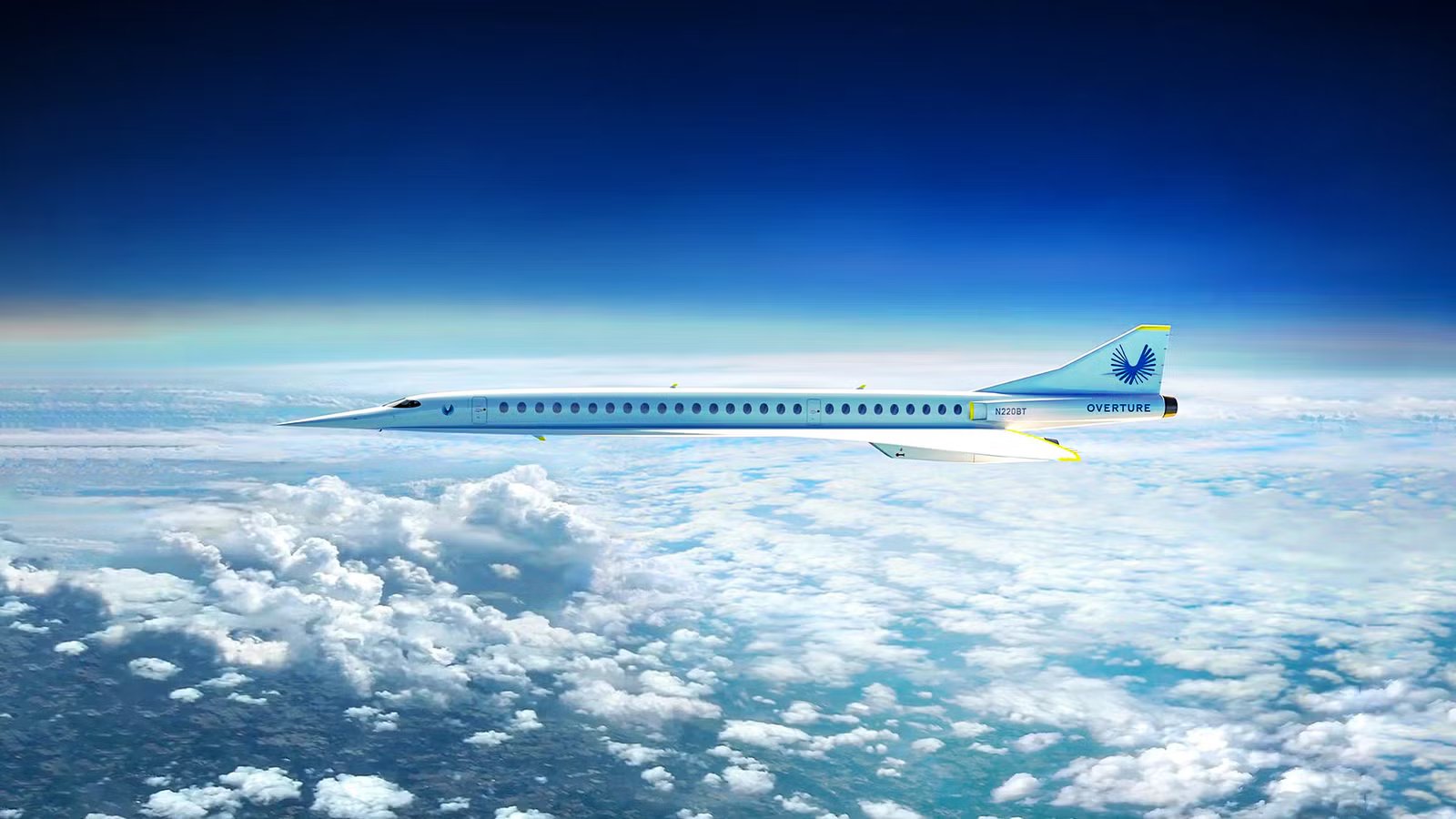
On June 6, 2025, President Donald Trump signed an executive order that undid one of the most influential factors in the commercial failure of the Concorde as a mainline supersonic transport when it debuted decades ago. Still, even with legal permission to conduct supersonic flights over land, no SST has been brought forward yet to succeed the historic jetliner. However, Boom Supersonic and its Overture SST airliner aim to change that.
The Overture technically should not require any exemption to the 1973 Federal Aviation ban on civil supersonic flying over populated areas. Boom is working closely with NASA, which is currently developing quiet supersonic engines and aerodynamic designs through the Lockheed Martin X-59. This collaborative program aims to produce a supersonic jetliner that makes a sound more akin to a mild thump than the notorious sonic boom that rattled windows and angered the public when the Concorde took flight.
Even if the Overture does achieve this technical triumph, it will have to contend with the brutal economics of civil aviation that played a greater role in the demise of the Concorde than any engineering or environmental concerns ever did. There are four major cost lines that the Overture will need to be successful: fuel consumption, maintenance costs, flyaway costs, and load factor profitability.
By The Numbers: Beating Concorde At The SST Game

Right off the bat, Boom Supersonic aims to cut down on ticket fares by more than half compared to the Concorde. Many Concorde flights were charters, with passenger airfares climbing as high as $66,000 after adjusting for inflation. But routine round-trip tickets averaged between $12,000 and $15,000. Boom is targeting $5,000 for a round-trip airfare on an average route while also carrying fewer flyers per mission.
The startup planemaker was planning to build a smaller, leaner plane that also flies more slowly to save on two of the highest operating costs that made the Concorde so expensive. The Overture is expected to weigh about 170,000 pounds (77,111 kg) and carry a maximum of 80 passengers, compared to the Concorde, which weighed over 400,000 pounds (181,437 kg) and could accommodate nearly 130 passengers. The lower gross weight of the plane, combined with more efficient engines, will make it far less thirsty, and on top of that, Boom plans to fly with 100% sustainable aviation fuel.
The Concorde was notoriously maintenance-intensive, requiring nearly 60 hours of work for every one hour the plane spent in the air, according to Supercar Blondie. Much of that time was spent wrenching on the four Rolls-Royce Snecma Olympus 593 afterburning turbojet engines. The Symphony engines that will power the Overture do away with the afterburner and target a lower top speed of Mach 1.7, compared to the Concorde, which flew just over Mach 2.0. But Boom has never made an engine before, and this engineering challenge is among the most daunting in the program.

Boom has enjoyed an optimistic reception from commercial aviation titans like United Airlines, American Airlines, and even Japan Airlines. Thanks to industry enthusiasm, the company has $300 million in financial backing as of 2025. Despite being a new company with no support from a major engine maker like Rolls-Royce, Pratt & Whitney, or General Electric, Boom Supersonic is still aiming for an aggressive rollout. The company plans to debut its first production-grade commercial SST by the end of the decade.
Concorde relied on highly inefficient military-style afterburners to dump raw fuel directly into the exhaust pipe. This was necessary to break through the sound barrier (Mach 1) and maintain Mach 2 cruise speeds, consuming a staggering 6,771 gallons (25,631 liters) of fuel per flight hour. To beat the “Concorde curse” by 2030, Boom Supersonic’s design strategy focuses on eliminating the exact physical and economic inefficiencies that doomed historic supersonic jets. Instead of chasing raw speed, Boom is optimizing for aerodynamic efficiency, modern materials, and targeted routing.
Boom plans to make its jet quieter by refining its aerodynamic designs in collaboration with NASA and Lockheed Martin’s Skunk Works, and it will also rely on aerodynamics to achieve fuel efficiency by leveraging a supercruise. Targeting a lower top speed drastically reduces the total air resistance the plane must overcome, allowing the engines to produce enough thrust without afterburners and dramatically reducing fuel burn. This dramatic improvement in operating cost is just as crucial as the breakthrough in noise reduction.
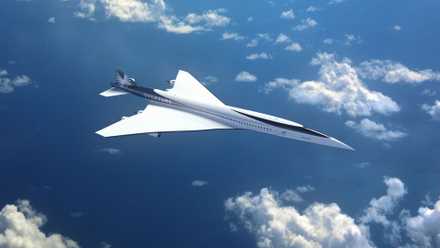
Will Boom Ever Fly? United CEO Gives Overture A 50-50 Chance
Scott Kirby has some strong thoughts on the startup program and manufacturer.
Hearts On Fire: The Symphony Engine

The first Symphony test engine achieved a stable flame during initial testing at the Georgia Institute of Technology last year. Currently, the company is conducting sprint core testing at the Colorado Air and Spaceport to evaluate the compressor, combustor, and turbine assembly. The rapid advances in materials, digital design, and flight control since the Concorde was built greatly improve the odds of Boom Supersonic achieving success.
Although the company has no established track record as a jet engine builder, designing a power plant from scratch in 2026 is a completely different ballgame from what it was in the 1960s. Advanced AI optimization algorithms can simulate billions of micro-variables in airflow, thermal stress, and combustion stability. By modeling how air flows through the compressor stages at Mach 1.7 in a virtual space, engineers can perfect the blade geometry to maximize efficiency, eliminating years of traditional physical trial-and-error prototyping.
Concorde’s engines were controlled by analog mechanics and manual pilot adjustments. If air entered the engine intakes at the wrong angle or speed, it caused an “engine surge” or compressor stall, resulting in terrifying explosive bangs and immediate power loss. The Symphony engine relies on next-generation Full Authority Digital Engine Control systems. It automatically adjusts the geometry of the variable engine intakes and exhaust nozzles in real-time. By dynamically managing the airflow before it hits the engine face, the avionics ensure the engine operates at peak thermodynamic efficiency, preventing stalls during all flight transitions without human intervention.
Still, the design relies entirely on 100% sustainable aviation fuel to meet environmental emissions requirements. Because SAF is currently scarce and expensive, Overture’s aerodynamic design must hit its exact efficiency targets out of the box, or the ticket prices will quickly climb past the promised $5,000 mark. Although progress has been made on the supply chain side, the unpredictability of this element may prove the undoing of the jet even if it is successful by every other metric.
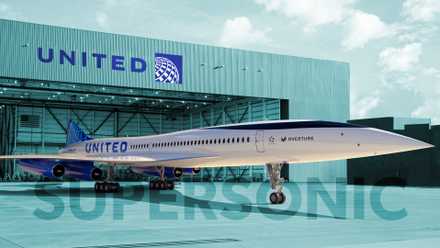
United Airlines To Benefit As US Lifts Ban On Overland Supersonic Flights
The airline is looking to launch supersonic flights within the next decade.
Catch what other flight trackers miss
Emergency squawks, holds, NOTAMs — live signals, no signup.
Open tracker
Catch what other flight trackers miss
Emergency squawks, holds, NOTAMs — live signals, no signup.
Open tracker
Quieter, Lighter, Cheaper, and Tougher: Boom’s Composite SST

The power plants of the Overture SST are vital to the engineering success of the aircraft design, but the engines will be of no help without the aerodynamics being pioneered by the Lockheed Martin X-59 QueSST, or Quiet Supersonic Technology. The X-59 features a 30-foot (9 m) needle-like nose, heavily swept wings, and a top-mounted engine intake. Its hyper-elongated profile deliberately generates individual, tiny shockwaves along the entire length of the airframe.
The design of the X-59 means that on the ground, the sound of a sonic boom is just a 75-decibel “sonic thump,” roughly equivalent to a car door shutting down the street. With this design, the aircraft will be able to fly over land even if US laws change, and ideally, it will also be able to operate overseas once other aviation authorities confirm that the sound level is acceptable. This will open up a much wider network of destinations and dramatically increase Overture’s profitability compared to the Concorde.
The design of the X-59 also incorporates a unique wing twist that aims to significantly reduce wave drag experienced by very fast-moving aircraft as they compress the air in front of them. 3D modeling coupled with computational fluid dynamics enabled Skunk Works to build the X-59 with a wing that will pioneer aerodynamic principles for future SSTs like the Overture. By slicing cleanly through the air while flying faster than the speed of sound, the Overture can propel itself to Mach 1.7 with far less thrust than the Concorde required to achieve similar speeds.
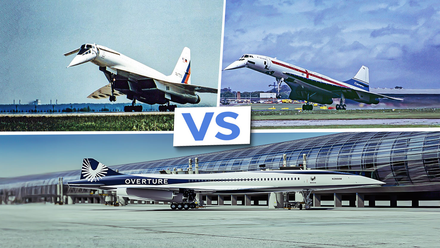
Boom Vs Concorde Vs Tupolev: Supersonic Passenger Jets Compared
Both blazed a supersonic trail that Boom’s Overture now aims to surpass, but how do they compare?
Tailor-Made SST: Right Sizing For The Mission

Concorde was built to hold 100 passengers. While that sounds modest, the global market of ultra-wealthy individuals willing to pay a $15,000 ticket was tiny. Consequently, Concorde frequently flew with load factors under 50%, which also means that it often took off with no one aboard. The staggering fuel and crew costs of that flight had to be divided among only 25 or 50 paying passengers, forcing ticket prices even higher in a compounding death spiral.
By lowering the capacity to 64 to 80 seats, Boom mirrors the exact layout of modern international business-class cabins. This smaller capacity matches the existing daily demand for high-end corporate travel. Filling a 64-seat plane is infinitely easier than filling a 100-seat plane. This is complemented by the fuel savings of a lighter plane and even cheaper airport fees, thanks to the lower total weight of the airframe every time it lands. The same composite that makes that low weight possible will also require far less maintenance than the aluminum and titanium materials used in the Concorde.
Then there’s the aircrew. The Concorde required a flight engineer, but the Overture will only require two pilots, eliminating one-third of the expenses on the flight deck. The same digital electronics that make it easier to fly the plane will also help reduce maintenance by using predictive algorithms. Not only do these systems provide simple and intuitive interfaces for the aircrew and ground technicians, but they can predict when parts may fail ahead of time so that the Overture will never even come close to the astronomical maintenance hours that the Concorde required.