dailynewsnblog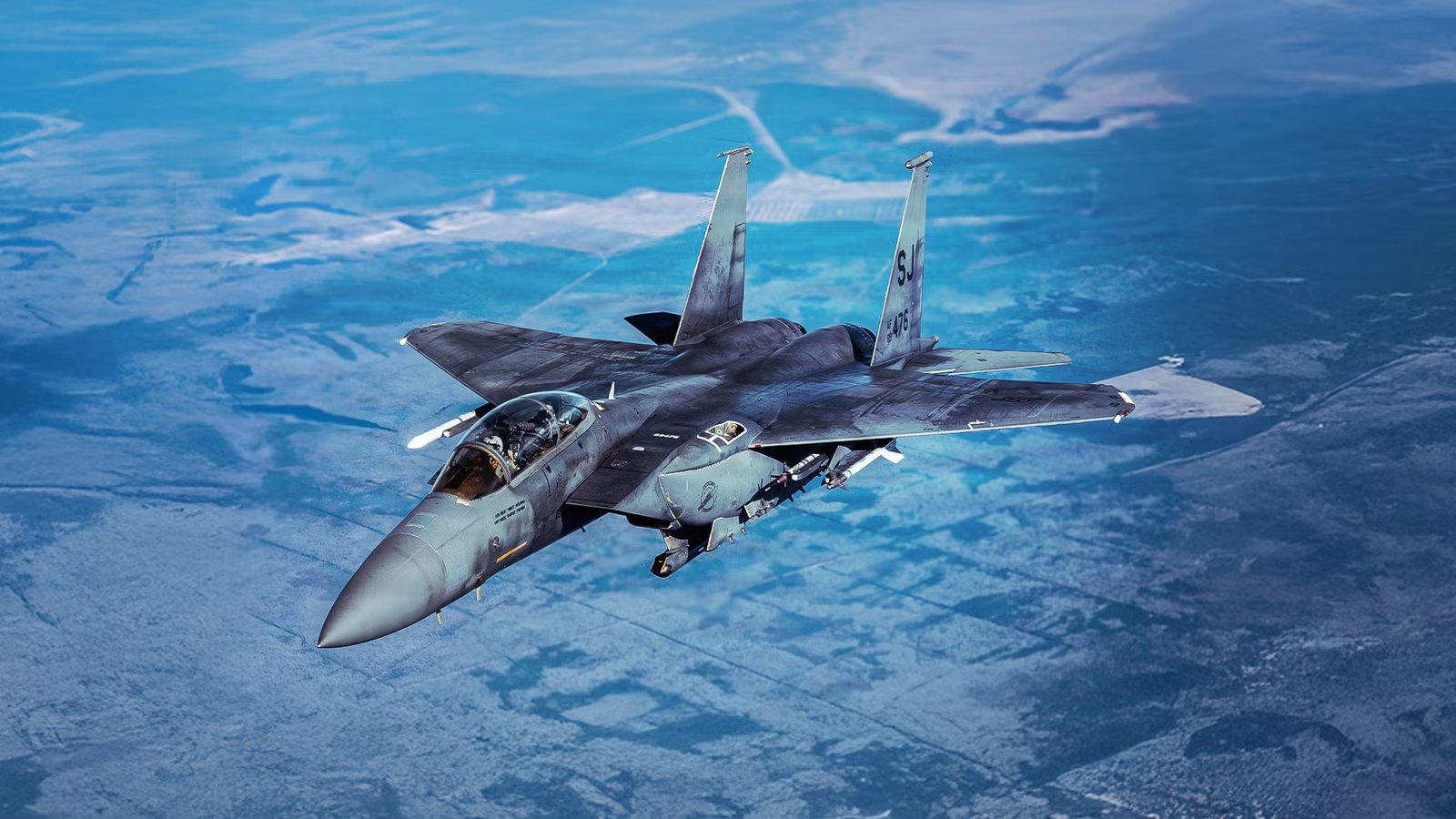
As the US Air Force attempts to balance its budget for fleet recapitalization, which will see the first combat-ready sixth-generation warplanes in history join the fleet in the next few years, the legacy warbirds are being downsized. That includes the venerable  Boeing F-15E Strike Eagle, which has one of the best combat records in the history of military aviation.
Its fleet of 218 fighter jets will be cut down to just 99 examples that feature more powerful power plants as well as the most upgraded systems. The USAF has selected F-15Es equipped with the F100-PW-229 to be retained and upgraded, while the 119 airframes with the F100-PW-220 engines will be decommissioned.
These jets that are kept will be upgraded with the Eagle Passive Active Warning Survivability System, which some already have, greatly enhancing electronic warfare capabilities. At the same time as this decision, the Air Force also announced that it is doubling the number of new F-15EX Eagle II variants that it wants to buy.
By raising the original number from 129 to 267, the USAF has reversed course from previous years, when annual targets continuously shrank. There are currently 25 examples in service, and it expects to receive 24 per year going forward, per Boeing’s full-rate schedule of two per month, at an annual cost of $3 billion.
No Substitute For The Eagle

The 99 F-15E Strike Eagles that were selected for retention offer the Air Force a high value as existing airframes that can be upgraded to 4.5-Gen capability. Their immensely powerful F100-PW-229 engines produce 29,000 pounds (129 kN) of thrust each and push the Strike Eagle to a top speed that exceeds even that of the Lockheed Martin F-22 Raptor 5th-Gen stealth fighter.
The F-15E also has the highest payload of any fighter in active service with the US Air Force now. The Legacy models from the 1970s, the F-15C/D, are being phased out rapidly to make way for the incoming F-15EX, which takes the multirole mission to the next level as a true 4.5-generation fighter with even more power and performance.
These two aircraft will be crucial missile truck platforms that support fifth and sixth-generation fighter jets behind enemy lines as they designate targets for the Eagles to strike with standoff munitions. The Eagle II offers higher tech that complements the upgraded Fleet of Legacy Strike Eagles while capitalizing on an existing supply chain established for its predecessors.
The 99 F-15Es will eventually be decommissioned due to structural airframe life; the new F-15EXs will still be able to use the same support base. This makes the composite fleet relatively future-proof and well situated to complement the even more advanced aircraft that are incoming.
Payload Maxing The F-15

Both generations of the F-15 that are being integrated into the Air Force of the future refine and maximize performance characteristics that were originally developed in the 1970s. The new technology that keeps these aircraft lethal on the battlefield tomorrow is focused on electronic warfare and advanced weapons employment.
Both aircraft have the AN/APG-82 Active Electronically Scanned Array targeting radar as well as the Legion Pod infrared search and track sensor, which can detect stealthy targets that radar can miss. Both the new F-15EX and F-15E Eagles receiving retrofits will be equipped with the same cutting-edge sensor suite, allowing them to work together in a fight and integrate with next-gen aircraft as well.
Specifications | F-15E Strike Eagle | F-15EX Eagle II |
|---|---|---|
Total Thrust | 58,000+ pounds (258+ kilonewtons) | 59,000+ pounds (262+ kilonewtons) |
Max Takeoff Weight | 81,000 pounds (36,741 kilograms) | 81,000 pounds (36,741 kilograms) |
Payload Capacity | 23,000 pounds (10,432 kilograms) | 29,500 pounds (13,381 kilograms) |
Length | 63.8 feet (19.44 meters) | 63.8 feet (19.44 meters) |
Wingspan | 42.8 feet (13.05 meters) | 42.8 feet (13.05 meters) |
Height | 18.5 feet (5.64 meters) | 18.5 feet (5.64 meters) |
Maximum Speed | 1,650+ miles per hour (2,655+ kilometers per hour) | 1,650+ miles per hour (2,655+ kilometers per hour) |
Combat Radius | 790 miles (1,272 kilometers) | 800+ miles (1,287+ kilometers) |
Service Ceiling | 60,000 feet (18,288 meters) | 60,000 feet (18,288 meters) |
Ferry Range | 2,400 miles (3,862 kilometers) | 3,000 miles (4,828 kilometers) |
While the F-15EX comes with the Advanced Display Core Processor II standard, the older F-15Es are getting them as upgrades. It is the fastest mission computer in the world, making it the primary enabler of the F-15’s ‘Arsenal Ship’ mission. The F-15E can already carry a very impressive air-to-air loadout, which greatly exceeds what stealthy aircraft can carry because they are limited to internal weapons bay capacities.
The F-15EX Eagle II takes this a step further by using more advanced fly-by-wire that compensates for wingtip flutter when the outermost wingtip hardpoints are loaded. This, combined with the Advanced Missile and Bomb Ejection Rack, allows the F-15EX to carry 22 versus eight on the F-15E.
Although the Eagle II may beat out the Legacy Strike Eagle on conventional weapons payload thanks to its more modern core systems, both are prime candidates to carry hypersonic missiles in future conflicts. The F-15E is the primary test platform for the Hypersonic Attack Cruise Missile, although the Eagle II may end up being the preferred platform to deploy it.
What The EPAWSS Upgrade Means

The Eagle Passive Active Warning Survivability System was developed by BAE Systems and transforms the Legacy F-15E Strike Eagle into a digital-age combat system. Although no variant of the F-15 will ever be stealthy like the F-22 Raptor, the powerful electronic warfare suite allows these aircraft to penetrate deeper into contested airspace thanks to advanced countermeasures.
Defensive sensors and offensive jamming can blind or deceive enemy targeting systems, which makes the Eagle much more survivable. EPAWSS is so effective at jamming that it helps non-stealthy F-15s survive in high-threat environments. Unlike the 1980s-era analog Tactical Electronic Warfare System, EPAWSS uses high-speed digital processing to monitor and jam threats across the entire electromagnetic spectrum simultaneously.
The upgrades to the F-15E even include a redesigned tail antenna layout and 50% more chaff and flare capacity, matching the hardware on the F-15EX. By standardizing this electronic warfare suite across both of the variants in the future F-15 fleet, the USAF is transforming its Cold War-era fighter and ‘bomb truck’ into a survivable, high-capacity partner for next-gen fighters and bombers.
Heightened survivability combined with digital interoperability will allow the F-15E to seamlessly integrate into the Joint All-Domain Command and Control. Here, it can receive data from next-gen platforms and strike hardened targets in a conflict against a near-peer adversary.
The Ultimate Wingman: Collaborative Combat Aircraft & The Eagle

As a further step toward full integration with the Air Force of the future that is in development now, the F-15E is expected to be upgraded with systems that will make it capable of coordinating with and controlling collaborative combat aircraft, or loyal wingman drones. These advanced uncrewed tactical airframes are expected to make up the bulk of the USAF fleet in the future, with crewed platforms acting as the ‘quarterback’ on the battlefield.
The Air Force is planning to acquire as many as 1,000 of these drones, and they will be interoperable with every aircraft in the US military, as well as many allied nations, once full integration is complete in the 2030s. These drones will perform the dirty, messy, and boring missions that can be fulfilled without the need to jeopardize a human life in the cockpit.
The F-15E will be a more effective strike platform by using its sensors to guide drones to targets before using its own munitions, or by taking on the risk itself, becoming a kind of ‘mothership.’ A single F-15EX or upgraded F-15E is expected to control two to four drones simultaneously. This effectively doubles or triples the number of ‘shooters’ and missiles available to a single flight lead, helping the USAF overcome the numerical advantages of near-peer adversaries.
Conserving Munitions & Lives

Loyal Wingmen are also intended to be cheap enough to be attritable and literally act as a kind of ‘missile sponge’ to take the hit for a crewed aircraft if a hostile missile cannot be defeated by any other means. The drones fly directly into the teeth of enemy defenses. If a CCA is shot down, no human life is lost, and the $100 million F-15 and its aircrew remain safe.
Coordination with CCAs is expected to be a core capability for future platforms in the USAF, other service branches, as well as American partner nations around the world. The Lockheed Martin F-35 Lightning II was built to be a system of systems with these drones in mind, as is the upcoming Boeing F-47 6th Gen stealth fighter.
Bomber aircraft like the Northrop Grumman B-21 Raider have also been engineered with this capability, and the Legacy Boeing B-52 Stratofortress will be undergoing a retrofit program to work with CCAs as well. Even the new Boeing KC-46A Pegasus multirole air tanker will be able to task loyal wingman drones in the future.