dailynewsnblog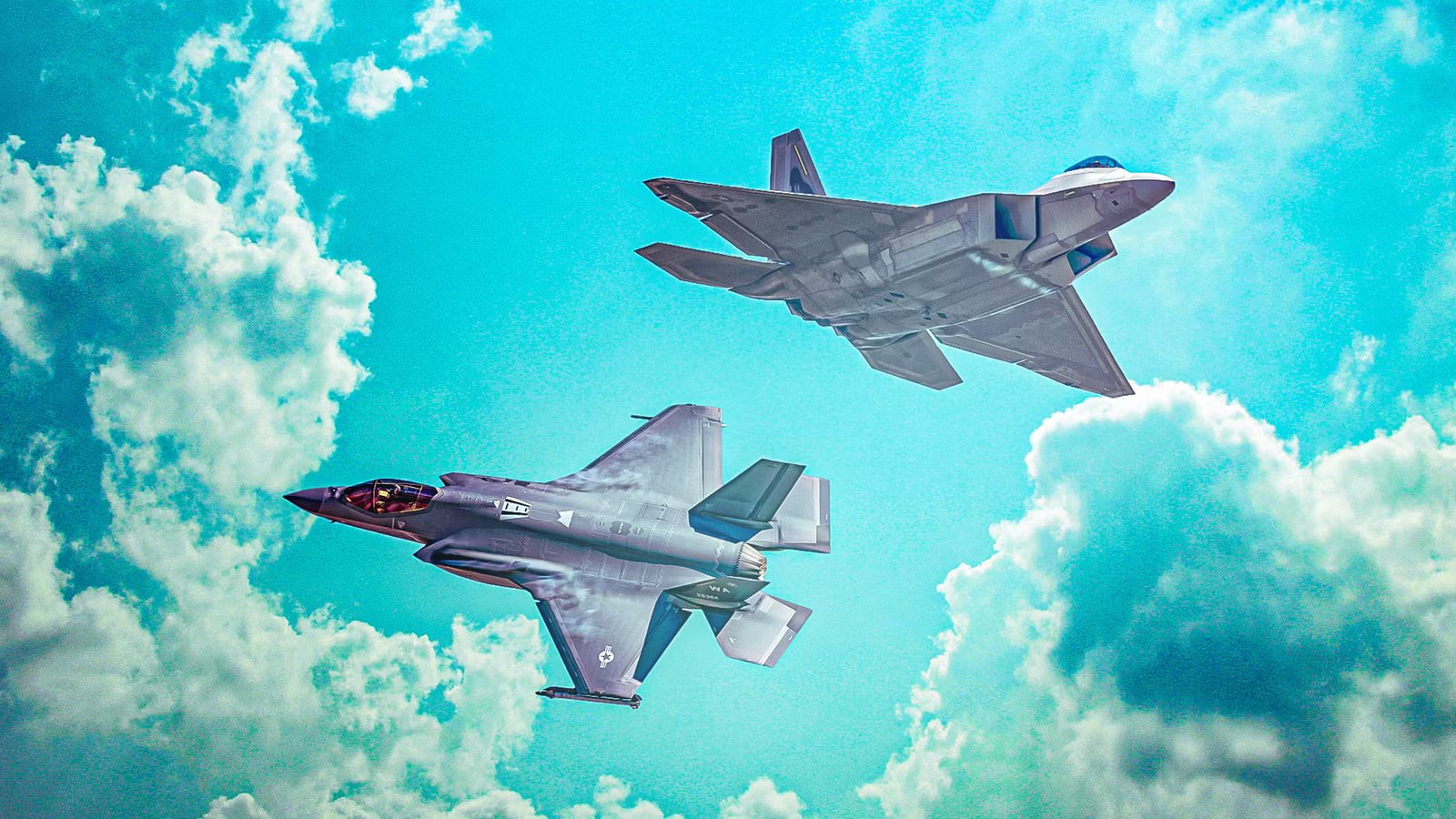
The Lockheed MartinF-22 Raptor remains one of the most capable air superiority fighters ever built. Designed during the Cold War’s final years and introduced into service in 2005, the aircraft was engineered with a singular objective: to dominate enemy airspace against the most advanced threats imaginable. Even decades after its introduction, the F-22 is still widely regarded as one of the most formidable combat aircraft in existence.
Yet that dominance comes at an extraordinary price. The aircraft costs upwards of $85,000 per flight hour to operate. By comparison, the Lockheed Martin F-35A Lightning II, despite also being a stealth aircraft packed with advanced technology, costs roughly half as much per flight hour. The F-35A is newer, produced in larger numbers, and often criticized for its own sustainment expenses. However, the F-22’s operating costs stem from a combination of design philosophy, maintenance complexity, fleet size, aging infrastructure, and logistics challenges that make it uniquely expensive to sustain. Understanding why the F-22 costs so much more to fly than the F-35A provides insight not only into military aviation economics but also into how fighter aircraft evolve over time. It highlights the long-term consequences of limited production runs, specialized engineering, and sustainment decisions that continue affecting the United States Air Force decades after an aircraft enters service.
The F-22 Was Designed Without Cost Efficiency As A Priority

The single biggest reason the F-22 is so expensive to operate is rooted in its original mission. The aircraft was never designed to be affordable. It was designed to be unmatched in air combat. During the Advanced Tactical Fighter competition of the 1980s and early 1990s, the Air Force prioritized stealth, supercruise capability, agility, and sensor fusion above virtually every other consideration. The resulting aircraft incorporated technologies that were revolutionary at the time but extremely difficult and expensive to maintain. Unlike the F-35, which was developed as a multirole aircraft intended for export and large-scale production, the F-22 was built specifically for high-end air superiority missions. This specialized focus resulted in a more complex aircraft with tighter manufacturing tolerances and more demanding sustainment requirements.
One major contributor is the aircraft’s stealth architecture. The F-22 uses advanced radar-absorbent materials and coatings that require extensive inspection and repair after flight operations. These coatings degrade from weather exposure, thermal stress, and high-speed maneuvering. Maintaining them requires climate-controlled facilities, specialized technicians, and labor-intensive repair cycles. According to defense reporting cited by National Security Journal, stealth-related maintenance historically accounted for roughly one-third of all F-22 maintenance activity.
The aircraft’s engines also add substantial cost. The Pratt & Whitney F119 engines enable supercruise, allowing the F-22 to fly at sustained supersonic speeds without afterburners. While this capability gives the aircraft exceptional combat performance, it also introduces higher maintenance demands and greater lifecycle costs than more conventional fighter engines. In effect, the F-22 represents an era when the Air Force prioritized absolute capability over affordability. The F-35, developed later, incorporated lessons from the Raptor program and placed much greater emphasis on long-term sustainment efficiency.
Small Fleet Size Makes Every Part More Expensive

Fleet size plays a central role in military aviation economics, and the F-22 suffers from one of the biggest disadvantages possible: too few aircraft. The Air Force originally planned to purchase more than 700 F-22s. That number was gradually reduced before production ultimately ended at just 195 aircraft, including test and training units. Today, only around 178 remain in service. This limited production run has enormous consequences for sustainment costs. Spare parts must be manufactured in relatively small quantities, preventing the economies of scale that reduce costs in larger programs. Suppliers supporting the aircraft also have little commercial incentive to maintain production lines for such a small fleet, which can make components more expensive and sometimes harder to source.
Current F-22 Operators in the US Air Force | ||
|---|---|---|
Division of the Air Force | Unit | State |
Air Combat Command | 1st Fighter Wing | Virginia |
Air Combat Command | 53rd Wing | Florida |
Air Combat Command | 57th Wing | Nevada |
Pacific Air Forces | 3rd Wing | Alaska |
Pacific Air Forces | 15th Wing | Hawaii |
Air National Guard | 154th Wing | Hawaii |
Air National Guard | 192nd Fighter Wing | Virginia |
Air Force Reserve Command | 477th Fighter Group | Alaska |
By contrast, the F-35 program benefits from scale on a global level. More than 1,000 F-35 aircraft have already been built across multiple variants, with additional orders from allied nations continuing to expand production. This large fleet spreads sustainment and logistics costs across many more aircraft and operators. The difference extends beyond spare parts. Maintenance training, software support, supply chains, and infrastructure become more efficient when shared across a large fleet. The F-35’s multinational support network helps reduce long-term operating costs in ways the F-22 simply cannot replicate.
The F-22’s small fleet also creates readiness problems. When parts shortages occur or aircraft require depot maintenance, fewer airframes are available to meet operational demands. This increases pressure on the remaining fleet and contributes to higher wear rates. As the aircraft ages, these problems intensify. Replacement parts become harder to manufacture, sustainment contracts become more specialized, and maintenance hours increase. The Air Force is effectively sustaining a boutique fleet of highly specialized fighters, and boutique fleets are inherently expensive.

From 76 F-22 Raptors To 200 Next-Gen Fighters: How Much Larger America’s Air Superiority Fleet Could Get
A closer look at the future of air power in the US Armed Forces.
Raptor Maintenance Is Exceptionally Labor Intensive

Although both aircraft are stealth fighters, the F-22’s stealth system is significantly more maintenance-heavy than the F-35’s. The Raptor was the first operational fighter designed entirely around stealth characteristics. Many of its radar-absorbent materials and low-observable features were developed before engineers fully understood how to optimize stealth maintenance for long-term operational use. As a result, the aircraft requires extensive post-flight inspection and repair work. Even minor surface wear can compromise radar signature performance, requiring technicians to repair coatings and inspect sensitive areas of the airframe. Exposure to moisture, salt air, sand, and heat all accelerate degradation.
The F-35 benefited from years of technological advancement and operational lessons learned from the F-22 and earlier stealth aircraft, such as the Lockheed F-117 Nighthawk. Its stealth coatings are more durable and easier to maintain, reducing labor hours per flight hour compared to the Raptor. According to military sustainment reporting, the F-22 has historically required between 10 and 30 maintenance hours per hour flown. That is an extraordinarily high figure even by advanced fighter standards.
This labor burden directly increases flight-hour costs. Operating expenses do not simply reflect fuel consumption. They include technician labor, spare parts, inspection procedures, logistics, and downtime. Every additional maintenance hour increases the total sustainment bill.
The complexity of stealth maintenance also affects readiness rates. Recent data shows the F-22’s mission-capability rate has fallen significantly in recent years, dropping to roughly 40% in fiscal year 2024. In practice, this means fewer aircraft are available for operations at any given time, forcing the Air Force to spend more resources maintaining operational readiness.
F-35 Program Was Designed With Sustainment In Mind

One of the most important differences between the two aircraft is that the F-35 program was created with sustainment efficiency as a core objective. The Pentagon recognized early that operating costs would determine whether the F-35 could succeed as a large multinational program. Unlike the F-22, which prioritized maximum air dominance, the F-35 was intended to serve as a scalable, exportable platform for numerous countries and military branches.
This fundamentally changed the aircraft’s design philosophy. The F-35 incorporates more modular systems, improved diagnostics, and streamlined maintenance procedures intended to reduce labor requirements. Advanced onboard sensors continuously monitor aircraft health and identify maintenance issues before they become critical. While the F-35 program has faced significant criticism over sustainment challenges, it still operates at substantially lower flight hour costs than the F-22.
Another major factor is logistics integration. The F-35 benefits from a global sustainment enterprise involving allied operators across Europe, Asia, and North America. Shared supply chains and pooled maintenance resources improve efficiency and reduce unit costs over time. Fuel efficiency also matters. The F-35 uses a single-engine configuration compared to the F-22’s twin-engine design. Although the F119 engines provide exceptional thrust and supercruise capability, operating two advanced engines inevitably increases fuel consumption and maintenance complexity.
The Air Force and Lockheed Martin have also invested heavily in reducing F-35 sustainment expenses over time. While the program has not achieved all its cost-reduction targets, the aircraft’s operating costs have steadily improved as production expanded and maintenance systems matured. The F-22, by contrast, lacks the scale and modernization momentum needed to significantly lower operating expenses.
How Many Hours Can The F-35 Fly On Internal Fuel?
What do you think the answer is?
Aging Aircraft And Sustained Investment Drive Costs Higher

The F-22 is now an aging aircraft fleet, and aging fleets are expensive regardless of capability. Most Raptors entered service nearly two decades ago. As aircraft age, maintenance requirements naturally increase due to structural fatigue, parts wear, and obsolescence issues. Systems designed in the 1990s are increasingly difficult to support with modern supply chains.
This problem is especially severe for the F-22 because production ended in 2011. Once a production line closes, sustaining the aircraft becomes progressively harder and more expensive over time. Specialized suppliers disappear, replacement components become scarce, and maintenance depots must adapt aging systems to modern requirements. The Air Force continues to invest billions in keeping the aircraft operational. Recent sustainment programs include upgrades to engines, avionics, sensors, and fuel systems intended to preserve the Raptor’s combat effectiveness through the 2030s. These upgrades are necessary because the F-22 still provides capabilities the Air Force considers indispensable. In pure air-to-air combat, many analysts still regard it as superior to any operational fighter in the world. However, maintaining that edge becomes increasingly expensive each year.
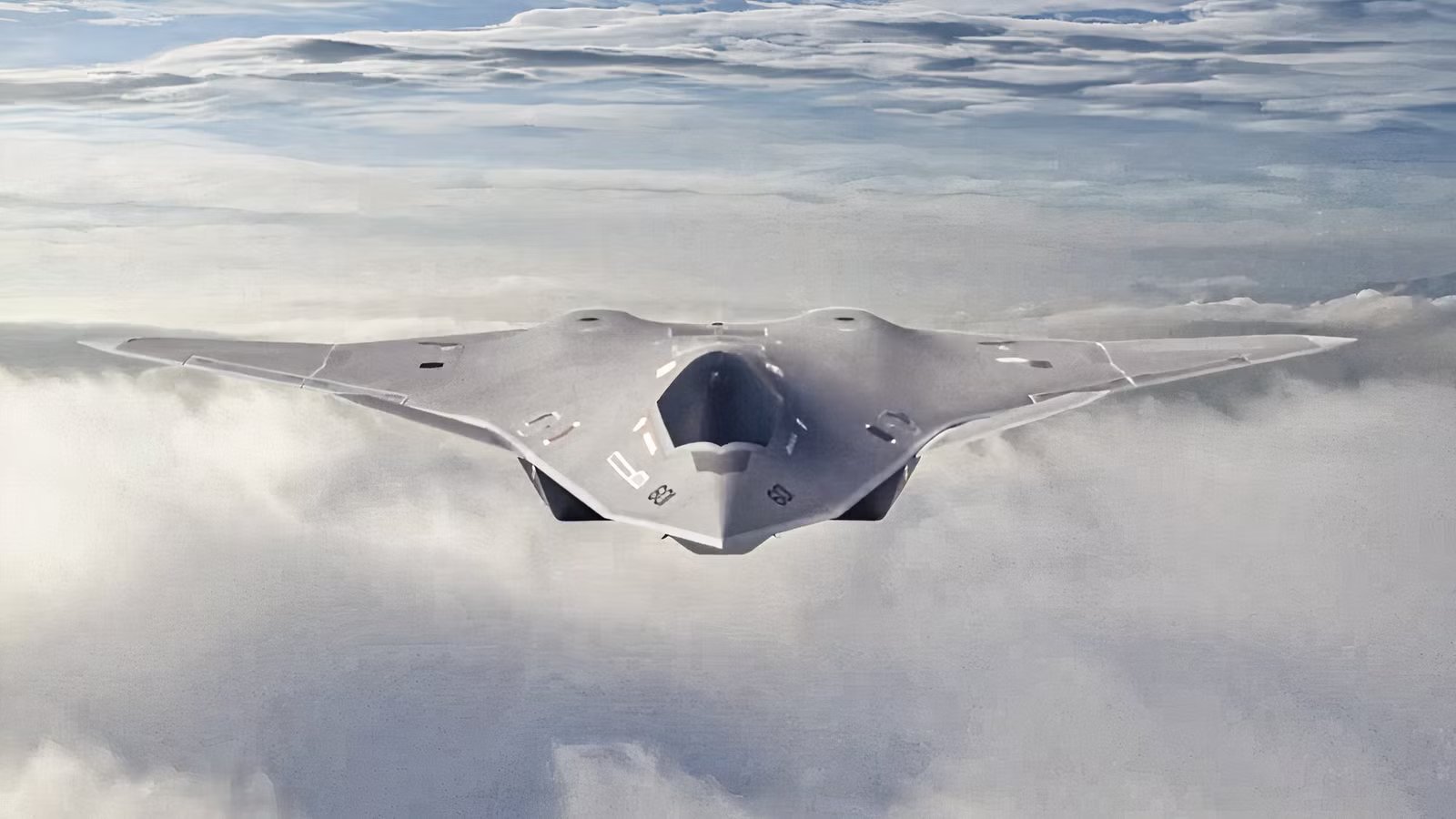
Supply chain fragility compounds the issue. Limited spare parts inventories and reliance on niche suppliers lead to delays and higher procurement costs. Even routine repairs can become expensive when parts must be specially manufactured or refurbished. At the same time, the Air Force is gradually shifting focus toward the future Next Generation Air Dominance initiative, which is expected to eventually replace the F-22 in the air superiority role. This transition creates another challenge: balancing investment in aging Raptors while funding future systems. The result is a fleet that remains strategically valuable but financially burdensome.
Big Takeaway

The reason the F-22 costs more per flight hour than the F-35A ultimately comes down to design priorities, fleet size, maintenance complexity, and age. The Raptor was built to achieve unmatched air superiority during an era when cost efficiency was secondary to performance. Those demands became even more expensive after production ended, and the fleet remained far smaller than originally planned.
The F-35, while hardly inexpensive, was designed with different priorities. It benefits from modern sustainment planning, a global production base, modular maintenance systems, and economies of scale that the F-22 never achieved. Despite its expense, the F-22 continues to occupy a critical role in the United States Air Force. The aircraft’s high operating cost is therefore not simply a budgeting problem. It is the long-term price of building an aircraft optimized for absolute dominance rather than affordability.