dailynewsnblog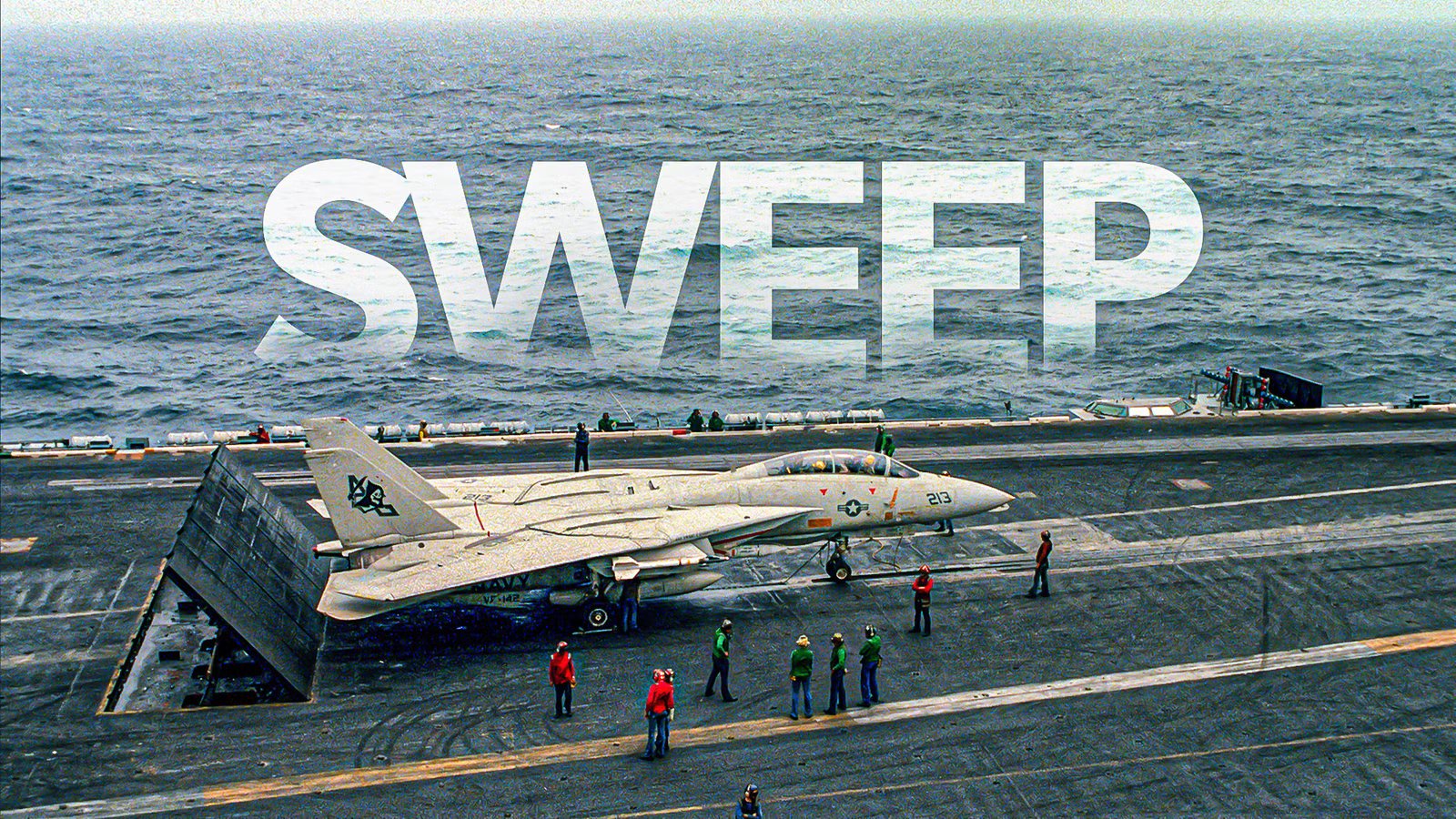
The Grumman F-14 Tomcat, one of the most iconic fighter jets of the 20th century, is famous for featuring a swing-wing mechanism. It was the second mass-produced aircraft with variable-sweep wings, after the General Dynamics F-111 Aardvark, and the technology has not been widely used in the West since then, only incorporated in the Panavia Tornado and Rockwell B-1 Lancer. While it’s not a common technology, it was instrumental in allowing the Tomcat to perform its role as the US Navy’s primary interceptor and air superiority fighter.
The F-14 Tomcat first entered service with the Navy in 1974, and Grumman built 712 in total. Of these, 632 were for the US Navy, while another 79 were exported to Iran prior to the 1979 Iranian Revolution, with one retained by Grumman for testing. Designed during the Cold War, it was envisioned as both a high-altitude interceptor and an air superiority fighter, serving prominently in conflicts like the Gulf War. The Tomcat is also famous for being featured in the 1986 blockbuster ‘Top Gun’ and its 2022 sequel ‘Top Gun: Maverick’.
The F-14 Tomcat In A Nutshell

The Grumman F-14 Tomcat is an American high-altitude fighter developed for the US Navy. It was the US’s first fourth-generation fighter, incorporating more advanced technology and upgraded armament while also offering improved maneuverability from third-generation fighters like the McDonnell F-4 Phantom. The F-14 Tomcat was followed up by iconic names like the McDonnell Douglas F-15 Eagle, General Dynamics F-16 Fighting Falcon, and the McDonnell Douglas F/A-18 Hornet.
While the Tomcat was mainly designed as a high-endurance interceptor, it was also intended to serve as an effective air superiority fighter. It features a twin-tail and two afterburning turbofan engines that could supercruise in later models. It was designed with a bubble canopy that allowed for 360-degree vision, along with a two-pilot flight deck. With 632 delivered, it was the US Navy’s primary carrier-based interceptor and air superiority fighter until the type’s retirement in 2006.
The F-14 Tomcat was replaced by the Boeing F/A-18E/F Super Hornet, and these planes met an unusual fate. Rather than scrap the Tomcats for parts, the US Department of Defense ordered all F-14s to be shredded in Arizona, with the last one destroyed in 2009. This was to avoid the possibility of F-14 parts falling into the hands of US enemies, or more specifically, Iran. Iran was the only other nation to operate the Tomcat, but relations between the US and Iran have deteriorated significantly since the Iranian Revolution.
The F-14’s Variable Geometry Wing

The Tomcat’s variable-sweep wing is crucial to allowing the plane to operate out of US Navy aircraft carriers. It has a top speed of Mach 2.4, making it one of the fastest aircraft ever built, but flying supersonic requires a slimmer wing with a higher sweep angle and a sharp leading edge to minimize drag. This, however, means that a wing optimized for supersonic flight is suboptimal at subsonic speeds, including at speeds when planes take off and land.
Adding to the complication is that landing on aircraft carriers involves using narrow runways roughly 300 to 500 feet (91.4 to 152.4 meters) long with no margin for error on a moving surface. This requires careful maneuvering at low speeds, which can be extremely difficult with a wing designed for supersonic flight. The F-14’s swing-wing mechanism actually has the wings pivot forwards during low-speed flight rather than backwards, which allows for a lower angle of attack at low speeds and makes carrier landings feasible.
|
American Military Aircraft With Variable Geometry Wings |
Entry Into Service |
Number Built |
|---|---|---|
|
General Electric F-111 Aardvark (fighter-bomber) (F-111AB/C/D/E/F/K/FB-111A/EF-111A) |
1967 |
566 |
|
Grumman F-14 Tomcat (interceptor/air superiority fighter) (F-14A/B/D) |
1974 |
712 |
|
Rockwell B-1 Lancer (heavy bomber) (B-1A/B/R) |
1986 |
104 |
Subsequent supersonic aircraft (including Concorde) solved this issue by incorporating other wing designs. One such solution was the delta wing, which is meant to perform well at subsonic and supersonic speeds. However, the F-14 specifically required excellent maneuvering at lower speeds for carrier operations, which a delta wing could not provide at the time. Instead, it features a variable geometry wing that swivels forward automatically during low-speed flight, and then automatically swings backwards at higher speeds.

How The Eurofighter Typhoon Stacks Up Against The US F-14 Tomcat In 2025
Can a Cold War icon beat a modern air superiority fighter?
The Aerodynamics That Required A Swing Wing

The F-14 Tomcat needed to be a plane that was maneuverable at low speeds for US Navy carrier operations, while also performing well at supersonic speeds. This required designing one wing for two completely different purposes. A wing designed for low-speed flying tends to be large and wide, with high camber and little to no wing sweep, maximizing lift. However, this design also creates huge amounts of drag, which worsens performance at higher speeds and caps top speed.
Aircraft flying closer to the speed of sound, like modern commercial airliners, are designed with swept wings. This delays the onset of wave drag and supersonic shockwaves, which form when an aircraft is flying close to the speed of sound. A swept wing essentially results in air moving more slowly over the wings than with a straight wing, which improves high-speed performance. The downside is that swept wings are less effective at lower speeds, which is why airliners require high-lift devices like flaps and slats.
A wing designed for supersonic flight is thinner than one designed for low-speed flight, and incorporates an extremely high sweep angle, close to double what you see on an airliner. This further slows airflow over the wings, reducing drag, and therefore allows planes to reach extremely high speeds, in excess of the speed of sound (Mach 1.0). The downside is that this design produces extremely low lift at slower speeds, which presents problems for low-speed flying, but the F-14 solves this with its variable geometry wing.
How The F-14’s Wings Operated

The F-14 Tomcat features two pivoting wings on both sides of the aircraft. They’re mounted on a titanium structure, and they swing automatically in-flight using an onboard computer based on speed and altitude. They adjust throughout the flight, and can swing forward to a maximum of 20 degrees for low-speed flight, while the rearward limit for normal flight is set at 68 degrees. When fully swept backwards, the wings are largely flush with the horizontal stabilizers, and they can be swept further backwards to 75 degrees for carrier parking.
The wings can be controlled manually if necessary, by deactivating the computer using a switch. While the swinging mechanism was designed to enable better handling at low speeds, it’s also crucial to the Tomcat’s role as an air superiority fighter. This was a flaw of the prior F-4 Phantom II, which was a large, heavy plane equipped with long-range missiles that had difficulty dog-fighting. While the F-14 is much larger than the F-4, it was far more maneuverable.
Although the F-14 is designed to land with its wings fully swept forward, it is capable of landing with wings swept backwards, although it would be dangerous due to higher stall speeds. In addition, the F-14 was certified to fly with asymmetric wings, tested in case of a possible in-flight malfunction, and was also deemed capable of landing on carriers in this condition. While F-14s did experience mechanical issues with their wings, no F-14 ever crashed resulting from issues with the wings.

Is It True That The F-4 Phantom Is A Long-Range Supersonic Fighter?
For a period the F-4 was the workhorse of US airpower able to fill many roles thanks to its large aircraft, range, and supersonic flight.
The Issues With Variable Geometry Wings

While no Tomcat was ever lost due to an issue with the variable sweep wing, the mechanism proved to be complex and expensive to maintain. This was due to both the parts as well as the manpower required to keep it operational. The F-14 also had issues with its Pratt & Whitney TF30 engines, which were replaced by the General Electric F110 in later versions. However, what truly killed the F-14 was a combination of its high costs and the end of the Cold War, which diminished the need for a high-altitude interceptor.
Since the F-14, the only Western planes that were mass-produced with variable sweep wings were the Panavia Tornado and Rockwell B-1 Lancer, both of which were designed in the 1970s. While the design does offer aerodynamic benefits, the mechanism has proven to be enormously complex. Planes like the F-14 Tomcat were significantly more expensive to purchase and came with high maintenance costs compared to aircraft with fixed delta wings or other wings designed for supersonic flight. As such, variable sweep wings have become obsolete.
|
Grumman F-14 Tomcat Variants |
Description |
|---|---|
|
F-14A Tomcat |
Original version |
|
F-14B Tomcat |
New radar, Pratt & Whitney TF30 engines replaced with General Electric F110 |
|
F-14D Tomcat |
Upgraded digital avionics, new radar |
The F-14 was replaced by the  Boeing F/A-18E/F Super Hornet, a plane that was roughly half the price and came with a third of the maintenance costs. The F/A-18 is a smaller, more maneuverable multi-strike aircraft that’s slower than the F-14, but the US Navy no longer requires a carrier-based high-altitude interceptor as was needed during the Cold War. On top of that, the Super Hornet is more reliable than the Tomcat and is also generally considered to be easier to fly than the F-14.