dailynewsnblog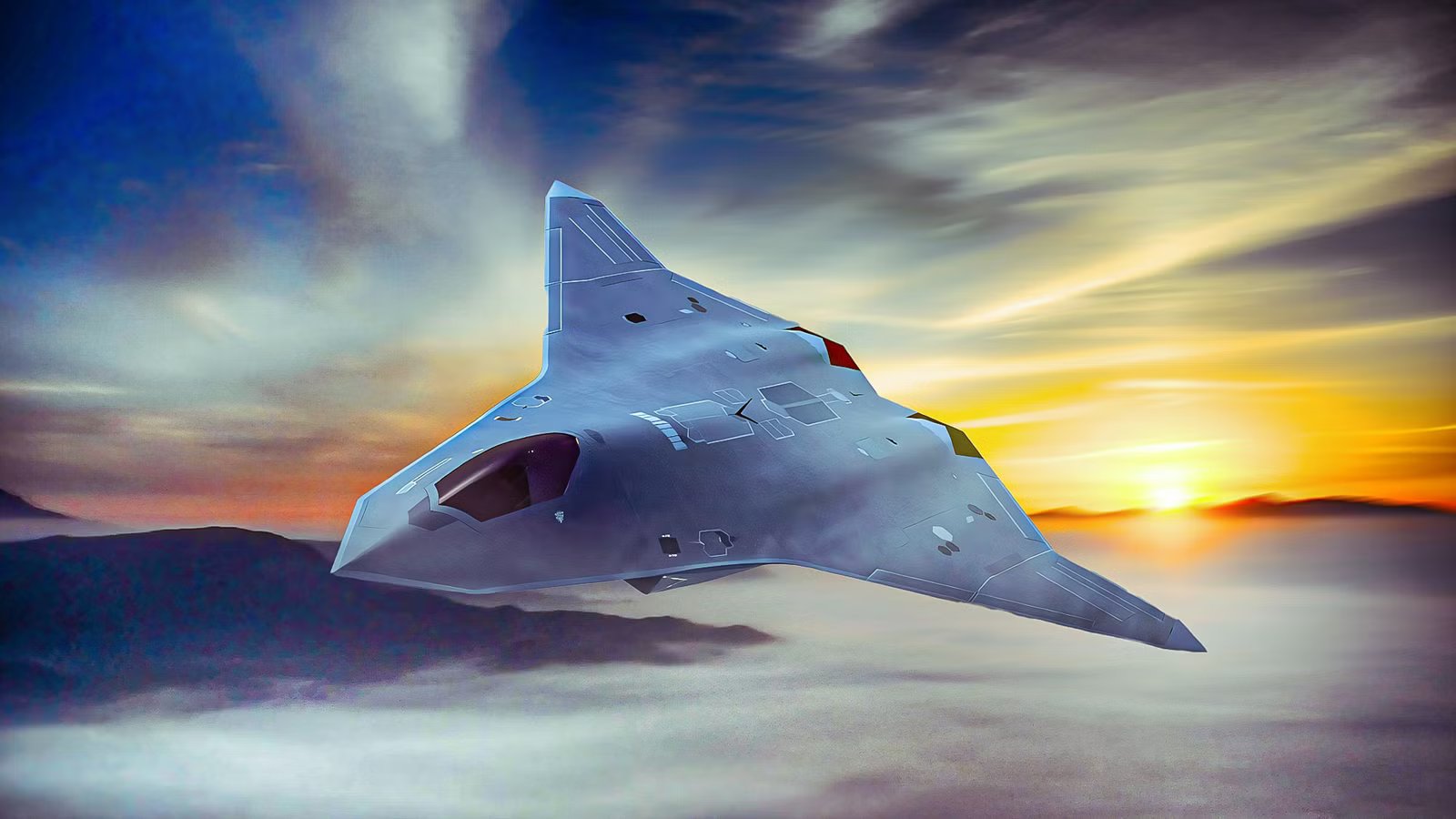
While the F-35 is struggling with disappointing software updates and the F-22 fleet is nearing the end of its service life, the NGAD will bring a new system of systems with artificial intelligence in the cockpit as well as on-board uncrewed drone platforms.
Stealth++: The Lowest of Low Profile Fighter Jets

The F-22 Raptor has an immediately identifiable, angular aerodynamic shape on all of its exterior surfaces that were made with one purpose: to evade enemy radar. Despite being newer, the F-35 Joint Strike Fighter is well known to be less stealthy as it has more rounded shapes that make it less complex and costly to build. The F-47 aims to incorporate the benefits of both of these jets by being affordable like the F-35 but having a radar cross-section that is even smaller than the F-22.
The NGAD program aims to achieve this by using a tailless blended wing body design. This will make it a flying wing like the iconic Northrop Grumman B-2 Spirit and B-21 Raider stealth bombers. The F-22 and F-35 both have canted tail surfaces, which help deflect radar waves because they are not vertical. However, eliminating the tail is the ideal design for a stealth aircraft. This geometry alone will dramatically decrease the radar detectability of the F-47 from any direction.
The F-22 is still considered the gold standard of stealth fighters with its clean, diamond-like platform utilizing strict edge alignment and twin canted tails to deflect high-frequency X-band radar tracking spikes. On the other hand, the F-35 is primarily shaped for frontal stealth with some rear aspect RCS optimization. The NGAD’s diamond-like fuselage blends seamlessly into the wings with deep chined edges stretching from the nose out to the wingtips. Instead of bouncing radar spikes in a few controlled directions, its fluid shape smoothly scatters waves continuously, preventing a clear return signal.
The Deadliest Flying Dorito: No Tail, No Problem

The Boeing F-47 breaks aerospace design conventions by bringing a tailless flying wing profile to an agile air superiority platform. The F-22 Raptor is famous for its incredible supermaneuverability, which allows it to ‘turn and burn’ against even the most agile adversaries. It retains a pair of twin vertical stabilizers that are angled outward to make moves like its stunning post-stall maneuvers possible. However, they introduce a distinct vulnerability called surface traveling waves and corner reflections. Low-frequency radars cause the tail to act like an antenna, creating an electromagnetic resonance that exposes the aircraft’s position.
The F-47 eliminates vertical surfaces entirely, as the National Security Journal highlighted. Without tail fins, there are zero vertical corners to trap and reflect radar waves. This yields all-aspect low observability, meaning the aircraft maintains its tiny radar cross-section whether a radar grid is looking at it from the front, side, or from behind. Thanks to a slim, blended delta profile, the F-47 distributes its payload, fuel, and engines entirely within the main wing structure.
The NGAD shares flying wing DNA with strategic stealth bombers like the B-2, dubbed the Flying Dorito, and the newer B-21 Raider, but the F-47 will be the first to withstand high-G combat maneuvers and supersonic speeds. The B-2 defeats radar without a tail using its serrated trailing edge, or sawtooth, with active horizontal surfaces controlled by a quadruple redundant computer system that keeps it stable in flight. The B-21 has a simpler V shape on the tail, but the F-47 will have the most streamlined shape of all, a simple ‘cranked kite’ or chined delta.

25 Years From Now, This Is The Future Of Military Aviation
A glimpse into the next era of air warfare.
Paradigm Change: Next Generation Adaptive Propulsion

The variable cycle engines, or NGAP, are the next most revolutionary element of the NGAD after its flying wing airframe. Standard fifth-generation engines like the F-22’s Pratt & Whitney F119 use a two-stream design, core airflow, and bypass airflow. NGAP engines introduce a dynamically controlled third bypass stream of air. The F-47’s variable cycle engines manipulate thermodynamic physics to defeat both advanced infrared tracking and radar networks across all spectrums of detectable emissions.
General Electric’s XA102 and Pratt & Whitney’s XA103 are currently competing to be chosen for the USAF’s F-47. Like the engine in the F-22 and F-35, NGAP will have a normal non-afterburning cruise profile for most flights and an afterburner for supersonic maneuvering. However, these engines will be designed to automatically funnel cold air through their third outer stream as a kind of blanket to dramatically reduce the external temperature of the jet.
This will hide the NGAD from enemy infrared search and track sensors that the fifth-generation fighter jets are still vulnerable to in many scenarios. On top of that, the F-47 will have a much more efficient super cruise profile than the F-22 because its engine geometry can be reconfigured in mid-flight. It is also speculated to be capable of achieving supersonic speeds with better fuel efficiency by closing the third stream and concentrating a massive amount of airflow for the engine core.
Here’s Why Air Forces Are Expanding Their Stealth Fighter Programs
The global race for the ultimate stealth jet.
Faster, Leaner, and Smarter: Next Generation Air Dominance

Combining the Stealth++ profile of the NGAD with the performance and efficiency enhancements that the NGAP offers will create a ‘superfighter’ that dominates every category of tactical comparison. The variable cycle engines eliminate the compromise that traditional fighter jets require in order to achieve high speeds. During long-range transit, the engine opens up this third stream to maximize bypass airflow, reducing fuel consumption by 25% to 30%, allegedly.
When entering a combat zone, the engine digitally chokes off the third stream. This forces all incoming air into the high-compression engine core, generating an immediate surge in military thrust to sustain speeds theoretically exceeding Mach 2.2+ without using fuel-guzzling afterburners. By pairing adaptive thermodynamic fuel efficiency with a thick, tailless blended-wing-body that maximizes internal fuel volume, the F-47 achieves a massive leap in unrefueled combat radius.
The F-22 Raptor operates with a restricted unrefueled combat radius of approximately 590 nautical miles (1,093 km). The F-47 expands this baseline to an unrefueled combat radius exceeding 1,000 to 1,400 nautical miles (1,852 to 2,593 km), depending on mission configuration. Because the aircraft burns significantly less fuel per hour while holding a defensive position, it can remain active over a target area for hours rather than minutes. This maximizes the time behind enemy lines that the F-47 can observe the enemy, deliver close air support, and designate targets for drones or other aircraft.
This eliminates the constant need to rotate aircraft back to refueling planes. In a massive operating theater like the Indo-Pacific, short-ranged fifth-generation stealth fighters like the F-22 or F-35 rely heavily on aerial refueling tankers. These massive tankers lack stealth profiles and are easily tracked by long-range anti-aircraft radar networks. Enemy forces can target the tankers, effectively cutting off the fuel supply lines of the stealth fighters.

Why The Pentagon Is Worried About International Stealth Fighter Development
The new 5th-generation arms race.
Off the Chain: The Air Force’s Lone Wolf

The F-47 bypasses the tanker vulnerability that limits fifth-generation stealth fighters and completely unravels China’s anti-access/area-denial strategy, or A2/AD. Operating beyond the range of China’s localized defensive kill chain, the F-47 transforms from a standard tactical dogfighter into an invisible, hyper-connected airborne quarterback. Its massive range allows it to launch from well outside the enemy’s long-range missile envelope, fly deep into highly contested airspace entirely unrefueled, complete its strike or air dominance mission, and return safely.
The People’s Liberation Army Air Force designed the J-20 Mighty Dragon with long internal fuel bays and very long-range air-to-air missiles, like the PL-17, specifically to bypass American fighters and assassinate slow, non-stealthy target anchors like KC-46 tankers and E-3 AWACS radar planes. By removing the need for a predictable ‘tanker track’ in the sky, the F-47 deprives J-20 squadrons of their high-value targets.
The F-47 can launch from secure, distant fields, like Japan or Guam, fly deep inside highly contested airspace, and return without ever needing a midair fuel stop. Unlike the F-22, which has been limited by its data-link incompatibility, NGAD seamlessly integrates legacy fifth-generation platforms. The jet will be able to interoperate over tactical link with space-based military constellations and autonomous drone swarms to project overwhelming power across the vast distances of the Indo-Pacific theater.

From 76 F-22 Raptors To 200 Next-Gen Fighters: How Much Larger America’s Air Superiority Fleet Could Get
A closer look at the future of air power in the US Armed Forces.
Aerial Predator: How Next-Gen Fighters Hunt With The Pack

When the Air Force’s ‘lone wolf’ needs to become a ‘pack hunter’ for its mission, the F-47 pilot acts as an airborne commander for multiple loyal wingman drones. These semi-autonomous collaborative combat aircraft are being made now to handle dangerous, front-line tactical tasks. They will even be attritable, costing far less than the crewed fighters to build and sustain, making them a ‘missile sponge’ in a worst-case scenario.
The sacrifice of the CCAs preserves the most ‘exquisite’ fighter jets like the F-47 and F-35 to fight another day. Even without being destroyed to stop enemy fire, loyal wingman drones are exceptionally useful in performing the ‘dirty, boring, and messy’ tasks. They save wear and tear on next-gen fighters, increasing readiness and making the best platforms available for the most important missions. This completes the NGAD’s total dominance of air warfare as the first fighter jet to use artificial intelligence in a system of systems to achieve air superiority.

![18-Hour Nonstop Flights: Los Angeles’ 10 New Ultra-Long Routes [Map & List]](https://dailynewsnblog.com/wp-content/uploads/2026/06/the-arrival-and-the-beginning-of-a-new-nonstop-connection-between-los-angeles-and-hong-kong.jpg)