dailynewsnblog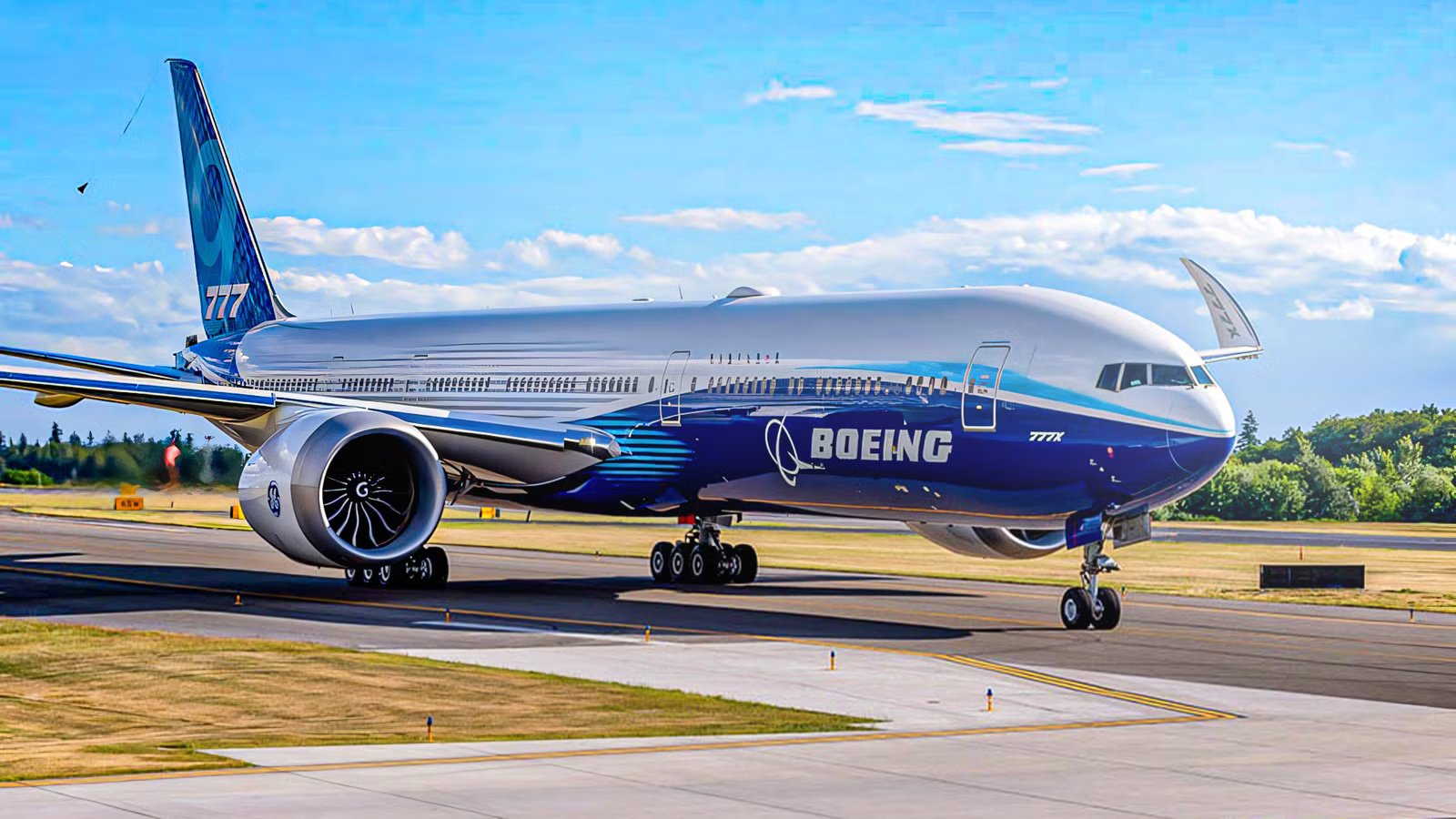
The line between a brilliant engineering workaround and a multi-billion-dollar financial puzzle is remarkably thin in modern commercial aerospace. If a manufacturer decides to build an evolutionary variant of a highly successful twin-engine widebody, the initial business logic usually relies on saving massive development costs by avoiding a completely clean-sheet design. However, sometimes, introducing a single, unprecedented mechanical feature can shatter those assumptions, triggering a ripple effect of architectural changes and regulatory challenges that rival the launch budgets of entire legacy aircraft programs.
At the heart of the United States’ newest widebody program, this kind of feature does exist. The Boeing 777X, with a heightened safety culture, has turned what appeared to be a clever hardware solution into an exhaustive, historic test of structural endurance and software validation. By breaking away from traditional fixed-wing design conventions, the manufacturing team entered uncharted technical territory, where each layer of progress required building a new baseline of proof from the ground up.
A Simple Task?

Boeing decided that the logical next step for its aircraft development was to bring its highly successful 777 family into the modern era. Its design premise: maximize the wing aspect ratio to achieve unprecedented fuel-burn efficiency. To deliver the operating economics demanded by international network operators, the aircraft needed a significantly larger lifting surface than its predecessors. The solution was a highly advanced, swept wing constructed from lightweight carbon-fiber composites, expanding the total wing surface area by roughly 15% to achieve the strict range and payload targets of the program.
However, expanding the size of a lifting surface immediately collides with the rigid limits of real-world airport infrastructure. In flight, the widebody boasts a massive wingspan of 235 feet, five inches (71.75 meters). It gives the aircraft excellent aerodynamic glide characteristics, but it pushes the plane directly into International Civil Aviation Organization Code F gate classifications. The problem is that the vast majority of international tier-one airports are structurally optimized for Code E dimensions, meaning a standard fixed-wing layout would have rendered the aircraft incompatible with the passenger gates, taxiways, and maintenance hangars used worldwide.
To circumvent these constraints without sacrificing aerodynamic performance, the design team engineered a mechanism to fold the outer 11.5 feet (3.5 meters) of each wingtip vertically upward immediately after landing. The action successfully compresses the on-ground footprint down to a manageable 212 feet, 9 inches (64.85 meters), allowing the twinjet to slide seamlessly into existing airport gates alongside legacy widebodies. Resolving this spatial footprint conflict was absolutely non-negotiable, as failing to secure universal gate access would have doomed the entire project to the same infrastructure barriers that severely restricted the commercial viability of the double-deck Airbus A380.
No Need To Worry About Folding Inflight

Cockpit integration for something like this, of course, needs both automation and pilot control. On the flight deck overhead panel, between the passenger seat belt switch and the primary lighting controls, Boeing engineers installed a dedicated toggle switch to control wingtip movement. The tactile interface ensures that the flight crew remains the ultimate authority during the pre-departure sequence. Before leaving the gate or while taxiing, the crew manually commands the outer wing panels to drop down into the horizontal plane. Flight management displays, meanwhile, provide continuous, color-coded visual feedback, changing from a flashing alert configuration to a solid green indication once the mechanisms achieve full extension.
To prevent a catastrophic situation in which an aircraft attempts to become airborne with an incomplete lifting surface, the jet’s digital backbone features a hard-coded takeoff-inhibition architecture. Multiple independent electronic sensors continuously monitor the exact position and mechanical lock status of the primary hinge pins. If these sensors fail to confirm that both outer panels are fully deployed and structurally secured, the flight control computers actively intervene. The fly-by-wire system blocks the application of takeoff thrust, preventing the aircraft from advancing into a high-speed takeoff roll. Rather than placing the entire safety burden on pilot memory or procedural checklists, the hardware itself establishes an impassable electronic barrier to ensure compliance.
Wingtip Status | Cockpit EICAS Indication | Flight Control System State | Takeoff Thrust Availability |
Folded / Vertical | Amber alert or warning icon | System unlocked, power isolated | Completely blocked by software |
Transit / Moving | White transitional status text | Actuators engaged, locks open | Completely blocked by software |
Extended / Unlocked | Amber configuration message | Hinge pin unseated, safety latch open | Completely blocked by software |
Extended / Locked | Solid green confirmation | Mechanical bolts driven, isolated | Fully authorized for flight |
Once the mechanical locks are set firmly into place, the aircraft changes its operating state for the duration of the flight. The control system electronically isolates the hydraulic lines and electrical circuits that drive the rotary actuators, rendering the entire folding systeminert while airborne. Deep system isolation exists to ensure that no transient software glitch, electrical short, or accidental crew input can unlatch the mechanism during cruise operations.
The Boeing 777X Will Physically Refuse To Take Off If Its Wings Are Still Folded
A visually striking feature, the folding wingtips on the 777X are critical to its operation.
Keeping Existing Airport Infrastructure In Mind

Managing flight crew workload during the high-stress rollout phase after landing takes a slightly different approach than you might expect. Instead of requiring the pilots to manually locate and flip an overhead switch while decelerating on the runway, Boeing opted for absolute automation during arrival. The aircraft’s flight computers track ground speed and wheel-spin data in real time to determine the exact moment the vehicle transitions from an airborne craft to a taxiing vehicle. As the jet slows to a speed below a precise threshold of 50 knots (92.60 kilometers per hour), the automated retraction sequence engages without direct human intervention, ensuring the pilot’s focus remains firmly on the landing itself.
Catch what other flight trackers miss
Emergency squawks, holds, NOTAMs — live signals, no signup.
Open tracker
Catch what other flight trackers miss
Emergency squawks, holds, NOTAMs — live signals, no signup.
Open tracker
Folding the wingtips at high speed could introduce structural instability if strong crosswinds strike the vertical surfaces during a high-speed rollout. Conversely, waiting until the aircraft comes to a complete stop would cause massive traffic delays at busy international hubs, where the widebody jet would linger on the active runway until its wingspan shrinks down to fit the narrow parallel taxiways. Therefore, initiating the 20-second retraction sequence precisely at 50 knots (92.60 kilometers per hour), the outer 11 feet (3.35 meters) of each wing fold upward smoothly before the aircraft reaches the final runway turnoff, maximizing airport traffic throughput.
Phase of Rollout | Ground Speed | Wingtip Configuration | System Logic and Safety Status |
Initial Touchdown | ~140 knots (259.28 kilometers per hour) | Fully extended and mechanically locked | Power isolated, mechanical bolts engaged |
Braking & Deceleration | ~80 knots (148.16 kilometers per hour) | Fully extended and mechanically locked | System monitors speed, locks remain closed |
Transition Trigger | 50 knots (92.60 kilometers per hour) | Actuators unlocking and rotating up | Automatic command activates, bolts unseat |
Runway Exit | 25 knots (46.30 kilometers per hour) | Fully folded into vertical position | Ground span reduced, Code E taxi authorized |
The automated sequence also eliminates any ambiguity for air traffic control and ground handling teams waiting at congested airport gates. The wingtips reliably reach their full vertical position before the aircraft clears the runway hold-short line, so the ground handlers know with absolute certainty that the incoming jet complies with Code E separation boundaries. The visible vertical orientation of the 11 feet (3.35 meters) extensions is an unmistakable physical confirmation for everyone on the ramp, helping airlines to seamlessly slot the massive airliner into tight terminal spaces originally built for traditional widebodies and eliminating the need for specialized ground procedures or extended taxi routes.
Adding Unnecessary Complexities?

Creating a massive wing from advanced carbon fiber composites enabled Boeing to achieve an unconstrained, high-aspect-ratio geometry that delivers a 10% improvement in fuel efficiency over previous generations. However, adding a heavy mechanical hinge, hydraulic actuators, locking bolts, and secondary electronic control systems introduces a significant structural weight penalty. Every additional pound of metal and hardware integrated into the fold mechanism robs the airframe of potential payload capacity or ultimate range performance.
The older 777-300ER relied on an aluminum alloy structure with a fixed span of 212 feet, seven inches (64.80 meters), which lacked the advanced aerodynamic profile but required zero moving parts beyond standard flaps and ailerons. The new composite structure expands the inflight wing area by 15%, providing an enormous surface that generates immense lift and stores up to 350,410 pounds (158,943 kilograms) of jet fuel.
Traditional fixed wings require routine structural inspections for fatigue and corrosion, but they do not possess heavy-moving load-bearing structures that cycle thousands of times each year. Airlines must now incorporate specialized checks for hydraulic fluid purity, actuator wear tolerances, and sensor calibration into their standard line maintenance schedules. If an intricate hinge component fails mechanically or develops an electrical fault while away from a primary hub, the aircraft cannot be dispatched with the system deactivated, meaning a single stubborn locking bolt can ground a multi-million-dollar widebody jet at a remote station.

Can The Boeing 777X Take Off Without Its Wingtips Extended?
A closer look at a question that continues to swirl around the Boeing 777X.
Expecting The Unexpected

In the event of a severe system malfunction occurring during a critical phase of ground operations or during extreme weather, this new system needs to be robust. For instance, if an aircraft encounters intense gale-force winds while parked at an exposed gate with its wingtips folded vertically, the surface area acts like a massive sail, transferring immense twisting forces down into the hinge structure. Pilots and ground crews need absolute confidence that the mechanical assembly can withstand these extreme environmental loads without structural deformation or uncommanded deployment.
To address these exact vulnerabilities, regulatory bodies like the Federal Aviation Administration (FAA) mandated a rigorous set of special conditions to design for worst-case environmental scenarios. The mechanical latching system utilizes a heavy locking bolt that remains under constant mechanical tension, so that even a total loss of electrical and hydraulic power cannot cause the wingtip to shift positions. Also, structural testing showed that the vertical assembly can withstand sustained ground winds exceeding 65 knots (120.38 kilometers per hour) from any direction without compromising the hinge’s integrity.
From a day-to-day pilot perspective, these extensive safeguards mean that a technical anomaly within the wingtip system is treated with the same serious gravity as a primary flight control failure. The EICAS system provides clear, step-by-step diagnostic checklists to guide the crew through troubleshooting procedures if a latch fails to seat correctly before departure.
The New Normal?

Successfully certifying a transport-category airliner with a mutable primary structure, Boeing has broken a long-standing engineering taboo in commercial aviation. Competitors and regulatory bodies worldwide are closely watching the operational performance of this system as the aircraft prepares for formal commercial deployment.
International airports are starting to reach their physical expansion limits, and so, the ability to operate a high-capacity widebody with a massive 235 feet, five inches (71.75 meters) cruise wingspan out of a standard Code E gate space is incredibly valuable. This operational adaptability allows network planners to deploy more efficient, higher-payload aircraft onto highly competitive routes without forcing airport authorities to invest hundreds of millions of dollars in widening taxiway clearances or rebuilding terminal corridors. The folding wingtip, therefore, transforms a severe structural constraint into a manageable software and mechanical process.
The maturation of this technology may actually lead to a significant shift in how rival aerospace manufacturers approach long-range aircraft development. Competitors have already begun exploring advanced research initiatives, such as experimental flexible-wing concepts designed to optimize aerodynamic efficiency across various flight phases, building on existing designs that have demonstrated the benefits of blended-wing configurations. What is certain is that the 777X is the first to have this unique feature, so let us see whether it becomes the new normal for wing design.