dailynewsnblog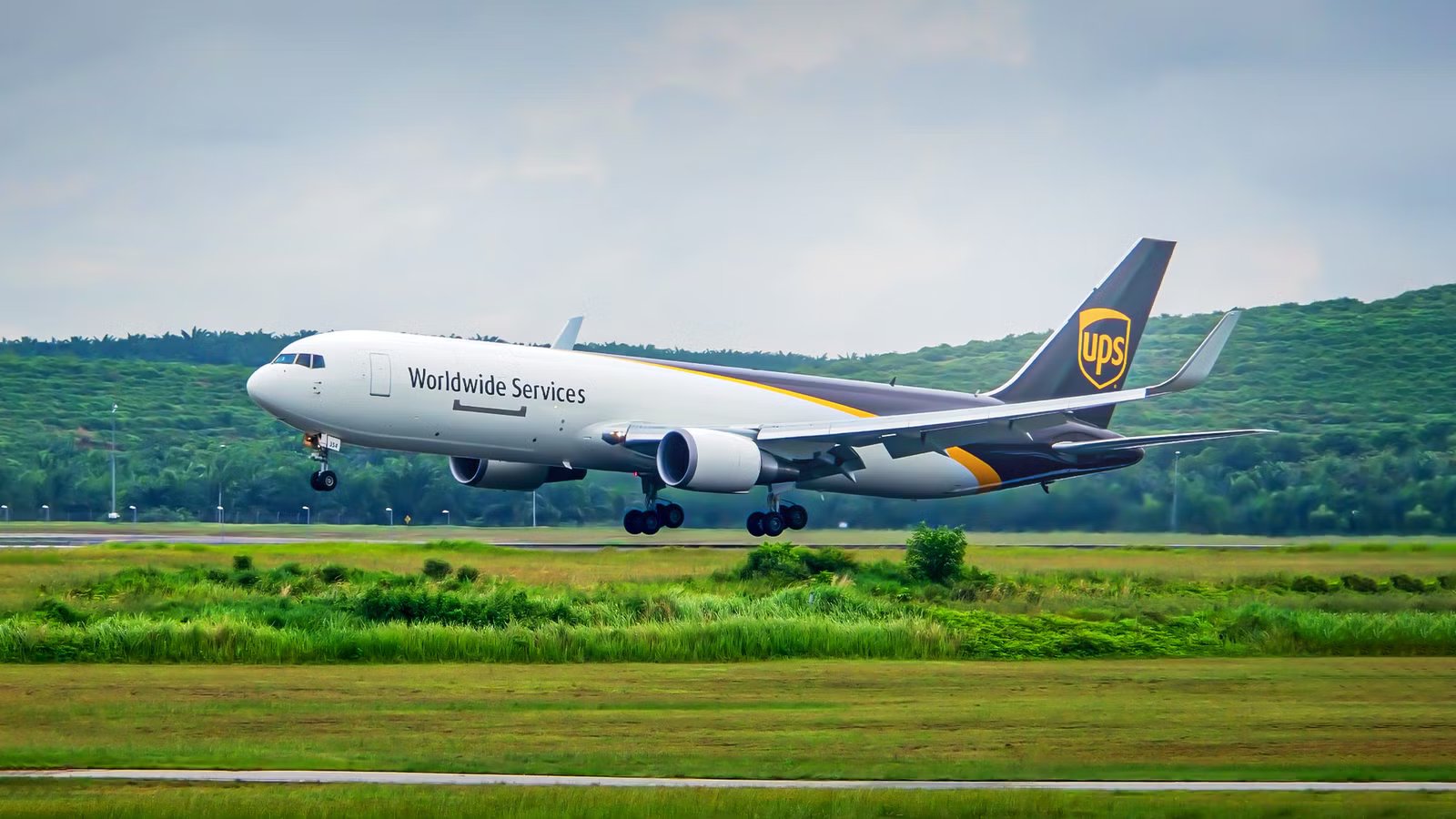
It has been almost 45 years since the Boeing 767 first took to the skies in 1981. The jet is now beginning to fade from commercial aviation, where modern twin-aisle jets like the Airbus A350 are taking over. However, like so many outdated jets, the 767 is taking on a new life as a freighter and military workhorse.
The strengths that gave it versatility and reliability in commercial aviation, such as its rugged landing gear, right-sized payload, and excellent General Electric CF6 engines, continue to have relevance. The  Boeing 767 could start struggling once the larger 777-8F finally arrives, but it will continue to have importance as the KC-46 Pegasus tanker. Deliveries could stretch into the 2030s, and the US Air Force will likely keep using the jet for decades after.
Phasing Out The Passenger 767

Boeing delivered the final Boeing 767-300ER to Air Astana over a decade ago. It has also been around a quarter of a century since the final Boeing 767-400ER was delivered to Continental Airlines. New examples of the aircraft have been made irrelevant by the emergence of the Boeing 787 Dreamliner and the Airbus A330neo.
The result has been that all passenger 767 aircraft are getting older, gradually getting more expensive to operate, and losing reliability. Moreover, the family has ceased to improve, and the efficiency gap for modern widebody jets is only getting larger. Some passenger airlines continue to fly significant quantities of 767s, particularly in the US. According to Planespotters.net, Delta Air Lines has 57 of the planes, while United Airlines has 45 active 767s and eight parked.
Although these carriers are clearly finding utility in holding on to their reliable workhorses, they are decidedly on their way out. United has retired 32 of the aircraft, and its remaining 767 fleet has a creaking average age of 28.8 years.
Both United and Delta have clear plans to at last move on from their 767s. Delta plans for its remaining 767-300ERs to be retired by 2030. United is working to the same timeline with its remaining 767-300ERs and 767-400ERs. Outside the US, Japan Airlines is the largest operator of passenger 767s. The airline hopes to retire the jet by 2028, replacing them with the smaller Airbus A321neo.
The Cargo Industry Has Given The 767 New Life, But The End Of Production Is In Sight

The 767 has found new relevance in the cargo industry, but even that won’t last forever. The 767 freighter production line is winding down. In May 2026, Fedex Express received its 152nd and last new-build Boeing 767-300F. Its registration was N244FE.
Overall production is expected to end next year. The hard 2027 deadline to end 767 production at Everett came due to corporate headwinds, a machinist strike in late 2024, and hefty pre-tax financial charges. The table below shows the FedEx Express fleet, where the 767 remains by far its most plentiful aircraft.
Aircraft type | In service | Parked | Total | Future |
|---|---|---|---|---|
ATR 42/72 | 51 | 9 | 60 | 5 |
Airbus A300 | 43 | 4 | 47 | |
Boeing 737 | 8 | 8 | ||
Boeing 757 | 79 | 3 | 82 | |
Boeing 767 | 148 | 4 | 152 | |
Boeing 777 | 57 | 2 | 59 | 2 |
Cessna 408 SkyCourier | 34 | 7 | 41 | 2 |
McDonnell Douglas MD-11 | 12 | 17 | 29 | |
Total | 432 | 46 | 478 | 9 |
An end to production will not mean a rapid end to cargo carriers’ usage of the 767. The average widebody passenger aircraft retires between 25 and 30 years of age, but cargo aircraft can push to 40 years old before they have to be retired.
The average age of FedEx Express’s 767 freighters is just seven years, showing that we should see them in the airline’s fleet for around another three decades. Simple Flying also points to the fact that an aircraft retired by FedEx last June, an Airbus A300-600F, was 32 years old. A recently retired MD-11 had a similar age.
The 767 Freighter Is Actually A Modernizing Aircraft

In the warped world of freighter aircraft, the 767 is actually an aircraft used to modernize aircraft from the generation before. UPS and FedEx are using their new 767s to replace Airbus A300 and MD-11 freighters. They have also decided not to opt for cutting-edge freighter widebody jets, like the Airbus A350F or 777-8F.
The end of production of new 767 freighters will also not mean that these enormous US cargo carriers cannot further expand their fleets. We can expect to see them hungrily seeking out retiring 767 passenger aircraft and converting them into freighters. The table below shows the specifications for the 767, based on data from Air Charter.
Payload | 119,000 lb (54,000 kg) |
|---|---|
Hold size | 1531 x 177 x 98 inches (3890 x 450 x 250 cm) |
Total load volume | 15,570 cubic feet (438 cubic meters) |
Maximum range | 3,763 miles (6,060 km) |
Cruising speed | 528 mph (850 km/h) |
There are several reasons that old and inefficient aircraft like the 767 can still be hugely important to cargo airlines. The use of tight overnight hub schedules often pushes cargo aircraft away from their optimal usage, putting reliability at a higher premium than fuel burn.
Variable load factors also mean that purchasing cheaper aircraft makes low demand periods less damaging. Finally, fuel burn costs can more easily be passed on to customers than in the ridiculously competitive commercial aviation industry.
The KC-46 Pegasus Has Resurrected The 767 As A Tanker

Recent years have seen the 767 rise to become the US Air Force’s primary tanker as the KC-46 Pegasus. 100 of these jets had come into American military service by December 2025. The plane will be essential in replacing the Cold War-era KC-135 Stratotanker, a truly outdated aircraft that has been flying since the 1950s. It can carry up to 212,000 lb (96,000 kg) of fuel.
The KC-46A uses the Boeing 767-200ER as a bed, but has been substantially redesigned away from the jet’s commercial use. The freighter version of the aircraft has also served as an inspiration, pulling from the airframe’s structural reinforcement capable of dealing with large payloads. Another aircraft that the KC-46A draws from is the 787. The plane has this aircraft’s modern glass cockpit and advanced avionics, replacing the KC-135’s analog displays.
Further advancements draw from military technology to help the plane do its job. The boom is now fly-by-wire, enhancing the precision of fuel transfer. Survivability systems have also been improved, so that the aircraft can meet nuclear, chemical, biological, and kinetic threats. Its systems can detect and counter these threats.
The Pegasus Has Been A Difficult Resurrection

At no point in the KC-46A’s development or delivery has its current significance been guaranteed. Problems began before a deal was made. Initial plans for a controversial leasing arrangement collapsed in 2004 after a procurement scandal. The Pentagon then moved towards a tanker based on the A330 based on a Northrop Grumman and EADS proposal.
This jet would be larger, with a higher fuel and cargo capacity than the proposed 767 design. The Air Force landed on the Northrop/EADS team. However, Boeing managed to get the deal overturned by mounting a formal protest via the Government Accountability Office.
A host of problems have afflicted the aircraft since Boeing and the United States Air Force’s agreement in 2011.
There were plenty of developmental issues with the refueling boom and its Remote Vision System. Boom operators use this system to control refueling from inside the aircraft, rather than needing a direct eyeline to the boom. The boom’s stiffness also made it incompatible with certain aircraft. These technological challenges required a comprehensive redesign, which led the program to overrun and cost Boeing billions.
The first two KC-46A jets finally came into American military hands in January 2019, and the plane soon went into sustained production. However, that wasn’t the end of its issues. In 2025, deliveries were temporarily halted due to the Air Force’s quality concerns.
The 767 Could Be Challenged By Modern Freighters

Boeing has traditionally dominated the large freighter market. The ongoing significance of the 767 plays a substantial part in ensuring this dominance continues. However, while the Boeing 777X program continues to struggle, all Boeing freighters could soon be at risk from the Airbus A350F, as reported by Simple Flying. This freighter type has been pushed past 100 firm commitments by orders from Atlas Air, Cathay Group and Air China.
As well as offering a modern alternative to large Boeing freighters, the A350F is also well-timed as new ICAO carbon dioxide emissions standards for newly manufactured aircraft come into effect in the coming years. The regulations will prevent brand-new 767Fs and 777Fs from being built.
The A350F brings a host of advancements to the freighter landscape. Airlines would otherwise have had to wait for uncertain 777X deliveries to benefit. Examples include a reduction in fuel consumption by 20% and the use of advanced materials that achieve the necessary strength for a freighter with a far lower weight.