dailynewsnblog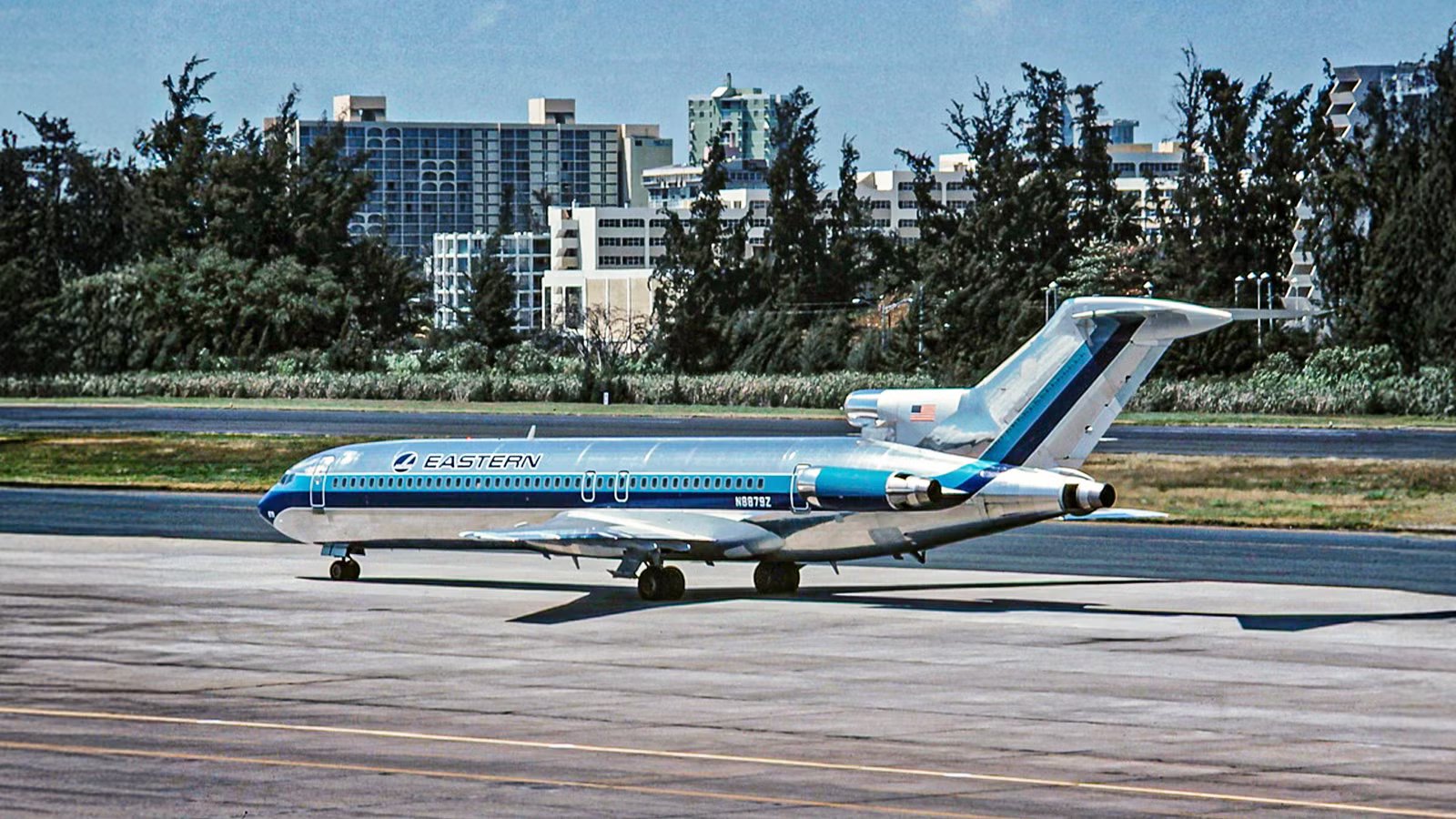
The Boeing 727 is often remembered as one of the most recognizable airliners ever built, with its distinctive T-tail and trio of engines mounted at the rear of the fuselage. To many observers, the aircraft’s three-engine layout appears to be a straightforward engineering choice from an era when designers were still experimenting with aircraft configurations. In reality, the third engine existed because  Boeing found itself caught between three major airlines that all wanted very different things from the company’s next short- and medium-haul aircraft.
Rather than choosing one customer over another, Boeing attempted to satisfy all three at the same time. The result was an aircraft whose defining feature became the physical embodiment of a disagreement between  United Airlines, American Airlines, and Eastern Air Lines. The Boeing 727’s trijet configuration was not simply a matter of style or engineering preference; it was a compromise that allowed Boeing to bridge competing operational requirements, regulatory limitations, and technological constraints of the early 1960s.
Boeing Needed A Successor To The 707

By the end of the 1950s, Boeing had already transformed commercial aviation with the Boeing 707. The four-engine aircraft proved that airlines and passengers were ready for the Jet Age, but it was not ideal for every market. Many routes across the US did not generate enough demand to justify operating a large long-haul aircraft, yet airlines still wanted the speed and prestige that came with jet service.
Boeing therefore began studying a smaller aircraft that could serve medium-density routes while accessing airports that were unsuitable for larger aircraft. The US manufacturer envisioned an aircraft carrying roughly 100 to 150 passengers while operating economically on domestic services, but defining exactly what that aircraft should look like quickly became difficult because Boeing’s most important customers could not agree on the basic configuration.
The disagreement centered on a surprisingly simple question – how many engines should the new aircraft have? The answer would influence everything from operating economics and maintenance costs to airport performance and route flexibility. Unfortunately for Boeing, its three largest prospective customers each favored a different solution.

The Last Trijet In America With Commercial Service
The Boeing 727 played an important role in the early days of jet-powered commercial aviation.
United Airlines Wanted Four Engines For Challenging Airports

United Airlines strongly favored a four-engine design. At the time, the carrier operated extensively from  Denver International Airport (DEN), an airport whose high elevation created challenges for early jet aircraft. High-altitude airports reduce air density, which in turn decreases engine performance and wing lift, and the problem becomes even more pronounced during hot weather, creating what are often referred to as hot-and-high conditions.
In the early 1960s, jet engine technology had not yet advanced to the point where a pair of engines could reliably deliver the performance required for these demanding operations. United Airlines’ planners worried that a twin-engine aircraft might struggle to depart safely from airports like Denver International Airport while carrying a commercially viable payload. The airline therefore viewed four engines as the safest and most practical solution, as additional engines provided greater total thrust and offered more favorable performance margins if one engine failed during take-off. Since United Airlines’ route structure included airports where performance was critical, company executives pushed Boeing toward a design that resembled a smaller version of the 707.
From United Airlines’ perspective, four engines represented operational flexibility and confidence. The airline was less concerned about the additional maintenance burden because the aircraft still needed to perform in conditions where engine power remained a precious commodity.
American Airlines Preferred The Efficiency Of A Twin

 American Airlines approached the problem from the opposite direction. While United Airlines focused heavily on performance, American Airlines concentrated on economics, with every additional engine increasing maintenance requirements, fuel consumption, and overall operating costs. American Airlines believed that a twin-engine aircraft would provide the most efficient solution for the domestic routes it intended to serve, as fewer engines meant fewer components to inspect, repair, and overhaul. The airline also anticipated lower fuel burn and reduced maintenance expenses throughout the aircraft’s operating life.
From a modern perspective, American Airlines’ preference seems obvious. Today’s most successful commercial aircraft families are overwhelmingly twin-engine designs. However, early-1960s technology made the argument far less straightforward, and the low-bypass turbojet engines available at the time simply did not produce the enormous thrust levels that later turbofans would deliver.
The Pratt & Whitney JT8D, which eventually powered the Boeing 727, generated between approximately 13,600 and 16,100 pounds of thrust, depending on the variant. Those figures were respectable for the period, but they imposed limitations on what a two-engine aircraft could accomplish, particularly from shorter runways or high-altitude airports. American Airlines nonetheless viewed twins as the future and pressed Boeing to pursue the most economical solution possible. The airline essentially argued that efficiency should take precedence over the additional capability provided by extra engines.
Why Did Airbus Build The A380 With 4 Engines?
A closer look at why this relatively modern double-decker has an outdated engine configuration.
Eastern Air Lines’ Requirements Changed The Entire Debate

While United Airlines and American Airlines argued over performance versus efficiency, Eastern Air Lines introduced a completely different concern. The airline’s extensive network included routes to destinations throughout the Caribbean, making overwater operations a major consideration.
At the time, US Federal Aviation Administration (FAA) regulations imposed strict limitations on twin-engine aircraft. Before the development of modern Extended-range Twin-engine Operational Performance Standards, commonly known as ETOPS twin-engine airliners generally could not operate more than 60 minutes from a suitable diversion airport. This rule dramatically restricted the routes available to twin-engine aircraft, and even if a twin-engine aircraft possessed adequate performance and economics, regulatory barriers prevented it from serving many overwater city pairs that airlines considered highly profitable.
Eastern Air Lines, therefore, needed more than two engines if it wanted unrestricted access to its Caribbean network. A four-engine aircraft would satisfy that requirement, but so would a three-engine aircraft. Unlike American Airlines, Eastern Air Lines could not accept a twin-engine aircraft, regardless of how efficient it might be.
Catch what other flight trackers miss
Emergency squawks, holds, NOTAMs — live signals, no signup.
Open tracker
Catch what other flight trackers miss
Emergency squawks, holds, NOTAMs — live signals, no signup.
Open tracker
The airline’s position effectively eliminated the simplest compromise. Boeing could not merely split the difference between United Airlines and American Airlines because Eastern Air Lines’ route structure required a configuration that could bypass the 60-minute overwater restriction. The debate was no longer solely about economics or performance, and regulation had become an equally important factor.
The Trijet Became Boeing’s Compromise Solution

Faced with three customers demanding three different answers, Boeing chose an option that nobody had originally requested but everyone could accept. The company developed a trijet. The three-engine configuration offered a middle ground between the competing requirements. It provided more total thrust than a twin-engine design, helping address concerns about performance from challenging airports. At the same time, it avoided the weight and maintenance penalties associated with a four-engine aircraft.
Most importantly, the third engine met regulatory requirements affecting Eastern Air Lines’ overwater routes. By moving beyond the twin-engine category, the aircraft gained access to destinations and city pairs that would otherwise remain off limits under existing rules. Boeing eventually settled on a distinctive arrangement with all three engines mounted at the rear of the fuselage. Two engines sat on either side of the rear fuselage, while the third fed through an S-shaped duct located at the base of the vertical stabilizer.
The configuration created an aircraft that balanced the priorities of all three launch customers. United Airlines received additional thrust, American Airlines avoided the expense of a fourth engine, and Eastern Air Lines obtained the regulatory flexibility it needed. Rather than forcing one airline to compromise completely, Boeing added hardware and created an entirely new category of aircraft.
5 Reasons Why Boeing Decided To Build The 767
The manufacturer had multiple reasons for choosing to build the jet.

The benefits of the trijet design extended beyond regulatory compliance and customer satisfaction. By relocating all three engines to the rear fuselage, Boeing left the wings free of engine nacelles and pylons, and this seemingly simple decision produced one of the aircraft’s greatest strengths. Engine-free wings allowed Boeing engineers to develop an exceptionally sophisticated high-lift system. The B727 featured triple-slotted trailing-edge flaps along with leading-edge slats and Krüger flaps, and together, these devices dramatically increased lift during take-off and landing.
The result was an aircraft capable of operating from airports that many aircraft could not serve, and the Boeing 727 became famous for its ability to use runways measuring roughly 4,500 to 4,800 feet in length, opening access to numerous smaller communities while still providing jet service. Its high-lift wing generated a maximum lift coefficient estimated between 3.0 and 3.6, an extraordinary figure for a commercial aircraft of the period. Landing speeds remained comparatively low, while take-off performance allowed the aircraft to operate from airports that would have challenged many competitors.
These capabilities helped transform the Boeing 727 into one of the most versatile aircraft of its era. Airlines could deploy it on routes ranging from major city pairs to smaller regional airports, giving operators a level of flexibility that proved highly attractive throughout the 1960s and 1970s.
The trijet solution worked so well that the Boeing 727 became the US manufacturer’s best-selling aircraft of its generation. A total of 1,832 aircraft were built throughout an extraordinary production run that stood as a company record until it was eventually surpassed by the Boeing 737. The largest historical operators of the passenger 727 are outlined in the table below:
Ranking | Airline | Boeing 727 |
|---|---|---|
1 | United Airlines | 230 |
2 | Delta Air Lines | 191 |
3 | American Airlines | 184 |
4 | Pan Am | 151 |
5 | Continental Airlines | 135 |
Yet the very factors that made the third engine necessary gradually disappeared. Engine manufacturers developed increasingly powerful and reliable high-bypass turbofans capable of producing far more thrust than the JT8D. As engine performance improved, twin-engine aircraft could safely operate from airports that once seemed to require additional engines. Regulations evolved as well. ETOPS standards progressively expanded, eventually allowing twins to fly 120 minutes, 180 minutes, and even farther from suitable diversion airports. Routes that had once demanded three or four engines suddenly became accessible to aircraft with only two.
The economics also increasingly favored twin-engine aircraft, and airlines discovered they could carry similar passenger loads while maintaining fewer engines, burning less fuel, and reducing maintenance costs. New aircraft such as the Boeing 757, Boeing 767, and later generations of Airbus and Boeing twin-engine aircraft demonstrated that the regulatory and technological barriers which had shaped the 727’s design were disappearing.
What remained was a fascinating historical reality – the Boeing 727’s signature third engine existed because three major airlines wanted three different airplanes, and Boeing found a way to give each of them enough of what they wanted to secure the order.