dailynewsnblog
The Airbus A220 has rapidly transitioned from a niche regional experiment into a central pillar of financial stability for North American carriers. It spent its early years navigating supply chain hurdles and engine reliability concerns, and now, the aircraft is delivering on its promise of unmatched efficiency. This guide explores how the jet is reshaping the balance sheets of major airlines and startups alike, putting the notion that the right-sized aircraft is often the most profitable one in the sky into absolute certainty.
The importance of the A220 lies in its ability to occupy a unique space that both  Boeing and Embraer have struggled to fill. As legacy carriers look to replace aging, inefficient fleets and new entrants seek to dominate secondary markets, this clean-sheet design offers a rare combination of long-range capability and low trip costs. For the first time in decades, airlines have a tool that can fly 3,400 nautical miles (6,297 km) with the economics of a regional jet but the ergonomics and passenger appeal of a widebody.
Economical Star Performer

 Delta Air Lines has used the A220 to bridge the gap between its regional feeders and its mainline fleet with exceptional results. In its Q1 2026 earnings report, the carrier revealed a record $15.9 billion in revenue, with the aggressive deployment of the A220 being a key factor in protecting its 3.2% operating margin. Replacing the aging Boeing 717 and the Embraer 190 is no easy feat, but with the A220, Delta has removed high-maintenance, gas-guzzling airframes from its network in favor of a platform that burns 25% less fuel per seat.
The financial impact of this right-sizing strategy is visible in the unit cost data. Recent internal metrics suggest that the A220-300 provides a 12% cost-per-seat advantage over modern competitors like the Boeing 737 MAX 7. This margin allows Delta to maintain high frequencies on business-heavy routes without the risk of flying half-empty 180-seat aircraft during off-peak hours. For Delta, the A220 is a margin protector that enables the airline to recapture revenue in an environment where fuel prices remain volatile.
Strategic fleet discipline has seen Delta expand its A220 stable to nearly 100 aircraft. This scale allows for standardized crew training and maintenance routines, further driving down the indirect costs that usually plague mixed-fleet operators. As the airline pushes toward a more premium-heavy configuration, the A220 serves as the perfect canvas for high-yield seating that passengers are willing to pay a premium for on shorter hops.
Growing And Growing

Breeze Airways has completely rewritten the startup airline playbook by utilizing the A220 to build a fortress around underserved city pairs. As of May 2026, the carrier operates approximately 90% of its routes without a single nonstop competitor, a feat that would be impossible with larger, more expensive narrowbodies. The A220’s low trip cost allows Breeze to profitably serve long and thin routes that connect secondary markets, effectively creating a monopoly on convenience for travelers in cities like Charleston and Providence.
This specialized route strategy led Breeze to report its first full year of net profitability in 2025, a milestone that has carried over into 2026. Focusing purely on point-to-point connections rather than the traditional hub-and-spoke model, the airline avoids the high landing fees and congestion of major hubs. The A220 is the engine behind this growth, providing the range to link the East Coast to the West Coast while maintaining a seat count that is easy to fill even in mid-sized markets.
The ability to break even with 6% fewer passengers gives Breeze a massive safety net when testing new markets. If a route underperforms, the lower financial floor of the A220 prevents the kind of heavy losses that typically sink new airlines. The flexibility that the aircraft brings has allowed the carrier to expand its network to over 200 nonstop routes, proving that the A220 is a powerful tool for market disruption when used outside the traditional airline hubs.
Simple Flying Quiz
Easy (15s)Medium (10s)Hard (5s)
Pushing The Range Limits

The A220’s range of 3,400 nautical miles (6,297 km) has unlocked a new frontier for North American network planners. Today, we are seeing a surge in transcontinental routes that skip the traditional hubs entirely, linking cities like Richmond (RIC) directly to  Los Angeles (LAX). Previously, only larger jets would have been used here, that required much higher passenger loads to justify the fuel burn, but the A220 makes them commercially viable with as few as 100 passengers on board.
 Air Canada has been a primary beneficiary of this range, using its A220 fleet to connect Montreal, Vancouver and Toronto to secondary destinations in Central America and the US West Coast. The jet’s ability to handle the thin air of hot and high airports while still carrying enough fuel for a six-hour flight is a technical feat that few other narrowbodies can match. This capability allows the airline to right-size its international offerings, ensuring that it doesn’t waste an A321LR or all new A321XLR on a route that the A220 can handle with better margins.
Where airlines give particular commendation is in the significant operational advantage in terms of turnaround times. The smaller passenger cabin and efficient door layout allow for faster boarding and deplaning compared to a 737 MAX 8. On a busy transcontinental schedule, saving 10 or 15 minutes at the gate can mean the difference between an aircraft flying four segments a day or five, directly impacting the total revenue generated by each hull.
Stretch Coming Soon?

The aviation industry is currently fixated on the July 2026 Farnborough International Airshow, where Airbus is widely expected to announce the formal launch of the A220-500. This stretched variant would seat up to 180 passengers, placing it in direct competition with the A320neo and the 737 MAX 8. Recent momentum for the stretch was bolstered by a landmark order from AirAsia for 150 A220s in early May 2026, a move that many analysts see as the final push Airbus needed to greenlight the larger model.
For North American majors like Delta and Air Canada, the A220-500 is the holy grail of narrowbody flying. A larger variant would offer even better seat-mile costs by spreading the weight of the wing and engines over a greater number of passengers. The A220 wing was originally designed with a stretch in mind, so the -500 would likely maintain much of the fuel efficiency that made the smaller models famous. It would create a super-efficient 180-seater that could eventually eat into sales of the aging A320 design.
a220
If the A220-500 enters service by 2028, it will radically shift the competitive landscape in the US. Airlines could operate a single fleet type that covers everything from a 100-seat regional hop to a 180-seat transcontinental trunk route; another level of flexibility that is now the ultimate goal for fleet planners, as it allows for infinite scalability without the massive overhead of maintaining multiple pilot and mechanic pools.
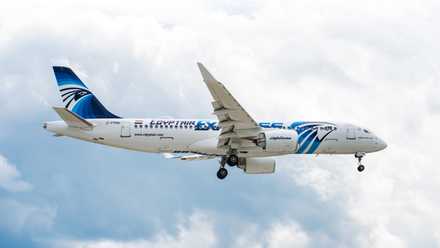
Will Airbus Build The A220-500?
Airbus already operates several variants in its A220 series.
Not Without Its Struggles

The one shadow hanging over the A220’s success has been the reliability of the Pratt & Whitney Geared Turbofan (GTF) engines. In 2024 and 2025, hundreds of aircraft were grounded globally due to premature wear on engine components, leading to significant revenue losses for operators. However, the tide is finally turning as new maintenance agreements and accelerated shop visits have begun to clear the backlog, with carriers like JetBlue reporting that their A220 aircraft on ground (AOG) numbers have dropped by 40% since last year.
To mitigate future risks, many airlines like Azul Linhas Aereas have signed 12-year comprehensive service agreements with Pratt & Whitney that include guaranteed spare engine availability. These contracts are designed to ensure that the engine issues of the past do not derail the profitability of the future. While the GTF remains a complex piece of machinery, its fuel-saving benefits, up to 20% better than previous engines, are simply too great for airlines to abandon, especially with the new 2026 hardware fixes showing improved durability.
The stabilization of the engine situation is a major relief for the industry. With more aircraft actually in the air rather than in the hangar, the true earning potential of the A220 is finally being realized. Pilots and maintenance crews are also becoming more proficient with the type, leading to a steady increase in daily utilization rates. As the “learning curve” flattens, the A220 is looking to be a reliable option that can handle the high-cycle environment of any network.
A Fan Favorite

Putting the spreadsheets and the fuel bills aside, the A220 has a secret weapon: passengers genuinely love it. In an era of shrinking legroom and middle-seat dread, the A220’s 2-3 seating configuration is a massive marketing advantage. For travelers, this means that 80% of the seats in any given row are either an aisle or a window. Many are increasingly using apps to specifically book A220 flights, allowing airlines to command a yield premium or higher average fare for these services compared to a standard 3-3 narrowbody.
The introduction of the Airbus Airspace cabin on all 2026 deliveries has further elevated the experience. With larger overhead bins that can accommodate 60% more bags and customizable LED lighting that reduces jet lag, the A220 feels like a much larger aircraft. The 11 by 16 inch (28 by 40 cm) windows, which are the largest in the narrowbody class, flood the cabin with natural light, creating a sense of space that is often missing from smaller jets.
The future of the A220 in North America looks exceptionally bright. As the program crosses the 1,000-order milestone and the engine issues fade into the rear-view mirror, the aircraft is cementing its status as the most important narrowbody of the decade. The A220 is now the common denominator in the story of modern airline profitability, showing its face in many airline fleets not just in North America but globally.