dailynewsnblog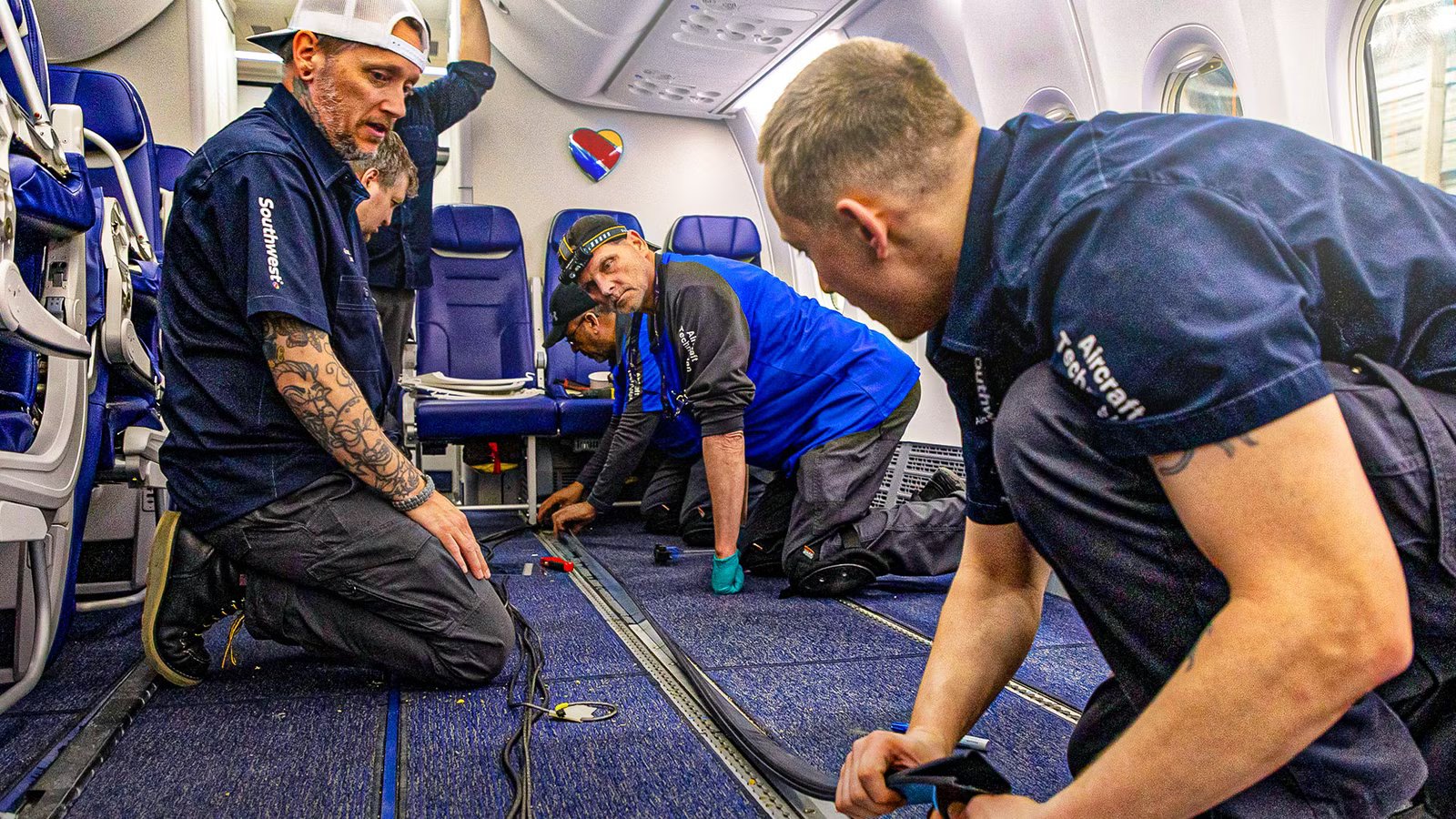
 Southwest Airlines spent more than five decades building one of the most operationally efficient business models in commercial aviation. Its open seating system was not simply a quirky brand identity feature; it was a carefully engineered mechanism designed to accelerate boarding, reduce gate time, and maximize aircraft utilization across a dense short-haul network. That efficiency became a core competitive advantage as Southwest scaled to more than 800 Boeing 737 aircraft operating thousands of daily flights.
Now the airline is dismantling that system in favor of assigned seating, premium seat monetization, and an eight-group boarding process. Early passenger reactions suggest the transition has introduced significant boarding friction, particularly around overhead bin access and aisle congestion. While most coverage focuses on customer inconvenience, the more important question is operational: what happens when an airline optimized for rapid turns suddenly adds even a few extra minutes to every flight cycle across its entire fleet?
Southwest’s Original Boarding Model Was Built Around Speed

For more than half a century, Southwest Airlines has built its operational identity around one idea: keeping airplanes moving. The carrier’s famous open seating system was never simply a branding gimmick or a customer-experience experiment. It was an efficiency tool designed to reduce the time aircraft spent sitting at gates. In the airline industry, where aircraft can cost tens of millions of dollars and generate revenue only while airborne, minimizing idle time is one of the most important drivers of profitability.
The strategy worked particularly well because Southwest standardized almost its entire operation around Boeing 737 aircraft. Operating a single aircraft family simplified pilot training, maintenance inventories, scheduling, and spare-parts logistics. By late 2025 and early 2026, Southwest operated more than 800 Boeing 737 aircraft, making it one of the largest all-737 fleets in the world. The company’s network structure also differed from traditional hub-and-spoke airlines because Southwest emphasized high-frequency point-to-point flying, meaning aircraft frequently cycled through multiple airports throughout the day.
That operational structure made fast turnarounds critically important. Southwest aircraft commonly operate five to seven daily flight segments, significantly more than many long-haul international carriers. Historically, Southwest targeted turnaround times of 25 to 35 minutes at many airports, allowing aircraft to spend more hours in revenue-generating service. Even small increases in boarding or departure times, therefore, have outsized consequences because delays compound across multiple flight legs. A single aircraft losing 20 to 30 minutes during the morning schedule can carry those delays throughout the remainder of the day.
Assigned Seating Changes Passenger Behavior

The shift to assigned seating changes the behavioral flow inside the aircraft cabin in ways that are operationally significant. Under Southwest’s old open-seating model, passengers continuously moved through the aircraft looking for available seats, creating a relatively fluid boarding pattern. Travelers who boarded later simply selected whatever seats remained without needing to stop at specific rows or negotiate with other passengers over assigned positions.
Assigned seating introduces a much more rigid boarding environment. Passengers now stop precisely at designated rows, verify seat numbers, rearrange carry-on items, and often search for overhead bin space close to their assigned seats. Because modern travelers increasingly avoid checked baggage fees by bringing larger carry-on roller bags onboard, overhead storage has become one of the most contested resources during boarding. Once the nearby bin space fills, passengers frequently move backward through the aisle searching for additional storage, creating interruptions that slow the entire boarding process.
Those disruptions create operational ripple effects beyond passenger inconvenience. Flight attendants spend more time assisting travelers with baggage placement and seating confusion, while passengers waiting in the aisle struggle to reach their rows. Early traveler reports following Southwest’s January 2026 rollout described visible congestion during boarding, especially on fuller flights. The issue becomes more important because Southwest carried more than 134 million passengers annually before the seating transition, meaning even small inefficiencies scale rapidly across the airline’s network.
Broken Promises: How Southwest Is Impacted By Boeing 737 Delays
The carrier confirms it will not receive over 100 contracted deliveries from Boeing
The Fleet-Level Math Gets Large Very Quickly

The most important part of the assigned seating debate is not whether boarding feels slightly slower to passengers. The real issue is the scale at which minor operational inefficiencies multiply across a massive fleet. Southwest’s network operates thousands of daily departures, and each additional minute spent boarding or repositioning passengers reduces the amount of time aircraft spend flying revenue-producing routes.
Consider a conservative scenario in which assigned seating adds five minutes to every turnaround cycle. If Southwest operates roughly 800 aircraft and each aircraft averages five flight segments per day, the cumulative impact is enormous: 800×5×5 = 20,000 minutes per day.
That equals approximately 333 additional aircraft-hours lost every day, or nearly 14 full aircraft-days of productivity removed from the network every 24 hours. Over the course of a year, those losses compound into tens of thousands of additional ground hours. Even a more modest three-minute increase per turnaround would still remove roughly 200 aircraft hours of utilization per day. In an industry where airlines fight intensely for marginal efficiency improvements, that level of operational drag becomes financially meaningful very quickly.
Slower Boarding Creates Network Fragility

The larger issue is not simply slower boarding times. It is the way delays propagate throughout an airline network built around tight aircraft rotations. Southwest’s operating model depends heavily on keeping aircraft moving continuously throughout the day, with many Boeing 737s completing five, six, or even seven separate flight segments in a single operating cycle. Unlike long-haul international airlines that may schedule extended ground windows between flights, Southwest has traditionally minimized idle time to maximize aircraft utilization and daily revenue.
Southwest schedules many of its aircraft across multiple cities in a single day with relatively limited slack between flights. When turn times increase systemwide, even minor delays begin compounding rapidly across the network. A late departure in one city creates knock-on effects for subsequent departures; crew schedules, gate assignments, aircraft positioning, fueling operations, catering timelines, and passenger connections later in the day. What begins as a five-minute boarding delay in Dallas or Phoenix can evolve into cascading disruptions that affect aircraft hundreds, or even thousands, of miles away by evening operations.
That compounding effect becomes especially dangerous because Southwest’s network structure relies heavily on aircraft rotation efficiency rather than the traditional hub-and-spoke buffering used by some legacy carriers. If one aircraft falls behind schedule early in the morning, there are fewer opportunities to absorb delays before crews approach FAA duty-time limits or airports encounter gate congestion during peak periods. During irregular operations such as thunderstorms, air traffic control slowdowns, or maintenance events, the loss of even small amounts of turnaround flexibility can significantly weaken the airline’s ability to recover the schedule before delays spread systemwide.
Why Southwest Airlines Had To Rewrite Its New Boarding System Weeks After Launch
The carrier’s assigned-seating rollout exposed bin-space battles, loyalty tensions, and the cost of abandoning old habits.
Southwest Is Spending Capital to Recover Lost Efficiency

The airline’s response suggests it understands the operational risks introduced by assigned seating. Southwest has already announced plans to retrofit roughly 70% of its fleet with larger overhead bins capable of holding approximately 50% more carry-on luggage by the end of 2026.
Those larger bins are not merely a passenger-experience upgrade. They are intended to reduce the number of passengers who search for storage space outside their assigned rows. Fewer aisle reversals and fewer baggage conflicts should help restore some of the boarding speed that the old open-seating system naturally achieved.
Southwest is also adjusting its boarding-group structure to improve cabin flow. The airline now uses eight boarding groups instead of the old A/B/C lineup, attempting to distribute passengers more efficiently throughout the aircraft. Whether those changes fully offset the additional complexity remains uncertain.
The Real Gamble Is Revenue Versus Utilization

Southwest did not abandon open seating by accident. The move is part of a broader strategy to improve profitability and compete more directly with legacy airlines that generate significant revenue from seat assignments, premium seating, and fare segmentation. For decades, Southwest differentiated itself through simplicity, faster boarding, fewer fees, and a more streamlined customer experience. But as competitors increasingly monetized premium products, Southwest’s traditional model began limiting its revenue potential.
Assigned seating gives the airline several new ways to increase ancillary income. Southwest can now charge for preferred seats closer to the front of the aircraft, introduce extra-legroom rows, and create more clearly defined fare categories aimed at higher-spending travelers. Those additional revenue streams have become increasingly important across the airline industry as fuel, labor, and maintenance costs continue rising. Activist investor Elliott Management strongly pushed for these changes after Southwest’s profitability weakened, despite the airline generating roughly $28.1 billion in revenue for the full year 2025, a 2.11% increase from 2024.
The challenge is that airline economics depend heavily on operational efficiency. Southwest historically offset lower ancillary revenue by maximizing aircraft utilization through rapid turnarounds and simplified operations. If assigned seating creates enough friction to slow boarding, increase delays, or reduce daily aircraft productivity, the new revenue opportunities must outweigh those operational costs. Southwest is effectively testing whether higher ancillary income can compensate for the loss of some of the simplicity and speed that have historically defined its business model.