dailynewsnblog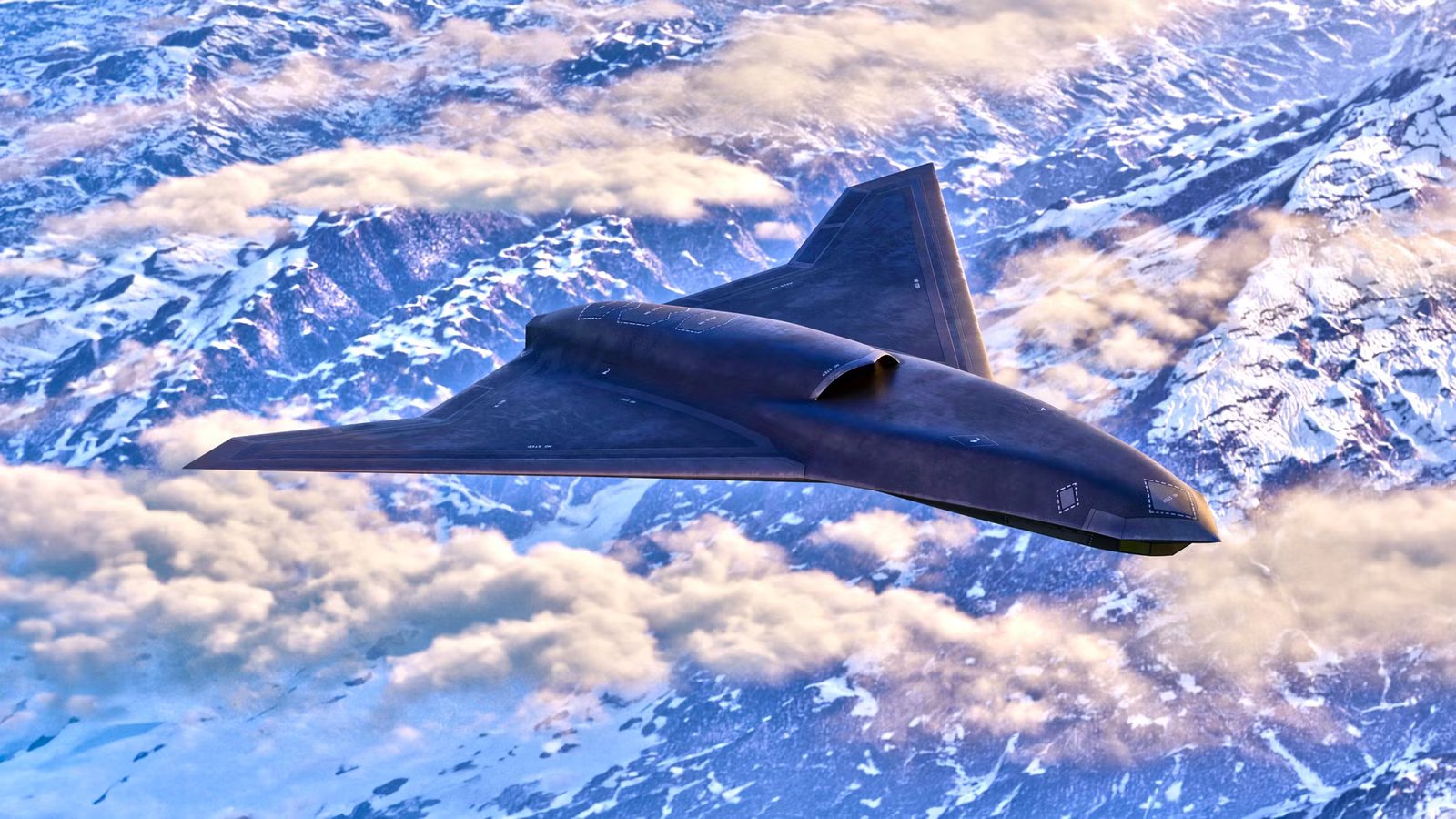
The upcoming Boeing F-47 6th-generation fighter jet is just the manned component of the Air Force’s Next Generation Air Dominance (NGAG) program. The other part is the development of advanced loyal wingmen drones called Collaborative Combat Aircraft (CCA). Unlike previous-generation fighter jets, the F-47 is not being designed as a stand-alone fighter jet, but as a node or command center of a strike package that will include CCAs and other off-board platforms.
For Increment 1 of the CCA program, the United States Air Force has greenlit the Anduril YFQ-44A and General Atomics YFQ-42 aircraft. But take a look at these aircraft, and on the face of it, they don’t look right for the state-of-the-art, long-range, supersonic, all-aspect stealth F-47. This is where more advanced CCA designs, like the Lockheed Martin Vectis, could come in.
CCAs Are Still Taking Shape

Even though Anduril has announced that its YFQ-44A is in production at its new Arsenal 1 facility, the eventual shape of the CCA program is still taking form. The Air Force is developing a completely new doctrine and aircraft type, and the program remains in the early stages. It will also likely have different requirements for CCAs of various capabilities, depending on the aircraft they are to be paired with and the mission set. The first Air Force CCAs are to be paired with the F-22, starting in 2029, with the F-35 flowing shortly thereafter.
In its Increment 1, the US Air Force rejected the “gold-plated” Lockheed Martin competitor. At the same time, it rejected the smaller and less capable Kratos XQ-58 Valkyrie that it is using as a test aircraft to develop the CCA concept. The Air Force opted for the affordable, capable, but subsonic General Atomics and Anduril demonstrators. However, the US Marine Corps has selected an adapted variant of the XQ-58 as part of its CCA program to fly with its fleet of F-35s. The first are expected to arrive in 2029.
Of the three fighter-jet operating services, the Navy appears to be the farthest behind. It has only just started evaluating its requirements for a CCA aircraft and is leveraging pioneering work already done by the Air Force. There have been reports that the Navy is considering much less capable CCAs. These would fly a few missions and then end their short lives as one-way attack drones or essentially cruise missiles.
Increment 1 Emphasizes Speed Of Development

Rolls-Royce is a major producer of aircraft engines, and it is a notable contractor for the United States. Recently, Kaare Erickson, Senior Vice President of Strategic Campaigns for Combat and Strategic Systems at Rolls-Royce, spoke about how the company sees potential for its AE 3007 engine and its newly developed Orpheus engine to power Increment 2 of the USAF’s CCA program. The AE 3007 already powers the MQ-25 Stingray and RQ-4 Global Hawk.
He noted, “There’s a lot of activity in Increment 1, but the real inflection point for propulsion is Increment 2, where the Air Force is deciding how much capability, range, survivability, and mission flexibility these platforms truly need.” He also highlighted that the Air Force wants to use these aircraft in the Indo-Pacific, where they must overcome the tyranny of distance. He explained that Increment 1 was about getting aircraft flying quickly, with the emphasis on the speed of development more than optimization.
But this is expected to change with Increment 2. In this stage of the program, the Air Force needs to ask harder questions, such as range, payload, power, survivability, cost, etc. Put another way, the YFQ-44 and YFQ-42 have been developed in urgency for the Air Force’s existing fighter jets. They do not necessarily represent what the program will be as it matures into Increment 2 and develops CCAs for the Air Force’s F-47. The F-47 is expected to enter service in the early 2030s.

The World’s Largest Air Forces By Number Of F-35s
A closer look at some of the leading F-35 armadas around the world.
Lockheed Sees The Need For High-End CCA

Even though the Air Force snubbed Lockheed’s gold-plated stealth CCA bid, Lockheed has been undeterred. From its perspective, the Air Force will need a more capable, higher-end CCA, although this is not necessarily to the exclusion of less capable aircraft. Lockheed says, “Lockheed Martin Vectis is designed to fly independently or team seamlessly with crewed aircraft like the F-35 and future next-generation platforms.” Like all CCA hopefuls, Lockheed also claims it’s affordable.
Lockheed claims the aircraft is stealthy, long-ranged, and has high endurance, although it remains runway dependent in its “current instantiation.” Renderings are at least somewhat reminiscent of futuristic NGAS tanker renderings and appear more in line with some of the stealthy wingman drone designs appearing in China. It should also be noted that Lockheed believes in the need for its higher-end Vectis to the point that Vectis is being self-funded by the company.
|
Lockheed Martin Vectis (per Lockheed, etc.) |
|
|---|---|
|
Role |
Loyal Wingman Drone/Collaborative Combat Aircraft |
|
Top speed |
Mach 0.8-0.9 |
|
Range |
Unstated |
|
First flight |
2027 (planned) |
|
Cost |
$35+ million |
Frustratingly, the performance parameters of Vectis have not been disclosed. So it is impossible to say what its payload will be, or its range, endurance, and top speed. Lockheed has stated it will be smaller than an F-16, but that doesn’t reveal a whole lot. The prototype is expected to fly in 2027 and will be powered by Williams International’s FJ44-4 turbofan engine, which offers 3,600 lbf of thrust.
The F-47’s Massive Combat Radius

The F-47 is expected to be a generational leap in air dominance and restore the “silver bullet” status the F-22 Raptor boasted when it entered service two decades ago. However, it needs to be emphasised that little is known about the F-47; the public doesn’t even know what it will look like, as the two official partial renders are suspected to have deliberate misdirections to keep US adversaries guessing.
But some things can be stated. It is reported to have the radar cross-section of an “insect” and a combat radius of more than 1,000 nautical miles (1,852 km). This is a significantly larger combat radius than today’s fighter jets. Combat radii are only variable and are mission-specific, although this could be as much as double the combat radius of the F-22, which is estimated to have a combat radius of 530 to 600 nautical miles (981 to 1,111 km). The F-35A’s combat radius is similar to, or a little larger than, the F-22.
Here, the conversation can go back to what Rolls-Royce and Lockheed Martin are saying. It’s all well and good to want to have a low-cost CCA for short-range missions. However, the F-47 is designed to counter China over the vast distances of the Pacific. This demands that the F-47’s future CCA’s have a long combat radius, and to have a large combat radius, the CCA’s must scale up and therefore increase in cost. For reference, the current Increment 1 CCAs are reported to have a combat radius of over 700 nautical miles (1,296 km).

From 76 F-22 Raptors To 200 Next-Gen Fighters: How Much Larger America’s Air Superiority Fleet Could Get
A closer look at the future of air power in the US Armed Forces.
The Question Of Affordability

But not all the evidence points to expensive, ‘exquisite’ CCAs for Increment 2. According to The War Zone, former Secretary of the Air Force Frank Kendall previously stated that there “is a range of options from low-end to potentially more exquisite. I tend to think that it’s probably going to be closer to this low-end thing.” One of the main concerns for the Air Force is that of cost. Increment 1 CCAs already cost around $25 million, while Increment 2 CCAs are expected to be 20–30% more expensive in the $33–35 million range.
The best system is not just the most advanced and capable one; it’s the one that an air force can actually afford. This is why the SR-71 Blackbird was outlived by the older and less capable Lockheed U-2. The F-22 was the most capable air dominance fighter jet ever developed, and yet the costs meant the Air Force slashed its buy from 750 to just 187 and returned to purchasing upgraded F-15s.
It is possible to design a system so capable that it becomes unaffordable. That said, the F-47 is not designed to be affordable or produced en masse. The Air Force is only planning to purchase around 185 examples; they are intended to be the tip of the spear, working with more affordable and less capable fighter jets. It’s possible the Air Force will develop less capable CCAs for its F-35s and F-15s, but “exquisite” ones for its cutting-edge F-47.
Even The Vectis Is Subsonic

Another factor to note is that the YFQ-44 and YFQ-42 aircraft appear to be subsonic. Yet, these are intended to operate alongside supersonic F-22s and F-35s. It is unclear how that will work, although it can be noted that fighter jets spend almost all their time flying at subsonic speeds or low supersonic speeds.
The top speeds of the US Air Force’s aircraft are different. Both the F-22 and F-15 have top speeds of around Mach 2.2, with the F-22 being much more efficient with its supercruise capabilities. The F-35 only has a top speed of Mach 1.6 (reduced from Mach 1.8 during the design stage). The incoming B-21 Raider bomber is also expected to eventually have CCAs, although it is a subsonic aircraft.
It has been reported that the future F-47 will have a top speed of at least Mach 2. Sandboxx News reports that even the higher-end Vectis is being designed with a high-subsonic speed of Mach 0.8 to 0.9. The question then becomes to what degree the CCAs will be expected to keep pace with their fighter jets and how the Air Force plans to use these aircraft together, despite their different top speeds.