dailynewsnblog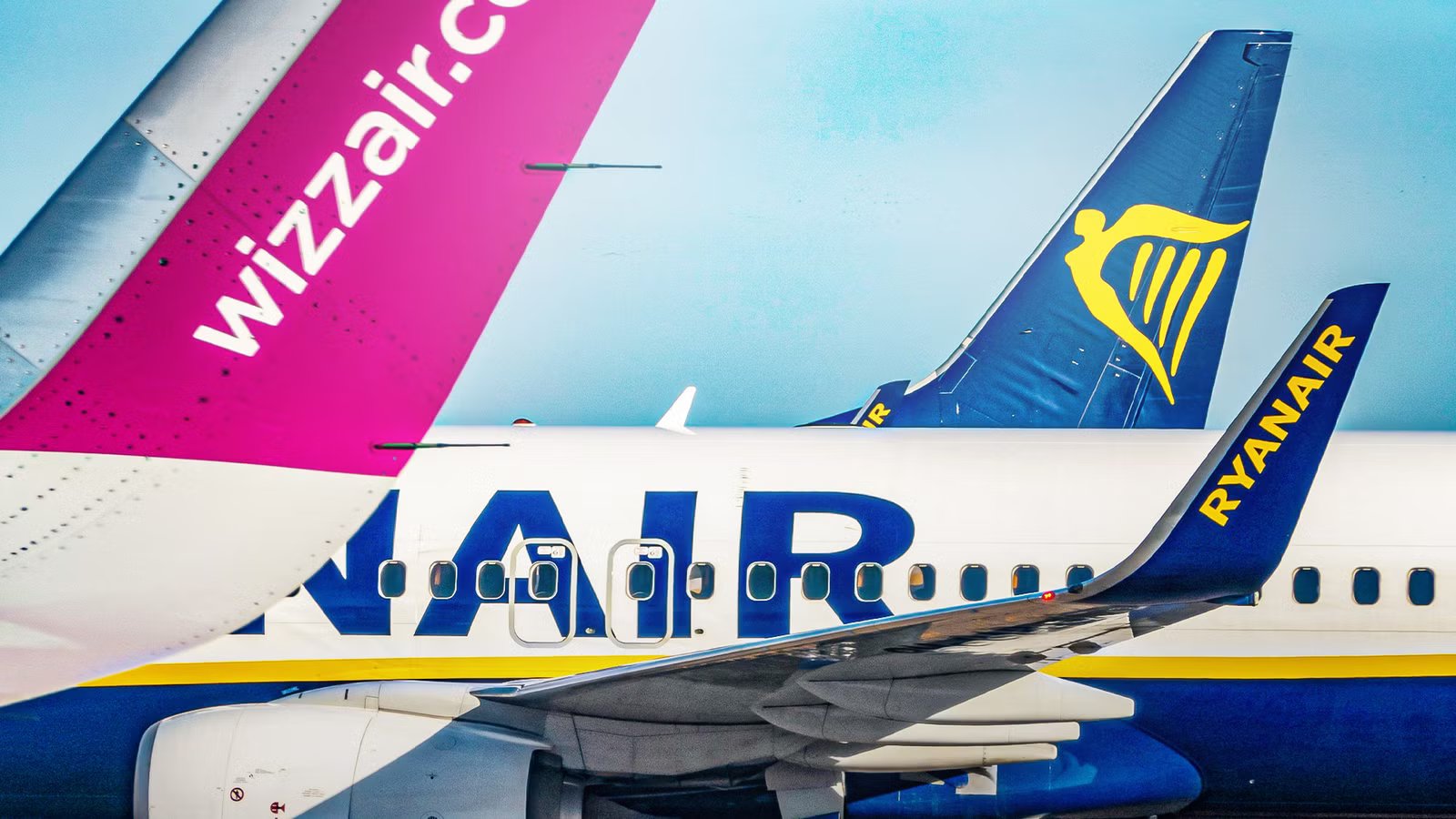
Airline CEOs are often outspoken in times of economic uncertainty, especially when it affects the aviation industry. The CEO of Ryanair, Michael O’Leary, United Airlines’ Scott Kirby, and Delta Air Lines’ Ed Bastian are some of the most frequent contributors to aviation headlines. Ryanair’s O’Leary is the latest to sound off amid ongoing regional tensions in the Middle East, which have had a significant impact on the aviation landscape.
According to Investing.com, O’Leary stated that “European airlines could face bankruptcy if jet fuel prices, which have surged from around $80 to $150 per barrel following the Strait of Hormuz blockade, remain elevated through the summer months.” It is unclear at which airlines, if any, this comment was directed.
“We think a number of our airline competitors in Europe are going to face real financial difficulties,” he explained.
The Norges Bank Investment Management (NBIM) Investment Conference 2026

O’Leary’s comments at the Oslo investment conference — that European airlines could go bankrupt if jet fuel stays at $150 per barrel through the summer — are factually grounded, but they also strategically elevate Ryanair’s competitive position. The real story is not the warning itself, but the deeper meaning and motivation behind it.
O’Leary’s position as CEO means that his words carry weight. At the conference, he primarily targeted his competitors, suggesting that they may not be ready to adapt to volatile Jet-A costs.Ryanair, with 80% of its fuel hedged, describes itself as “the most insulated airline in Europe.” That insulation applies narrowly to fuel price swings, not to the wider operational climate.
Geopolitical tensions — particularly in the Middle East — continue to ripple through the industry in ways hedging cannot offset, from rising insurance costs to uncertainty in passenger demand. In that context, even a heavily hedged carrier may reassess where it deploys aircraft and capital, as we explore below.
“Fare Increases Are Sticking”: Alaska CEO Warns Higher Prices Are Here To Stay
As fuel costs soar, airlines worldwide are implementing drastic measures.
Narrative: Ryanair Will Survive, Others Won’t

By highlighting Ryanair’s hedge, he’s signaling that Ryanair will survive; other airlines won’t survive.
Spirit Airlines was among the first carriers hit by the latest Middle East tensions, with rising fuel costs ultimately forcing it to shut down on May 2, 2026, despite an already fragile financial position. Looking at the financial picture of other LCCs, particularly those in Ryanair’s geographical area, Wizz Air reported a Y25 net profit of €213.9 million — a 41.5% drop year‑on‑year — while its operating profit fell even more sharply, sliding from €437.9 million to €167.5 million, a 61.7% decline.
easyJet’s CEO Kenton Jarvis remarked that the airline “saw continued positive demand in the first half, driven by our great value flights and holidays, alongside a continued focus on our operations and customer experience.”
While easyJet was not already in a precarious financial position, the conflict has impacted its operations, as it has for other airlines globally.
“Despite these positives, our H1 financial performance worsened year-on-year, impacted by the conflict in the Middle East and the competitive environment in some markets. Following our busiest Easter holiday period ever, the operational ramp up into peak summer continues as planned.”
End Of An Era: Final Spirit Airlines Flight Lands In Dallas As Carrier Confirms Shutdown
The last Spirit flight has touched down in Dallas, marking the end of the ultra-low-cost carrier’s operations.
Looking at Ryanair’s Own Challenges

O’Leary is correct from a current financial perspective, that Ryanair is well insulated. The Irish carrier is experiencing strong financial growth, with net profits in the first half of fiscal year 2026 jumping ~42% to approximately €2.54 billion. While O’Leary’s hedging of fuel costs aims to protect the airline amid a global fuel crisis, it’s always worth considering the other variables at play.
 Berlin Brandenburg Airport (BER) will lose Ryanair’s seven-aircraft operating base on October 24. Ryanair has cited that the airport is the “most failing airport in Europe,” according to Euro News. However, the true reason for this closure may be multifaceted. Ryanair emphasized that higher airport taxes make the base economically unsustainable. These fees apply uniformly to all carriers, so the airline’s decision reflects its own cost‑sensitivity rather than a unique burden. However, it is reasonable to question whether this explanation tells the full story.
Even though Ryanair maintains that it is fully hedged against jet‑fuel price volatility, the broader operating environment has become more unpredictable. Ongoing tensions in the Middle East have introduced economic uncertainty, causing the closure of a base in a high-traffic, cosmopolitan European city.
In that context, the decision to withdraw from Berlin may reflect a more cautious, system‑wide recalibration of capacity rather than taxes alone. Rising charges at BER may be the stated trigger, but the strategic backdrop is a global environment where airlines are increasingly defensive in their deployment decisions. Therefore, O’Leary’s suggestion that the airline is essentially immune to jet fuel price volatility, is associated with other types of operational adjustments to stay competitive.
It is also worth noting that other European ultra low-cost carriers (ULCCs) are maintaining operations at BER. In fact, Wizz Air is set to increase capacity by almost 280,000 departing seats. Eurowings and Condor are also expected to increase their schedules at the airport, possibly in preparation for the market gap Ryanair will leave upon its base closure. Ryanair confirmed it will maintain Berlin services, but utilizing aircraft stationed outside Germany.
Other Uncertainty Facing Ryanair

Ryanair’s other biggest challenges right now include rising labor costs and recurring labor disputes, airport congestion and slot constraints, and Boeing delivery delays. Ryanair flight attendants based in Spain (the airline operates nine bases in the country) were reportedly ordered to repay their union-mandated salary increases in May 2025, according to the BBC. Also in 2025, ground crew strikes took place again in Spain. A strike in 2022 took place in Belgium, Spain, and Portugal regarding pay and working conditions, Reuters reported. These examples serve as a microcosm of the labor disputes involving Ryanair over the last five years.
Airport congestion is another issue, particularly disruptive for Ryanair, given its scale in Europe. EU airports have become increasingly congested as air traffic has grown, pushing many of them to the brink of their physical and operational limits. This pressure made a unified regulatory system necessary in the 1990s. Under that system, airport slots are defined as the formal permission for an airline to use airport infrastructure — runway, taxiway, and gate access — at a specific time for a takeoff or landing. Airports such as London Heathrow and  Amsterdam Schiphol Airport (AMS) are the most well-known examples of slot restrictions. The Federal Aviation Administration (FAA) operates a similar protocol in the US.
According to Yahoo News, Boeing’s delivery delays have forced Ryanair to cut its FY26 passenger forecast by 4-5 million, slowed its fleet expansion, and constrained its ability to deploy capacity during peak seasons. The delays stem from Boeing production problems, labor strikes, and quality‑control issues, and Ryanair has repeatedly warned that the risk of further slippage remains high.
Ryanair Stripped Of Two Slots At Eindhoven Airport After Repeated Late Arrivals
The Irish carrier has lodged an appeal with the European Commission.
Low Cost: North America Vs. Europe

Eric Tanner, CEO of Canadian low-cost carrier (LCC) Flair Airlines stated that the low-cost model “doesn’t work in the North American market.” Ryanair’s eight most popular routes have an average distance of about 1,020 nautical miles, whereas Flair’s top eight routes average 1,066 nautical miles. The idea that low‑cost carriers struggle in North America because the continent is spread out doesn’t withstand scrutiny. The stage lengths LCCs operate in Canada and the US are not meaningfully longer than those flown by Europe’s most successful low‑cost carrier.
North American low‑cost carriers face a fundamentally different airport and regulatory environment than their European counterparts. In Europe, airports actively compete for LCC traffic by offering low landing fees, marketing support, new‑route subsidies, and inexpensive ground handling — all of which enable the Ryanair/easyJet cost model. In contrast, North American airports operate with higher fixed costs, limited pricing flexibility due to local governance, and added TSA‑driven security requirements that slow turnarounds and increase staffing needs. The result is an operating landscape where the economics simply don’t reward the same level of cost‑cutting.
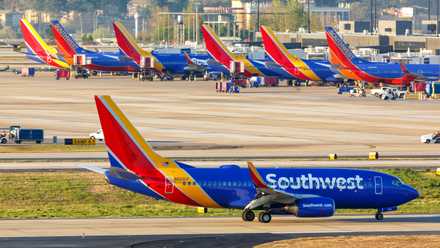
Low Cost Vs Legacy: Which Airline Model Has the Smartest Fleet Strategy?
A strong fleet strategy is essential in commercial aviation. Legacy giants like Delta and United have widebodies for global reach—787s, A350s, even some aging 767s—while loading up on A321neos and MAX 10s for domestic and mid-haul international routes. Their fleets are diverse, optimized for everything from short regional flights to 14-hour flights. However, maintaining a varied fleet adds complexity and costs to operations.
Low-cost titans like Southwest in the US and Ryanair in Europe keep their single-type 737 fleet simple and efficient. For decades, this single fleet type has proven resilient against market fluctuations, with both airlines weathering several black swan events. However, with Boeing delays and Airbus complications, relying on a single aircraft type is becoming more challenging. While Ryanair has managed to remain profitable, Southwest has not, and it is changing its entire business model to recover. Whether that will involve a mixed fleet in the future is still an o
Lastly, it is worth noting that consumer behavior and market structure further differentiate LCC performance in the US and Canada. North American travelers place a higher value on bundled service, loyalty programs, and seamless network connectivity — areas where legacy carriers like Delta, United, American, and Air Canada dominate through fortress hubs and powerful frequent‑flyer ecosystems. There is less emphasis on this model than in Europe, where LCCs are the mainstream product; in North America, they remain a niche (and endangered) alternative.
North American travelers also have a basic economy option available to book on every legacy carrier in the United States, as well as offerings from  Aeromexico,
  Air Canada, and WestJet. This is a relatively new option for the European market, with Lufthansa announcing the debut of Economy Basic on its routes just last month. In summary, ULCC and LCC carriers in Europe are the status quo, rather than the alternative, providing them with a much more stable and lucrative market.
Analysis: Alarm or Positioning?

Michael O’Leary is notable for speaking very candidly about Ryanair’s Competition. While not directly threatening such airlines, O’Leary has raised comments about Wizz Air and easyJet, potentially to deflect from Ryanair’s own struggles. O’Leary may have done so to promote brand confidence and ensure operational integrity for its customer base.
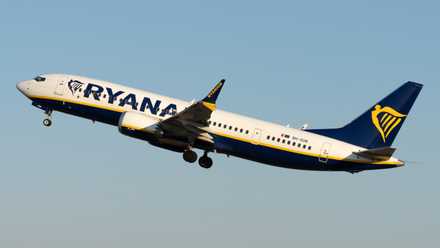
Ryanair Boss Believes Wizz Air Will Go Bust & easyJet Will Be Sold Off In Parts
In the wake of Play ceasing operations, Ryanair Group CEO thinks more airlines in Europe are in danger.
In the long term, only so much protection can be provided by the 80% fuel hedging, as it is a short-term strategy imposed by Ryanair. The current Middle East tensions are unpredictable, especially as they pertain to global oil infrastructure and supply. Trimming weaker frequencies to boost loads, accelerating the retirements of older, fuel‑hungry aircraft, and emphasizing an airline’s high-market-share trunk routes may be viable strategies to help an airline during a period of economic uncertainty.
A more measured reading of O’Leary’s remarks suggests they say more about Ryanair’s positioning than about any imminent wave of airline failures. Fuel shocks strain the industry, but Europe’s major carriers have more variables and government regulations to consider when economic uncertainty arises. Overall, low-cost carriers need to be vigilant about spending across all areas of the balance sheet, which validates O’Leary’s rationale for sounding the alarm.