dailynewsnblog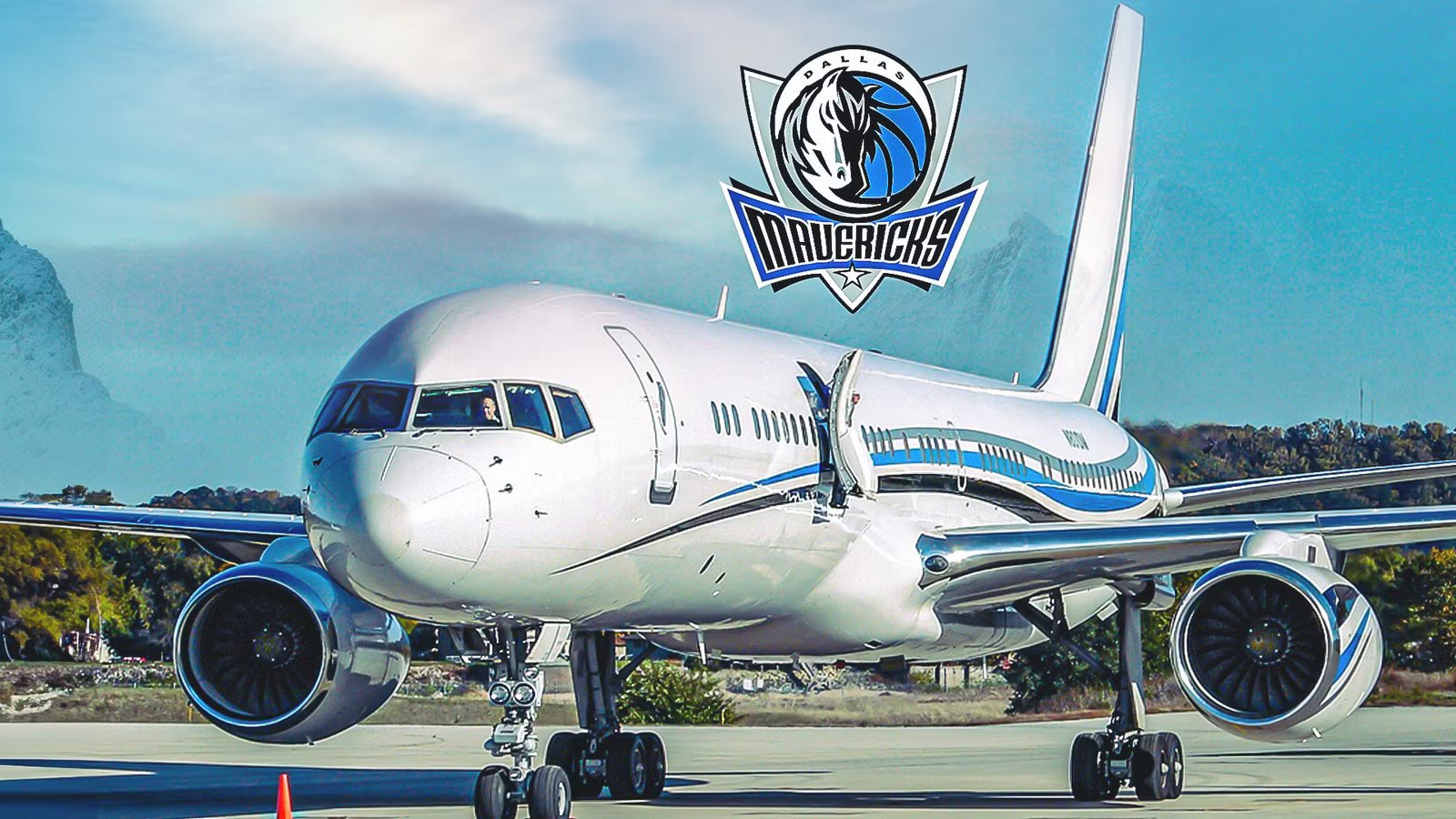
For the 2025-2026 NBA season, the league rolled out the most significant overhaul of professional sports travel in decades, replacing its aging fleet of Boeing 757 charters with up to 14 purpose-built Airbus A321neo aircraft operated by  Delta Air Lines. The cabins feature lie-flat beds, Comlux VIP interiors, and a level of finish more consistent with private aviation than commercial charter. For the vast majority of the league, it was an unambiguous upgrade, and 28 franchises accepted it without hesitation.
Two did not. The Dallas Mavericks and Houston Rockets both declined the league’s new fleet and continue to operate their own dedicated aircraft, the Mavericks on a freshly refurbished Boeing 757 and the Rockets on a widebody Boeing 767 shared with the Houston Astros. Their reasons for opting out say less about any shortcoming in the league’s product and more about how certain ownership groups think about competitive infrastructure, and why the instinct to control every detail of team operations does not stop at the gate.
The NBA’s Most Ambitious Travel Overhaul In Decades

For most of the NBA’s modern era, team travel meant boarding a chartered Boeing 757, a narrow-body jet that served its purpose but was never designed with professional athletes in mind. Long legs, recovery needs, and back-to-back game schedules demand more than a reconfigured commercial aircraft can comfortably provide, and the league’s reliance on aging 757 charters had become an increasingly visible gap between the NBA’s global profile and the operational standards its franchises expected. For the 2025-2026 season, the league addressed that gap in a significant way.
The NBA rolled out a fleet of up to 14 Airbus A321neo aircraft, operated by Delta Air Lines, purpose-built for team travel with VIP interiors designed by Comlux. The cabins feature lie-flat beds, humidifiers, and a level of finish more consistent with private aviation than commercial charter. The A321neo’s fuel efficiency and range make it a practical fit for the NBA’s domestic travel patterns, and Delta’s operational infrastructure gives the league a reliable, professionally managed solution across all 30 markets.
The rollout represented the most significant overhaul of professional sports travel logistics in decades, and the league framed it as exactly that. Standardizing the fleet across franchises was designed to eliminate the competitive and operational inconsistencies that came with teams sourcing their own charter arrangements, ensuring that a team flying into a road game in Denver was arriving on the same product as the franchise hosting them. For 28 of the league’s 30 teams, that standardized solution was good enough. For two of them, it was not.
A Dive Into The Two Aircraft

On paper, the Airbus A321neo and the Boeing 757 occupy similar territory. Both are narrow-body single-aisle aircraft designed for medium-range operations, both carry roughly similar passenger counts in commercial configuration, and both have been widely used for charter and VIP operations. But the similarities are largely superficial, and for anyone paying close attention to what each aircraft actually offers in a team travel context, the differences are meaningful.
The 757 is a longer, heavier aircraft with a significantly more powerful thrust-to-weight ratio than the A321neo. Powered by either Rolls-Royce RB211 or Pratt and Whitney PW2000 series engines, the 757 was famously overpowered for its size, giving it short-field performance and climb characteristics that no current narrow-body can match. It can operate out of shorter runways, climb faster, and carry heavier payloads over longer distances than the A321neo without the same performance penalties.
The A321neo’s CFM LEAP or Pratt and Whitney GTF engines are dramatically more fuel efficient than the 757’s powerplants, its fly-by-wire flight control system is more sophisticated, and its cabin cross-section, while nominally similar in width, benefits from modern interior architecture that makes the available space feel more usable. The 757’s fuselage diameter is actually slightly narrower than the A321’s. Neither aircraft is a clear winner in every category. The 757 is older, louder, and less efficient, but it is also faster, more powerful, and carries a legacy of performance.
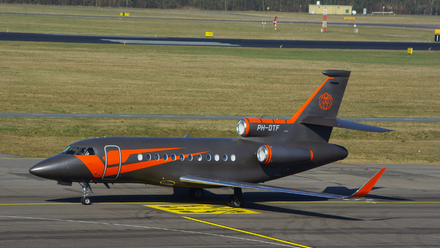
Max Verstappen’s Dassault Falcon 8X
Verstappen purchased the aircraft in 2020.
The Dallas Mavericks And Their Decision To Stay Independent

The Dallas Mavericks have been operating their own dedicated aircraft since Mark Cuban bought the franchise in 2000, and the current setup reflects more than two decades of refinement around that philosophy. The team travels on a Boeing 757 registered as N801DM, a 757-256 originally ordered by Iberia and operated by the Mavericks since 2001. N801DM underwent an extensive VIP retrofit program toward the end of 2025, completing a total interior redesign and heavy maintenance overhaul ahead of the 2026 NBA season, with the refurbished cabin divided into specialized sections to maximize player recovery and staff productivity.
The updated interior features multiple 4K displays throughout the cabin, touchscreens at every seat, full-height closets, and high-speed WiFi. The new layout also features higher ceilings, team-branded leather upholstery, an onboard weight room, and a dedicated medical treatment space. A weight room and medical bay on a team aircraft is not something a standardized league fleet can accommodate across 28 franchises without compromising the product for everyone else. It is exactly the kind of specification that only makes sense when a franchise is building an aircraft around its own requirements rather than a shared standard.
The decision to invest heavily in the 757 rather than accept the league’s A321neo reflects something consistent about how the Mavericks have historically approached competitive infrastructure. Cuban’s original rationale for acquiring a dedicated aircraft was straightforward: controlling every variable that affects how players arrive at road games is a competitive decision, not a luxury one. The ownership group that has followed him has maintained that logic.
The Houston Rockets

Where the Mavericks’ travel philosophy traces back to one owner’s hands-on approach to competitive infrastructure, the Houston Rockets’ independence from the league fleet reflects a different but equally deliberate set of priorities. Since 2019, the Rockets have used a Boeing 767 for official team transport, registered as N625HR, a 767-322ER originally ordered by United Airlines and delivered in 1992. The aircraft is managed and operated by iAero Airways exclusively for the Rockets.
The Boeing 767 is a significantly larger aircraft than the Boeing 757. The Rockets’ decision to operate a 767 rather than accept a standardized narrow-body solution is in part a straightforward argument about space. The plane is also shared with the Houston Astros outside the NBA season, as the Fertitta family owns both franchises, which distributes the operational cost of maintaining a dedicated widebody aircraft across two professional sports organizations simultaneously.
That dual-use arrangement reveals the kind of integrated thinking that defines how Tilman Fertitta runs his sports properties. The cost of maintaining a Boeing 767 year-round is considerable, but when the same aircraft serves two franchises across two separate seasons, the economics become considerably more manageable. It also means the Rockets are not simply opting out of the league fleet on principle. They have built an alternative that is financially structured to sustain itself, operationally tailored to their specific requirements, and large enough to offer something the A321neo cannot match.
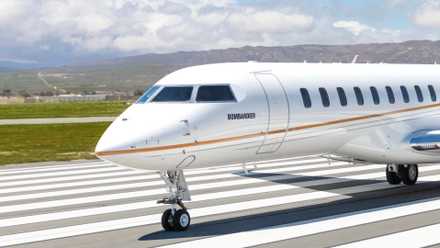
Impressive: NBC Sportscaster Flies 10 Hours In Private Jet From The Super Bowl To The Olympics
A Bombardier Global 7500 is behind this impressive story.
How NFL Teams Travel Compared To The NBA

Moving an NFL franchise means transporting a traveling party that can exceed 150 people, including players, coaches, medical staff, video teams, and security personnel, alongside a substantial volume of sideline equipment. A narrow-body aircraft cannot accommodate that load in a single departure, which is why NFL teams have traditionally chartered widebody aircraft from American, Delta, and United, with United flying more NFL charters than any other carrier in the 2024-25 season, making use of 767s, 787 Dreamliners, and 777s. Delta has contributed 767s, A330s, and A350s to the charter pool, and the Dallas Cowboys have been flying on American Airlines Boeing 777s.
A small number of franchises have gone further than chartering and invested in their own dedicated aircraft. The New England Patriots were first, acquiring a pair of Boeing 767-300ERs in 2017, originally operated by American Airlines and configured in a VIP layout operated by Omni Air International under a long-term agreement. The Arizona Cardinals have gone furthest of all, with owner Michael Bidwill’s Gridiron Air operating up to five Boeing 777-200ERs, with at least two in active service as of early 2026. Billy Bishop Toronto City Airport The Cardinals’ primary aircraft seats 275 passengers across four cabin zones, including 28 lie-flat seats, and the fleet’s belly capacity handles the equipment volume that makes NFL logistics so demanding.
What the NFL’s travel landscape illustrates is that the instinct driving the Mavericks and Rockets is not unique to basketball. Across professional sports, the franchises willing to invest most heavily in dedicated aviation infrastructure tend to be those whose ownership groups view operational control as a competitive variable rather than an overhead cost. The methods differ by sport and roster size, but the underlying logic is consistent: the teams that can afford to own their travel arrangements and choose to do so are making a statement about how seriously they take the details that happen before the game even begins.