dailynewsnblog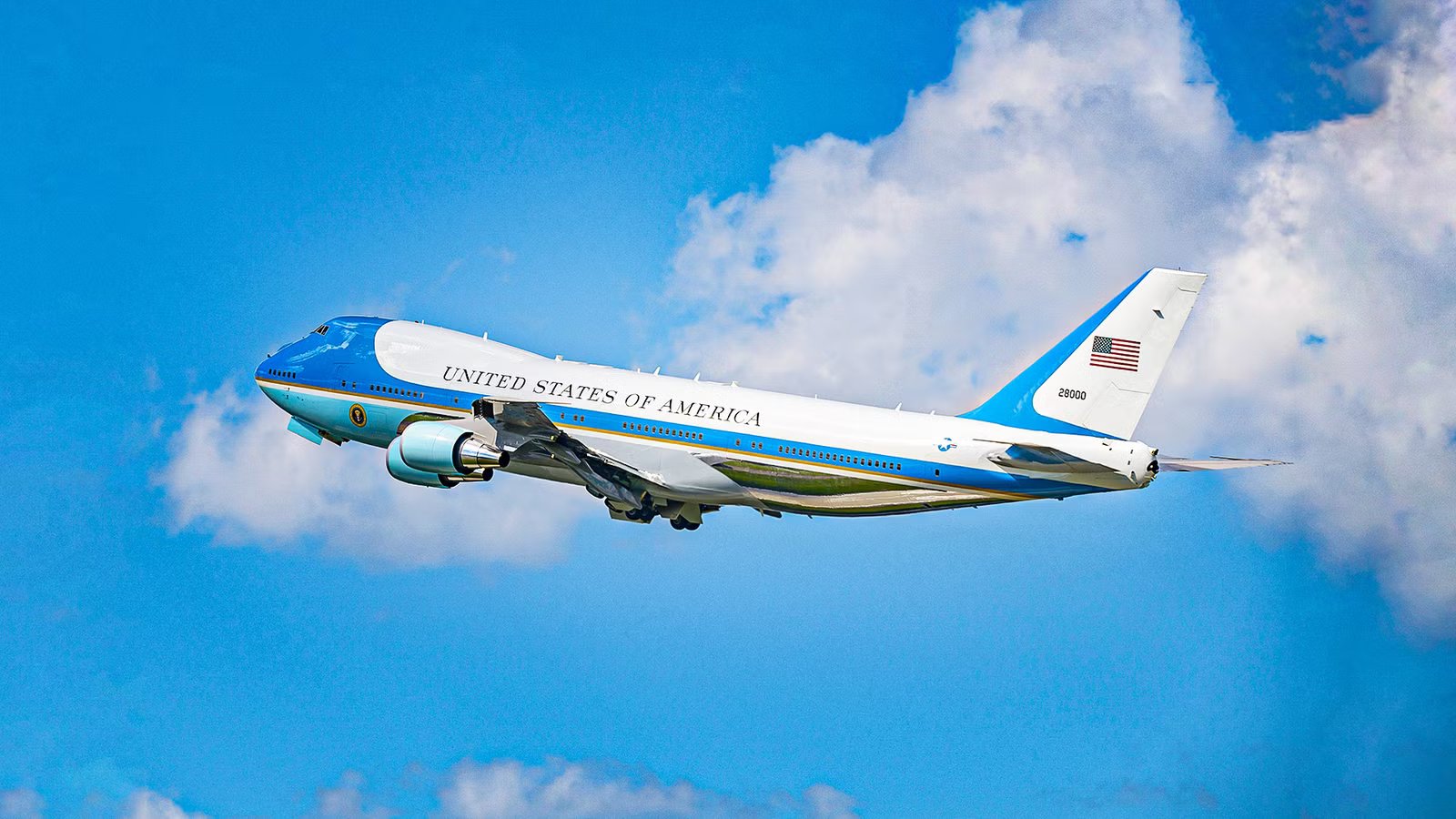
The replacement of the Air Force One fleet, officially known as the VC-25B, is billions of dollars over budget and years behind schedule. The first jet was supposed to arrive in 2024, but it is now estimated to arrive in mid-2028, with some predictions indicating 2029 or later. There are many reasons the program is struggling.
Labor shortages, a high turnover rate among staff with specific security clearances, and technical complexity like complicated wiring and cooling systems, have all slowed progress. The new aircraft’s first flight is now scheduled for March 2026, a 16-month delay. The project has cost Boeing more than $2.4 billion. From an initial $3.9 billion to roughly $6.2 billion, the overall anticipated cost to taxpayers has increased.
The Art Of The Deal

Trump claimed to have saved taxpayers $1.4 billion by negotiating a fixed-price contract with  Boeing in 2018. Boeing’s management eventually acknowledged that this was a mistake because all cost overruns must be borne by the corporation, not the government, which has resulted in significant losses and put pressure on their manufacturing capacity.
Trump notoriously proposed a new red, white, and blue paint scheme, which was later shown to cause engine overheating and was ultimately discarded. To accelerate the present timeline, the forthcoming VC-25B aircraft will lack aerial refueling capability. This decision was made as a cost-saving strategy during the project’s restructuring, and while it has sparked heated debate, it remains the current engineering norm for the two aircraft being converted by Boeing.
With an unrefueled range of roughly 8,900 miles, the new VC-25B will outrange the earlier VC-25A by nearly 1,100 miles. Commercial Boeing 747-8i aircraft are being converted into the VC-25B. For a jet of this size, adding a nose-mounted fueling port and the required interior piping is an enormous engineering achievement that requires intricate structural strengthening and weight-balance changes.
Military commanders, including former Chairman of the Joint Chiefs of Staff Gen. Joseph Dunford, have acknowledged that the absence of refueling is a “limiting factor” that will necessitate new strategic planning for emergency situations. In a serious nuclear scenario where staying airborne indefinitely is essential, the principal approach anticipates the President will be transferred to the E-4B Nightwatch, which still has complete aerial refueling capabilities.
Shaking Things Up: New Blood At Boeing

The latest update in the saga of Boeing’s efforts to build the next generation of Air Force One jets indicates that a former executive of Northrop Grumman’s strike division, Steve Sullivan, will lead the VC-25B team. Breaking Defense reports that an internal email revealed the leadership change-up. Sullivan was the leader of the B-21 Raider program in his previous posting, according to Reuters. Jamie Burgess, Boeing’s vice president of its bombers, mobility, and surveillance division, informed members of the VC-25B team via email on June 25, 2025.
Sullivan will take up the helm of a severely troubled project, one that Boeing has said is billions of dollars in the red. The contract for the two hardened executive jets was struck in 2018 under the previous Trump administration. The future of the VC-25B depends on aggressive intervention and potential compromises.
|
Date |
VC-25B Milestone |
|---|---|
|
Aug 2012 |
Formal start. |
|
Feb 2018 |
Trump and Boeing agree to a $3.9B fixed-price deal. |
|
Feb 2020 |
Structural work begins on two commercial 747-8 airframes. |
|
Dec 2024 |
Initial deadline for the first mission-ready aircraft (Missed). |
|
Feb 2025 |
White House acknowledges potential delays until 2029 or later. |
|
Dec 2025 |
Air Force awards $15.5M, sets mid-2028 target. |
|
Jan 2026 |
Work begins on a gifted Qatari 747 to serve as a bridge. |
|
Mar 2026 |
Revised date for the first test flight (originally Nov 2024). |
|
Mid-2026 |
Expected arrival of the interim Air Force One. |
|
Late 2026 |
Two used Lufthansa 747-8s arrive for crew training. |
|
Mid-2028 |
Current projected delivery for the first VC-25B aircraft. |
|
Dec 2029 |
Projected date for the fleet to reach Initial Operational Capability. |
To save money, the government bought two airframes originally built for Transaero, a defunct Russian airline. However, converting these commercial jets into ‘flying White Houses’ proved more difficult than building them from scratch, requiring massive rewiring and structural overhauls. Former CEO Dave Calhoun stated the company probably shouldn’t have signed the deal, citing the extreme technical complexity and unpredictable supply chain inflation that followed.
Enter Elon

Elon Musk, Trump’s former ally and Special Advisor, was the head of the Department of Government Efficiency, whose objective is to eliminate waste and inefficiency in the United States government. As a result, the newly constituted agency has cut programs and staff in large swaths since its creation.
Trump later requested that Musk visit the Boeing facility that is constructing the latest and greatest version of the flying Oval Office. By all accounts, Boeing has received its oversight with open arms. Breaking Defense relayed this comment from the CEO of Boeing:
“Elon Musk is actually helping us a lot in working through the requirements on VC-25 to try to help us get the things that are non-value added constraints out of the way so that we can move faster.”
Despite Boeing’s struggles, the Air Force has largely held Boeing to the letter of the 2018 agreement, forcing the company to continue absorbing costs while demanding the same nuclear-hardened survivability. Musk insisted that at least one plane could be delivered within a year—a timeline that military officials and engineering experts regard as highly unrealistic given the plane’s nuclear-survivability requirements.
Trump

President Trump has been a vocal critic of the delays in delivering the latest iteration of Air Force One. He approved the project himself during his last term in 2018 under a fixed-price contract, but that didn’t account for the additional time and engineering required to accommodate his new livery. In 2022, the proposed change to Air Force One’s color scheme was reportedly thrown out due to the extra cost and time.
In his official statement from 2018, Trump expressed his continued dissatisfaction with Boeing’s failure to deliver the aircraft by the initial 2024 timetable. Although he expressed interest in a used 747-8, he told the media that he would still not contemplate purchasing an aircraft from Airbus, Boeing’s European rival. He dispatched Elon Musk, his most reliable advisor, to assess the status of the two new 747s.
In order to scrutinize the red tape and pinpoint manufacturing bottlenecks, Musk visited Boeing’s San Antonio facility. The fact that Musk’s SpaceX directly competes with Boeing in other aerospace industries while having the authority to supervise and impact Boeing’s federal contracts sparked concerns.

Boeing Workers No Longer Need Top Security Clearance To Work On Air Force One
Boeing has been under pressure from President Trump to deliver the latest version of Air Force One as quickly as possible.
Regifted Jumbo Jet: Refitting A Qatari 747-8

The interim president and chief executive officer of Boeing commented to reporters at the 2025 Paris Air Show that the recently “gifted” 747-8 from the Qatari royal family to President Trump had no impact at all on the VC-25B , as Defense News recounted. The 747-8s currently being overhauled for the Next Air Force One were originally built for a Russian carrier, Transaero.
The current US Air Force VC-25A jets are 747-200 series aircraft, decades behind current aerospace technology. Aside from the already incredible array of technology housed in the VC-25As, the two jets being refitted at Boeing’s Texas facility will feature a myriad of new enhancements to bring the President of the United States’ dedicated jumbo jets up to the current state of the art. At the same time, the Department of Defense (DOD) has accepted a civilian Boeing Business Jet (BBJ) specified Boeing 747-8 from Qatar as a gift to the Office of the President.
President Trump has indicated that he is interested in converting the plane as rapidly as possible to serve as an interim Air Force One until the VC-25Bs are finished. The idea has sparked significant political backlash, and many defense and aerospace experts have balked at it as both infeasible and a security disaster. The Qatari-sourced jet would supposedly be donated to President Trump’s presidential library at the end of his current term in office.

Why The World’s Largest Military Transport Aircraft Doesn’t Use Winglets
Simplicity meets power on the world’s largest ‘big wing’ jets.
Made in the USA: Boeing’s Production Stalls

Boeing is the world’s largest manufacturing company, a juggernaut of the aerospace industry, and a major defense industry supplier to the US Armed Forces. The scale of Boeing’s operations is impressive, but the number of program delays and struggles has given the industrial giant great difficulty in recent years.
The 737 MAX has struggled to meet production goals amid tragic accidents that forced major production audits and supervision. The 777X has struggled to reach final certification and begin production as airlines impatiently await their orders. The output issues on the commercial side have opened the door for Airbus to make inroads and sell more A320neo narrowbody and A350 series widebody jetliners.
Boeing leadership has openly characterized the Air Force One deal as a strategic error. The VC-25B potentially tops the list of problematic programs under Boeing’s umbrella as its losses are supposedly in the billions, according to Boeing. The conflict between the Air Force and Boeing has turned into a financial disaster for the company and a critical readiness gap for the military.