dailynewsnblog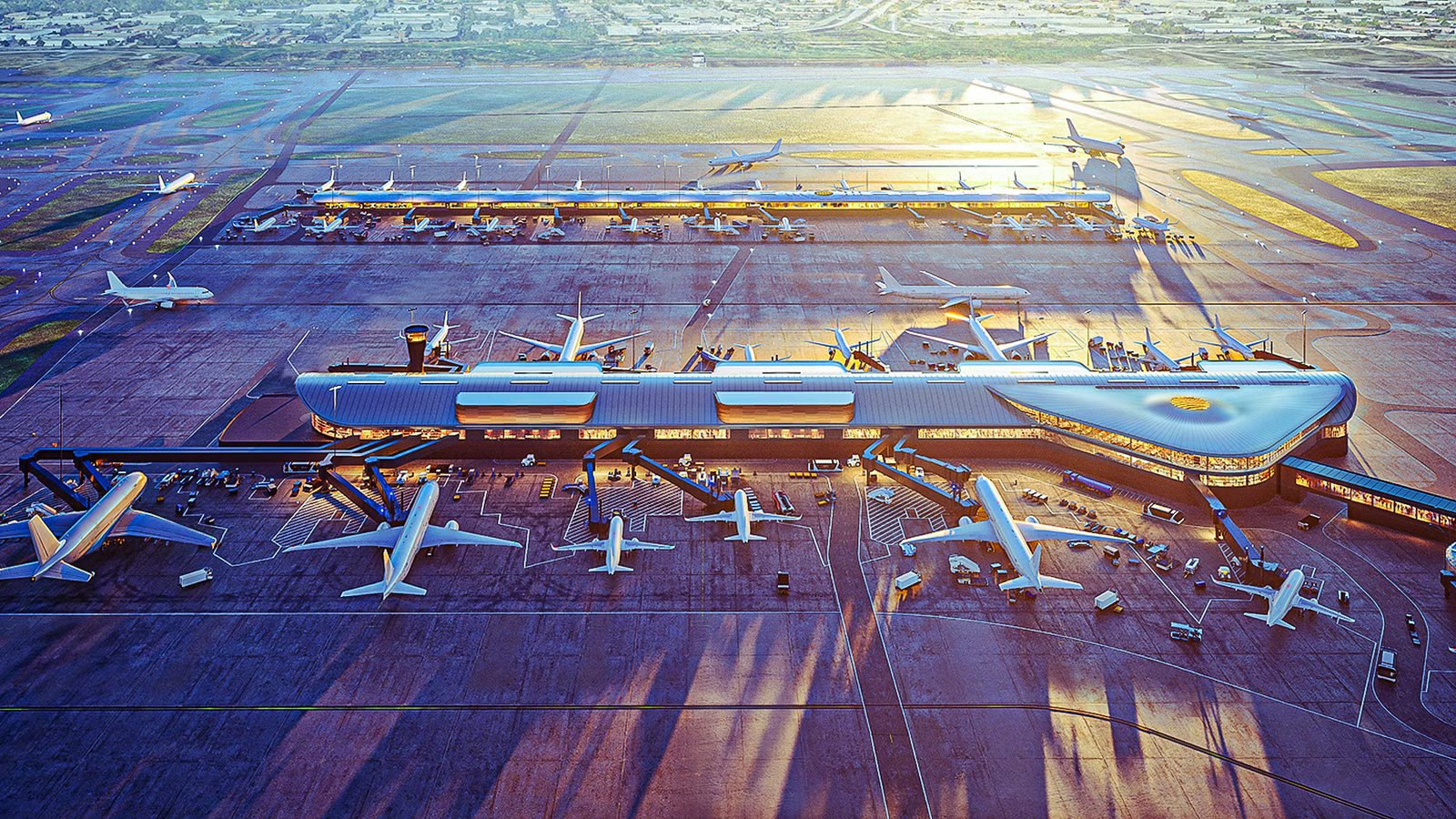
To meet growing passenger capacity, several airport-related projects are being undertaken in cities all around the world, ranging from extending existing infrastructure to replacing aging facilities and, in some cases, even building brand-new airports. Two projects that quickly become interesting when considering the numbers are the upgrades underway at  Chicago O’Hare International Airport (ORD) and the new King Salman Airport project in Riyadh, Saudi Arabia.
The context that makes these two cases interesting is the fact that ORD is essentially spending more capital per passenger to add to the airport’s capacity than the developers who are increasing the passenger capacity of Riyadh’s existing airport. This guide evaluates how these two projects differ and identifies the reason for this cost difference.
Chicago’s O’Hare 21 Upgrade Project

The concept of O’Hare 21 is to bring Chicago’s primary airport into the 21st century by upgrading its facilities and expanding its capacity. The primary focus is replacing the airport’s aging Terminal 2, while also developing new gates for the first time in over two decades, subsequently boosting the airport’s capacity to handle more aircraft and passengers.
According to data published by Corgan, one of the stakeholders heavily involved in the design and development process of the project, the new facility replacing the airport’s Terminal 2 will feature 2.2 million square feet of space, including a satellite concourse linked by underground tunnels. According to data published by Clayco, this project will add 19 new gates to the airport, capable of handling both narrowbody and widebody aircraft. According to Airport Technology, this expansion will essentially increase the airport’s capacity to handle another 20 million passengers annually.
Data published by Chicago’s Mayor’s office in 2026 shows the airport handled 84.8 million passengers in 2025. A statement from the office in August 2025 also states that the project, in its later part, will include a second satellite concourse, designed to include a further 24 gates. The existing facility will be demolished and reconstructed in phases, while maintaining minimal disruptions to the ongoing operations. The first part of the project is expected to be completed by 2028.
The Project Increases Costs For Passengers Too

While the costs for this project in 2018 were originally estimated at over $8 billion, a 2023 report published by WTTW News states that the rising costs and inflation have since pushed this to over $12 billion. Considering this project was also backed by the airport’s two major carriers, United Airlines and  American Airlines, reports indicate the carriers were not happy with the increasing costs either.
However, this upgrade in facilities and the new terminal will also come with a cost for all future passengers. According to a report by Fitch Ratings from December 2025, ORD has an enplanement cost of $25.75. This is the cost an airline pays the airport for every passenger departing on board their aircraft. The current cost is reportedly higher than the domestic average, but more importantly, the report also states that the enplanement cost is forecasted to increase to $40 or higher in the coming years.
This cost would naturally be passed on to passengers in the form of fare hikes. Considering how Chicago is the busiest airport in terms of aircraft movements and sees considerable connecting traffic from United and American, it will eventually become more expensive for passengers to connect via ORD. However, the larger impact will be felt by the more price-sensitive passengers traveling with low-cost carriers based at ORD.
Riyadh’s Upcoming Mega Airport Project

While the city of Riyadh is currently served by Riyadh King Khalid International Airport (RUH), the nation’s capital city will have a newer and much larger airport in the coming years. The new facility will be built beside the existing airport and rebranded as King Salman International Airport. Upon expansion, the new (resultant) airport will dwarf the current RUH facility by offering immense operational scale, with the new airport planned to have more facilities and six parallel runways.
According to the airport website, the ground has already been broken for the expansion, and the final project will cover a land area of over 480 million square feet (45 square kilometers), with a further 12 square kilometers of area for real estate. Obviously, due to the scale of the project, various parts of the project will be unveiled in phases. By 2030, the airport is expected to have a passenger capacity of 100 million and a cargo capacity of around two million tons. By 2050, the airport is expected to have a passenger capacity of 185 million.
Obviously, a major driving factor of passenger and cargo traffic will be the newly launched Riyadh Air, which has an ambitious plan to operate to over 100 destinations by the end of the decade. To support its own network and fleet growth, the carrier has placed large aircraft orders, covering a wide range of narrowbody and widebody aircraft. The carrier aims to become a major competitor in the Middle East, but also on the global aviation stage, alongside its neighboring operators such as  Emirates,
  Qatar Airways, and
  Etihad Airways.
The Cost Of Such An Expansion Project

In comparison, the cost of building multiple terminals and parallel runways, along with other real estate, will be significantly higher than the cost of the ongoing project at ORD. In the case of Riyadh’s airport expansion, the cost is estimated to total up to a sum of $30 billion.
This project is pivotal for the nation, as it seeks to boost tourism to the country while also diversifying its oil-centric economy. As demonstrated by neighboring nations such as the United Arab Emirates and Qatar, one way to do this is through tourism, while also leveraging the geographic location to allow passenger traffic to connect to all corners of the world. While the airport is certainly heading in that direction, it is taking it a step further, turning the entire project into an integrated airport city.
This is where the additional real estate area comes into use, with the space planned for residential, retail, recreational, and logistical activities. Furthermore, the cost also covers the facility’s investment in sustainability, with a considerable portion of the airport’s energy requirements to be powered via renewable sources. In fact, even the expansion project is utilizing a substitute for fossil fuel in the early construction phase, thereby reducing the overall carbon footprint of the project.
It’s More Expensive Per Passenger In Chicago?

Given the scope of the project, Chicago airport’s annual handling capacity will increase by a further 20 million passengers, for a cost of $12 billion, on a per-passenger basis, this would equate to the airport spending around $600 per additional passenger added to ORD’s existing capacity.
As for Riyadh, data published by Arabian Business indicates RUH handled 40.8 million passengers in 2025. Considering RUH is aiming for a capacity of 185 million passengers by 2050, and the project cost of $30 billion, the cost per additional passenger to the airport capacity would equate to around $162. This is a considerably lower cost than that of ORD’s expansion project.
Considering the larger picture and the nature of the expansion plans, it becomes clear as to why there is such a disparity between the two costs on a per-passenger basis. In the case of ORD, the infrastructure upgrade and expansion are happening within the confines of an already active airport. As such, this project adds to the complexities of ensuring minimal disruptions to operations while working within the limitations of the allocated space. Additionally, the costs of demolishing and clearing existing infrastructure should also be considered before building any new structures or facilities.
In Riyadh, on the other hand, while the nature of the project is an expansion, it is actually being done around an existing facility, expanding outwards. Therefore, the number of limitations is considerably fewer. Furthermore, the new constructions are happening on unused land, which makes preparations and construction considerably more efficient and subsequently cheaper.
Lastly, purely on a mathematical basis, despite the higher cost, the expansion project in Riyadh is being spread across a significantly higher capacity increase, which reduces the cost on a per-passenger basis.
Catch what other flight trackers miss
Emergency squawks, holds, NOTAMs — live signals, no signup.
Open tracker
Catch what other flight trackers miss
Emergency squawks, holds, NOTAMs — live signals, no signup.
Open tracker
Airlines Are The Primary Drivers

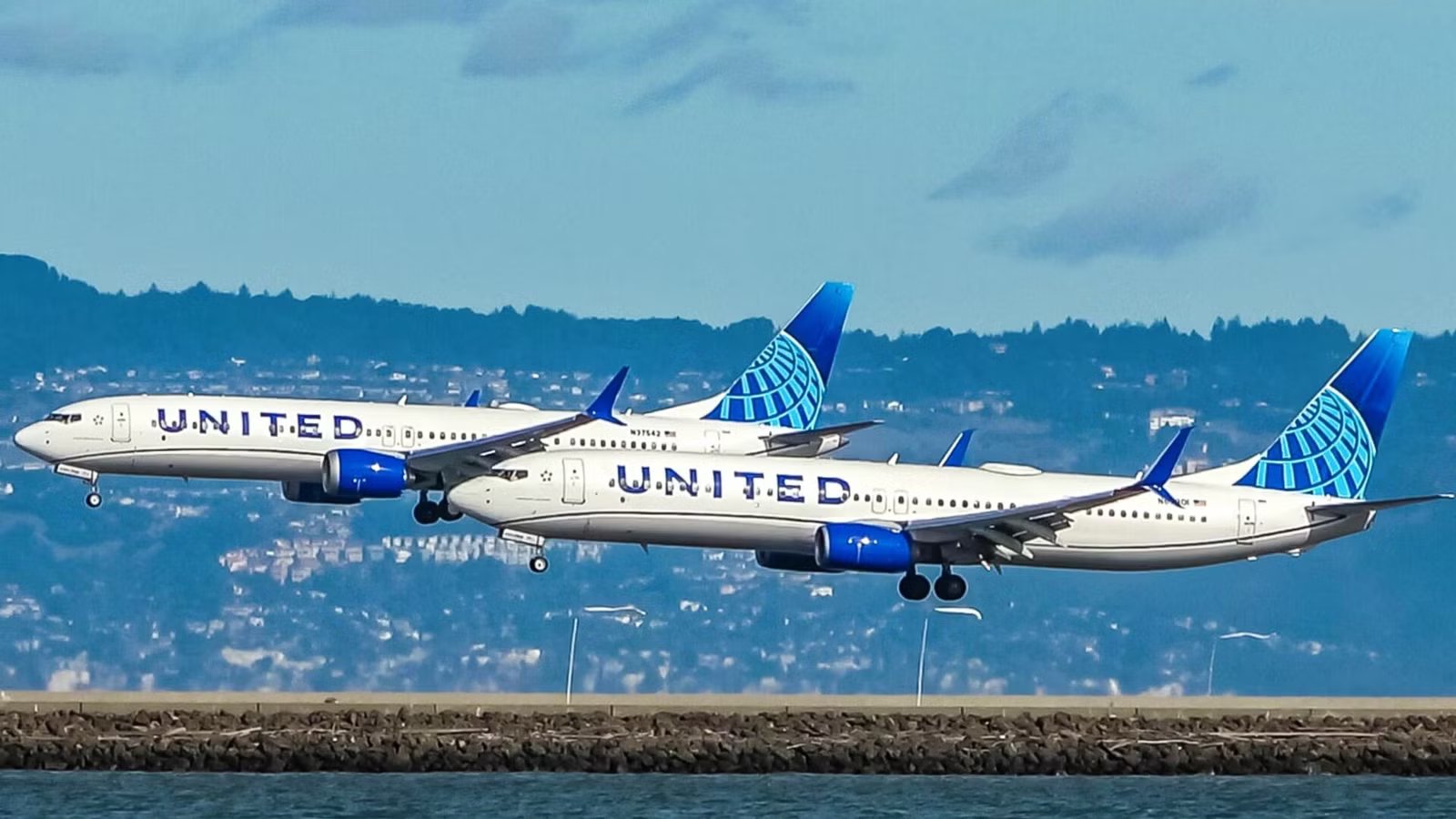
While the facility and the capacity matter, ultimately, the passenger and cargo traffic are essentially driven by the airlines. Especially the airlines that call the airport home. For Chicago, this is United and American Airlines, which are among the largest airlines in the US (and the world, for that matter), with highly established domestic and international networks.
Things are a little different when it comes to Riyadh, because although it is a major airport in Saudi Arabia, it does not have the scale or capacity of Chicago. But even disregarding that, the airport does not have a major airline with an extensive network that calls it home. This is where Riyadh Air steps in. Assuming the airline grows its fleet, network, and operations to scale with the airport’s expansion, in a few years the carrier should help drive passengers traveling between the East and the West via Riyadh.
While the carrier’s current plan is far from that of having a network and fleet akin to that of United or American, the Middle Eastern market has demonstrated it can be competitive and capable of handling sufficient passengers. This has been proven by Emirates with  Dubai International Airport (DXB), Etihad with Abu Dhabi International Airport (AUH), and Qatar Airways with
  Doha Hamad International Airport (DOH).