dailynewsnblog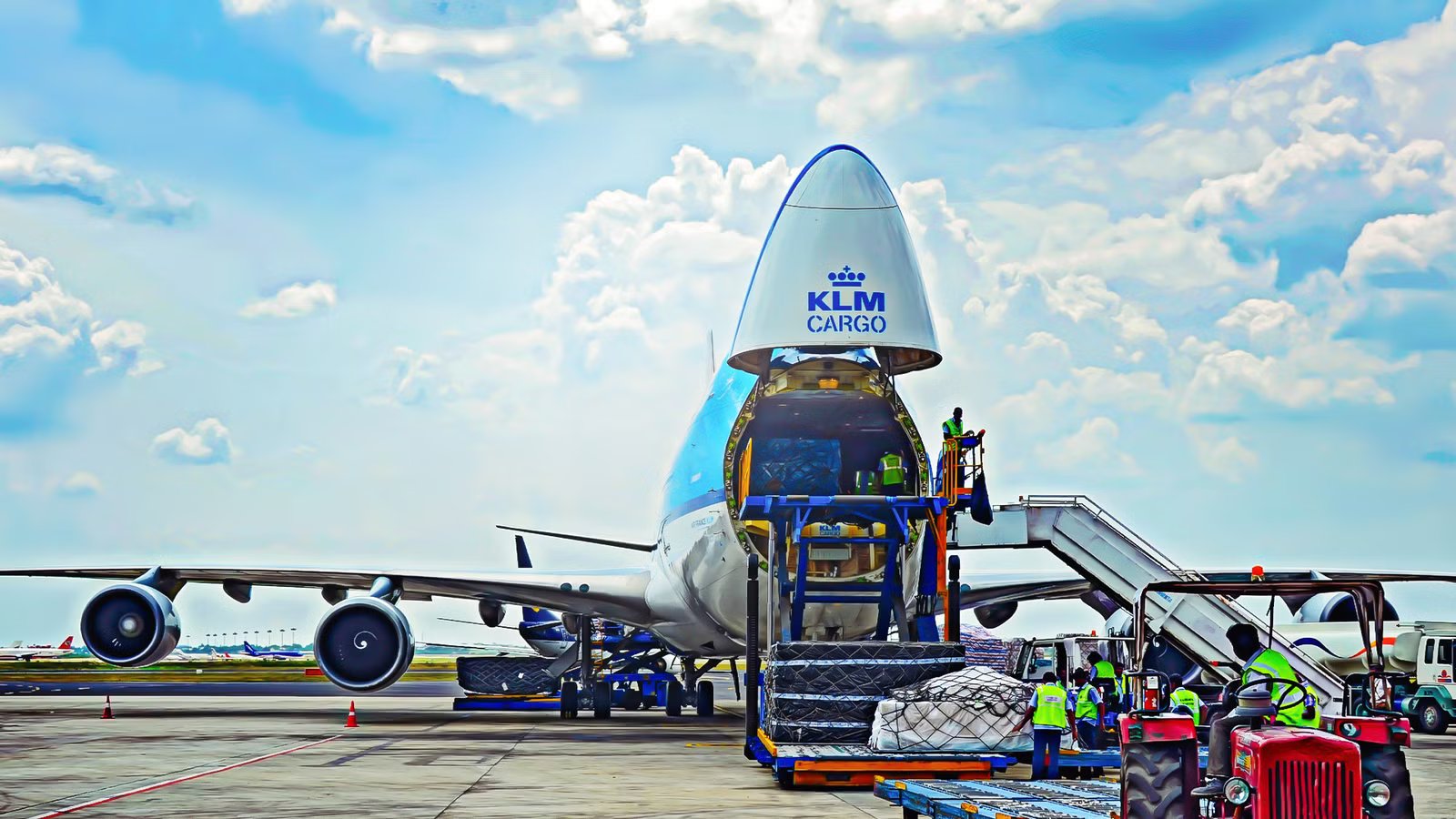
Air cargo has long relied on the factory-built Boeing 747-400F for the immense quantity of outsized cargo that is shipped all over the world every day. As major cargo carriers begin retiring aging four-engine freighters throughout the late 2020s and early 2030s, the aviation industry faces an unprecedented capability gap. Next-generation widebody freighters like the Boeing 777-8F and Airbus A350F are not too far away and promise double-digit fuel efficiency improvements, but neither aerospace giant is offering an aircraft equipped with a front-loading nose door.
When Joe Sutter and his engineering team designed the original 747 airframe in the late 1960s, they anticipated that supersonic passenger transport would soon render subsonic jetliners obsolete for long-haul travel. Consequently, the team engineered the 747 as a dedicated freighter from day one, placing the cockpit on an upper deck specifically to leave the lower nose section unobstructed for an upward-swinging cargo hatch. Today, as environmental regulations and fuel economics mandate a complete industry transition to high-efficiency twin-engine jets, that deliberate 1960s design choice remains an unrepeatable anomaly in commercial aircraft manufacturing.
The True Purpose Of The Nose Door

The fundamental reason the 747-400F can accept ultra-long cargo boils down to elevated flight deck geometry. The cockpit sits well above the main floor line, which makes an unbroken straight-line loading channel that extends from the tip of the radome all the way to the aft pressure bulkhead. This unique upper-deck hump removes the barrier that standard flight deck installations present on every other commercial freighter flying today.
The mechanism governing the nose door is one that even a modern-day engineer would be impressed by. In short, it is a masterclass in heavy electro-mechanical actuation and structural sealing, in a time when technology was not as sophisticated as it is now. When ground crews initiate the opening sequence, electric motors unlatch 16 heavy locking pins around the perimeter before motor-driven screw jacks tilt the entire forward fuselage section upward on a top-mounted hinge system. Once fully raised, an automated powered roller system embedded directly into the nose floor engages, allowing ground handlers to drive heavy cargo pallets directly onto the main deck without needing lateral manipulation.
Straight-in loading channels provide an unmatched operational capability for specialized air freight that would struggle to fit on standard cargo aircraft. Single-piece payloads such as 185 feet (56.4 meters) oil field drill pipes, heavy power generation rotors under 8 feet (2.4 meters) in height, intact helicopter fuselages, and long aerospace wing tooling routinely roll directly through the front hatch. Without this front-loading aperture, transporting continuous rigid equipment that exceeds the width of standard side doors becomes physically impossible on commercial jet transport.
The More Common Side Door

Every modern commercial widebody freighter under production relies exclusively on a side cargo door positioned on the left side of the rear or forward main deck fuselage. Side doors are highly efficient for standard international shipping pallets; however, they introduce a severe geometric limit for long or rigid cargo items. To enter the main cabin through a side aperture, every piece of freight must undergo a mandatory 90-degree lateral pivot inside the constrained width of the fuselage.
This turning radius requirement imposes strict mathematical limits on cargo dimensions, regardless of how wide an airframe manufacturer cuts the door opening. The upcoming A350F boasts an extra-wide side door measuring 175 inches (4.45 meters) across, something that the manufacturer promotes clearly, but a rigid object that exceeds the internal diagonal turning space of the fuselage cannot complete the pivot. Even if an item measures less than the maximum payload length of the cargo hold, its inability to bend around the door frame prevents loading entirely.
Ground handling operations for side-door freighters also demand delicate maneuvering when handling heavy long-span loads. Logistics crews typically employ specialized multi-axis K-loaders and articulate heavy cargo at precise angles to clear the structural door frames without striking the inner cabin walls. For high-value energy sector equipment or sensitive military hardware, having a complex turning process introduces substantial operational risk and extends loading times compared to the effortless straight-in drive-on process of the 747-400F nose door.
Why Is The Nose Door Not Coming Back?

Given the clear operational benefits of front-loading capability, questions often arise as to why neither  Boeing nor Airbus incorporated a nose door into their modern twin-engine freighter designs. The reason is really because of the weight trade-offs required to make a single-deck nose section open on hinges. On a twinjet airframe where the cockpit rests on the main deck floor, creating an opening nose would require placing the entire flight deck structure on a movable joint or rerouting critical flight controls, hydraulic lines, and electrical harnesses around a heavy hinge mechanism.
Engineering a hinged nose on a single-deck fuselage brings with it a massive empty weight penalty that directly undermines aircraft payload and range performance. Heavy structural reinforcement frames, motorized actuators, heavy latching hooks, and redundant pressure sealing bulkheads add thousands of pounds of dead weight to the forward fuselage. On a modern carbon-fiber composite hull like the Airbus A350 or an advanced aluminum-lithium airframe like the Boeing 777X, adding this mechanical complexity would severely compromise structural integrity and increase manufacturing costs.
Aerospace manufacturers ultimately determined that designing a nose door for a twinjet would sacrifice fuel efficiency on 95% of standard palletized cargo routes just to serve a 5% niche market for outsized freight. Commercial airlines and freight integrators prioritizing lower carbon emissions and reduced operating costs demanded maximum fuel burn efficiency, leaving outsized cargo specialists without a direct structural replacement for their four-engine nose-door fleets.

Beyond raw payload length constraints, the geometry of the nose door directly impacts aircraft productivity on the airport apron. In commercial air cargo logistics, ground turnaround time is a critical financial variable, as every hour spent sitting at an airport gate burns capital without generating revenue. The 747-400F is an aircraft that brings a dual-stream loading workflow not seen on most other cargo aircraft, providing access to the forward and lateral sections of the main deck simultaneously.
In a dual-stream operation, ground handlers position a high-capacity nose loader at the front of the aircraft while operating a standard main deck cargo loader at the side door. This parallel setup enables ground crews to offload inbound pallets through the front while simultaneously loading outbound freight through the side, or maneuver ultra-heavy items through the nose without halting standard palletized loading elsewhere on the main deck. At high-volume transpacific hubs such as Anchorage, Seoul-Incheon, or Frankfurt, this synchronized access slashes main deck cargo handling times substantially.
Gaining an accelerated ground handling capability directly enhances fleet utilization for scheduled freight carriers and charter operators alike. Reducing airport ground time allows airlines to maximize flight hours per airframe, hit tight departure windows across congested international trade corridors, and absorb unexpected delays without cascading through the flight schedule. For specialized logistics providers carrying time-sensitive oil and gas equipment or automotive manufacturing machinery, dual-stream speed provides a compelling economic rationale for preserving four-engine freighters, even if they are no longer the most efficient option available.
Something Has To Change

Airframe manufacturers are pitching the 777-8F and A350F rather relentlessly to international cargo fleets. Logistics directors still face, however, a critical operational scenario: can extra-wide side doors be enough to pick up from the retiring 747-400Fs? Aircraft designers at Airbus specifically widened the A350F main cargo door to 175 inches (4.45 meters), making it 29 inches (0.74 meters) wider than the standard Boeing 777F door. This modification aimed directly at capturing legacy 747 replacement orders by accommodating larger industrial assemblies through a side entrance.
The reality is that having a side door means tilting heavy equipment, posing severe structural and weight distribution challenges that side-door freighters were never originally engineered to handle. Tilting a 30 ton (27.2 metric tonne) generator rotor concentrates immense downward force onto a tiny surface area of the cargo floor, often exceeding the maximum floor load density limits of the aircraft deck. Furthermore, sensitive industrial components like turbine shafts or oil field assemblies are engineered for horizontal support, and holding them at sharp angles during transit risks structural warping or internal seal damage.
These mechanical constraints leave global supply chains facing a permanent operational change. Rather than relying on specialized transport workarounds, industrial equipment manufacturers are beginning to redesign heavy machinery into smaller, modular components that can be assembled onsite after delivery. For critical infrastructure projects where modular design is impossible, companies will no longer have access to rapid air logistics once four-engine nose-door freighters are fully retired, ushering in a complete reliance on slower maritime transport.
Could Another Come Along?

Facing the reality that modern twinjets cannot load continuous outsized cargo, charter airlines and specialized freight operators are taking aggressive measures to extend the operational lives of their existing 747-400F fleets. Aircraft heavy maintenance providers report surging demand for comprehensive D-checks, structural wing-plank replacements, and avionics modernization programs for 20-year-old 747 airframes. Carriers are deferring retirement dates well into the 2030s to retain their front-loading market monopoly, investing millions into the survival of the type.
Maintaining aging four-engine jetliners comes at a steep financial penalty that is reshaping air freight pricing dynamics. As 747-400Fs accumulate flight cycles, maintenance hours per flight hour escalate rapidly, while four older engines consume significantly more fuel than modern twinjets. To cover these elevated maintenance burdens and fuel bills, cargo operators charge premium charter rates for nose-door capacity, passing the costs directly onto energy companies, defense contractors, and industrial conglomerates that have no alternative transport options.
The eventual retirement of factory-built 747-400Fs and newer 747-8Fs will naturally bring a new precedent in global supply chains. Heavy industrial equipment manufacturers will need to redesign modular machinery into shorter, assemble-on-site components that can turn 90 degrees through twinjet side doors, or rely on slower maritime shipping routes for outsized equipment. The retirement of the Queen of the Skies should permanently close the era of high-speed, straight-in civil air logistics, unless someone is bold enough to give the nose door another try.