dailynewsnblog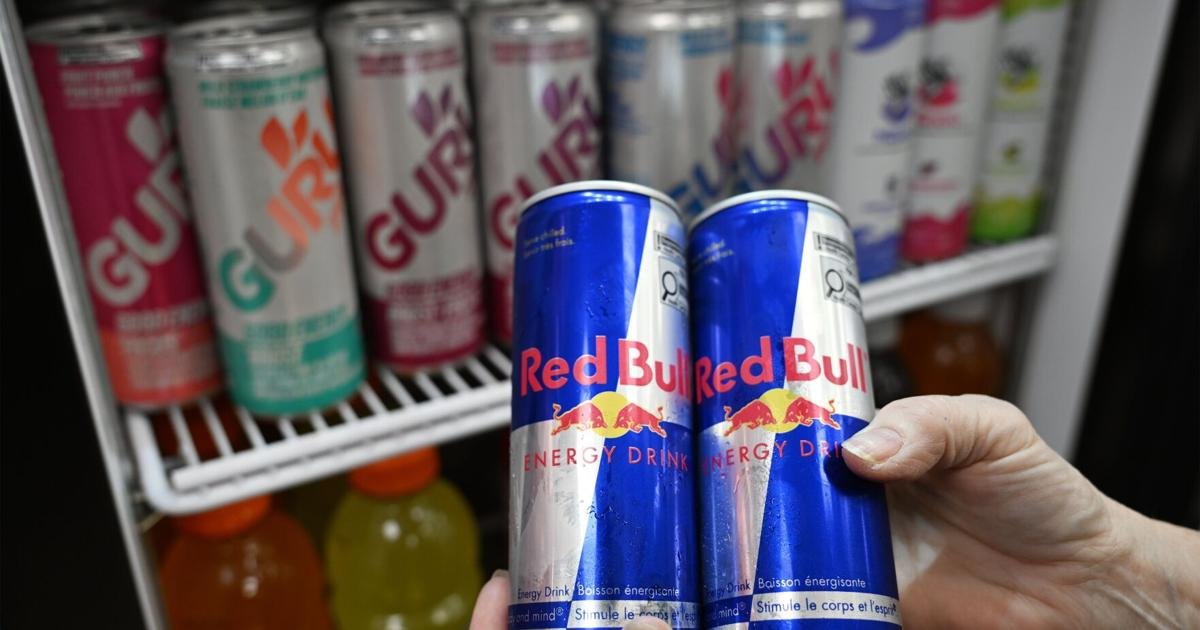
By late 2019, the safety of energy drinks was in the spotlight.
A blistering TV documentary had highlighted the potential role the drinks played in the deaths of two young Ontarians, a 15-year-old and a young man visiting a cottage in Quebec.
Staffers for the health minister drew up a briefing note in case any of her critics across the aisle asked what the government was doing to protect other Canadian youth as the colourfully marketed stimulants were exploding in popularity.
“Our Government takes the concerns regarding caffeinated energy drinks very seriously,” the key messages say, before noting that Health Canada had already taken action: limiting caffeine and requiring “robust labelling measures” on packaging that warned against consumption by children — or mixing with alcohol.
How industry research shaped Canada’s safety decision
Three years later, the regulator removed the labels from cans, a seeming about-face based on a re-evaluation of the latest research. Health Canada concluded there was no conclusive evidence that mixing alcohol and energy drinks led to risky behaviour.
An investigation by The Examination, an American journalism non-profit, in collaboration with the Star and other partners, has found that some of the research they considered was funded by the energy drink industry. This includes studies by Dutch professor Joris Verster, who has co-authored at least 18 papers on the topic and has received funding from Red Bull.
Those studies concluded that mixing energy drinks and alcohol does not cause people to drink more or suffer higher rates of harm. It is out of step with research not funded by the industry, which has found combining energy drinks and alcohol is associated with higher rates of injury, binge drinking, sexual abuse and drunk driving.
Health Canada says the labels were a temporary measure for a new and unfamiliar product, and when it consulted researchers, published studies, industry and trade partners it found “no clear evidence” that that energy drinks promote risky behaviours or cover up alcohol-induced inebriation.
“No single submission or study determines a regulatory outcome,” a spokesperson wrote in an email.
The bulk of the studies co-authored by Verster found minimal risk to mixing alcohol with energy drinks.
His employer, Utrecht University, had previously cleared him of any conflict of interest following an investigation a decade ago. Following recent inquiries from the Examination and its partners about his research, including his work backed by Red Bull, the university said it has opened another investigation into his research group.
Verster denied wrongdoing. He said his research followed ethical guidelines and stands by his findings.

Sloppy Joe’s Bar Tender Crystal Petersen mixes a Red Bull energy drink with vodka July 22, 2001 in Key West, FL.
Joe Raedle Getty Images
Karlheinz Niederreiter, head of science, regulatory and government affairs at Red Bull, told the Examination in an email that regulators across the world have concluded that Red Bull Energy Drink is safe to consume. That’s why, he wrote, nearly 14 billion cans were sold worldwide last year.
That isn’t good enough for Heather Mitchell, whose son’s death intensified the scrutiny energy drinks were facing.
Zachary, 21, was spending an August weekend at a friend’s cottage in 2016 when he went swimming. But shortly before midnight, Mitchell hit the water awkwardly when he dove from a 15-foot high deck. He briefly resurfaced, spoke a few words and went under again. That was the last his friends saw of him, according to a coroner’s report.
His friends told police that he’d drank approximately six beers and several cans of Red Bull over about two hours, according to the coroner’s report. His blood alcohol level was above the legal limit, the report notes, but not high enough to conclude he was significantly intoxicated.

Zachary Mitchell, shown at his high school graduation in 2012.
Heather Mitchell
The coroner’s report attributed his death to drowning, likely due to an arrhythmia caused by a combination of energy drinks and exercise.
The coroner also recommended that Quebec, the province where Mitchell died, conduct an awareness campaign on the risks of consuming energy drinks following physical exertion or when mixed with alcohol.
Heather, Zachary’s mother, calls the removal of alcohol warning labels a “clear dereliction of duty.”
Inside the duelling research
Joris Verster was prolific among the Red Bull-backed researchers.
An area of focus for him and his colleagues was the phenomenon known as “masking” — the hypothesis that mixing alcohol and caffeine causes people to get drunk without realizing it. They concluded that masking was not a threat.
This finding was echoed in a report by the European Food Safety Authority (EFSA) in 2015 that focused on whether caffeine masks the subjective perception of alcohol intoxication. The report concluded that mixing alcohol and energy drinks was not a serious concern at moderate levels of consumption; it didn’t examine higher consumption levels. Health Canada told the Star and its media partners that they “relied heavily” on the EFSA report when deciding whether to continue with alcohol warning labels.
In particular, Health Canada points to parts of the report that grapple with a wide range of concerns with regards to combining energy drinks and alcohol or other additives. Those sections cite Verster’s research, as well as work done by the British Committee on Toxicity, the German Federal Institute for Risk Assessment and others.

Health Canada said, “no single submission or study determines a regulatory outcome.”
Sean Kilpatrick The Canadian Press
A third section, which focuses on masking — or the “Subjective perception of alcohol intoxication” — cites two meta-analyses, one of which was co-authored by Verster. Verster was listed as the second author of four, of which two declared financial conflicts of interest.
The meta-analysis in which Verster was involved analyzed nine other studies and concluded that caffeine had “no effect” on someone’s awareness of being intoxicated.
Silvia Valtueña Martínez, a European Food Safety Authority scientist who contributed to the 2015 report, defended its conclusions. The panel of authors considered a wide range of research, she said, and industry-backed studies like Red Bull’s should not be discounted.
“Science is science, regardless of who is funding it,” she said.
When asked how much money he’d received from Red Bull, Verster told the Examination that he could not disclose an amount, as his contracts with the beverage company were confidential.
In May, EFSA said that it would revisit its findings on caffeine and energy drinks and release a new opinion next year focused on the safety for children and teenagers. However, the agency said it would not address the risks of mixing energy drinks and alcohol because drinking by minors is already considered harmful.
What the ‘real-world’ evidence shows
The research on masking fails to capture the risks involved with how people actually mix the two drinks in the real world, says Tim Stockwell, a former director of the Canadian Institute for Substance Use Research in Victoria.
In one of the first Canadian studies of its kind, he and his PhD students interviewed more than 2,000 people in emergency departments across British Columbia, to assess whether consuming energy drinks with alcohol increased injury risk. They found that it did.

Dr. Tim Stockwell, photographed by the Star in Victoria, B.C., in 2011, studied whether consuming energy drinks with alcohol increased injury risk.
LUCAS OLENIUK TORONTO STAR
Stockwell said many described an attempt to mingle the effects of each substance. In other words, “it appears that it helps you party longer,” Stockwell said. There’s a term for it: Wide-awake drunk.
The longer you “party,” the more alcohol you accumulate in your bloodstream. Meanwhile, the caffeine blunts your perception of injury risk, Stockwell said. Many people are familiar with alcohol’s ability to make you feel like you’re fit to do things you shouldn’t, he added, but caffeine gives you the energy to follow through.
“It’s like you get the energy to do really stupid things, and you’ve lost the fear of doing them.”
The Examination found more than 100 studies published about the health or behavioural risks of mixing energy drinks and alcohol. Of the studies that received funding by Red Bull or were conducted by researchers who disclosed financial conflicts of interest with the company, 95 per cent concluded that mixing alcohol with energy drinks did not increase those risks. Roughly 80 per cent of studies with no known industry funding reached the opposite conclusion, The Examination found.
Canada originally allowed energy drinks to be sold in the country under what’s known as a temporary market authorization in 2004, not quite two decades after the first can was sold in Red Bull’s home country of Austria.
The temporary status functions as regulatory training wheels on new products, allowing them on shelves on a case-by-case basis, with “strict compositional and labelling requirements,” as Health Canada puts it, while more data is gathered.
This time on the market allows officials to collect information on sales, consumer research and incidents in support — or not — of an eventual full authorization. It was during this time that Health Canada required the “do not mix with alcohol” statements as a “precautionary approach.”

MONTRÉAL – Ever since 15-year-old Zachary Miron died after drinking a can of Red Bull while …
In 2021, a Health Canada analysis said that combining alcohol and energy drinks had been “identified as a public health concern in Canada,” and noted that a cautionary statement “would be required” to address the risk.
At the time, Canada was working towards a permanent regulatory category called “supplemented foods.” The agency reached out to stakeholders, scientists and trade partners for feedback on allowing the drinks to be sold on a more permanent basis.
When deciding whether or not to remove alcohol warning labels from energy drinks, Health Canada says it looked at an array of research, including the EFSA report, a statement from the UK’s Committee on Toxicity and a risk assessment done by their own scientists almost a decade earlier that found evidence at the time did not conclusively show toxicological harm caused by mixing the two.
Industry pushback: How drink makers lobbied regulators
The beverage industry told the regulator there was no scientific basis for the warning label — and it had research to back up its position.
The Canadian Beverage Association sent Health Canada a lengthy letter pushing back on a slew of the proposed changes, including the move to supplemented food labelling in general. The letter criticized the alcohol warning labels as “lacking scientific rationale,” and cites Verster’s research.
All CBA submissions are “grounded in peer-reviewed research and publicly available scientific studies,” and the organization remains committed to clear labelling and responsible communication, the association’s president Krista Scaldwell said in an emailed statement to the Star.
The European Union joined in, cautioning against the labelling requirement and pointing to the European Food Safety Authority report from 2015.
In the list of regulations released the next year, in 2022, there was a shift in tone. While consumers and academics supported the labels, Health Canada said industry associations had “provided evidence” that the consumption of alcohol and energy drinks “did not present an elevated risk to health.” The labels were no longer required.
It’s not wrong for Health Canada to have had conversations with Red Bull or the Canadian Beverage Association, says David Hammond, a professor at the University of Waterloo who acts as an expert witness in court cases, primarily on behalf of governments defending health regulations from legal challenges by the food, tobacco, and cannabis industries.
“In fact, they’re obligated to consult with stakeholders,” he says.
But as one of the academics who was part of the Health Canada’s consultations on the temporary authorizations of energy drinks, Hammond says his impression was that industry may have had an “outsized influence” on the conversation, relative to concerns raised about safety.
“I’ve spent 25 years testifying against the tobacco companies, so I’m not a shrinking violet when it comes to industry,” he said. But he said he was still surprised at the influence of Red Bull and the Canadian Beverage Association in meetings with Health Canada.
While he believes the risk of mixing energy drinks and alcohol to be well established, Hammond says there is also an argument to be made that labelling would help. Health Canada’s original warning labels were not particularly effective, he says, but it doesn’t change the impact that labelling can have, not just on specific behaviours, but on social norms more broadly.
“The warning is like putting a flag in the ground, and it has impacts that are broader than that individual consumer,” he says. “It signals and frames a product in a way more generally; that there’s reason for caution when consuming this particular product.”
In response to the Examination’s findings on studies with industry ties, Peter Miller, a professor at Deakin University in Australia, said he was not surprised. In 2013, he wrote an essay in a medical journal criticizing the wave of industry-funded studies about mixing energy drinks and alcohol.
Those research grants are “an investment using universities’ reputation to be able to influence policy,” Miller told The Examination.
“This is a campaign to protect their profits and to avoid legislative intervention.”
With files from The Examination’s Sasha Chavkin, Ashley Okwuosa, Fernanda Aguirre Ruiz, Romina Colman, Léopold Salzenstein, and from the Tow Center for Digital Journalism’s Aisvarya Chandrasekar.