dailynewsnblog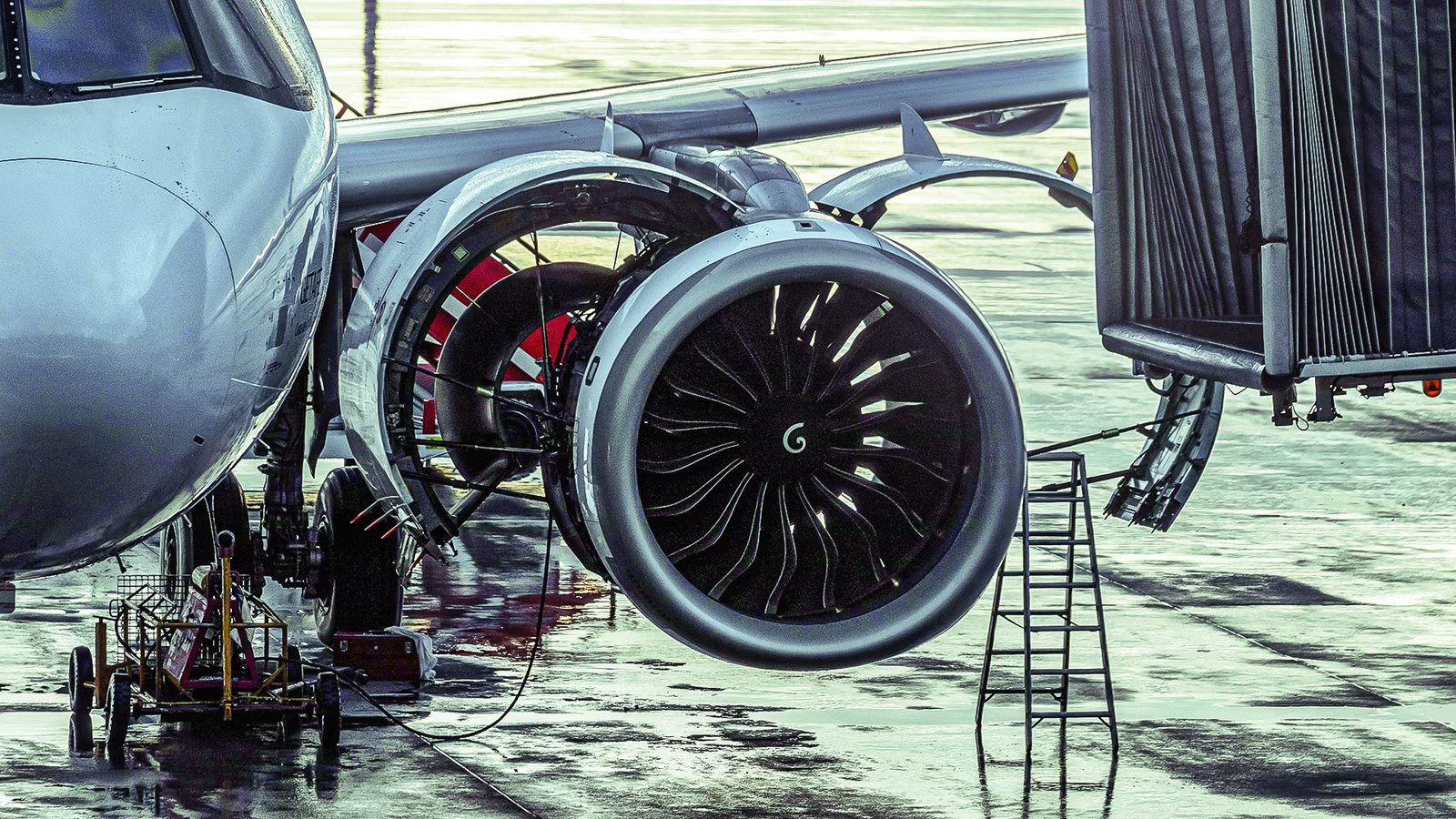
GE Aerospacehas recently announced its agreement to acquire Consolidated Precision Products (CPP). The firm manufactures complex titanium, aluminum, and superalloy castings and airfoils for commercial and military engines and employs 6,600 people across 20 facilities. This investment is worth $11.75 billion. GE Aerospace has funded $7 billion of this cost in cash, but has had to take on new debt to complete the acquisition.
The deal will help GE Aerospace secure airfoil supply, with the company expecting demand to rise by more than 30% by 2030. The deal will substantially ease the bottlenecks GE Aerospace will face in the coming years because of the long time required to construct components for advanced modern aircraft engines. For example, Tech Times reports that it takes 60 to 90 weeks to create 40 single-crystal turbine blades at a cost of over $600,000. Simple Flying has contacted GE Aerospace for comment.
What Exactly Has GE Aerospace Purchased?

GE Aerospace has purchased a manufacturer based in Cleveland, Ohio, with global facilities in the US, Mexico, Poland, Belgium, and Slovakia. On the surface, this is a superb acquisition of a supplier that GE Aerospace and other aircraft engine manufacturers have been reliant on. It goes further than that because of CPP’s manufacturing process. The firm is a world-leading producer of castings and precision sand-castings. These materials are designed to endure heat, pressure, and mechanical stress inside a jet engine’s hot section, used in components like turbine blades, nozzle guide vanes, and airfoils.
GE Aerospace has paid an enormous price to gain this access. Tech Times reports that GE Aerospace will value CPP at 18 times its 2027 EBITDA (Earnings Before Interest, Taxes, Depreciation, and Amortization). This rises to 26 times when synergies are factored in. The high value reflects how important these materials and components are to GE Aerospace. The deal should close in the second half of 2027, but could be delayed while regulatory approval is still pending.
CPP CEO James Stewart has called GE Aerospace “a great partner to CPP for many years” and said that the companies will now partner in “delivering meaningful value and advancing the success of both organizations.”
Single-Crystal Turbine Blades Are The Primary Potential Bottleneck

Many aircraft engine components are made through investment casting. A ceramic core of an intricate component is made, and then wax is molded around it. Several of the molds are combined into a ‘tree’. The tree is dipped in a ceramic slurry of the component’s materials and dusted. This coat is left to dry, and the process is repeated multiple times. Next, the component is superheated to melt out the wax. Hammering, blasting, or chemical dissolution then removes the ceramic core before the finished product is inspected.
This process becomes even more complex when used for the high-pressure turbine blades, which sit at the front of the hot section. These blades face heat, pressure, and the stress of centrifugal force as they spin. Because the blades must be so robust, they are grown as a single metallic crystal. The lack of grain boundaries helps prevent weak spots.
Single-crystal fabrication is exceptionally challenging. It requires the Bridgman method of directional solidification, with the component being removed from the furnace at a few inches per hour. Deviation during any stage of the manufacturing process, such as from ideal temperatures, can create defects and render a blade unusable. As a result, building the skilled workforce and facilities for single-crystal fabrication takes years, which is why GE Aerospace has been prepared to make such a substantial investment.
The Demand That Explains Why GE Aerospace Has Made This Deal

Aviation industry circumstances that have caused demand for complex aircraft engine components to outstrip supply have forced GE Aerospace’s hand. Recent years have seen a wicked combination of a return of passenger demand and an extensive aircraft manufacturer backlog. For example, the Boeing 777X has received 646 firm orders. None have been delivered as the aircraft is still awaiting final certification. The Boeing backlog now stands at over 6,000 jets. The table below shows the top airlines by the size of their 777X order:
Airline | Total order size |
|---|---|
Emirates | 270 |
Qatar Airways | 124 |
Korean Air | 48 |
Cathay Pacific | 35 |
Singapore Airlines | 31 |
The consequence has been that airlines are flying older jets for longer. These planes require regular engine inspections and maintenance. The market for aftermarket engine parts, such as single-crystal turbines, is growing to an unprecedented height. This is shown by financial reporting from Howmet Aerospace, a key player in the component casting industry. It says that its Q1 2026 revenue is up 19%. Its Engine Products department drove this growth, with a 29% revenue increase. GE Aerospace also reported 30% growth in airfoil demand, including the commercial, defense, and aftermarket industries.
We are approaching a critical point in the engine parts industry where demand meets a bottleneck. Aircraft engine manufacturers without direct access to essential materials and components could face extensive delays and costs, cutting into their operating profits. The CPP deal has bought GE Aerospace a unique level of supply-side security.
CPP Also Gains New Capabilities Through The Deal

CPP also stands to benefit from the GE Aerospace deal. CPP will be absorbed into its FLIGHT DECK operating model. FLIGHT DECK is a system of events, policies, checks, coaching, and more. It boosts the safety, delivery, quality, and cost, in that order, of aircraft engine components. GE Aerospace calls these performance metrics its “true north.”
The FLIGHT DECK model may sound like opaque corporate speak, but it has produced tangible improvements in output at key GE Aerospace plants. At the Pomigliano site in Italy, which is operated by Avio Aero, the model has produced the results outlined in the table below, as announced by GE Aerospace:
Metric | Result |
|---|---|
Labor productivity | +20% |
Inventory costs | -42% |
Lead time across production lines | -42% |
Reduction in wasted time and materials is a key goal of Flight Deck. Pomigliano site leader Roberto Bertaina said: “We had parts moving round the shop to different machines, and different parts coming to the same machine. That generated waste in terms of waiting, because the same machine operator was prioritizing one workflow over another.”
The Regulators Could Still Jeopardize The Deal

If GE Aerospace’s planned CPP acquisition will hurt rival engine makers’ access to casting, regulators could still block the deal. This is particularly likely given that CPP customers include high-profile manufacturers like Honeywell, Pratt & Whitney, and Lockheed Martin. The concern is that GE Aerospace would force CPP to place rival engine firms lower down in the production list, or refuse their orders altogether.
GE Aerospace has suffered at the hands of regulators before when making aviation industry deals. In 2001, the European Commission decided to block General Electric’s planned purchase of Honeywell International, which was worth $41 billion. Although the deal had been approved in the US after minor adjustments, it was the first time a European regulator had blocked a merger of two US companies.
As reported by CBS News, EU Competition Commissioner Mario Monti said, “The merger between GE and Honeywell, as it was notified, would have severely reduced competition in the aerospace industry and resulted ultimately in higher prices for customers, particularly airlines.” The decision led US senators to accuse the EU regulators of protectionism. President George Bush also expressed his concern. Honeywell continues to trade independently.
GE Aerospace Is Making Other Significant Investments To Improve Its Repair Infrastructure

The CPP acquisition is one of many other investments GE Aerospace has made in recent years. Simple Flying’s Luke Diaz reported on the firm’s $1 billion investment over five years to upgrade its maintenance, repair and overhaul (MRO) network to cope with surging demand. The firm first made the investment in July 2024. At that time, over 3,000 LEAP-powered aircraft were in the skies, and a further backlog of 10,000 engines still needed to be built. Traditionally, significant MRO investment is needed about a decade after an engine enters service, but GE Aerospace decided to get ahead of the curve.
“Our customers are experiencing strong air travel demand, and we are investing in increasing our capacity and efficiency so we can meet their growing needs and keep their planes flying safely and reliably,” said GE Aerospace President and CEO, Commercial Engines and Services, Russell Stokes.
Singapore has been a target for investment. Aviation Maintenance Magazine reported that GE Aerospace had committed $300 million, supported by the Singapore Economic Development Board, for its engine repair operations in the state. The upgrades would follow a plan lasting until 2029. The developments include a shop dedicated to CFM LEAP-1A and LEAP-1B high-pressure turbine modules, an Artificial Intelligence Center of Excellence, a chemical coatings facility, and a center for turbine shaft repair. The plan is to repair whole engines, rather than individual components, there.