dailynewsnblog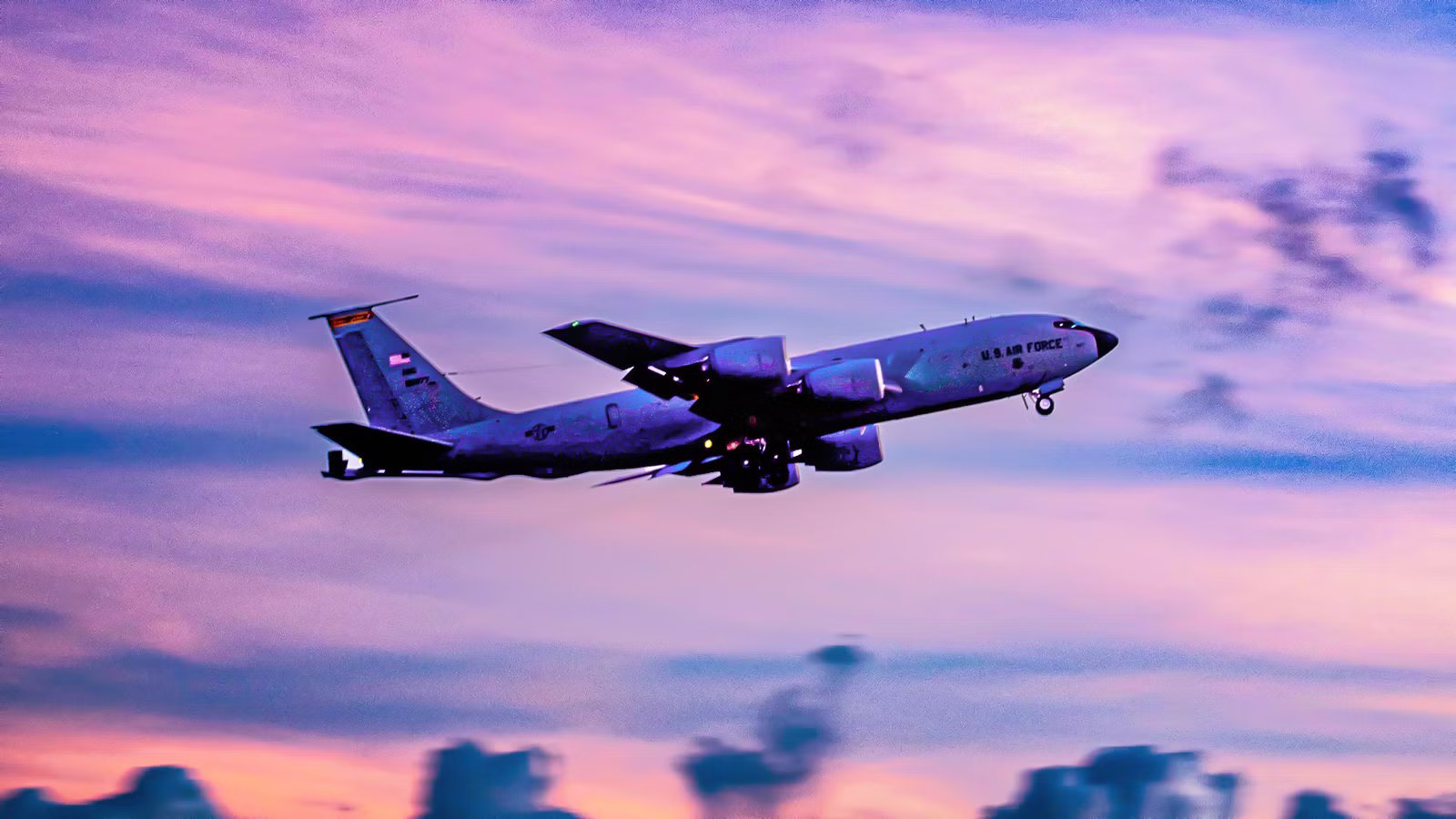
Despite being nearly 70 years old, the  Boeing KC-135 Stratotanker is still the backbone of the US Air Force’s (USAF) aerial refueling aircraft due to its durable, over-engineered airframe, which has allowed nearly 400 examples to continue serving while newer replacements struggle. The Boeing KC-46 Pegasus is its obvious successor. However, it has encountered substantial technical delays and performance concerns, preventing it from taking over the USAF’s aerial refueling role.
While the Boeing 707 that the KC-135 is based on was designed for efficiency and passenger comfort, the KC-135 was engineered for the nuclear-hardened requirements of Strategic Air Command, making its airframe a ‘tank’ of the skies. Being designed to withstand the overpressure and thermal radiation of flying near a nuclear blast resulted in such an over-engineered plane that it continues to endure and even outperform its modern peers.
The Air Force is legally mandated by Congress to maintain a minimum of 466 tanker aircraft. The Stratotanker fleet comprises over 80% of that fleet. The newer KC-46 Pegasus has struggled with critical flaws in its Remote Vision System and refueling boom, leading the Air Force to pause follow-on orders until Boeing resolves these defects. The Stratotanker’s simpler maintenance requirements make it a more predictable asset for routine missions.
The Stratotanker’s Crucial Mission For Global Operations

In modern high-tempo environments, the demand for tankers is constant for both training and overseas operations, often requiring hundreds of aircraft to be airborne simultaneously. During Operation Epic Fury, approximately 33% of the mission-capable tanker fleet was committed to this single operation, according to the Atlantic Council. The massive number was deployed over a wide area to sustain long-range strikes by Northrop Grumman B-2 Spirit Bombers and fighters.
During recent operations against Iran, the KC-135 has been critical in allowing fighter jets from both the Navy and the Air Force to remain on station longer over Iran. This allows jets like the Boeing F/A-18 Super Hornet and Lockheed Martin F-35 Lightning II to orbit the battlefield. The aircrews can then strike targets of opportunity and maintain pressure on enemy air defenses.
In March, Spain closed its airspace, which increased transit flight distances for USAF planes by roughly 30%. That required as many as 50% more tankers just to maintain the same refueling coverage. This forced the Air Force to divert at least 15 KC-135s to bases in France, Germany, and the United Kingdom and once again underscored the importance of the KC-135 and why a large fleet is so strategically vital.
The KC-135 Prepares To Be The First Centurion Tanker

Despite its age, the USAF has not slowed down in any way in integrating the Stratotanker as a support platform for its latest and greatest aircraft. The Air Force’s first 6th-Gen stealth bomber, the NG B-21 Raider, completed key aerial refueling tests using a KC-135 in April 2026. This confirms that the 70-year-old tanker remains the primary platform for developing next-generation strike capabilities. In fact, it is still so vital that some speculate the Stratotanker could reach almost a century of service before finally retiring.
The slow progress of the KC-46 and absence of a Next-Gen tanker platform entirely is pushing the USAF to keep investing in the KC-135. Updated plans focus on connectivity, survivability, and fuel efficiency to ensure the 1950s-era jets can safely operate alongside modern stealth fighters like the F-35 and B-21. The 2026 budget includes funding for a KC-135 engine and system upgrades, such as adding an updated tactical data link and a glass cockpit interface with improved electronic warfare resilience.
The Stratotanker’s airframe was designed for ease of maintenance under field conditions, meaning almost every cable run and mechanical component is accessible through dedicated panels. This modularity makes it uniquely upgradable even seven decades later. Leveraging that design, now there is speculation that a Drone Delivery Mechanism could be integrated into the Stratotanker. The prototype DDM will make the Stratotanker a mothership that can launch defensive unmanned aerial vehicles directly from the tanker’s aft hatch to protect it in high-threat environments on the battlefield of tomorrow.
Recapitalizing The Tanker Fleet: The USAF’s Return On Investment

The US Air Force has invested billions into the KC-135 Stratotanker through three major waves of modernization that have transformed it from a basic 1950s aircraft into a digital, mission-flexible platform. The KC-135 fleet has undergone several block upgrades to maintain its status as the backbone of global air refueling. The Air Force is now requesting millions more to extend the KC-135’s life through the late 2030s and potentially beyond.
In the 1980s, the Air Force replaced the original, noisy J57 engines with CFM56 (F108) turbofans. This investment allowed the jet to offload 50% more fuel while being 25% more fuel-efficient and 96% quieter. Then, beginning in 1999, the Pacer-CRAG upgrade installed new compass, radar, and GPS systems, which allowed the Air Force to eliminate the navigator position from the flight crew, significantly reducing crew requirements.
The latest round of modernization upgrades began in the 2010s with the Block 45 phase. This most recent major refresh replaced obsolete analog engine gauges and manual flight controls with a glass cockpit, featuring liquid crystal displays, a digital autopilot, and a modernized flight management system. For 2026, the Air Force requested $124.37 million specifically for modifications to keep the KC-135 fleet operational while waiting for a viable replacement.

The Real Reasons Why The B-2 Spirit Won’t Be Retiring Before The B-1 Lancer
The USAF’s Flying Dorito is outlasting the mighty Bone.
The Air Force Numbers Game: Never Enough Gas On Call

The McDonnell Douglas KC-10A Extender was retired in 2024, which only served to increase the importance of the KC-135 for the Air Force’s aerial refueling mission. As of 2025, roughly 396 Stratotankers remain in total inventory across active-duty, Air National Guard, and Air Force Reserve units. Falling well short of that figure, there are just 110 KC-46s in the fleet with a total of 179 Pegasus on order so far. The Air Force faces an ever-increasing demand for tankers, leaving no tolerance for a shortage of available planes.
Still, the KC-135 is slated to be retired in 2050, which could take place before the Next-Generation Air-Refueling System is ready, leaving the USAF short-handed. If there is no replacement available to fill the tanker gap, the Air Force may be forced to fly the KC-135 for nearly 100 years. This would require even more intensive maintenance and possibly a second round of major upgrades to keep the airframes safe and reliable.
In 2025, the Air Force announced plans to purchase an additional 75 Pegasus aircraft as a ‘bridge’ to keep the fleet size stable while waiting for NGAS. Issues with the KC-46 have forced consideration of more alternatives, including modified business jets as smaller, cheaper tankers to fill immediate capacity holes. This option remains speculative at this time and would likely not permanently resolve a tanker gap.

Why The E-3 Sentry’s Rotating Radar Dome Will Be Nearly Impossible To Replace
The eye in the sky the USAF is saying goodbye to.
Resurrecting The Stratotanker: Boneyard To Flightline

In emergency scenarios, the Air Force has recently demonstrated it can pull retired KC-135s from the ‘Boneyard’ and restore them to flight status to maintain fleet numbers. These preserved airframes are regenerated from mothball status to replace aircraft lost to accidents or combat damage. This month, there were reports of reactivated units arriving at the Oklahoma City Air Logistics Complex at Tinker Air Force Base.
Before heading to Oklahoma, the personnel at 309th AMARG peel off the white vinyl protective coating and remove protective seals from the engines and fuel systems at Davis-Monthan AFB in Tucson, Arizona. While most aircraft at the Boneyard are used for parts reclamation, a select number are retained in Type 2000 storage to protect them while standing by to potentially return to service.
KC-135 Stratotankers with serial numbers 58-0011 and 58-0018 were transferred to Tinker this April, according to The Aviation Geek Club. Airframe 58-0011 had been retired just last year, while 58-0018 was on the chopping block, but the call back to action will see it headed to heavy maintenance instead of the Boneyard.
Tinker performs exhaustive inspections for structural fatigue, corrosion, and wiring degradation. Because many Boneyard jets have been out of service for years, they often require immediate avionics and connectivity upgrades to meet current mission standards before rejoining the active fleet.

Why The B-52 Will Outlive The Very Bombers Built To Replace It
The enduring BUFF keeps flying through the eras.
The Problem With Pegasus: The Troubled Debut Of The KC-46

The Stratotanker’s successor is already several years behind, and persistent issues have it rolled back to 2027 for full operating capacity. In addition to glitches with the camera-based RVS on the KC-46 that replaces the KC-135’s physical control station in the aft, the refueling boom requires too much force for smaller aircraft like the A-10 Thunderbolt II to trigger, making it difficult for them to maintain a connection.
A redesigned Boom Telescope Actuator is currently in development and expected to be fielded in 2026 or 2027. As a result, it has been slow to receive certification for compatibility with airframes used by the US Armed Forces. Worse than that, the planes that have been delivered have suffered low readiness levels due to technical hiccups. Lawmakers paused deliveries from Boeing after cracks were discovered in the fuselage of brand-new jets last year and have categorized the KC-46 at the worst level of deficiency for a procurement program, Category 1, meaning that the flaws could cause loss of life or aircraft.
Despite these setbacks, the KC-46 remains the only tanker in production and is central to the Air Force’s recapitalization plan. The KC-46 is meant to be a bridge that will help phase out the KC-135 inventory without significantly dropping fleet size. Eventually, the NGAS tanker, which will be a sixth-generation platform capable of entering contested areas alongside stealth aircraft, is meant to be the new backbone of the fleet. Since the KC-46 cannot be delivered fast enough and the NGAS isn’t expected to even result in a working plane until 2040, it’s not expected that we will see the KC-135 truly leave the fleet until the 2050s.