dailynewsnblog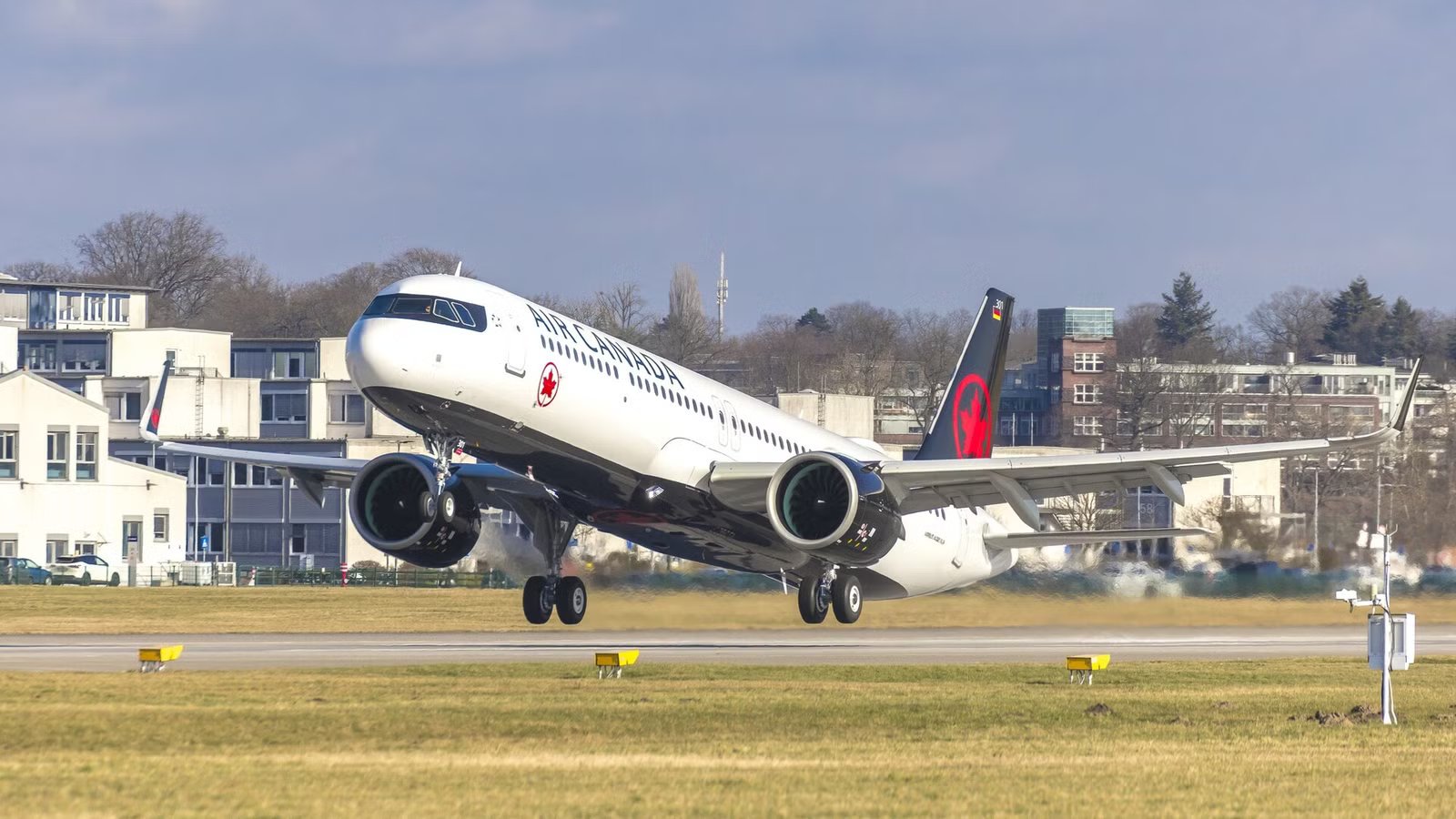
 Air Canada has formally taken delivery of its first Airbus A321XLR, marking the start of a new narrowbody era for the Canadian flag carrier. Following its maiden flight last month, the aircraft was officially handed over in Hamburg today and is now set to make its way home, giving Air Canada the first of what will become a 30-aircraft A321XLR fleet.
The aircraft is more than just another new jet. For Air Canada, the A321XLR combines long-range narrowbody economics with a cabin product that looks much closer to a widebody, including lie-flat Signature Class seats on a single-aisle aircraft for the first time in the airline’s history. Small wonder that Air Canada considers it a game-changing aircraft for its transatlantic expansion.
Air Canada Takes Its First A321XLR

Air Canada confirmed this morning that it had taken delivery of its first A321XLR in Hamburg, marking the formal handover of the airline’s newest fleet type. The aircraft is leased from SMBC Aviation Capital and is the first of 30 A321XLRs expected to join Air Canada over the coming years. Of those, 15 will be leased, and 15 are being acquired directly from Airbus.
At the time of writing, the aircraft is on its delivery flight from Hamburg to Windsor, Ontario. Once in Canada, the aircraft can begin the final phase of entry-into-service preparation, including local acceptance work, crew familiarization, maintenance checks, regulatory paperwork, and any final cabin or operational readiness tasks before it is released into scheduled flying.
Mark Galardo, chief commercial officer at Air Canada, described the aircraft as “game-changing,” saying that it will shortly be deployed across the Atlantic from Montréal and Toronto, while also becoming a staple on key North American transcontinental markets:
“The Airbus A321XLR introduces a dynamic new component to Air Canada’s growth strategy, greatly expanding our flexibility to launch new international routes and improve our offering on existing markets.”
For Air Canada, the A321XLR is not simply a replacement aircraft. It is a strategic piece of its network expansion, giving the airline a smaller long-haul platform capable of opening thinner transatlantic routes while still offering lie-flat Signature Class seats. With the new aircraft scheduled to carry its first passengers in just over seven weeks, it will now enter a very busy period of induction into the fleet, crew and maintenance preparation, and proving/familiarization activity, ahead of its planned commercial launch.
A New Transatlantic Workhorse

Air Canada’s first scheduled A321XLR route is planned to operate from Montréal–Trudeau International Airport (YUL) to Toulouse-Blagnac Airport (TLS), starting from June 15. By virtue of being the first, the route also has by far the highest number of scheduled A321XLR flights, with 266 movements listed for the rest of the year.
|
Base |
Destination |
Flights in 2026 |
Operating Dates |
Distance |
|---|---|---|---|---|
|
Montreal |
Toulouse |
266 |
From June 15 |
3,650 mi (5,875 km) |
|
Montreal |
Calgary |
136 |
From July 17 until October 24 |
1,870 mi (3,010 km) |
|
Montreal |
Berlin |
80 |
From July 18 |
3,750 mi (6,035 km) |
|
Montreal |
Nantes |
82 |
July 22–October 11 |
3,225 mi (5,190 km) |
|
Montreal |
Porto |
98 |
Aug 17–October 23 |
3,165 mi (5,095 km) |
|
Toronto |
London |
104 |
Aug 31–October 22 |
3,560 mi (5,730 km) |
|
Montreal |
Vancouver |
4 |
September 2 and 6 only |
2,300 mi (3,700 km) |
|
Montreal |
Lyon |
66 |
September 7–October 22 |
3,750 mi (6,035 km) |
|
Montreal |
Los Angeles |
48 |
October 1–24 |
2,475 mi (3,985 km) |
|
Montreal |
Lisbon |
98 |
From October 24 |
3,240 mi (5,215 km) |
|
Toronto |
Manchester |
78 |
From October 25 |
3,450 mi (5,550 km) |
|
Toronto |
Tenerife |
40 |
From October 25 |
3,850 mi (6,195 km) |
|
Toronto |
Copenhagen |
58 |
From October 27 |
3,900 mi (6,275 km) |
|
Montreal |
Tenerife |
18 |
From October 31 |
3,480 mi (5,600 km) |
The longest listed A321XLR route is from  Toronto Pearson International Airport (YYZ) to Copenhagen Airport (CPH) at around 3,900 miles, which will have a 9-hour block time on the return leg to Toronto. Air Canada currently operates the route with a Boeing 787-9, but it will shift to the long-range narrowbody for the winter schedule when demand on the route drops. This makes it exactly the kind of thin, long-haul markets the A321XLR was built for: routes that may not justify a widebody year-round, but where a premium-equipped narrowbody can open new possibilities.
The A321XLR launch pattern is also interesting. The early ramp-up is heavily centered on Montréal, including Toulouse, Calgary, Berlin, Nantes, Porto, Lyon, Lisbon, and Tenerife. Toronto then sees a late-October surge as the winter season kicks in, with Manchester, Tenerife, and Copenhagen all appearing in the schedule within a few days of each other.

A New Era: Air Canada’s First Airbus A321XLR Takes To The Skies
One step closer to the first delivery!
What To Expect Onboard Air Canada’s A321XLRs

Air Canada’s A321XLRs will be configured with 182 seats, split between 14 lie-flat Signature Class seats and 168 Economy Class seats. The A321XLR will also debut Air Canada’s new ‘Glowing Hearted’ cabin standard, which includes larger overhead bins, new ergonomic seats, 4K OLED seatback screens, Bluetooth audio, USB-C and AC power at every seat, and fast, free WiFi for Aeroplan members.
|
Cabin |
Seats |
Layout |
Key Features |
|---|---|---|---|
|
Signature Class |
14 |
Lie-flat premium cabin |
19-inch 4K OLED screens, Bluetooth audio, single-aisle lie-flat product |
|
Economy Class |
168 |
Standard narrowbody economy |
13-inch 4K OLED screens, Bluetooth audio, USB-C, and AC power |
|
Total |
182 |
Two-cabin layout |
New Glowing Hearted cabin standard |
Design-wise, Air Canada is leaning heavily into its Canadian identity. The cabin includes red stitching, bespoke fabrics, grey and stone tones, natural wood grain details, bronze accents, and a backlit maple leaf canopy at the entrance. For passengers, the result should be a narrowbody aircraft that feels far less like a typical short-haul jet, and much more like the future of Air Canada’s new long, thin international network.