dailynewsnblog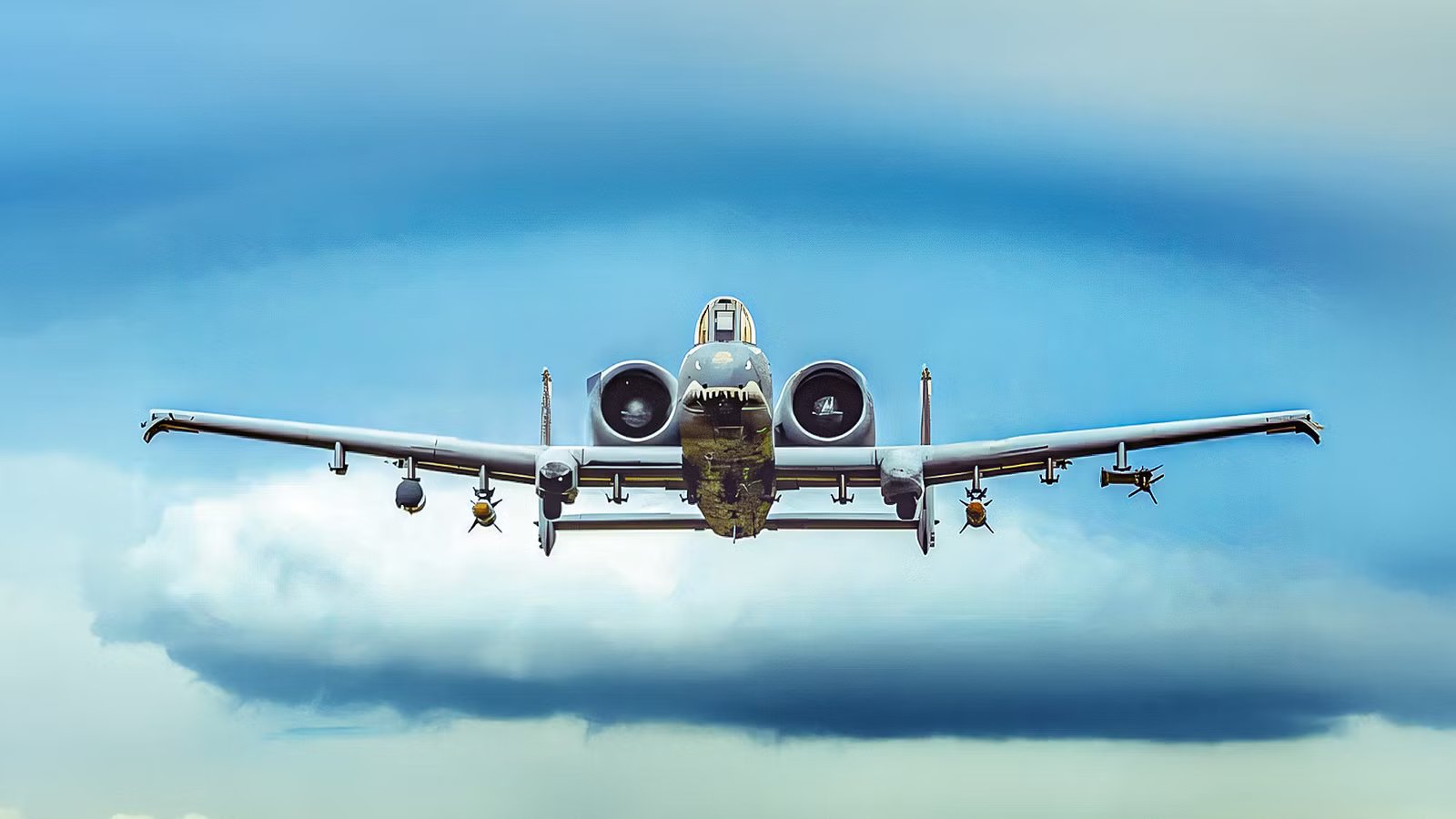
This question related to modern military aviation carries as much weight as the frustration: why does the United States Air Force (USAF) still fly a ground-attack jet designed in the 1970s? To understand the Fairchild-Republic A-10 Warthog ‘s grip on the Air Force inventory, it helps to understand what the aircraft was built to do and why doing it well has proven so surprisingly hard to replicate. Designed specifically for close air support, which means flying low, slow, and close to friendly troops to destroy enemy armor and infantry, the A-10 earned its reputation in the deserts of Iraq and Afghanistan. We will examine why that reputation has refused to fade, what the Air Force’s retirement calculus actually looks like, and what it might mean for US ground forces if the Warthog disappears before a true successor exists.
The Warthog remains in service with the USAF in 2026 because no other platform matches its combination of loiter time, low altitude survivability, pilot visibility, and the GAU-8 30mm cannon’s firepower—and retiring the fleet now would create a measurable close air support gap for ground forces. The Air Force proposed retiring all 162 remaining A-10s in FY2026 (with an estimated $57 million in decommissioning costs), but Congress limited divestment and required at least 103 aircraft to be retained through September 30, 2026. According to the USAF fleet data and various military reporting, including cost figures from the Congressional Budget Office, this analysis compares the reasons the Warthog endures and what losing it before a true successor would mean for US troops.
What Makes The A-10 Irreplaceable In The Close Air Support Role?

The short answer is that no other aircraft in the US inventory combines the A-10’s loiter time, low-altitude survivability, pilot visibility, and raw firepower in the way ground commanders have come to rely on it. The Warthog was purpose-built for one job, and that singularity of design is precisely what makes it so difficult to replace with a multirole platform. According to 19FortyFive, what has made the aircraft special is its exceptional loiter time, ability to operate from austere forward airfields, a durable airframe, and outstanding pilot visibility. These qualities matter enormously when troops in contact need overhead support that can stay, watch, and engage.
At the heart of the aircraft sits the GAU-8 Avenger, a 30mm rotary cannon so large it essentially determines the plane’s dimensions rather than the other way around. Originally conceived to destroy Soviet armor in a hypothetical European land war, the GAU-8 proved devastatingly effective against a much wider variety of targets across two decades of Middle Eastern combat. Ground troops who fought in Iraq and Afghanistan developed an almost visceral attachment to the sound of the gun, known as “brrrrt…”. This memorable sound became synonymous with rescue and fire superiority at the worst possible moments.
The broader design philosophy reinforces the cannon’s effectiveness. Unlike fast-movers that must approach at high speed and altitude to avoid ground fire, the A-10 flies slowly enough to positively identify targets and engage with precision. Its cockpit is positioned far forward, giving pilots an unobstructed downward view. This seemingly simple feature provides enormous tactical value when the difference between friendly troops and an enemy position can be measured in meters.
What Factors Keep The Warthog Flying Despite Years Of Retirement Pressure?

The forces keeping the A-10 are a layered combination of combat-proven resilience, ground-troop loyalty, active legislative intervention, and the stubborn absence of a credible replacement. As of early 2026, the Air Force had wanted to retire all 162 remaining Warthogs in a single fiscal year sweep, an acceleration of three years over the previous 2029 timeline, budgeted at $57 million in decommissioning costs. Congress blocked that move in the FY2026 National Defense Authorization Act, limiting divestments to just 59 A-10s and requiring the Air Force to keep at least 103 total aircraft through September 30, 2026.
Battle damage resilience is a major part of that value. According to 19FortyFive, the pilot sits encased in a titanium “bathtub” that can absorb direct hits from heavy-caliber rounds. The aircraft features redundant hydraulic systems, an engine layout designed so that damage to one engine does not take out the other, and a structural design specifically intended to absorb punishment and still return the pilot home. In practical terms, this means the A-10 can operate in threat environments that would force faster, more fragile aircraft to stand-off at safer distances — distances that reduce their usefulness to troops in contact.
Now, you have probably heard about the survivability characteristics of the Warthog dozens of times, but no story illustrates the aircraft’s mechanical robustness better than what happened over Baghdad on April 7, 2003. Then-Captain Kim “Killer Chick” Campbell, deployed with the 332nd Air Expeditionary Wing, was providing close air support to US Army troops fighting for control of the Iraqi capital when a surface-to-air missile struck the tail of her A-10. The SAM impacted the right horizontal stabilizer, sending shrapnel into the fuselage and completely severing both the primary and back-up hydraulic lines. The aircraft rolled violently left and pointed nose-down toward the city. Campbell lost all hydraulics instantaneously, disabling the flight controls, landing gear, brakes, and horizontal stabilizer.
Ejecting over central Baghdad was not an option she was willing to take. Instead, she switched to manual reversion, a system of cranks, pulleys, and cables that allows a pilot to fly the jet in an emergency — one of the few such systems on any combat aircraft. She then had to limp the nearly-crippled jet roughly 300 nautical miles, about an hour of flying, to the base in Kuwait. When ground crews inspected the aircraft after landing, they found hundreds of small holes in the fuselage and tail section on the right side, as well as a football-sized hole in the right horizontal stabilizer.
Back to more recent years, and there is the question of the emerging drones threat. In 2025, A-10s were deployed to Jordan, from where they primarily flew missions over Syria, striking ISIS-related targets and providing close air support and overwatch to US ground forces still stationed there. More strikingly, The Aviationist reported that an A-10C returned from a CENTCOM deployment with two Shahed-type drone silhouettes painted on its nose, a visual confirmation that the aircraft’s long loiter time makes it well-suited to hunting slow-moving aerial threats that faster jets would struggle to intercept economically. The drone-killing role has become a real and recurring mission, as well as the hunt for naval targets in the 2026 Iran Crisis.

These Are The Countries That Purchase US Fighter Jets
From F-35s to F-15EXs, this global guide reveals the countries powering US air dominance.
What Do Military Leaders And Congress Actually Say About A-10’s Future?

The institutional debate over the A-10 splits roughly along two lines: the Air Force leadership, which views the aircraft as a resource drain in an era of great-power competition, and Congress, which keeps intervening to slow or reverse retirement timelines. Both sides have coherent arguments, and neither has fully prevailed. According to Defense News, the Air Force’s 2026 spending plan called for retiring all remaining A-10s — a move the service argues is necessary to free up resources for next-generation platforms better suited to contested airspace against peer adversaries like China or Russia.
Congress disagrees, or at least disagrees with the pace. Both the House and Senate versions of the FY2026 National Defense Authorization Act call for the Air Force to phase them out gradually by 2029, a timeline the service itself would prefer to accelerate. That gap between congressional mandate and Air Force preference is a microcosm of a larger strategic argument: should the US military optimize for high-end peer conflict, where the A-10’s low-altitude vulnerability would be a serious liability, or should it maintain capabilities proven effective in the lower-intensity conflicts that have actually characterized American warfare for the past twenty-five years?
Ground commanders and special operations forces have consistently sided with Congress, and the recent deployment to the Middle East of units from Idaho is a signal that operational demand for the aircraft’s specific capabilities remains high regardless of what the budget debate suggests at the institutional level.
How Does The A-10 Compare To Its Proposed Replacements?

The Air Force’s case for retiring the A-10 rests on a single core argument: the Lockheed Martin F-35 Joint Strike Fighter can absorb the close air support mission while delivering far greater capability against near-peer adversaries. On paper, the F-35 can perform many of the tasks assigned to the Warthog. In practice, the comparison is more complicated. The F-35 is expensive to operate per flight hour, is optimized for high-altitude precision strike rather than extended low-altitude loiter, and lacks the A-10’s redundant survivability features in high-threat ground environments.
In the data, it gets complicated fast. The A-10 costs around $20,000 per flight hour, making it one of the least costly operational combat jets in the world. The most recent Congressional Budget Office analysis placed F-35A costs at approximately $34,000 to $36,000 per flight hour— a meaningful improvement from around $44,000 in fiscal year 2018, but still roughly 70 percent more expensive per sortie than the aircraft it would replace in the CAS role. The Air Force set itself a stretch goal of $25,000 per flight hour for the F-35 by 2025. That goal has not been achieved, and the path to getting there remains unclear.
The AC-130 gunship offers some overlap in the persistent loiter and fire support categories, but is far more vulnerable to air defenses, less maneuverable, and primarily operates at night, limiting its utility in some scenarios. Armed drones have taken over some surveillance and light strike roles, but they lack the firepower and responsiveness of a crewed aircraft working closely with ground troops.
As the National Interest noted, the problem with retiring the A-10 without a direct replacement is not that other aircraft are useless, but the fact that none of them replicate the specific combination of qualities the Warthog offers. The honest assessment, shared by many defense analysts, is that the US military is being asked to accept a capability gap in close air support in exchange for investment in capabilities deemed more relevant to future peer conflict. Whether that trade-off is acceptable depends heavily on which future conflict scenario one considers most likely.

7 Reasons Why The US Air Force Still Operates The B-52
From nuclear deterrence to missile truck missions, the B-52 Stratofortress remains essential to US airpower even in 2026.
What Are The Real Risks Of Retiring The A-10 Without A Replacement?

The main caveat to the case for keeping the A-10 is also the Air Force’s strongest argument for letting it go: in a high-end conflict against a near-peer adversary with advanced air defenses, the Warthog’s survivability model breaks down. The titanium bathtub and redundant systems protect against small arms fire and man-portable missiles, but they do not protect against modern surface-to-air missile systems of the kind deployed by Russia and China. In that environment, flying an A-10 low and slow over a contested battlefield would be extraordinarily dangerous, and the aircraft’s vulnerability would likely ground it or push it far from the front lines.
The War Zone reported that 39 A-10s went to the boneyard in 2024 alone, accelerating the drawdown even as debates continue. With the total fleet declining — and the recent loss of an airframe doesn’t help — the Air Force is managing a shrinking resource while simultaneously being required by Congress to maintain minimum force levels.
There is also a readiness risk on the other side of the ledger. If the A-10 is retired before the F-35 fleet is large enough and its pilots trained deeply enough in close air support to fill the gap, US ground forces could face a period during which dedicated low-altitude fire support is genuinely degraded. That window, even if temporary, could matter enormously in a future conflict that looks less like a peer air war and more like the persistent counterinsurgency and counterterrorism operations the US has actually fought.
So Why Does The Air Force Still Rely On The A-10 Warthog?

The answer, stripped to its core, is that the A-10 keeps showing up and performing — and nothing else does what it does quite as well or as cheaply. From the titanium-armored cockpit to the drone-kill markings freshly painted on a returned CENTCOM deployment, the aircraft continues to validate the instincts of the commanders and legislators who have fought to preserve it. It was designed for a Cold War that never became hot, survived into a post-Cold War era of persistent conflict, and has now found a second wind hunting drones and supporting troops in Syria from forward bases in Jordan.
The deeper story is about the difficulty of planning for multiple futures simultaneously. The Air Force is not wrong that resources spent maintaining the A-10 are resources not spent on the platforms needed for great-power competition. But Congress is not wrong that retiring a proven, irreplaceable capability before a successor exists creates a real and immediate risk to the soldiers who depend on it. Both arguments are correct, which is why the debate has lasted decades without resolution.
What comes next will depend on how quickly the F-35 community develops genuine close air support proficiency, how the drone threat evolves, and whether any future conflict gives the Air Force the political breathing room to accept a near-term capability gap in exchange for long-term modernization. The 2029 Congressional timeline exists as a compromise, but timelines in defense policy have a way of slipping. The Warthog, as it has done repeatedly, may yet outlast the plans made to replace it.