dailynewsnblog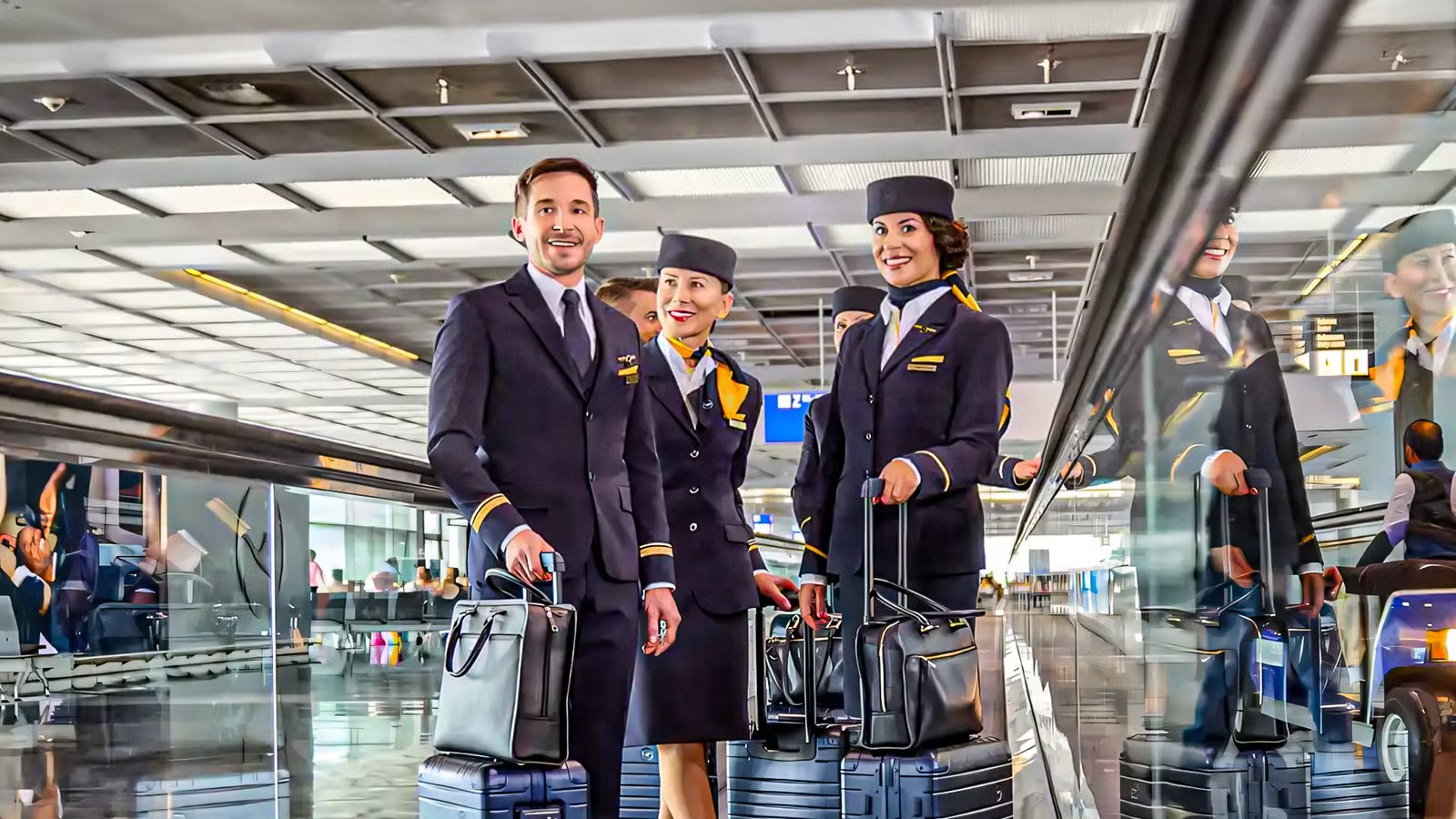
The flight attendant uniform has always been a strong feature, and many airline uniforms share its look and construction but are designed for a very specific purpose. There is also strong branding behind them, and they have to reflect the airline and are often instantly recognizable. Over time, some parts of the uniform have changed, but the grooming standards behind it are often still very strict.
In this article, we will explore the history of the uniform, why flight attendant uniforms tend to feature hats and why this is significant. We will also look at why designers are often chosen to create uniforms and how airlines use them as marketing tools. We will also see how uniforms have changed in recent years and often reflect social change.
Purpose & History

In the early days of commercial aviation, the flight attendant uniform was strongly influenced by the aesthetics of military and marine industry uniforms. Pilots have always worn hats, so when flight attendants came into being, it was natural that their uniforms would follow suit. The first female flight attendants, in the 1930s, were nurses. Ellen Church was the first female flight attendant. She wanted to be a pilot, but airlines didn’t allow female pilots, so she persuaded an airline executive that she could help inside the cabin and take care of passengers. They offered first aid and calmed the passengers way back when flying was a scary experience.
Hats were either cap or pillbox styles and reinforced a structured, disciplined image. Indeed, in the early days, hats were practical too, as they helped keep hair neat in windy conditions on the runway. The uniform with a hat was formal and elegant. It was also inspired by the nurses who first worked as flight attendants, signaling care and safety. The military influence of the hat showed discipline and authority. In the 1940s and 1950s, it was more about glamour and fashion, think Pan Am style.
The 1970s became futuristic and space-influenced, and hemlines got shorter, whilst in the 1980s uniforms became more business-like. The flight attendant uniform represented professionalism, authority, and safety. The hat was important because it helped flight attendants stand out to passengers who needed assistance at the airport. Later, as safety became more established, it was deemed important so that flight attendants could be easily distinguished in an emergency and recognized as part of the crew, not as service providers.
Airline Brand

Airlines use uniforms to stand out and are often instantly recognizable, and this reinforces their brand.  Singapore Airlines’ uniform focuses on the batik-patterned fabric and tailored fit, representing Singapore Airlines’ brand identity of service and tradition. It is widely recognized as a brand identity that represents elegance and grace. The uniform is more than just clothing; it is a signature element of Singapore Airlines’ service excellence.
  Air France’s uniform has always been about chic Parisian style and has been designed by the likes of Jean Paul Gaultier and Christian Lacroix.
Airlines often take inspiration from culture, as does Singapore Airlines. Air India’s uniform is saree-inspired and reflects tradition and hospitality. Japan Airlines’ uniform is minimal and precise, and strongly follows Japanese aesthetics. Vivienne Westwood designed Virgin Atlantic’s classic yet structured uniform, which embodies contemporary British chic and old-school glamour. Balenciaga designed Korean Air’s distinctive uniform.
The flight attendant uniform became somewhat of a marketing tool, so for many years, famous fashion designers were brought in to redesign uniforms. These included Emilio Pucci, who designed the futuristic, fashionable uniforms for Braniff Airlines in the mid-1960s. Part of their uniform was a clear rain dome hat designed to keep hair and make-up immaculate in bad weather, but this was later ditched because there wasn’t enough room to stow them on board.

Emirates Unveils New Uniforms For Premium & VIP Passenger Services Team
Emirates’ VIP and premium service team has a fresh look.
Distinctive Airline Uniforms

Singapore Airlines’ iconic uniform has been unchanged since the late 1960s. The Sarong Kebaya was designed by Pierre Balmain and symbolizes Southeast Asian heritage, hospitality, and elegance. The design is well known for epitomizing the ‘Singapore Girl’. The emphasis is very much on traditional attire rather than the more Western approach of wearing hats. The colors of the uniform represent the rank of the flight attendant: blue – flight attendant, green – lead flight attendant, red – chief flight attendant, and purple – inflight manager. The colors are echoed in male uniforms, with the same color tie representing rank.
 Emirates has long been associated with its beige uniform with red hat and white veil. Their uniform reflects their cultural identity, luxury, and Middle Eastern elegance. The red pillbox hat has a draped white veil that drapes over the shoulder. The white veil is designed with seven folds to represent the seven Emirates in the UAE. Gulf Air and Oman Air cabin crew also wear hats with veils reflecting the local culture. Qatar Airways has a sailor-style hat that matches the burgundy uniform.
The Etihad Airways uniform was redesigned by Italian designer Ettore Bilotta and features a chocolate-brown pillbox hat inspired by the desert sands of the UAE. It does not have a veil like the previous uniform, and instead has a purple, gold, and brown scarf. The uniform was inspired by the golden age of aviation and the film stars of the 1950s. British Airways’ cabin crew uniform is designed to look professional while retaining British heritage and classic style.
Uniform Secrets

When hats are part of the uniform, they are worn during boarding and disembarking, as well as at airports or hotels. They are also worn for promotional work and when being featured by the media. There are very strict rules about wearing hats as part of the cabin crew uniform, which often means measuring the distance from the hat to the top of the eyebrow to keep it perfectly even. This is unsurprising, as grooming standards are very strict, with some airlines specifying that females should wear a certain shade of lipstick.
Hats can also be significant in terms of rank, with the color varying. For example, at Etihad Airways, cabin crew wear a brown hat, whereas the senior cabin crew member (SCCM) or cabin services director (CSD) wears a purple hat but the same uniform. At Emirates, the SCCM/CSD wears a brown hat and uniform, whilst at  Qatar Airways, the cabin crew have the burgundy uniform with a matching hat, and the CSD wears a gray uniform and hat.
Ground staff often wear a similar uniform to the cabin crew, so that they are easily identified but do not always require a hat or features significant to the cabin crew. Some airlines may have hats, but only specific fleets will wear them. For example, in the early 2000s, British Airways had a hat that matched the uniform, but only the Concorde crew wore it, not the main fleet crew. A hat was also worn if featured at any media function.

Why You Might Notice A Subtle Difference The Next Time You’re Onboard Qantas
It abolished its gender categories; females are now not required to wear heels, and males are permitted to wear makeup.
Social Change & Modern Reality

Rules about flight attendant uniforms have changed over the years, and some aspects are not as strict. Although hats are often still part of the uniform, they are generally not worn during service. This is because it is impractical to be worn in the cabin, so hats are normally taken off once the doors are closed and then donned again prior to disembarking. But they are also worn in public, such as airports and hotels.
Uniforms have also changed in recent years in response to gender evolution and modern social shifts. When airlines became more gender-inclusive, hats became less important in the uniform, and the aesthetic became slightly less formal. Now, uniforms are more inclusive: trousers can be worn by all genders, flat shoes may be worn instead of heels, and hats are optional at some airlines from a female perspective. Virgin Atlantic and Alaska Airlines have relaxed policies on tattoos, makeup, and gender-specific items.
The color and structure of a uniform will also be strongly symbolic. The red echoes warmth and power, like Cathay Pacific, Austrian Airlines, and Virgin Atlantic. Navy or black, as seen at Lufthansa, British Airways, and Air France, represents safety, trustworthiness, and a pilot-like seriousness. A bright, multicolored uniform usually reflects friendliness and an easygoing nature and works well for low-cost airlines such as Southwest Airlines, Cebu Pacific, and Wizz Air.
Uniforms Have Changed Throughout The Years

During the golden age of aviation, from the 1930s through to the 1960s, hats and uniforms were designed to reassure passengers that flying was safe and prestigious. In history, most flight attendants were female, feminine, and polished, almost theatrical in their grooming, with very strict grooming rules. Structured hats have a military influence but with a sense of glamour. The addition of veils reflects local shapes and culture.
Hats and uniforms help passengers to identify flight attendants immediately, should they need assistance or in an emergency. They are also important to an airline’s brand and feature prominently in promotions, ceremonies, and as visual representations of the airline. Uniforms can also be part of an overall airline experience, rather than just seen as transport. Uniforms can reduce anxiety in a very controlled environment and offer structure to a potentially stressful experience.
Today, many new factors are changing the shape of the flight attendant uniform. New designs utilize breathable, sustainable fabrics that are also non-flammable and use responsible processes. Designs must be able to adapt to different body shapes, and there must be less gender restriction and more inclusivity. New uniform designs are also thoroughly tested by cabin crew during trials to ensure they are fit for purpose, especially in such an unusual environment and the unique circumstances it demands.