dailynewsnblog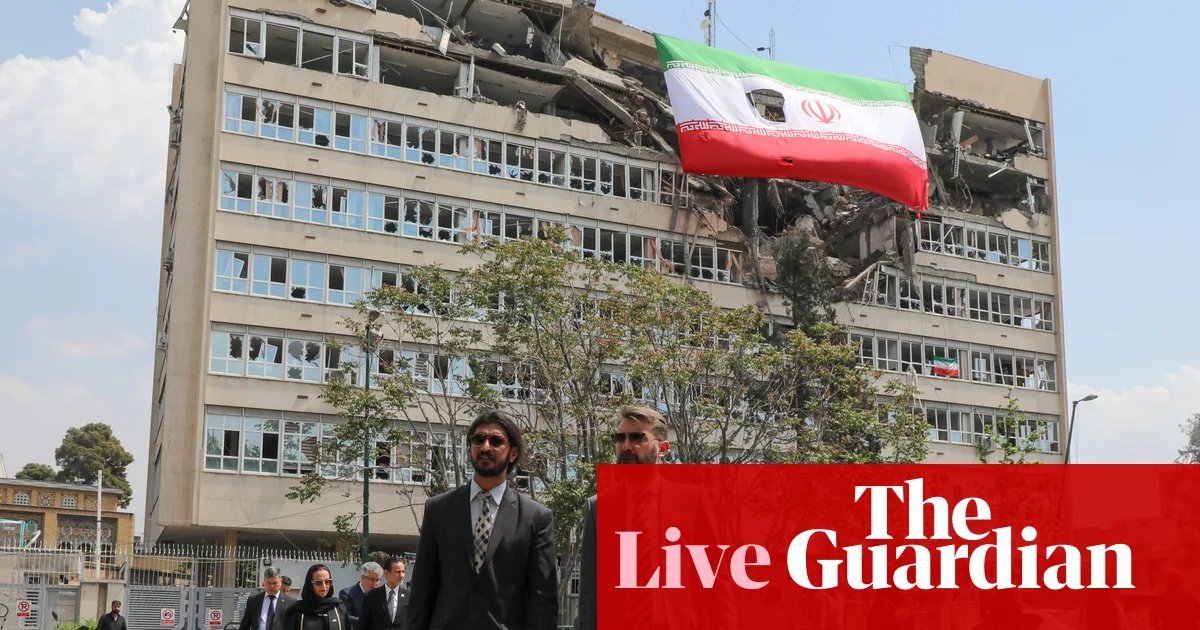
Key events

Hannah Ellis-Petersen
On Tuesday morning, Islamabad sat poised and ready to host a second round of talks – even as uncertainty reigned over whether both sides would even turn up.
Pakistani officials remained optimistic that the second round of negotiations would happen, even as Iranian ministers said they would refuse to come to the table under the threat of “force” and it remained unclear exactly when US vice-president JD Vance planned to depart Washington for Islamabad.
Roads were shut down around Islamabad’s five-star Serena hotel, where the first round of negotiations took place over a tense 21 hours, but failed to strike any deal.
Over the past few days, Islamabad and other major cities have been grappling with blackouts lasting more than seven hours, as the country faces a grave energy shortage due to the ongoing blockade of the strait of Hormuz – bringing home the economic gravity of these talks for south Asian countries.
Neighbouring Bangladesh warned this week that its mobile network would soon face a shutdown as they were running out of fuel to run the power stations.
Islamabad’s electricity board released a statement on Monday night making assurances there would be enough electricity to ensure that US and Iranian negotiators were not plunged into darkness for the duration of their meeting.
Opening summary
Hello and welcome to our live coverage of events in the Middle East.
Iran is considering attending peace talks with the US in Pakistan, a senior Iranian official said on Monday, after moves by Islamabad to end a US blockade of Iran’s ports – a key obstacle to Tehran rejoining peace efforts as the end of a two-week ceasefire nears.
But the official also stressed to the Reuters news agency that no decision had been made, while Iranian foreign minister Abbas Araqchi said “continued violations of the ceasefire” by the US were a major obstacle to continuing the diplomatic process.
On Monday night, Iranian chief negotiator Mohammad Bagher Ghalibaf accused Donald Trump on social media of increasing pressure on Tehran through the blockade and ceasefire violations, saying Iran rejected negotiating under threat and warning that “we have prepared to reveal new cards on the battlefield”.
The two-week ceasefire – set to expire on Wednesday – had appeared to be in jeopardy after the US said it seized an Iranian cargo ship on Sunday that tried to run its blockade and Tehran vowed to retaliate.
In other developments:
-
Trump said a deal with Iran would happen “relatively quickly”. He also said on Truth Social the US would not lift its blockade until Iran had agreed to a deal and that he believed the nuclear deal the US was negotiating with Tehran would be better than a 2015 international agreement to curb Tehran’s nuclear program.
-
US vice-president JD Vance remained in the US on Monday, a source told Reuters, denying reports he was already on his way to Pakistan, in comments adding to the uncertainty over a second round of talks. In Islamabad, however, preparations for the talks appeared to be going ahead.
-
Oil prices fell on Tuesday while most stocks rose on lingering hopes for a deal to end the US-Iran war and reopen the strait of Hormuz, despite Tehran not saying if it would attend.
-
Iranian foreign minister Abbas Araghchi and Russian foreign minister Sergey Lavrov discussed the conflict by phone. Lavrov reportedly reiterated the need to uphold the ceasefire and continue diplomatic efforts, while Araghchi said Tehran would to try to ensure the uninterrupted passage of Russian ships and cargo through the Hormuz strait.
-
The toll of Palestinians killed in Israeli strikes in Gaza on Monday has risen to at least five, according to Palestinian health officials, while witnesses said Hamas fighters clashed with gunmen from an Israeli-backed militia.