dailynewsnblog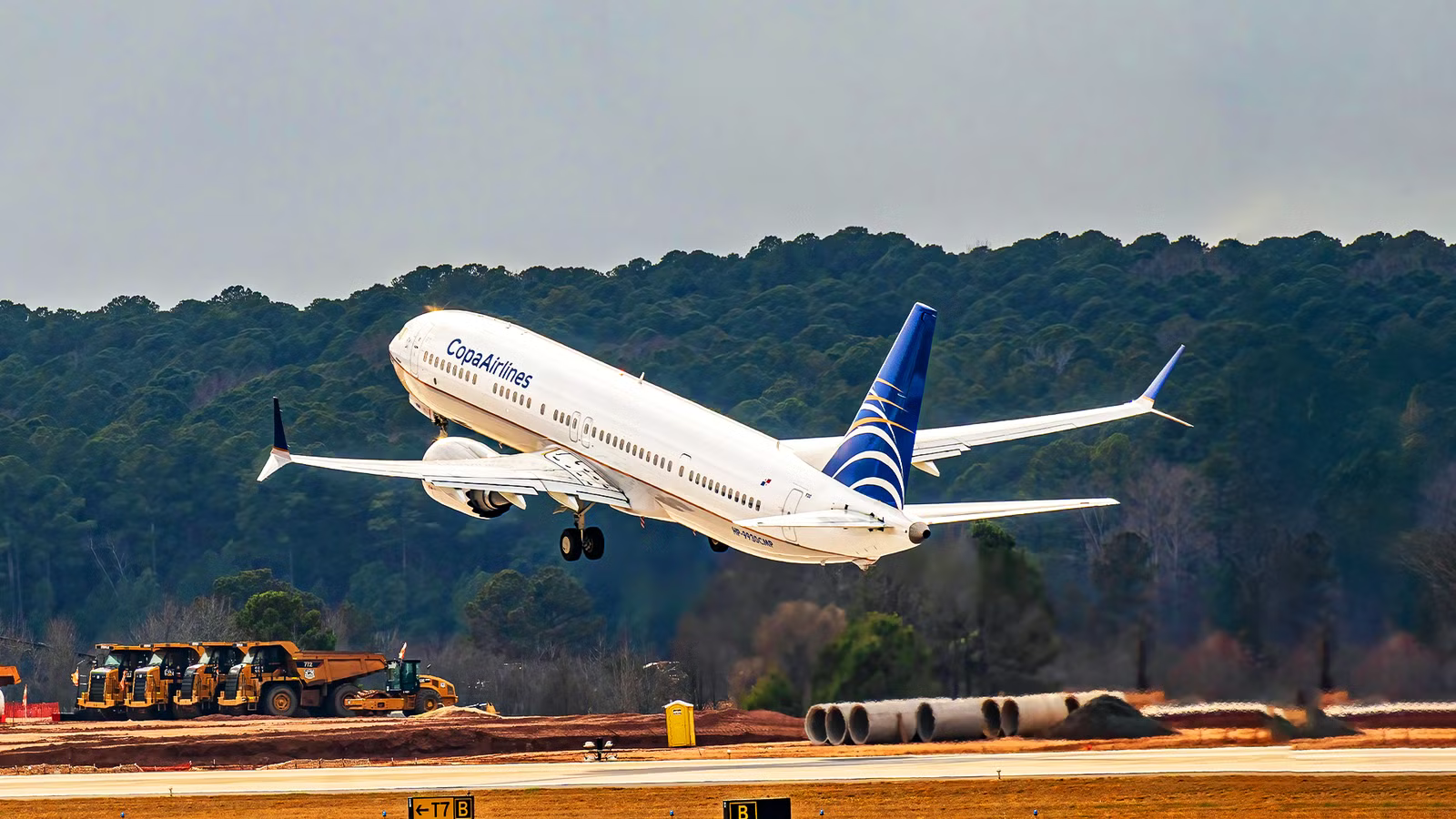
The United Airlines livery has become a familiar design in the US. For over 15 years, the planes have featured a large globe on the tail as their primary logo (inherited from Continental Airlines), along with a grey underbelly. The 2010 design, which was essentially Continental’s livery but with the United text, was updated into the current 2019 livery (unofficially called ‘Evo-Blue’ by some, but officially known as ‘Sky Blue’), which got rid of the gold accents seen before while adding more blue, billboard titles, and a wavy underbelly design.
Down south in Central America, however, another airline operates planes with a strikingly similar livery to United’s prior design. Panama-based Copa Airlines first introduced its current livery in 1999, and apart from a tweaked logo as well as the name, it appeared extremely similar to the livery being flown by Continental at the time. This was due to the relationship between the two at the time, and, notably, it is still operating with this nearly 30-year-old design without many changes at all.
Copa Airlines And Continental Airlines

In 1998, Continental Airlines made a significant investment in Copa Airlines. A new holding company was formed, named Copa Holdings, and Continental held a 49% ownership stake. The two also had an extensive code-sharing agreement and quickly developed a very close relationship, while Copa Airlines began participating in Continental’s OnePass loyalty program. Copa Airlines, looking to align its branding with its new American partner, began drafting up new livery concepts and eventually settled on the current design, which debuted in 1999.
The new Copa livery featured a different globe design compared to Continental’s logo, and the typeface was also changed. Apart from this, however, the two designs were virtually identical, which was the point. With the large investment made by Continental and the close commercial partnership between the two, both parties wanted to promote their relationship with one another. After all, it was a major deal for a US airline to be so closely tied with a Latin American carrier, and vice versa for Copa Airlines.
Despite how prominent the partnership was, Continental’s involvement with Copa Airlines was short-lived. The US carrier cut its stake in Copa down to 27.3% in 2005 and then to just 10% the following year. In 2008, Continental divested all of its remaining shares in Copa. The two carriers still maintained a close commercial relationship, and Copa Airlines joined SkyTeam in 2007 (Continental became a SkyTeam member in 2004), but Continental simply no longer had any stake in its Panamanian partner.
Copa Airlines And United Airlines

On October 24, 2009, both Continental Airlines and Copa Airlines withdrew from  SkyTeam, with Continental subsequently joining
  Star Alliance while Copa initially remained unaffiliated. In 2010, Continental Airlines merged with United Airlines, and the newly merged entity continued its close partnership with Copa Airlines. The Panamanian flag carrier used OnePass until the program was formally discontinued in 2012, after which it participated in MileagePlus until forming its own program in 2015, named ConnectMiles.
Copa Airlines joined Star Alliance in 2012 as the merger between United and Continental wrapped up, and it continues to maintain a close partnership with United. However, the latter does not hold any stake in the Panamanian flag airline, and Copa Airlines therefore operates entirely independently. When United Airlines chose to update its branding in 2019 and unveiled its latest livery, this decision was not coordinated with Copa Airlines, which has its own marketing and branding strategy today.
Continental formerly had a great deal of influence over Copa Airlines’ affairs, and the two parties actively coordinated their commercial strategies when relevant. Meanwhile,  United Airlines and Copa essentially had nothing to do with one another until the merger, and although they now have a close partnership, they are distinctly separate companies. Copa has no intention to update its livery to match United’s Sky Blue livery, and there’s a distinct possibility that Copa’s next livery might not have any ties to United or Continental.
How And Why Airlines Update Liveries

Airline liveries are more important than you’d think, because they essentially serve as physical representations of an airline’s brand. Just like companies invest heavily in logos, slogans, custom fonts, and more to create a cohesive brand, airlines design liveries that are meant to reflect their desired brand image. The two work hand in hand, and you often see livery redesigns coupled with general company brand updates. When the livery is updated, it’s usually for a specific brand-related purpose.
Copa Airlines hasn’t updated its livery in 27 years because the company hasn’t seen the need to perform a major brand overhaul. The carrier is generally well-liked and has strong recognition among its target customer base, so it doesn’t need to change its familiar livery or familiar branding elements. In fact, performing a refresh when the airline has a positive reputation and isn’t seen as outdated or aging is a very risky proposition, because rebrands can backfire, and the effect is worse when it wasn’t necessary.
United Airlines is actually an excellent example of this. The 2010s were a difficult decade for the airline, as the merger with Continental was rough, the company’s relationship with employees was strained, and public perception was poor. The Sky Blue livery, along with the general brand update that accompanied it, sought to distance the company from the Continental merger and the past. It followed the introduction of Polaris business class and Premium Plus, and it was followed by a general push towards becoming a premium carrier right after the pandemic.
This was even reflected in the United Airlines brand right after the merger with Continental. Notably, the new company kept the United name, but paired it with Continental’s former visual branding elements, including the logo and livery. The reason why this was done is that Continental had a much better reputation than United in the US. Internationally, however, United was the more recognized name. Therefore, the company decided to take the best of both brands to create the United that we know today.
United And Copa’s Relationship Today

American Airlines is the leader in the US-to-Latin America market. It has long established itself as the dominant force in this region, while its Miami hub has more demand to Latin America than any other in the US. United Airlines is number two, ahead of Delta Air Lines, and its partnership with Copa Airlines remains valuable. Copa has a massive network within North America and to South America, making its hub in Panama City a valuable spoke for United.
Both carriers are members of Star Alliance and offer reciprocal frequent flyer benefits, while they also codeshare on each other’s flights. United ultimately doesn’t rely very heavily on Copa Airlines today, as it serves Panama City from just two hubs (Houston and Newark) with three daily flights. However, this still represents fairly sizable capacity given that United is flying the Boeing 737 MAX 9 to Panama City.
Star Alliance Members | |||
|---|---|---|---|
Aegean Airlines | Austrian Airlines | EVA Air | SWISS |
Air Canada | Avianca | ITA Airways | TAP Air Portugal |
Air China | Brussels Airlines | LOT Polish Airlines | Thai Airways |
Air India | Copa Airlines | Lufthansa | Turkish Airlines |
Air New Zealand | Croatia Airlines | Shenzhen Airlines | United Airlines |
All Nippon Airways | Egyptair | Singapore Airlines | |
Asiana Airlines | Ethiopian Airlines | South African Airways |
United uses Houston as its primary hub for Latin America flights, and it serves Panama City twice daily from Houston. Copa Airlines can be leveraged for connections to destinations not served directly by United, which strengthens the Chicago-based carrier’s network on the continent. On the flip side, United’s massive US network helps feed Copa’s flights to the States, and the latter now serves 17 US destinations.
Copa Airlines’ Success

Copa Airlines has been one of the most consistently successful airlines in Latin America. The carrier operates over 100 aircraft and serves nearly 90 destinations from its hub in Panama City, which it dubs ‘Hub de las Americas’ (Hub of the Americas). The Panama City hub is a huge asset because it’s perfectly positioned to facilitate connections between North America and South America. In addition, there’s another advantage offered by the Panama City hub, which is distances.
Nearly all of the largest cities in the Americas can be reached from Panama City by a narrowbody, and Copa Airlines therefore operates an all-Boeing 737 fleet. This is excellent for keeping fleet and maintenance costs low, but Copa Airlines also keeps operating costs on each route extremely low. This makes it far cheaper for Copa Airlines to operate an itinerary between New York and Buenos Aires via Panama City than for Delta Air Lines via Atlanta, which has to fly expensive widebodies to much of South America.
Copa Airlines Fleet | Number Of Examples |
|---|---|
Boeing 737-700 | 9 |
Boeing 737-800 | 57 |
Boeing 737 MAX 8 | 21 |
Boeing 737 MAX 9 | 32 |
Total | 119 aircraft |
With an extensive network, cost-efficient operation, and well-regarded brand, Copa Airlines is an impressively well-run airline. Its livery dates back to an era when it became the Central American little sibling to Continental Airlines, but it’s now become far more than that.