dailynewsnblog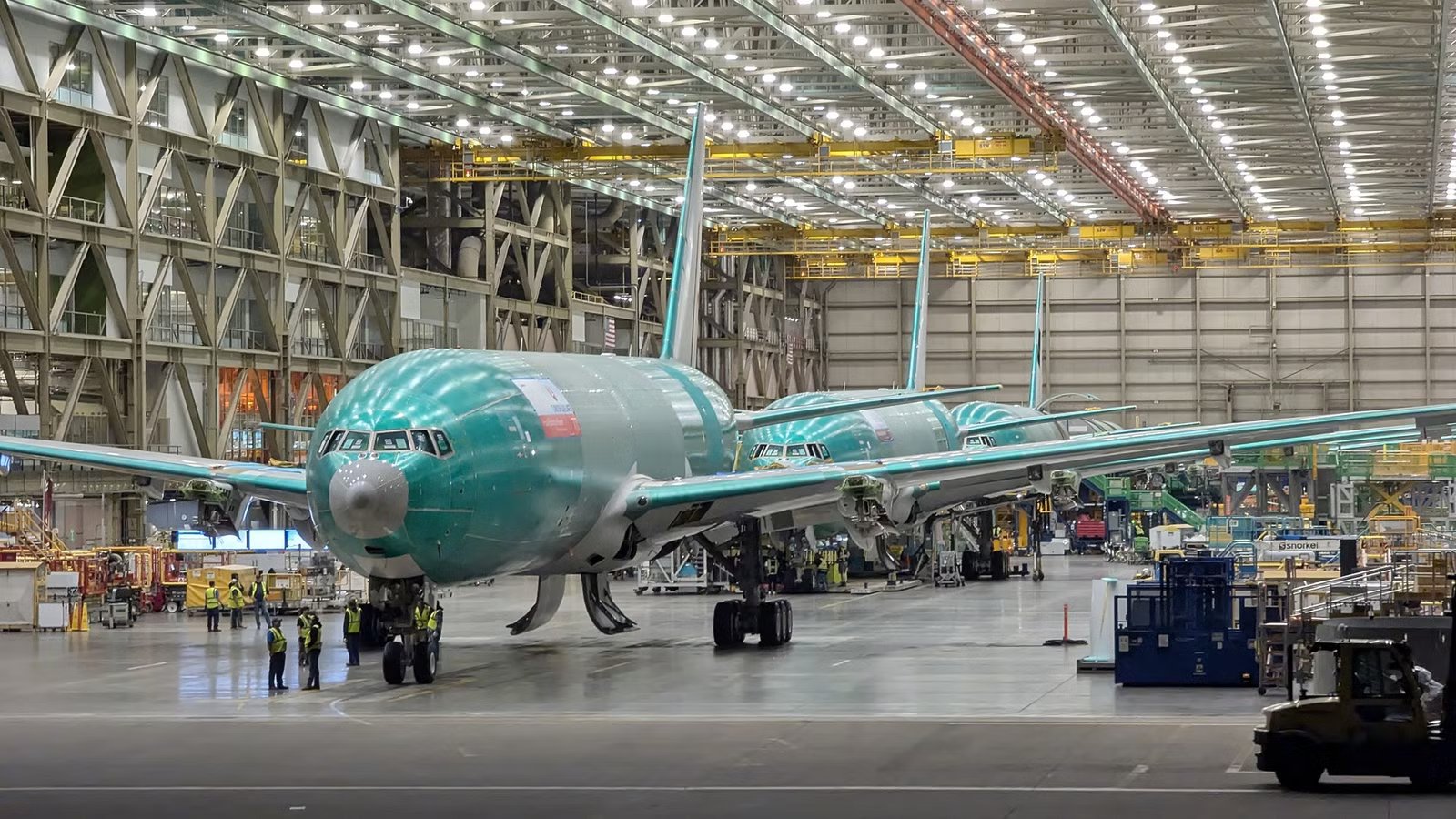
The Boeing 777X is set to revolutionize long-haul air travel when it enters commercial service in 2027. The widebody aircraft showcases the latest in aircraft technology to provide airlines with superior operational efficiency and passengers with a superior onboard experience. Although the 777X’s entry into commercial service has been pushed back by seven years, Boeing has already built multiple examples of the aircraft.
In this article, we will take a look at why  Boeing has already built so many 777Xs, despite the anticipated delivery date still being a year away. We will also examine some of the unique design features of the 777X and explore which airlines have already placed orders for this innovative aircraft.
26 Aircraft Already Built

According to The Seattle Times, Boeing has already built as many as 26 examples of the 777X, four of which are being used for test flights. This leaves a further 22, which are reportedly being stored at Seattle Paine Field International Airport (SEA). The Seattle Times went on to say that “many of those parked nose-to-tail on a runway at Paine Field with large blocks hanging from their wings in place of engines.”
As well as being Boeing’s major production and storage facility, Seattle Paine Field International Airport also sees a limited number of passenger services from both Alaska Airlines and Frontier Airlines. These connect the airport to the likes of  Los Angeles International Airport (LAX), Phoenix Sky Harbor International Airport (PHX), Honolulu Daniel K. Inouye International Airport (HNL), and Las Vegas Harry Reid International Airport (LAS).
When aircraft such as the Boeing 777X are stored, they are placed into short or long-term preservation, which typically includes covering sensors, running periodic system checks, and sealing engines (although not in the case of these 777-9s, which have not yet been fitted with their engines). Throughout the time the aircraft are stored, maintenance teams periodically rotate tires, power systems as required, and monitor humidity to prevent corrosion. So, why has Boeing already produced so many 777X jets?
Certification Needs & Financial Strategy

One of the primary reasons for building the Boeing 777X so far ahead of its entry into service is to support the aircraft’s certification process. This is because the US manufacturer needs a number of examples of the 777X that can be used for certification and to validate the manufacturing process. For that reason, several of the aircraft that have been completed already were never intended for immediate delivery to airlines but are instead used for flight-testing.
Further functions that these jets serve include ETOPS trials, functionality and reliability testing, and other steps required by regulators before an aircraft can be certified by the US Federal Aviation Administration for commercial service. Modern certification programs rely not just on early prototypes, but on real production aircraft so that regulators can confirm that what rolls off the assembly line matches what was tested.
There is also a financial element to Boeing’s decision to produce the 777X despite its entry into service being delayed. The US manufacturer has chosen to continue producing aircraft in order to keep the 777X production line active and stable, as starting and stopping a widebody manufacturing line is extremely expensive. Furthermore, freezing production just because certification is delayed can create workforce, supply-chain, and quality disruptions that are even harder to recover from later.
By building early, Boeing can identify and fix any manufacturing issues that might arise with the 777X long before the model enters service. Once the aircraft can finally enter commercial service, the manufacturer can then begin deliveries more quickly because finished aircraft are already available. However, at the same time, the strategy carries risks, because aircraft that sit for years must be maintained, and any design or certification changes that arise during testing could require rework on the completed aircraft.

Why The Boeing 777X Will Evolve Long-Haul Flying
The aircraft features many new innovations from the older generation 777s.
Ongoing Delays To The Boeing 777X Program

Boeing originally planned for the 777X (specifically the 777-9) to enter commercial service in 2020, but that date slipped early on, after a test flight in late 2020 experienced an uncommanded pitch event. This prompted the FAA to question Boeing’s design, delaying certification and pushing the first delivery back to at least 2023.
However, in 2022, Boeing once again reassessed the certification timeline, with the first delivery moved to 2025. The US manufacturer even paused 777X production for much of 2022 and 2023, costing around $1.5 billion. In 2024, further issues arose when, during a test flight in Hawaii, Boeing discovered a critical structural part between the engine and wing had cracked, grounding part of the test fleet for inspections and repairs.
Fast-forward to 2025, and Boeing has once again delayed first customer delivery, with the new target delivery date set at 2027. This increased delay has cost the manufacturer in the region of $4.9 billion, and turned the 777X into one of the most prolonged sagas in modern commercial aviation history.

Why Might The World’s Most Advanced Long-Haul Widebody Airliner Have Airbus Worried?
When Boeing unveiled the 777X program, the aerospace industry took note.
All About The Boeing 777X

The Boeing 777X program represents the next major step in the evolution of the US manufacturer’s long-haul widebody line-up. Building on the strong foundation of the 777 family, the 777X promises improved efficiency, greater range, and a more modern passenger experience. At the heart of the Boeing 777X are its General Electric GE9X engines, which are the largest and most advanced turbofans ever developed.
The engines’ larger fans, composite materials, and higher overall efficiency are key to the fuel-burn reductions Boeing is targeting compared with the Boeing 777-300ER. For airlines operating high-demand routes, these improvements are especially attractive, as they translate directly into lower operating costs and better long-term economics. The passenger experience is also an important part of the package, and Boeing has incorporated popular features from the Boeing 787to aid this mission.
These include larger windows, better cabin pressurization, and improved humidity levels to make long flights more comfortable. Airlines will be able to customize the interior of the 777X to match their branding, with many planning expanded business-class cabins and upgraded onboard amenities.
With seating for more than 400 passengers in a typical configuration, the 777X is positioned as a flagship aircraft for some of the world’s largest carriers. Despite the ongoing delays, enthusiasm for the aircraft remains strong, highlighting how much of an impact it will have on the commercial aviation industry whenever it does eventually enter into service.
The Boeing 777X’s Folding Wingtips

Arguably the most unique and innovative feature of the Boeing 777X is its folding wingtip design, which the manufacturer devised in order to solve a very real problem. The 777X has an extremely large wingspan that improves fuel efficiency and aerodynamic performance, but such a wide wing would not fit into many standard airport gates. Instead of limiting the aircraft’s size, Boeing introduced a mechanism that allows the outer 11.5 feet of each wing to fold upward while on the ground.
This keeps the 777X within the same airport compatibility category as the current 777, allowing airlines to operate it without requiring new gate infrastructure. This contrasts with the Airbus A380, which required airports to modify their infrastructure to accommodate the giant aircraft when it was introduced in 2007. In flight, the Boeing 777X’s wingtips lock into place to create a full-span wing optimized for long-haul efficiency. The extended wingspan helps reduce drag, which then lowers fuel burn and increases range.
The folding mechanism itself is heavily engineered, featuring multiple locking systems, redundant power sources, and safeguards to prevent accidental folding in flight, and it meets the same rigorous certification standards as any other flight-critical structure. Although new to commercial aircraft, folding wings have long been used on military jets, especially those operating from carriers. By adapting the concept, Boeing has made it possible to design a more efficient widebody without compromising compatibility.

How Much Longer Are The 777X’s Wings Than The 777’s?
The new 777X will have a broader wingspan than the 777, but folding wingtips when on the ground.
Middle Eastern Airlines Are All In On The Boeing 777X

Boeing has received more than 500 orders for its upcoming 777X aircraft thus far. By far the largest operator is set to be  Emirates, which has a staggering 270 passenger 777Xs on order, made up of 35 777-8s and 235 777-9s.
This is perhaps unsurprising, given that the carrier, based at  Dubai International Airport (DXB), is already the world’s largest operator of the aircraft’s predecessor, the 777-300ER. The latest data from ch-aviation shows that
  Qatar Airways is expected to become the world’s second-largest operator of the passenger Boeing 777X, with 124 on order.