dailynewsnblog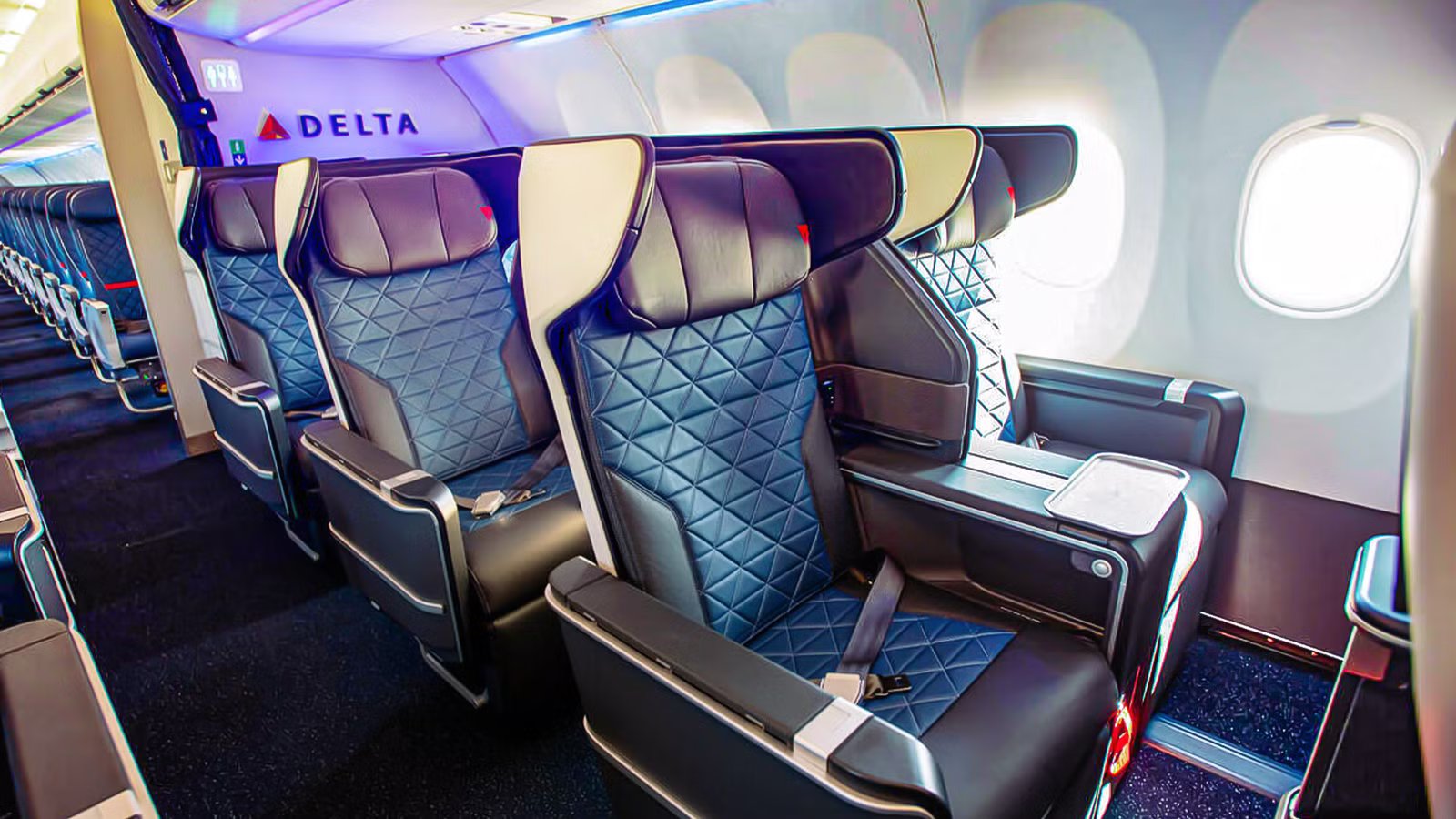
When airlines order a new fleet of aircraft, the assumption is usually straightforward – the aircraft arrive from the manufacturer, crews are trained, routes are assigned, and passengers begin flying on them shortly afterward. Yet Delta Air Lines’ newest Airbus A321neos have become an unusual example of how a single component can disrupt an entire fleet strategy. Rather than entering service with the premium cabins they were designed to showcase, several of the airline’s newest narrowbody aircraft spent months sitting in desert storage while the carrier searched for a way to make them operational.
The story is not really about a dispute between an airline and a seat manufacturer. Instead, it is a case study in how modern airline products have become so specialized that a single certification delay can ripple through fleet planning, network strategy, customer experience, and competitive positioning. In the case of  Delta Air Lines, the issue became so severe that the airline ultimately introduced a temporary cabin featuring 44 domestic first class recliner seats on aircraft originally intended to offer one of the most advanced premium transcontinental products in the US. Let’s take a closer look…
A Premium Strategy Built Around One Seat

Delta Air Lines’ Airbus A321neo premium transcontinental program was supposed to represent a major step forward in the airline’s domestic premium offering. The aircraft were expected to operate some of the carrier’s most important routes, particularly those linking major coastal business markets where travelers increasingly expect an experience that rivals international business class, such as New York John F. Kennedy International Airport (JFK) and  Los Angeles International Airport (LAX).
At the center of the strategy was the Safran Vue business class seat. Unlike traditional herringbone layouts that angle passengers toward the aisle, the Vue featured a reverse-herringbone design that positioned passengers toward the window. The concept promised a combination of privacy, comfort, and views, giving the  SkyTeam carrier a product that looked noticeably different from what competitors were offering.
The planned cabin reflected that premium focus, with each aircraft featuring 16 lie-flat business class suites, 12 premium economy seats, 54 Comfort+ seats, and 66 economy class seats. The layout balanced high-yield premium demand with the practical need to carry a substantial number of leisure travelers.
That strategy was hardly surprising, given that premium transcontinental travel has become one of the most competitive segments of the US airline industry. Travelers flying between markets such as New York, Los Angeles, San Francisco, Boston, and Seattle increasingly expect direct aisle access, lie-flat seating, upgraded dining, and enhanced privacy. Airlines have responded by investing heavily in premium cabins, often treating them as key differentiators.
For Delta Air Lines, the Safran Vue was more than just another seat. It was intended to become a signature product that would reinforce the airline’s premium positioning while helping it stand out from products such as JetBlue Mint and  American Airlines‘ Flagship Suite.
First Look: Inside Delta’s Massive 44-Recliner A321neo Ahead Of May 20 Debut
With nearly half the cabin dedicated to first class, Delta is committing to luxury.
The Certification Roadblock Nobody Expected

Reports emerging throughout 2025 and 2026 pointed toward persistent certification challenges involving the Safran Vue seat. While passengers often focus on comfort, privacy, and aesthetics, every airline seat must also satisfy extensive safety requirements before regulators allow it to enter commercial service.
The reported issues centered on certification standards by the US Federal Aviation Administration (FAA) involving human factors testing and crashworthiness requirements. These standards are designed to ensure that passengers can evacuate safely, move through the cabin efficiently, and remain protected during emergency situations. Even seemingly small changes to a seat’s geometry can trigger extensive review processes.
Industry observers have suggested that the difficulties expose a broader challenge facing the airline interiors sector, and over the past decade, premium airline seats have become increasingly complex. Features such as privacy doors, large entertainment screens, charging systems, storage compartments, and customized shell designs have transformed business class seats into highly sophisticated products, while at the same time, regulators remain focused on ensuring that safety standards are maintained regardless of how innovative a design may be. That can create tension between manufacturers seeking differentiation and regulators seeking consistency.
The Safran Vue was not simply another variation of an existing product – its reverse-herringbone layout represented a notable departure from more conventional designs. Every departure from established layouts can generate additional questions during certification, particularly when passenger movement and evacuation procedures are involved.
For Delta Air Lines, the result was a growing disconnect between aircraft deliveries and cabin readiness. The airline’s fleet strategy assumed the premium product would be available when the aircraft arrived, but instead the aircraft began showing up while the seat certification process remained unresolved.
Why New Aircraft Ended Up In Desert Storage

Perhaps the most remarkable aspect of the situation is that Delta Air Lines had already accepted delivery of several Airbus A321neos during 2024. Under normal circumstances, taking delivery marks the start of an aircraft’s operational life, and airlines spend billions of dollars on fleet renewal programs precisely because they expect those assets to begin generating revenue as quickly as possible.
Without certified seats, however, the aircraft could not enter service in the originally intended form. Delta Air Lines therefore faced a difficult decision – it could continue waiting indefinitely for certification progress, or it could temporarily remove the aircraft from active planning until a solution emerged. The result was the unusual sight of factory-fresh Airbus A321neos sitting in desert storage, with such facilities more commonly associated with retired aircraft, seasonal fleet adjustments, or aircraft awaiting resale.
The situation demonstrated how dependent modern airline programs can become on individual suppliers. Airbus had delivered the aircraft, pilots and flight attendants could be trained, and routes could be scheduled, yet a single unresolved component prevented the intended product from entering service. There were also significant financial implications. While airlines rarely pay published list prices, an Airbus A321neo still represents a major investment, and every month spent parked in storage reduced utilization and delayed revenue that those aircraft were expected to generate.
Beyond the direct financial impact, the delays complicated broader fleet planning. Airlines carefully coordinate aircraft deliveries with staffing, maintenance schedules, route launches, and network growth initiatives. When newly delivered aircraft suddenly become unavailable, those plans often require adjustment, gradually turning what was at first a seat certification challenge into a broader operational issue.
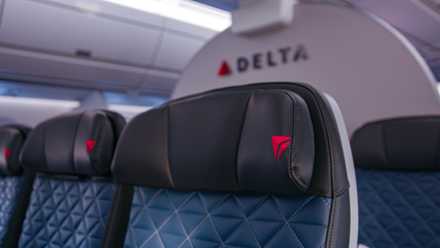
What Are The Benefits Of Flying Delta Air Lines’ Premium Select?
The SkyTeam carrier’s premium economy product offers many perks for passengers.
Delta Air Lines’ Unusual 44-Recliner Solution

Faced with ongoing uncertainty, Delta Air Lines eventually opted for a practical workaround. Rather than waiting indefinitely for the intended lie-flat business class suites, the airline developed a temporary cabin configuration that would allow the aircraft to begin carrying passengers. Introduced in May 2026, the interim layout transformed the aircraft into something unlike any other narrowbody currently flying for the carrier. Instead of the planned mix of business class suites and premium economy seating, the aircraft received a large domestic first class cabin featuring 44 recliner seats.
The complete configuration consists of 44 first class seats, 54 Comfort+ seats, and 66 economy class seats. Compared with the original design, the temporary layout dramatically increases the number of premium seats while eliminating the lie-flat product that was supposed to define the aircraft. In effect, Delta Air Lines created an aircraft that remains heavily weighted toward premium travelers while avoiding the certification complications associated with the original seats. From an operational standpoint, the decision makes sense, as aircraft create value when they are flying, not when they are parked in storage. By introducing a temporary configuration, Delta Air Lines could finally deploy the aircraft across its network and begin generating revenue from them.
The move also demonstrates the airline’s desire to maintain momentum. Waiting years for certification issues to be resolved would have left valuable aircraft sitting idle, so while the interim product differs significantly from the original vision, it allows Delta Air Lines to utilize the fleet while longer-term decisions are made. At the same time, every flight operated with 44 recliners instead of lie-flat suites serves as a reminder of how different the final product may have been had the original plan proceeded on schedule.
The Lavatory Problem And Other Operational Oddities

The temporary cabin solved one major challenge, but it also created several unusual operational quirks, including lavatory access within the enlarged first class cabin. With 44 premium passengers seated at the front of the aircraft and only a single forward lavatory, the passenger-to-bathroom ratio is unusually high for a premium-heavy cabin where convenience is typically emphasized.
On longer Transcontinental routes, the arrangement could create queues that passengers would not normally associate with a premium experience. One of the traditional advantages of premium cabins is reduced competition for onboard facilities. The temporary layout partially undermines that benefit simply because of the unusually large number of first class seats.
The customer experience also differs considerably from what Delta Air Lines originally intended. The carrier’s domestic first class recliner seats remain comfortable, particularly on shorter flights, but they fall into a different category than private lie-flat suites. Travelers expecting a cutting-edge premium cabin may instead find themselves receiving a more traditional domestic experience.
Crew operations are also affected, as boarding procedures, meal service, and passenger interactions all change when 44 passengers occupy the premium cabin. While none of these challenges are insurmountable, they create a unique operating environment compared with the airline’s original plans, and in many ways, the lavatory issue has become symbolic of the broader situation – it highlights how an airline can end up making unexpected compromises when a key component of its long-term strategy fails to arrive on schedule.
Why US Carriers Are Doubling Down On Premium Cabins
Airline luxury is going mainstream.
What Happens Next For Delta Air Lines’ Premium Ambitions?

The biggest question now concerns the future of the program. Reports suggest Delta Air Lines may be considering abandoning the Safran Vue altogether and adopting the Thompson Vantage Solo seat instead. Such a move would represent more than a simple supplier change. The Thompson Vantage Solo is already used by airlines, including JetBlue and American Airlines, and follows a more conventional aisle-facing herringbone layout; while potentially easier to certify, it would eliminate one of the key differentiators that Delta Air Lines originally hoped to bring to market.
From a practical perspective, switching to a proven product could reduce uncertainty and accelerate deployment. Airlines generally prefer predictable solutions when schedules, fleet plans, and customer expectations are involved, and a seat with an established certification history may appear increasingly attractive after years of delays. There would also be strategic consequences, as the window-facing reverse-herringbone concept was intended to provide a unique selling point. Replacing it with a more conventional product would therefore narrow the distinction between Delta Air Lines and its competitors in the premium transcontinental market.
Meanwhile, competitors continue investing in their own premium products. JetBlue Mint remains a strong force in premium transcontinental markets, while American Airlines continues rolling out newer Flagship Suite concepts. Against that backdrop, delays to the Airbus A321neo premium program also influence how Delta Air Lines positions itself within one of the industry’s most competitive markets.
Whether Delta Air Lines ultimately waits for the Safran Vue, adopts the Thompson Vantage Solo, or pursues another alternative entirely, the episode has already become a fascinating example of how modern airline strategies can hinge on remarkably specific details. A single seat design intended to create a competitive advantage instead delayed a flagship product, sent brand-new aircraft into desert storage, and forced Delta Air Lines to fly one of the most unusual premium cabin configurations currently operating in the US.
Catch what other trackers miss
Emergency squawks, holds, NOTAMs — live signals, no signup.
Open tracker
Catch what other trackers miss
Emergency squawks, holds, NOTAMs — live signals, no signup.
Open tracker