dailynewsnblog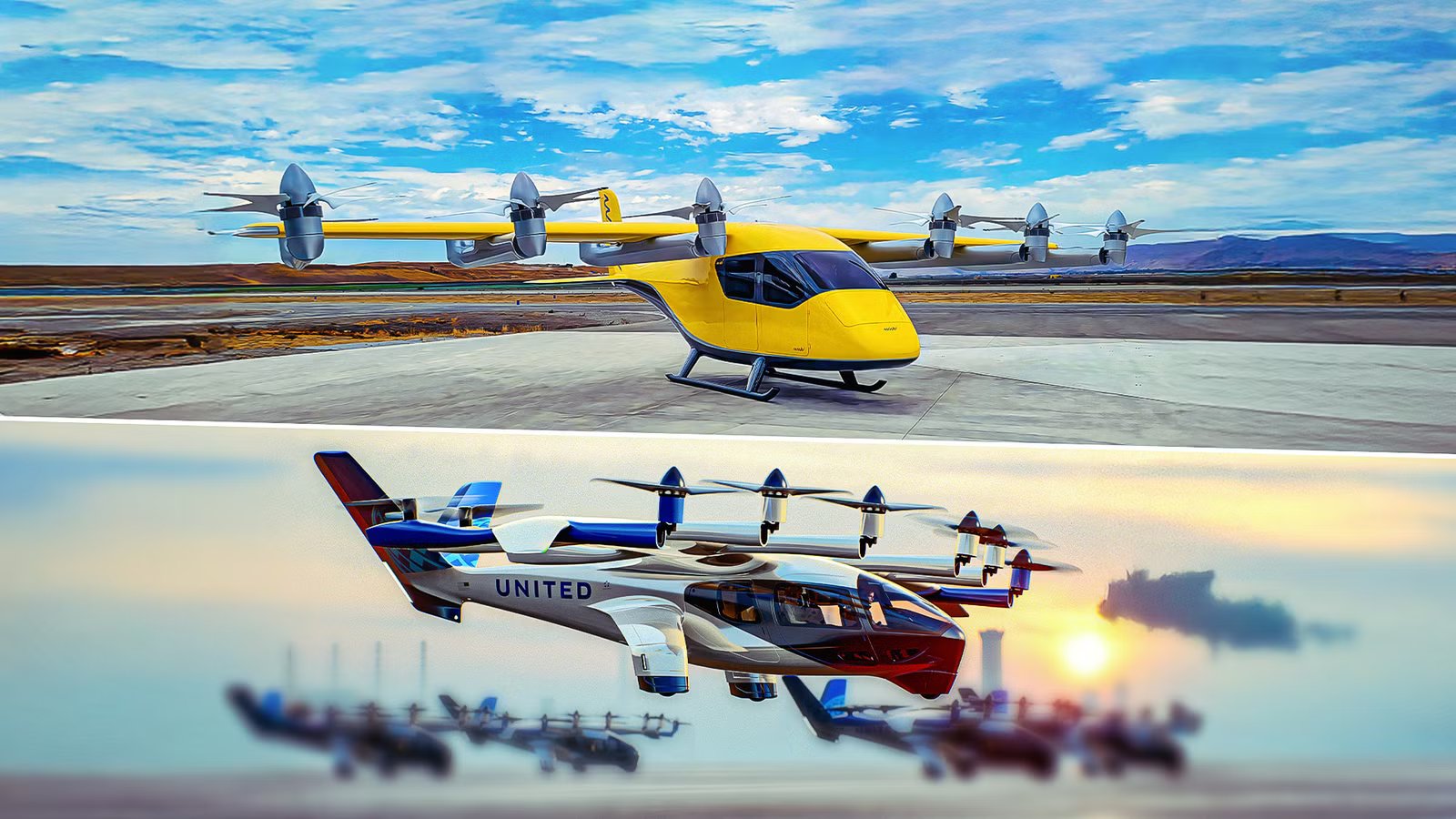
Earlier this August, Archer Aviation announced an all-stock deal through which it has acquired Wisk Aero, SkyGrid, and Insitu. These are all  Boeing subsidiaries focused on autonomous flight. As part of the deal, Archer Aviation is also set to construct an end-to-end ‘physical AI’ platform with relevance for both aerospace and defense. The deal is a major win for Archer Aviation.
However, it can also be seen as a major surrender from Boeing, through which it has ceded control of the strides it was making into autonomous aviation. While the reasoning for the deal pitched behind closed doors at Boeing is impossible to know, a possible interpretation is that Boeing is expending too much energy on fixing its struggling Boeing 737 MAX and 777X programs to continue its independent focus on aviation’s future, autonomous flight.
Here’s What Boeing Has Given Up

Boeing has given up three significant subsidiaries to Archer Aviation, an electric aircraft company: Wisk Aero, SkyGrid, and Insitu. Wisk Aero was previously a rival to Archer Aviation. It describes itself as the “world’s first four-passenger autonomous air taxi.” Wisk Aero aircraft have been flying for 16 years. It has been through six generations of eVTOL aircraft, which have completed over 1,750 test flights.
While Wisk Aero remains speculative, Insitu has proven itself to be a highly profitable defense drone business. AOL reports that Insitu currently earns $200 million in annual revenue. The firm builds surveillance and reconnaissance drones for 35 nations. It has already manufactured 3,500 units. The revenue is an essential lifeline for Archer, given that it reported a Q2 loss of $263.2 million.
The table below shows specifications for the Boeing Insitu RQ-21 Blackjack, also known as the Integrator, which is a major Insitu product. It uses data from the Insitu product page:
Description | Small tactical unmanned air system (STUAS) |
|---|---|
Maximum takeoff weight | 134 lb (61 kg) |
Wingspan | 16 feet (4.9 meters) |
Powerplant | 1 × EFI Piston Engine, 8 hp (6.0 kW) |
Cruising speed | 63 mph (100 km/h) |
Endurance | 16 hours |
Notable operators | United States (Navy), Australia (Army and Navy), Poland (Land Forces and Special Forces), and Canada (Army and Navy). |
The final subsidiary sold is SkyGrid. The company’s tagline reads, “SkyGrid takes a smarter approach to safely integrate advanced air mobility and highly automated aircraft operations into shared airspace.” The product hopes to ensure autonomous aircraft can safely fly in environments filled with crewed aircraft.
This loss of control has not brought some benefits to Boeing. Through the deal, it has gained access to a 19.75% equity stake in Archer Aviation. This isn’t just a minority share that ties Boeing’s successes to Archer Aviation’s profitability. The manufacturer has also gained a board seat and warrants to purchase additional shares if desired. These warrants are worth $100 million each, with the share price locked at $13.00 and $17.38, respectively. Archer Aviation will also develop an AI model, which Boeing will contribute data from over two million flight hours to.
Wisk, Insitu, And SkyGrid Are Not The Only Assets Boeing Is Ditching

The sale of key autonomous aviation assets to ArcherAviation is part of a broader pattern of subsidiary restructuring. Last November, it completed a $10.55bn sale of assets from its Digital Aviation Solutions business to Thoma Bravo, as reported by Aero Time. Included in the deal were four companies: Jeppesen, ForeFlight, AerData, which has built software related to aircraft management and tracking, and OzRunways.
Catch what other flight trackers miss
Emergency squawks, holds, NOTAMs — live signals, no signup.
Open tracker
Catch what other flight trackers miss
Emergency squawks, holds, NOTAMs — live signals, no signup.
Open tracker
With the deal completed, the four businesses operate as Jeppesen ForeFlight, led by Brad Surak, who is the former head of Boeing Digital Aviation Solutions. He said, “Backed by 90 years of Jeppesen’s gold-standard data and ForeFlight’s relentless spirit of exploration, this combination is building the most unified, intuitive platform in aviation. As we return to independence alongside a leader in software private-equity investing, we’re enabled to move faster, think bigger, and innovate.”
The table below shows what the four companies involved in Jeppesen ForeFlight do:
Company | Primary service |
|---|---|
Jeppesen | Industry-standard navigational charts, flight planning, and operational data |
ForeFlight | Electronic flight bag (EFB) apps and mobile planning |
AerData | Digital lease management, engine fleet planning, and secure technical records management |
OzRunways | Similar services to ForeFlight, but specifically for the Australian and New Zealand markets. |
Boeing chief executive Kelly Ortberg explained the deal, “This transaction is an important component of our strategy to focus on core businesses, supplement the balance sheet and prioritize the investment-grade credit rating.” In other words, given the financial and engineering failures suffered by Boeing’s primary commercial business in recent years, Boeing urgently needs to concentrate its focus, raise more funds and rehabilitate investor confidence. The urgency is shown by the fact that Boeing has only had one net profitable quarter since 2019, as reported by MacroTrends.
How Boeing Is Defending Its Decision

Boeing is keen to present the sale of Wisk, Insitu and SkyGrid as strategic rather than a decision forced by the reasons described above. “This transaction is a win-win for Boeing and Archer,” said Brian Yutko, Boeing vice president, Commercial Airplanes Product Development, Boeing’s investor newsroom reports.
Yutko argues that the move of ownership to Archer Aviation will greatly accelerate the development of each company’s products, getting them to market far faster. The stock earned in Archer Aviation is presented as a return on the enormous investment that Boeing have made in these companies over the decades. “We look forward to collaborating with Archer to drive continued innovation in aerospace, defense and autonomy,” he concludes.
Doubtless, Archer can’t believe its luck. The minority share in its business and having to give up a valuable space on its board are a small price to pay. The company’s founder and CEO, Adam Goldstein, said, “This is a watershed moment for Archer and the future of physical AI in aerospace and defense. This is the next big step forward in becoming a diversified platform, rapidly growing our revenue base and bringing scale to our business.”
Something is clear that both Archer and Boeing agree on. The autonomous flight products developed by each of the companies acquired by Archer will now be free to rapidly progress. They’ll now be mostly untethered from Boeing’s never-ending disasters. Exactly how effectively these subsidiaries will now execute remains to be seen. However, the mere $300,000 in revenue made by Archer in 2025 should still give investors plenty of reasons to be cautious.
When Simple Flying Sat Down With Archer Aviation

Simple Flying’s Sumit Singh has met with Tom Munis, Archer Aviation’s chief technology officer, to discuss eVTOL aircraft at Farnborough Air Show 2026. This is the aircraft type that Archer Aviation deals with and is the primary component of the deal. They are small, autonomous, and fly with comparatively low emissions. Archer Aviation was using Farnborough as an opportunity to unveil its new all-electric Midnight aircraft. Archer Aviation is currently working towards getting FAA approval. “It’s been in flight testing since 2023. It’s really exciting to have that program taking more steps towards type certification and launch.”
Tom explained the purpose of the Midnight product: “Everything about Midnight was optimised around moving people relatively short distances, think around 62 miles (100 km), for low ticket prices very safely.”
Sumit and Tom also discussed Halo. This is the civilian variant of a platform it built for defense purposes. Halo is designed for commercial logistics, freight, and emergency operations. “We saw the opportunity to develop a dual-use vehicle that has both military and civil applications. We are trying to move large amounts with Halo, both volume and mass, at larger distances than Midnight and at much higher speeds.” Because of the more strenuous physical demands, Halo is based off of a hybrid rather than an all-electric powerplant.
The Move Is An Unexpected Step For A Troubled Relationship

As close rivals, Wisk Aero and Archer Aviation have historically had a difficult relationship. In April 2021, Wisk sued Archer for what they called the “brazen theft” of intellectual property. The suit related to Archer’s first aircraft, which Wisk said was too similar to an aircraft that it had the patent for. Wisk also alleged that of its ten former engineers who had been hired by Archer, one had secretly downloaded thousands of files, with the assumption being that these Wisk-owned files had contributed to the Archer design.
“The similarity in overall aircraft design further indicates Archer’s use of more detailed design features, including features related to aircraft propulsion, power management, avionics, flight control and manufacturing methodology,” said Wisk, as reported by Tech Crunch. Archer then launched a counter-suit, seeking $1bn in damages.
However, the two companies settled their disagreement in an unusual way that made Boeing’s latest deal possible. Tech Crunch reports that Archer allowed Wisk to be its exclusive provider of autonomous technology. Furthermore, Wisk also received the option to purchase over 13 million shares of common stock in Archer for a price of $0.01 per share.