dailynewsnblog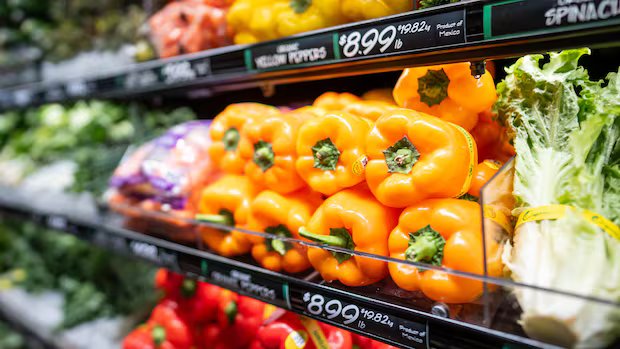

Listen to this article
Estimated 5 minutes
The audio version of this article is generated by AI-based technology. Mispronunciations can occur. We are working with our partners to continually review and improve the results.
Bad news if you recently decided to eat more greens because meat is so expensive.
It’s the produce section of your local grocery store that may trigger a double-take these days. Fresh veggies cost 7.8 per cent more year over year in March, according to Statistics Canada’s most recent inflation numbers. After prices increased 0.5 per cent in February, March’s increase is the largest since August 2023.
And while the prices of beef and coffee were still among the worst offenders for price increases over the past year, the standout item for March is the one doing all the heavy lifting in salads, packed lunches and your toddler’s vegetable intake: the mighty cuke.
The price of cucumber has increased 28.4 per cent over the past year, climbing sharply since January. The monthly average retail price was $2.21 per cucumber in February (the most recent data available). In March last year, the price was $1.54.
A quick scan of grocery store websites on Wednesday shows current regular prices for a single cucumber are anywhere from $2.99 at a St. John’s Sobeys, and $2.99 at a Toronto Metro to $2.50 at a Vancouver Loblaws.
The problem with cucumbers is we don’t have a very diverse supply of them in Canada, and they’re highly perishable. That makes them especially susceptible to production shortages, said Michael von Massow, a food agriculture professor at Ontario’s University of Guelph.
And in the colder months, Canada imports much of its cucumbers from Mexico and the U.S., where supply has been affected by poor weather and disease.
“If we have three trucks of Corn Flakes go off the road, there’s probably more Corn Flakes sitting in a warehouse somewhere and we can accelerate the production of Corn Flakes,” von Massow said.
“But for cucumbers, you need to plant new cucumber plants … so we don’t have a lot of buffer there.”
Statistics Canada noted that cucumbers, peppers and celery all had notable price growth in March, “due in part to tighter supplies related to adverse growing conditions in producing countries.”

The impact of rising fuel prices caused by the U.S. and Israel-Iran war is expected to show up next at the grocery store, starting with imported produce and some meat and dairy products.
‘All about fuel’
Prices for fresh fruits and veggies are seasonal, depending on local growing seasons. And overall, for fresh vegetables, we would typically expect prices to start coming down in March as the growing season moves further north, von Massow said.
Yet their prices in March increased 1.7 per cent from February.
“That 1.7 per cent is all about fuel,” he added, citing the war in the Middle East.
As The Canadian Press notes, Iran’s move to close the Strait of Hormuz in response to U.S. and Israeli attacks and ongoing uncertainty over ceasefire talks has sent global fuel prices skyrocketing in recent weeks.
TD Bank senior economist Leslie Preston warned that food inflation is particularly vulnerable to higher fuel prices because the grocery sector has thin profit margins, and transportation costs make up a sizeable share of expenses.
“In Canada, we are getting a lot of our food from very far away, so transportation costs are a key factor. That would be something we’d be watching for in the months ahead potentially to boost food prices,” she told The Canadian Press.

Local veggies coming soon
The good news? Spring is coming, and so is local produce.
Typically, vegetable and fruit prices drop each month from April to June, von Massow said, whether it’s from locally grown food or production in the U.S. moving further north, cutting down on transportation costs.
“We would expect over the coming months, even independently of the war in Iran and fuel prices, for prices to come down.”
When you look at the monthly average retail price going back nine years years, for instance, cucumber prices are seasonal — increasing in the fall, peaking in the winter and falling in the spring.
The local growing season for cucumber typically starts in late spring and ends in September, with less supply over fall and winter driving up prices.
And even though annually, the price of cucumbers has shot up, it’s actually decreased slightly by three per cent since February. That’s likely a reflection of a correction in the market, plus production moving a little bit further north, von Massow said.
As an alternative, there’s another, sometimes overlooked option: frozen and dried vegetables, which only increased in price by 0.5 per cent year over year and didn’t change from February. And von Massow says they’re just as good, with today’s flash-freezing technology preserving all the nutrients.
“Yes, it’s nice to eat something fresh and crunchy. But if you were going to cook it and you’re looking to save money, then frozen Canadian vegetables are a great way of saving some money with the same level of nutrition.”