dailynewsnblog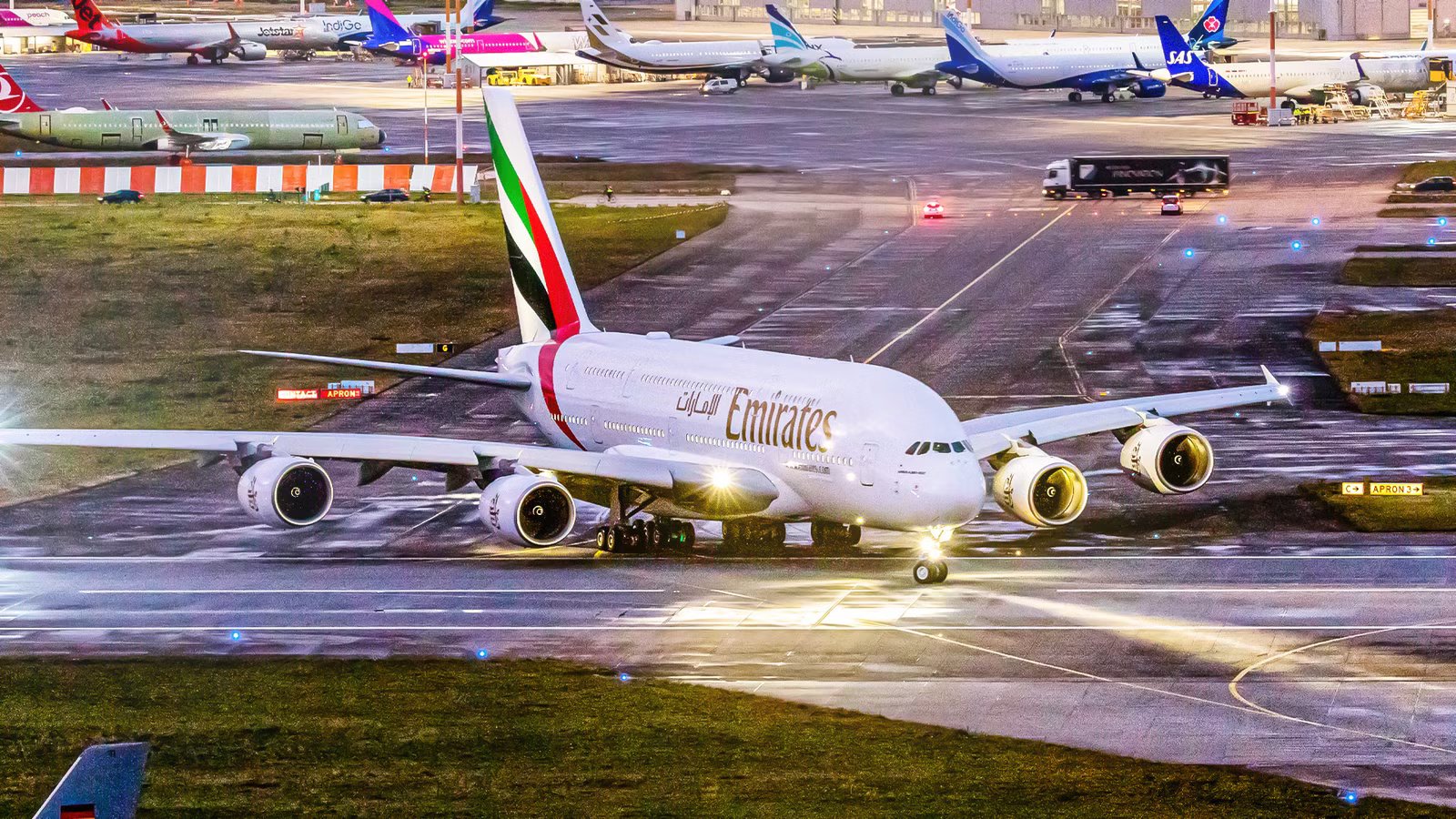
Global air travel demand continues to push airlines toward larger, more efficient aircraft, with capacity becoming a central focus in 2026. According to the International Air Transport Association (IATA) Air Passenger Market Analysis from January 2026, industry-wide passenger traffic grew by 3.8% year-on-year, reaching 774 billion revenue passenger kilometers (RPK). While this was a slowdown compared to December’s 5.8% growth, demand still outpaced capacity, which rose by 3.5% during the same period. Basically, IATA data shows how full aircraft are becoming in both domestic and international markets.
Looking ahead, global seat capacity is expected to grow by 5.2% year-on-year in the coming months. This is the fastest rate since April 2024. It suggests that airlines are getting ready for sustained demand, especially on long-haul international routes. In this article, Simple Flying ranks six aircraft that stand out for carrying the most passengers in commercial aviation today, highlighting the models that airlines depend on most when demand is high and airport slots are limited.
6
Airbus A330-900neo
Up to 460 passengers

The Airbus A330-900neo is number six on the list. It is one of the most capable twin-engine widebody planes currently in production. According to Airbus’ official website, this aircraft can carry up to 460 passengers. It typically seats around 310 passengers in a three-class layout. Delta Air Lines is the largest operator of this model.
As Simple Flying previously reported, the A330-900neo can seat 260-300 passengers in a three-class layout. Its maximum range is around 7,200 nautical miles. It was made as a direct competitor to the 787-9, with both being the top-selling airframe in their respective model families from their makers. The Airbus jets are consistently built for a higher seat capacity than their Dreamliner equivalents. The A330neo is the next-generation version of the A330ceo, having around 95% airframe commonality and advanced materials and components. This allows airlines such as Delta to modernize fleets with minimal training and maintenance investment.
5
Airbus A350-1000
Up to 480 passengers

The Airbus A350-1000 is ranked fifth in Airbus’ current lineup of most capable aircraft. As the largest variant of the A350 family, it is seven meters longer than the A350-900. According to Airbus, it can seat 375 to 400 passengers comfortably in a standard three-class layout, with 40% more space in premium seats. In high-density configurations, it can accommodate up to 480 passengers.
Qatar Airways was the first airline to use this aircraft in commercial service in 2018, following its first flight in November 2016. Powered by Rolls-Royce Trent XWB-97 engines, the aircraft features the Airspace cabin concept. This includes wider seats, larger windows, better lighting, and improved cabin pressure and humidity, designed to ease the stress of ultra-long-haul flights, as reported by National Aero Stands.
The A350-1000 has become a modern successor to the A380 on routes it once dominated. It offers a similar range, better fuel efficiency, and lower operating costs. This aircraft can be an excellent choice for the longest and most challenging routes where demand is high but doesn’t justify a superjumbo. It is commonly used on routes like Doha to Auckland and Doha to Los Angeles with Qatar Airways, London to Singapore with Singapore Airlines, and Hong Kong to London with Cathay Pacific.

Here’s How Much Bigger The Airbus A350-1000 Is Compared To The Boeing 787-10 Dreamliner
The design differences between the Airbus A350 and Boeing 787, and why the two planes are so different.
4
Boeing 747-8 Intercontinental
Up to 605 passengers

The Boeing 747-8 Intercontinental marks the end of a legendary lineage in aviation and is the longest commercial airliner ever built. According to the US manufacturer, it features the latest engine and wing combination, modern materials, and a refreshed flight deck. With a fuselage stretch of 5.6 meters compared to the 747-400, it can fit 66 more seats, offers 16% greater cargo volume, has a 15% lower cost per seat, and maintains a comparable cost per trip.
The 747-8 Intercontinental had its first flight in March 2011, with FAA certification following in December of that year, according to the aviation news website Airport Technology. Launch customer Lufthansa began revenue service with this aircraft in June 2012.
It seats 467 passengers in a standard three-class layout, but it can accommodate up to 605 passengers. Despite these impressive figures, only 48 passenger versions were produced, making the 747-8 Intercontinental one of the rarest jumbo jets in commercial aviation history.
3
Boeing 777-300/300ER
Up to 550 passengers

The Boeing 777-300 and its extended-range versions continue to be key players in long-haul travel. As reported in Ready for Takeoff, the 777-300’s fuselage has been lengthened by more than 10 meters compared to the earlier 777-200, bringing its total length to nearly 242 feet (74 meters). This change allows airlines to carry more passengers, about 368 in a typical three-class layout or up to 550 in high-density configurations.
The Boeing 777-300ER took this further by combining capacity with strong performance. According to AeroCorner, the aircraft entered service in 2004 and is powered by GE90-115B engines, which can produce up to 115,000 pounds of thrust each. With a range of around 7,300 nautical miles, the 777-300ER can handle long-distance routes while comfortably carrying 350 to 400 passengers.
According to a report from Airliners.net, Boeing publicly announced it was developing the 777-300 at the Paris Air Show in mid-June 1995, where it revealed it had secured 31 firm orders from All Nippon, Cathay Pacific, Korean Airlines, and Thai Airways. Later that month, Boeing’s board authorized production of the new aircraft. The 777-300 rolled out on September 8, 1997, followed by its first flight on October 16 of that year.
2
Boeing 747-400
Up to 660 passengers

Few aircraft have had such a lasting impact on aviation as the Boeing 747-400. Often referred to as the “Queen of the Skies”, it was built on the legacy of the original 747 and became the most successful version of the family, with nearly 700 built. According to National Aero Stands, the -400 featured significant improvements over previous models, including a modern two-pilot glass cockpit that eliminated the need for a flight engineer and a wing design that improved fuel efficiency and overall performance.
The 747-400 was designed to carry large numbers of passengers over long distances. The standard three-class configuration typically accommodated about 416 passengers, but airlines could increase that number depending on the layout. As reported by Airliners.net, the high-density variant of the 747-400D, used for domestic flights in Japan, could carry up to 568 passengers in a two-class configuration and, in maximum-density configurations, as many as 660 seats.
This capacity changed the way airlines approached long-haul travel. When the 747 first entered service, it had far more seats than any other aircraft in service at the time, reducing the cost per passenger and making international travel more affordable. The 747-400 has continued this legacy into the modern era, becoming a common sight at major airports around the world for decades.

How Much Does A Boeing 747-400 Cost In 2026?
The aircraft still surprisingly has some market value.
1
Airbus A380-800
Up to 853 passengers

The Airbus A380-800 is considered the largest passenger aircraft ever built. At 239.5 feet (73 meters) long and with a wingspan of almost 262.5 feet (80 meters), it remains the only commercial jetliner with two full-length passenger decks. Airbus says the aircraft can carry more than 850 passengers in economy class, and its certified maximum seating capacity of 853 is unmatched by any other aircraft. The usable area of both decks is around 550 square meters – about the size of three tennis courts.
When the A380 entered service with Singapore Airlines in October 2007, it was designed to carry large numbers of passengers between the world’s busiest airports. In practice, most airlines have opted for more spacious aircraft layouts, which typically seat between 489 and 555 passengers in three classes. Since then, the aircraft has flown more than 800,000 times and carried more than 300 million passengers, the European manufacturer said, making it a flagship for airlines that value space and comfort as well as capacity.
As AirGuide noted, the A380’s large-capacity design works best at airports with limited slots and on busy long-haul routes, where increasing passenger numbers is more practical than increasing the number of flights. This model has been crucial for major international carriers, especially on routes connecting global hubs where demand consistently supports large aircraft. For example, Emirates uses the A380 extensively on routes like Dubai to London Heathrow, Dubai to New York JFK, and Dubai to Sydney. Singapore Airlines operates it on important long-haul services such as Singapore to London and Singapore to Frankfurt. British Airways employs the A380 on transatlantic and Asia routes, including London Heathrow to Los Angeles and London Heathrow to Hong Kong.