dailynewsnblog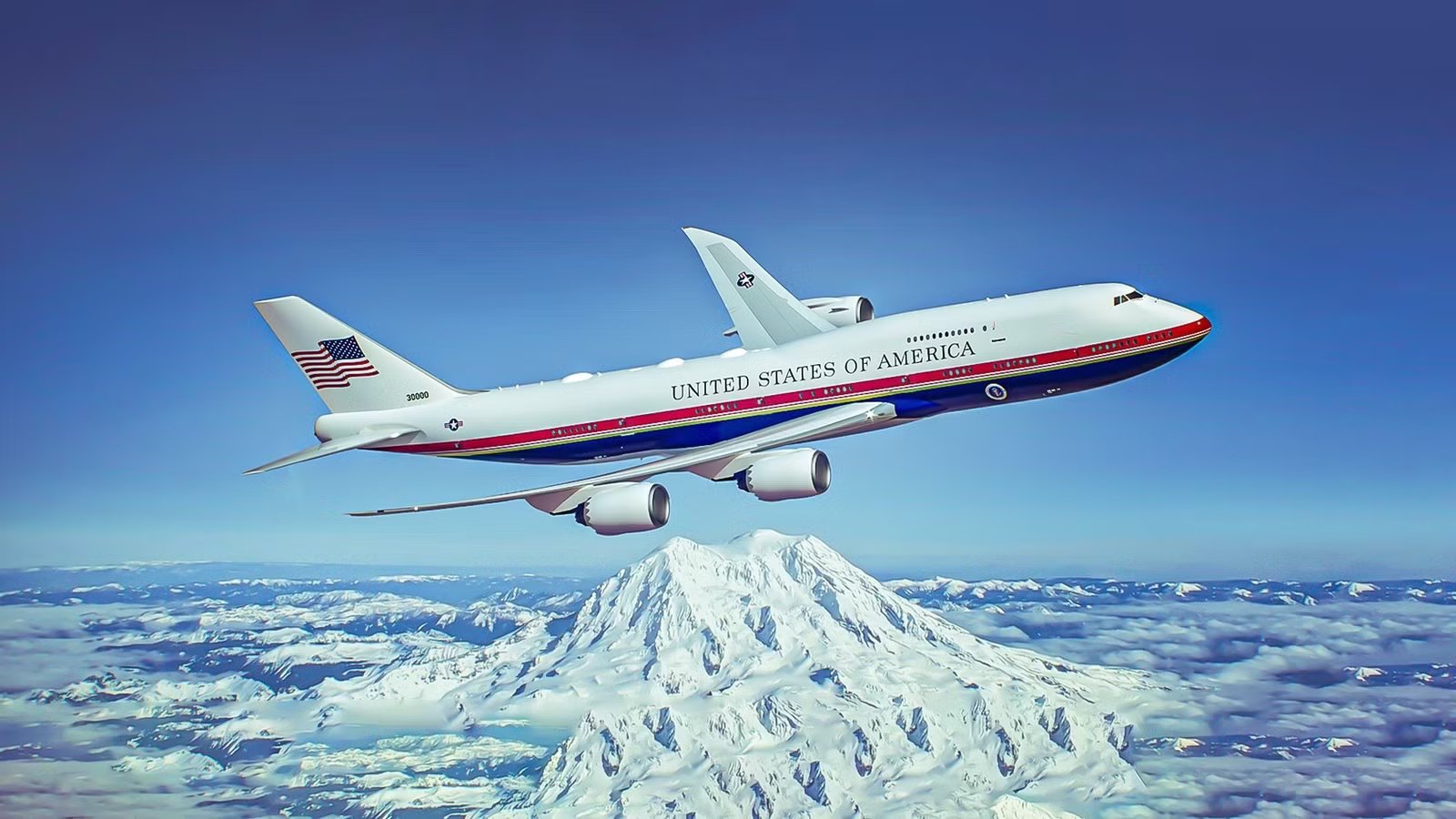
The United States’ new Air Force One program has been delayed for years because the VC-25B development process is significantly different from that of a normal commercial aircraft. This is rather a highly specialized military conversion wrapped inside a politically sensitive fixed-price contract.  Boeing is taking two 747-8 airframes and turning them into flying White Houses, with secure communications, presidential transport systems, and survivability features that go far beyond a commercial jet. The original delivery target was 2024, but the schedule has repeatedly slipped, with public reporting and official statements indicating that the first aircraft may not arrive until the late 2020s.
For this discussion, the core argument should be that the delay results from several problems compounding over time rather than a single dramatic failure. Boeing has faced supply-chain disruptions, the loss or transition of key interior suppliers, shortages of cleared and skilled workers, wiring and design-completion problems, and changing requirements as threat environments evolved. At the same time, the fixed-price structure capped the government’s payments, leaving Boeing to absorb major overruns and making the program financially painful as complexity increased. The result is a story about how prestige, national security customization, industrial weakness, and contract design collided in one of America’s most symbolic aircraft programs.
Why Is A New Air Force One Needed?

It is clear that a new Air Force One jet is necessary, and this has been widely agreed upon by presidents and defense analysts for years. The current fleet of presidential jets is exceptionally old, increasingly difficult to sustain, and no longer the best platform for a mission that is far more demanding than ordinary VIP travel. The two existing VC-25A jets are specially modified 747-200B models that entered service with the US Air Force in 1990 and 1991. That means that the United States’ chief executive is relying on aircraft built around a commercial platform from an earlier era. This aircraft is so long out of production and harder to support as parts, suppliers, and legacy systems continue to age.
From a more important perspective, Air Force One is not just a plane that carries the president from one city to another. Rather, it is effectively flying a command post that must allow the commander-in-chief to travel securely, communicate globally, receive medical care if needed, and continue governing during an ongoing crisis. The replacement VC-25B aircraft are designed to provide upgraded mission communications, more electrical power, self-defense systems, autonomous ground operations, and other capabilities that the Air Force says are necessary for the presidential airlift mission.
Officials have also said that requirements have changed over time as potential threats have evolved, making reliance on older jets look significantly less attractive, especially in a world where budgets are heavily constrained, and maintenance expenses for these older models continue to rise. Therefore, at a high level, the case for a new Air Force One is really about reliability, survivability, and the continuity of government, not just prestige or aesthetics.
What Was The Solution That Was Determined For This Problem?

The solution the US government settled on was not to continue stretching the life of the existing VC-25A fleet indefinitely, nor to design an entirely new presidential aircraft from scratch. This makes sense initially as a rather cost-effective solution. Instead, the Air Force created the Presidential Aircraft Recapitalization program and chose to acquire two 747-8 airframes, which would then be heavily modified into the new VC-25B standard.
In other words, the answer was to use a modern commercial platform as the base and transform it into a purpose-built presidential transport with military-grade mission systems. That approach was meant to balance capability, schedule, and risk more effectively than a clean-sheet design. At a high level, this solution addressed the core problem. The current aircraft were becoming harder and more expensive to sustain because of age, parts obsolescence, and long aircraft maintenance cycles that hurt availability.
The VC-25B plan, therefore, aimed to recapitalize the fleet with aircraft that could provide safer, more reliable presidential transport while also incorporating the systems required for the role. The Air Force has said those modifications include upgraded mission communications, increased electrical power, a medical facility, executive interiors, self-defense systems, and autonomous ground operation capability. Thus, the solution was really a full modernization strategy. The organization wanted to replace the aging 747-200-based fleet with two 747-8-based flying command posts that could keep the president airborne, connected, protected, and operational during routine travel or a national crisis.
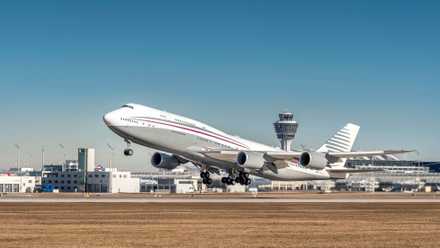
Confirmed: Ex-Qatari Luxury Boeing 747-8 To Be Delivered As Interim Air Force One This Summer
The aircraft will be used as a stopgap solution until new models arrive.
What Was The Original Delivery Timeline?

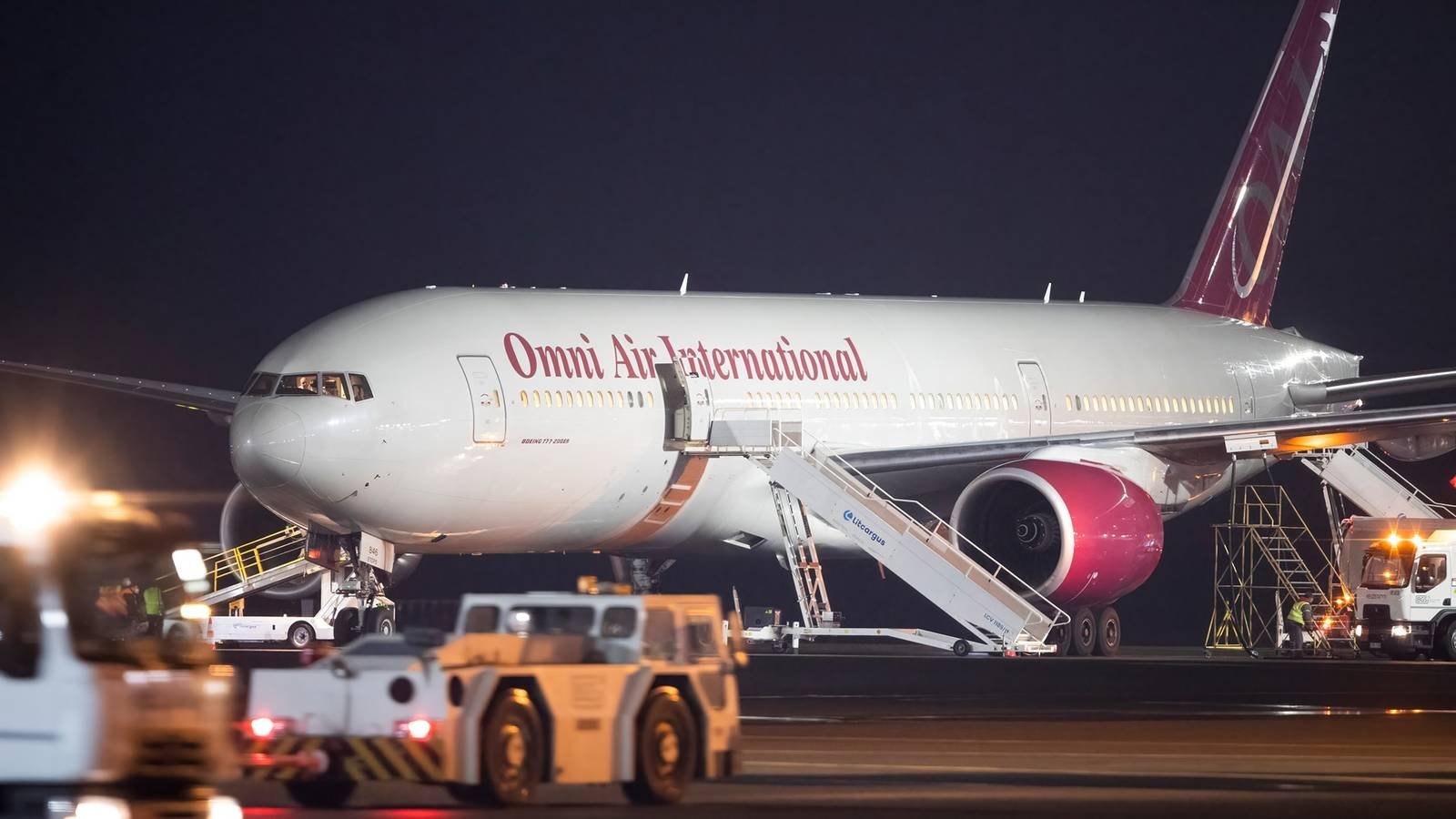
The stopgap solution now being deployed is essentially a former Qatari 747-8 that the US accepted and is converting into an interim presidential aircraft, all while Boeing’s purpose-built VC-25B replacements remain years behind schedule. Rather than wait for the full recapitalization program, the Pentagon moved to create what the Air Force calls a bridge aircraft, giving the White House a newer widebody platform sooner than the delayed Boeing jets can arrive.
Contractor L3Harris was recently tapped to handle the rapid overhaul, with the work centered on adding the communications, security, and defensive upgrades needed for presidential transport. The aircraft was accepted in 2025, and modification work began later that year. The Air Force has said it expects delivery to the Presidential Airlift Group by no later than this summer.
In practical terms, this is best understood as a workaround rather than the definitive Air Force One solution. The bridge jet is being fielded because the current aircraft are aging, and the VC-25B program has slowly slipped into 2028. However, the interim aircraft still raises questions about cost, security hardening, and how fully it can match the survivability of a purpose-built presidential command post. That makes it a politically and operationally useful patch, but still a compromise born from Boeing’s delays.
What Program Delays Have Occurred So Far?

The delays that created the need for a stopgap aircraft built gradually and then slowly snowballed. The VC-25B program originally aimed to deliver the first new Air Force One in 2024, but the schedule cracked first when Boeing’s interior subcontractor, GDC Technics, went bankrupt, forcing a supplier transition on one of the most customized parts of the aircraft. At the same time, pandemic-era labor disruption made it harder to staff the program, and the Air Force later disclosed additional workforce problems tied to security clearance.
The program was reassembled in 2022, with the first aircraft then expected in September 2026 and the second in February 2027, with both subject to additional schedule fluctuations. But even then, the revised timeline did not hold. By June 2024, the first flight had slipped to March 2026, and officials said subsystem “power on” testing had also been moved back. Development problems added further pressure. Boeing identified numerous design errors, which led to a suspension of wiring fabrication.
Later reports would point to supply-chain shortages, disappearing manufacturers, and evolving threat-driven requirements. By February 2025, a senior administration official said the first delivery, once due in December 2024, could slip to 2029 or later. At that point, the gap had become too large to ignore, which is a key reason why Washington moved toward an interim Qatari 747-8 bridge aircraft while the formal replacement program remains unfinished.
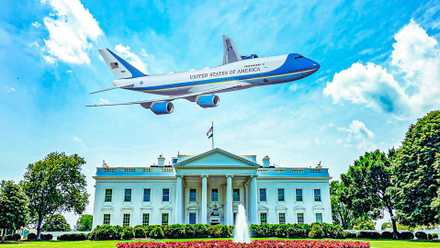
The New Boeing 747-8 Air Force One: What’s The Latest?
Will we see a new Air Force One before the end of the decade?
How Much Has The Whole Program Cost?

At a very high level, the clearest current answer is that the new Air Force One program now costs about $6.2 billion. That is the broad program-level figure reflected in recent Pentagon weapons-system budget materials, and it is the best number to use if you are describing the overall cost of replacing the presidential fleet rather than just Boeing’s portion of the work.
That number is much higher than the $3.9 billion figure that is often still quoted in older forms of coverage. The reason is that $3.9 billion referred to Boeing’s 2018 fixed-price deal to deliver the two completed VC-25B aircraft, not the full evolving government-wide acquisition picture, as delays, engineering changes, testing, military modifications, and related program expenses accumulated. An official 2023 Selected Acquisition Report already showed the program’s total acquisition estimate at about $5.73 billion.
This move eventually reached $6.2 billion, part of a broader upward trend and not a random, sudden jump. It is also worth separating the taxpayer costs from Boeing’s pain. The manufacturer has separately reported around $2.4 billion in losses on the contract, primarily because the deal was fixed-price and overruns hit the company’s bottom line directly.
What Is Our Bottom Line?

The bottom line here is that America’s new Air Force One has become a case study in how prestige programs can quickly spiral out of control when extreme customization, industrial strain, and flawed contracting collide. The current VC-25A aircraft are old enough that replacement is genuinely necessary.
These kinds of aircraft are harder to maintain, less aligned with modern mission requirements, and increasingly ill-suited to serve as secure flying command posts for the president. The chosen answer was the VC-25B program, an aircraft development program based on two heavily modified 747-8s, originally intended to begin in 2024, according to Air & Space Forces Magazine.
Nonetheless, supplier failures, labor shortages, design and wiring problems, clearance-related staffing issues, and evolving security requirements pushed the aircraft years behind schedule. That is what created the need for the interim Qatar-linked 747-8 bridge aircraft. In short, the program is no longer just a modernization story.