dailynewsnblog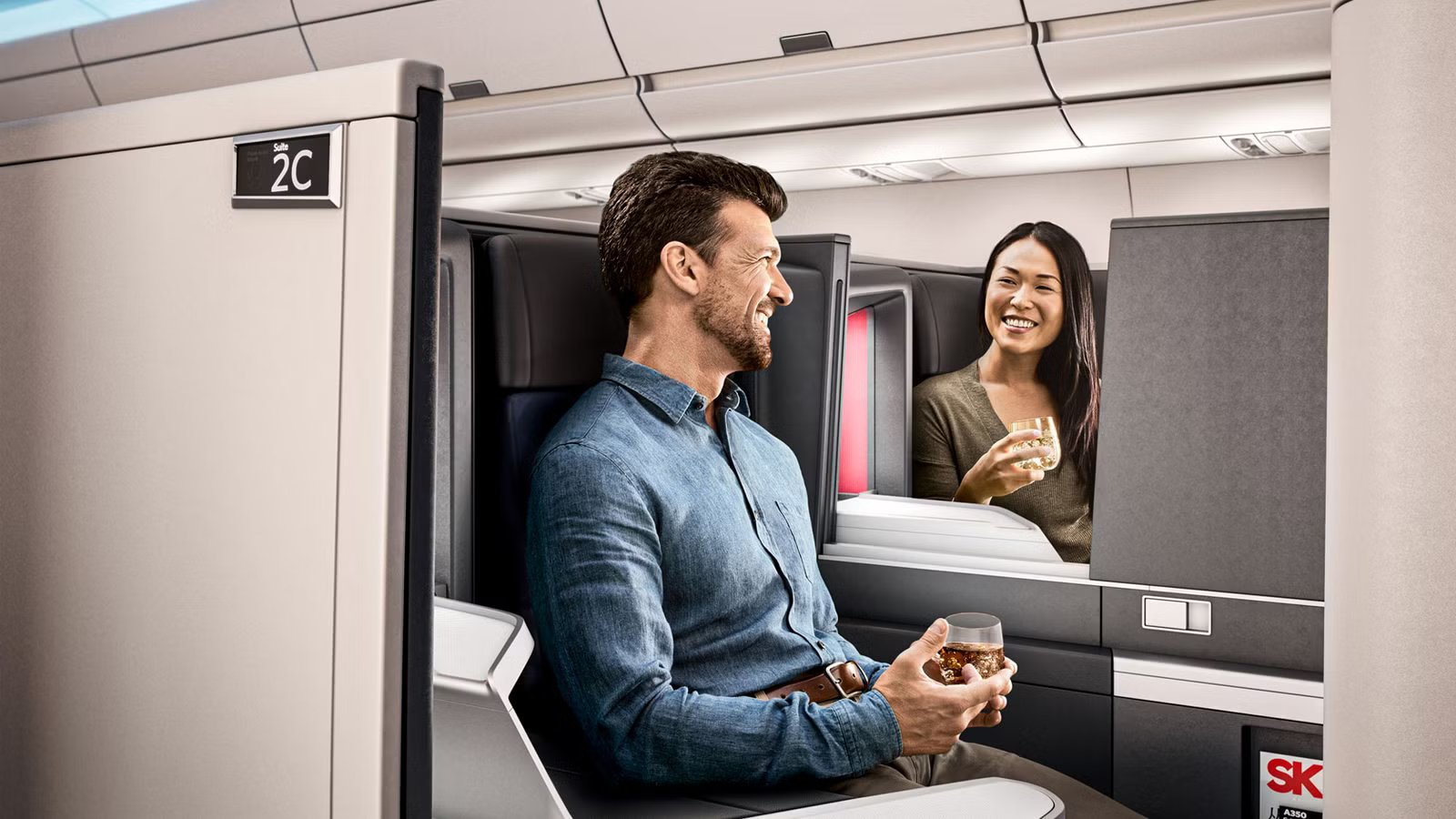
Whenever an airline introduces its latest international business class cabin to the world, the accompanying marketing material heavily emphasizes the lifestyle elements of the journey. From the high thread-count bedding, to the curated champagne lists, and the privacy afforded by sliding doors or translucent partitions. For the frequent flyer, these updates are presented as the pinnacle of airline hospitality. However, a peek behind the curtain of modern aviation economics reveals a completely different motive. This guide will explore why these ultra-premium cabins are not actually built as statements of luxury, but rather designed to rescue airline balance sheets.
According to data from the International Air Transport Association(IATA), pure flight operations were projected to generate a meager 3.9% profit margin in 2026, which translates to a tiny net profit of just $7.90 per passenger carried. With fuel prices volatile and labor costs high, airlines cannot rely on standard economy tickets to deliver meaningful shareholder value. Instead, the aircraft fuselage has been reimagined as a floating asset management platform, where luxury suites are the ultimate vehicle for high-margin capital allocation.
The Front Is Where The Focus Is

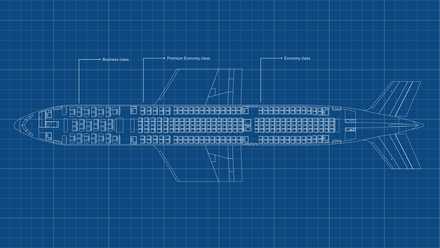
The layout of modern twin-aisle aircraft is undergoing a widespread transformation as airlines aggressively strip out standard economy rows to install high-end suites. The goal for airlines worldwide has been to maximize passenger volume, treating the back of the aircraft as the primary engine of total revenue. Today, that strategy has been completely inverted across international networks. Corporate networks and long-haul routes are now dominated by aircraft configurations in which the amount of premium seating has climbed significantly to squeeze maximum profit from every square inch.
All of these recent changes are a direct response to a massive variance seen in passenger spending habits.  Delta Air Lines provides a clear look at this trajectory through its recent fleet modifications. New long-haul aircraft entering the carrier’s international fleet feature configurations where nearly 50% of the total cabin is dedicated to premium seating tiers, a massive jump from the 30% baseline seen in older widebody layouts. This means that a large portion of the aircraft floor space is intentionally separated from low-yield commodity ticket price wars, ensuring that a single flight can generate far higher revenue per flight hour.
The financial wisdom of this shift is confirmed by the latest airline financial disclosures. During the first three months of 2026, Delta reported an adjusted March quarter record revenue of $14.2 billion, driven heavily by an explosive 14% year-over-year increase in premium ticket sales. In total, the premium cabin brought in $5.4 billion during the quarter, landing a mere $41 million shy of overtaking the revenue generated by the entire main cabin. When combined with other high-yield streams like cargo and technical maintenance, non-economy revenue now accounts for 62% of the total enterprise combination, showing just how the front of the plane has become the core business.
Are Loyalty Schemes More Valuable Than Airlines?

To truly understand why airlines are willing to invest millions of dollars in developing bespoke business-class cocoons, it is important to see why the relationship between premium seats and frequent flyer programs has such power. These suites are not designed to attract cash-paying corporate executives; instead, they serve as the ultimate prize that keeps the multi-billion-dollar loyalty ecosystem churning. The promise of an enclosed space on a long flight is the key psychological driver that convinces millions of consumers to swipe their co-branded credit cards for everyday purchases.
Catch what other flight trackers miss
Emergency squawks, holds, NOTAMs — live signals, no signup.
Open tracker
Catch what other flight trackers miss
Emergency squawks, holds, NOTAMs — live signals, no signup.
Open tracker
The real scale of this underlying loyalty economy easily eclipses the financial footprint of actual flight networks. In fact, the five largest US airlines collectively generated $28 billion in loyalty and credit card partnership revenue in a single year. These programs operate with incredibly high margins, acting as a massive financial cushion that prevents legacy networks from slipping into operational losses during economic downturns. For instance,  American Airlines credits its AAdvantage program for driving up to 77% of all premium cabin bookings.
Underlying loyalty programs have independent market valuations that frequently surpass the standalone value of the airlines themselves, something few realize. Every time a consumer earns miles through a credit card transaction, the airline sells that currency to a bank at a high margin. Delta’s recent investor report revealed that remuneration from its American Express co-branded card partnership surpassed $2 billion for the first quarter of 2026 alone, reflecting a 10% growth year-over-year. Without the aspirational draw of high-end business-class suites as the ultimate redemption goal, demand for these co-branded credit cards would dry up, collapsing the most profitable segment of the airline’s portfolio.
Being Creative With Available Space

The accounting pressure to expand premium space poses a highly complex engineering challenge for industrial designers tasked with developing a new cabin layout. The dimensions of a widebody airframe are entirely fixed, which means every additional inch allocated to a business class passenger must be clawed back from somewhere else. It explains why the latest suite concepts rely on extreme geometric staggering rather than simple, oversized footprints to deliver a sense of luxury.
The East Asian market, particularly through premier Japanese carriers, has become the global benchmark for this type of spatial wizardry. All Nippon Airways (ANA) pioneered this approach with its iconic business class configuration known as The Room, which uses alternating forward- and rear-facing seats to interlock passengers together like puzzle pieces. By arranging the seats in this counter-directional layout, designers can provide a massive 36-inch (91.4 cm) wide cushion surface while keeping the total pitch footprint down to a minimum.
Japan Airlines (JAL) achieved a similar structural victory inside its new Airbus A350-1000 suites, incorporating ultra-thin translucent panels and sliding privacy doors that add zero significant weight to the airframe while also satisfying the premium traveler’s demand for complete isolation. Every component, from the headphone-free headrest speakers to the nested footwells, is engineered to compress as many high-yielding passenger zones into the fuselage as possible, turning physical space directly into net margin.
Business Class Losing Its Identity

The final step in treating premium cabins as an exercise in accounting is the breakdown of the business class product itself. Revenue management teams are working to remove the traditional all-inclusive nature of a business class product, making it more reminiscent of what is seen on low-cost airlines. Stripping away the historical perks, though, airlines can introduce a highly segmented pricing model designed to extract every available dollar from different types of high-yield customers.
This strategy has manifested through the introduction of basic premium ticket categories.  United Airlines has led the legacy carrier transition by introducing a tiered basic business product, and Delta is on track to finalize its own unbundled premium fare structures by the end of 2026. Any executive whose corporate travel policy pays the full fare still receives the full suite of amenities. Meanwhile, a leisure passenger redeeming credit card points might be assigned to a lower tier that requires an additional cash payment just to select a specific seat or enter the departure lounge, making traditional luxury perks into separate, high-margin revenue streams.
Micro-segmentation in this sense allows airlines to protect their core margins even when broader economic factors depress standard coach ticket prices. During the 2025 fiscal year, Delta recorded a clear example of this trend: its premium cabin revenue climbed 7% year-over-year, and its main cabin passenger revenue dropped by 5% during the exact same twelve-month window. Now, by dividing the front of the aircraft into multiple pricing levels, carriers can capture cost-conscious small business owners and high-end vacationers without diluting the premium pricing floor required to offset the low margins of the economy cabin.
The Key Differences Between Economy, Premium Economy, Business & First Class
Walk the aisle with a seat designer to decode the real differences between economy, premium, business, and first class. Is the upgrade worth it?
Never Going Back To Economy

The financial justification for dedicating half of an aircraft to luxury suites rests on a concept known as consumer stickiness. Airline financial teams have discovered that premium seating options behave like a one-way valve in a way. Once a passenger experiences an international flight inside an enclosed suite, they become highly resistant to returning to the main cabin, creating a highly reliable source of recurring premium revenue.
According to data presented by Delta leadership, customer retention rates for travelers who purchase premium cabin products consistently hover in the mid-80% range. This behavioral metric significantly affects how airlines calculate the long-term return on investment for expensive cabin retrofits. The steep capital expenditure required to design, manufacture, and install a modern business class pod is recovered over time because the seat stays occupied by a highly predictable customer base that refuses to look at cheaper, basic transportation options.
What this means for airlines is that it creates a highly profitable corporate flywheel when combined with co-branded credit card ecosystems. As premium revenue and loyalty program engagement both jumped substantially in recent years, the standard economy cabin has evolved in turn to function primarily as a customer acquisition funnel. The back of the plane serves as an entry point where travelers collect miles and build initial status, while the business class suites at the front act as the high-margin destination that retains their long-term loyalty and card spend over multiple decades.
Volatility Is A Given

The evolution of the modern international business class suite should never be viewed solely from the perspective of passenger comfort or hospitality innovation. The products seen cutting through the air are undeniably impressive engineering achievements, but their true purpose is to serve as a high-yield defense against the brutal financial realities of global flight operations. Every sliding door, nested footwell, and unbundled fare bracket is a carefully considered line item designed to maximize the revenue generation of a fixed piece of space inside, in the grand scheme, not a lot of space.
As legacy airlines continue to transform their business models to rely less on standard economy fares and more on multi-billion-dollar loyalty credit card partnerships, the design of the aircraft cabin will eventually lean even further into strict accounting metrics. The trends currently being observed will only continue, and it is unlikely there will be any retreat from now on.
The airlines of the future are no longer basic transportation companies trying to sell as many seats as possible to the general public. These airlines now operate as asset management enterprises that happen to fly widebody jets, utilizing elite strategies seen in the financial sector to ensure structural profitability in an increasingly volatile global market.