dailynewsnblog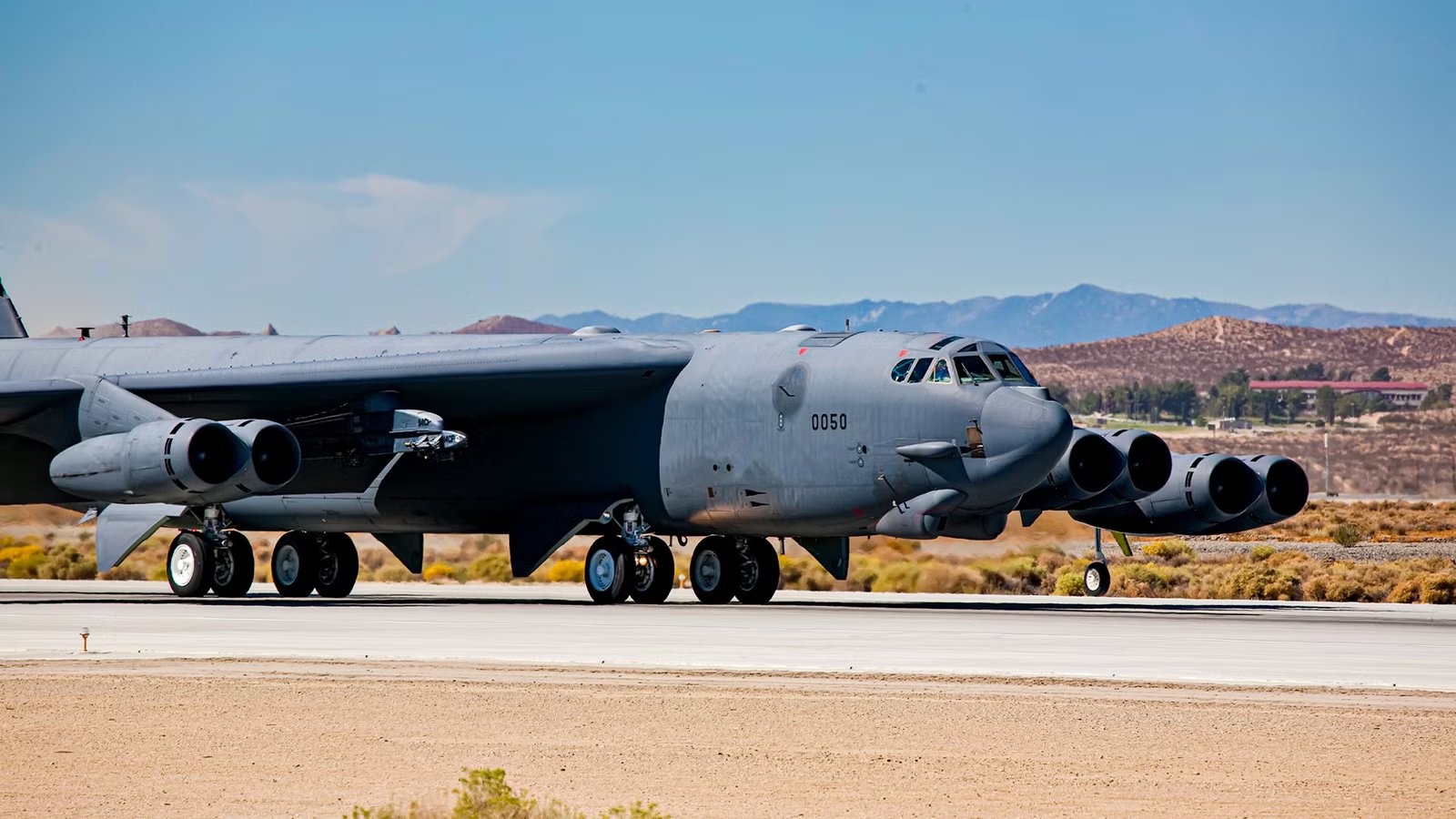
The longevity of the Boeing B-52 Stratofortress is unlike almost anything else seen in military aviation. The bomber has been in service since the 1950s, and although the overall fleet size has shrunk, there are still 75 in service. Even the youngest of them is still over 60 years old, and the USAF has no imminent plans to retire them. Instead, the Air Force intends to keep the B-52 flying until the 2050s, or nearly 100 years after the type first entered service. The key to achieving this goal is the B-52J program.
The B-52J is a modernization upgrade that will significantly improve the B-52’s usability for the next several decades. The biggest changes are new high-bypass turbofan engines, an updated radar, and improved avionics. Originally, the B-52J was meant to enter service by 2029, but it was subsequently delayed to 2033, and a testbed aircraft crashed shortly after takeoff in mid-June 2026. This was the deadliest B-52 crash in decades and caused an additional delay.
The June 2026 B-52 Crash

On June 15, 2026, a Boeing B-52H Stratofortress crashed shortly after takeoff near Edwards Air Force Base in California, killing all eight occupants. This was the first hull loss of a Stratofortress in a decade, since a B-52 overran the runway at Guam in 2016, and it was the deadliest accident involving the B-52 since a 1982 crash that killed nine. The plane reportedly fell from the sky at a rate of over 5,000 feet per minute, and the nearly full load of fuel created an unsurvivable fire.
The aircraft, registered as 60-0061 and named ‘Spirit of Aggieland II’, had received a new radar system in December 2025 and was being used as a test platform for the B-52J program. For this reason, three additional occupants joined the standard flight crew of five, including two Boeing employees, and the flight was conducted to test the plane’s new radar system. This is reported to be the only major piece of upgraded equipment on the Spirit of Aggieland II.
It’s unclear what exactly led to the crash, and it’s been announced that the investigation may take as long as six months. The B-52J program is comprised of multiple separate upgrades that are largely on their own timeline, and the crash has now led to a several-month delay with the new radar, as this was the component that Spirit of Aggieland II was testing. Meanwhile, the engine component of the program has already experienced a multi-year delay, in part due to integration issues.
What Is The B-52J Program?

The B-52 Stratofortress has received numerous upgrades over its 70+ years in service, and the B-52J is one of the most extensive. One of the biggest changes is the introduction of the AN/APQ-188 AESA radar, a derivative of the F/A-18E/F Super Hornet’s AN/APG-79 system. It’s an active electronically scanned array radar, which can provide quick updates on multiple targets and is more reliable than most other radar systems. It replaces the B-52H’s Cold War-era mechanically scanned radar.
The other major part of the B-52J program is the addition of the Rolls-Royce F130, the military derivative of the BR725. The BR725 is a variant of the popular BR700 series, which is used on multiple business jets, while the BR715 variant also powers the Boeing 717. The engine will provide the same amount of thrust while burning much less fuel than the Pratt & Whitney TF33 low-bypass turbofans currently on the B-52H, based on the JT3D.
In addition to these changes, the B-52J will feature new digital displays in the flight deck, as well as avionics upgrades. In essence, though, the radar and F130 engines are the most important parts of the program, and their timeline determines the timeline of the entire program as a whole. The USAF originally hoped for the plane to enter service by 2029, but it’s been pushed back to the early 2030s currently, which is problematic given the advanced age of the B-52H and its components.
Why The B-52’s New Rolls-Royce Engines Will Make America’s 70-Year-Old Bomber More Efficient Than Ever
The next chapter in the story of the B-52 is now being written.
The Lifespan Of The Stratofortress

The B-52 Stratofortress was developed in the late 1940s and early 1950s, fulfilling a USAF request for a new long-range strategic bomber. The original B-52A took flight in 1952, and only three B-52As were ever built, all of which were returned to Boeing and used for testing purposes. The first B-52 variant to enter active service with the USAF was the B-52B, which was introduced in 1955.
Boeing subsequently developed the improved B-52C, B-52D, B-52E, B-52F, B-52G, and B-52H variants. In total, 742 B-52s were delivered from 1954 to 1963, with the B-52G being the most produced version. The B-52H is the latest variant, and all B-52s currently in service are the B-52H model.
Boeing B-52 Variants | Number Built | Introduction Year | Boeing B-52 Variants | Number Built | Introduction Year |
|---|---|---|---|---|---|
B-52A | Three | Test aircraft | B-52F | 89 | 1958 |
B-52B | 50 | 1955 | B-52G | 193 | 1959 |
B-52C | 35 | 1956 | B-52H | 102 | 1961 |
B-52D | 170 | 1956 | B-52J | 75 to be converted | 2033 |
B-52E | 100 | 1957 |
Most of the other B-52 variants were retired from military service in the 20th century, with the B-52H being the notable holdout. The B-52H was delivered from 1961 to 1963, meaning that even the youngest of these planes is over 60 years old, while some examples are over 65 years old. There were 102 B-52Hs built in total, and 75 of these remain in service today.
The B-52H is the oldest transport aircraft type used by the United States armed forces, and one of the oldest military types in service worldwide. The planes themselves are also among the oldest planes in service with any branch of the US military. With the B-52J upgrades, the USAF intends to fly the planes until the 2050s, which means that the type will be in service for nearly a century. The planes themselves, meanwhile, would be over 90 years old, a truly unprecedented level of longevity.
Why The B-52 Continues To Stick Around

The USAF retired its B-52As/Bs/Cs/Es/Fs relatively quickly, as these were older planes that racked up significant usage, were less durable, had higher maintenance costs, and were less capable. The B-52Ds soldiered on until 1983, as they received structural upgrades, while the B-52G was the most common model and was removed from service in 1991.
The 1991 START treaty required the US and Soviet Union to dismantle most of their nuclear assets, and B-52s were largely used to carry nuclear warheads, resulting in the full destruction of all B-52Gs. The B-52H was the final production variant of the Stratofortress line, and it features more advanced turbofan engines compared to the turbojets found on prior B-52s.
Aircraft | Number In Service | Introduction Year | Retirement Year |
|---|---|---|---|
Boeing B-52H Stratofortress | 75 | 1961 | 2050s (as B-52J) |
Rockwell B-1B Lancer | 45 | 1986 | 2037 |
Northrop B-2A Spirit | 19 | 1997 | 2037 |
Northrop Grumman B-21 Raider | 100 on order | 2027 planned |
Some B-52Hs were retired more recently, while others were lost in accidents, creating the fleet of 75 that will be upgraded. The B-52 is not as fast as the Rockwell B-1B Lancer, nor is it as stealthy as the Northrop Grumman B-2A Spirit, but it’s cheap to operate and effective at carrying high payloads in low-threat environments. The B-1B and B-2A are both younger than the B-52, yet they will be retired sooner due to high maintenance costs
Indeed, the USAF intends to replace both of these planes with the Northrop Grumman B-21 Raider, a flying-wing stealth bomber. The plane is specifically designed for Indo-Pacific operations, and its advanced stealth technologies should provide meaningful benefits over the B-2A as well as the B-1B. However, the B-52 remains a durable airframe serving missions that don’t require the specialized capabilities of the B-21.
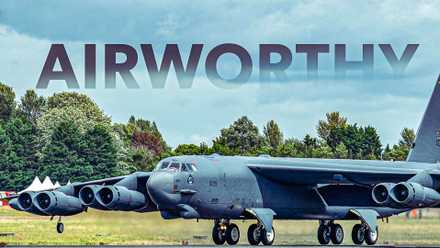
The Last Boeing‑Built Heavy Bomber Still Airworthy
A closer look at the veteran Boeing warbird.
Other Aging Planes In The US Military

While the B-52 is the oldest aircraft type in active military service with the USAF, the oldest jet flying with the USAF is 57-1419, a 1957 Boeing KC-135R Stratotanker (derived from the 367-80). The USAF received 732 KC-135s in total, and there are still hundreds in service today.
While the USAF is gradually returning its Stratotankers, it has yet to set a firm retirement date for the planes. The KC-135 is expected to remain in service until the 2030s, but could still fly even beyond this vague timeline. Both the B-52 and the KC-135 have relatively undemanding missions, while also being durable, cost-effective airframes.
The KC-135 fleet has already been re-engined with the F108 (military version of the CFM56), meaning that all of the US’s Stratotankers feature modern, fuel-efficient engines. For the missions that these planes fly, a clean-sheet aircraft would provide little benefit compared to the massive development costs, and the current planes work, which is why they remain in service. The KC-135 fleet is being partially replaced by the much larger Boeing KC-46 Pegasus.
Meanwhile, the USAF is also planning a new clean-sheet tanker focused on survivability and stealth. The B-52J’s eventual replacement may either be additional B-21 orders in the 2050s or a new bomber program. Meanwhile, the Lockheed C-130 Hercules first started production in 1954 and is still being built to this day as the C-130J Super Hercules, holding the record as the longest continuously produced military aircraft of all time.