dailynewsnblog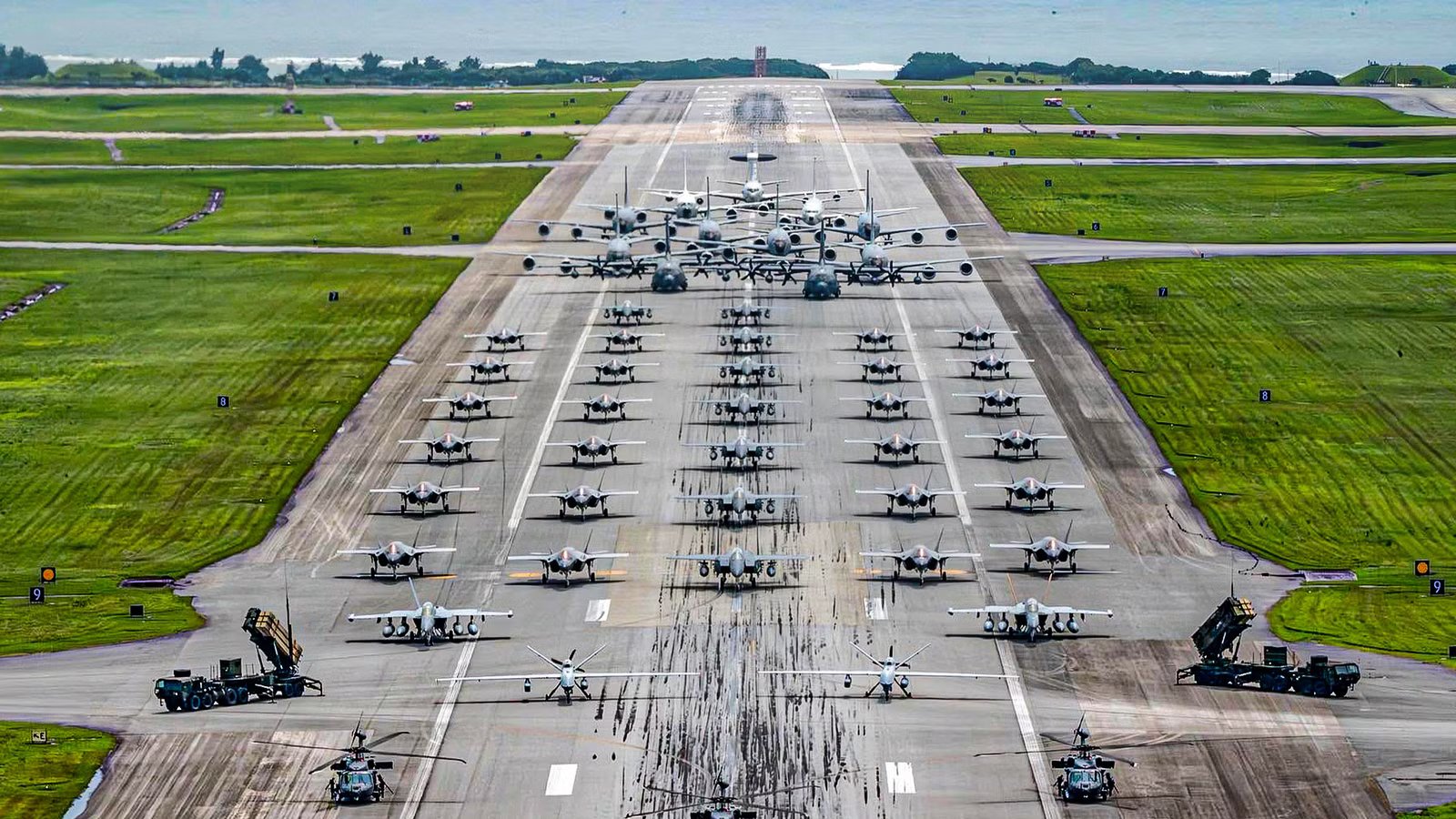
 Boeing’s Air Dominance Division, based in St. Louis, Missouri, has been struggling to deliver its F-15EX Eagle II fighter jets since its employees began to strike in 2025. The disruption to the assembly line has pushed back the delivery of the latest and greatest version of the venerable F-15 fighter series to numerous US Air Force squadrons. One of the most acutely affected units is Kadena Air Base in Okinawa, Japan. This airfield maintains a permanent cadre of fighter jets on site at all times and is due to receive the new F-15EX as soon as its planes become available.
The strike started on August 4, 2025, and lasted until November 13, 2025, a 102-day complete halt in manufacturing, according to On Labor. Meanwhile, the base has been retiring its legacy F-15C/D models since 2022 but has yet to receive the 36 planned F-15EX jets that will be permanently stationed under the 18th Fighter Wing. Air Force leadership expects the first F-15EXs to finally land on Okinawa in 2027, with the full complement of 36 aircraft taking until 2028 to be fully established.
Kadena: Keystone Of The Pacific

Kadena is the largest US Air Force base in the Pacific and sits strategically close to Taiwan and mainland China. The delivery delay creates a gap in permanent air power. To maintain a strong deterrent while waiting for Boeing to catch up, the Air Force is relying heavily on continuous rotational deployments. Temporary aircraft include legacy fourth-generation jets like the legacy F-15E Strike Eagles, Lockheed Martin F-16 Fighting Falcons, as well as fifth-generation F-35 Lightning IIs, and F-22 Raptors.
Because air superiority is the absolute priority at Kadena, the Air Force has assigned its most advanced air-dominance stealth fighters. Roughly a dozen high-end F-22s were deployed from the 90th Fighter Squadron based in Alaska and the 27th Fighter Squadron of Virginia. Multiple F-35A stealth detachments have cycled through Kadena, including units from the 355th Expeditionary Fighter Squadron also out of Alaska, and the 134th Expeditionary Fighter Squadron of the Vermont Air National Guard.
The 366th Expeditionary Fighter Squadron from North Carolina provided F-15E Strike Eagles alongside these ‘exquisite’ stealth fighters, as the Air Force refers to them. These jets filled the specific void of long-range strike capabilities while their stealthy counterparts handled air patrol. Still, this model is not a long-term solution. Rotating squadrons on short-notice tours severely strain the readiness, maintenance budgets, and family lives of units that were supposed to be training or resting at their stateside home bases.
F-15EX: The Air Force’s Bargain Fighter Program

The F-15EX was purchased as a fast, cost-effective way to replace aging F-15C/D models that were literally wearing out from structural fatigue. The Air Force’s finalized procurement target is settled at a baseline of 104 aircraft. The F-15EX is very different from every other aircraft on this list because it is an already proven platform. The jet has been digitized and refined for the 21st-century battlefield as the ultimate ‘missile truck’ supporting next-gen fighter jets, which will be behind enemy lines to paint targets while the F-15 pilot lobs standoff missiles from a safe zone.
Because the production line in St. Louis was already active and running, the program was expected to achieve immediate stability. A single F-15EX carries a reliable per-unit flyaway cost of approximately $90 million to $93 million. When you look at the total long-term infrastructure and lifecycle costs, the F-15EX program shines compared to stealth jets. Over a 30-year operational timeline, the total program cost for the 104-fighter fleet should be $30 billion to $35 billion.
Prior to the 2025 walkout, Boeing intended to deliver a full dozen Lot 2 Eagle IIs by the end of 2025 and ramp up to an assembly rate of two jets per month by early 2026. The strike left the factory severely behind schedule. Air Force Secretary Troy Meink officially confirmed the prolonged schedule during congressional testimony. As the historic American plane maker continues to struggle with labor issues, the handful of aircraft that have been finished are being delivered to domestically based units for training and operational testing instead of frontline squadrons, like Kadena’s.
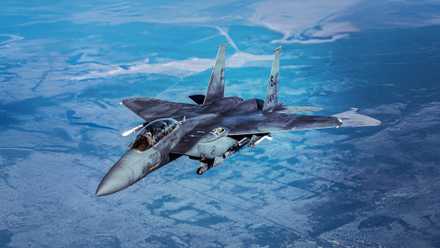
Why The US Air Force Is Scrapping 119 F-15E Strike Eagles But Keeping The Other 99
The changing of the guard begins.
Catch what other flight trackers miss
Emergency squawks, holds, NOTAMs — live signals, no signup.
Open tracker
Catch what other flight trackers miss
Emergency squawks, holds, NOTAMs — live signals, no signup.
Open tracker
Boeing’s Battle With The Union: American Machinists On Strike

In 2025, approximately 3,200 workers represented by the International Association of Machinists and Aerospace Workers District 837 went on a general strike. The issue with the Air Dominance Division in St. Louis is a climax of long-disputed terms for technicians who have built both of the F-15 jets for years and the Navy’s F/A-18E/F Super Hornet carrier-based strike fighters. The same facility is expected to produce the upcoming T-7A Redhawk USAF trainer jet that is being co-manufactured with Saab Aerospace of Sweden.
Boeing has consistently refused the terms of the union through multiple rounds of negotiations. The workers argue that the wage packages fail to reward senior technicians who have dedicated decades of their careers to the facility. They also dispute the retirement funding and have asked for voting to increase company contributions to 401K matching plans to offset the absence of a traditional pension. Boeing also pushed for a longer 5-year period before the next round of negotiations, while the union has firmly held on a three-year term.
In September 2025, the union unilaterally voted to approve a worker-drafted proposal. Boeing completely rejected the document, stating it would never sign an offer it didn’t co-author. Boeing then began hiring temporary workers in order to avoid a completely catastrophic meltdown of its contractual commitments to the Pentagon. In late October 2025, workers narrowly voted down Boeing’s fourth contract offer by an incredibly tight 51% to 49% margin.
Upgrade Or Replace? Why The US Air Force Is Reconsidering The F-15EX Over A New 5th-Gen Fighter
USAF expands F-15EX fleet to 267 jets as the Eagle II emerges as a key partner to the F-35 and future F-47 fighter.
Course Correcting: The Air Dominance Program Gets Back On Track

The strike officially ended on November 13, 2025, when 68% of the union membership ratified Boeing’s fifth modified proposal. The union accepted a 24% general wage increase that would be implemented over five years. Boeing also agreed to $6,000 signing bonuses, up from the $5,000 initially offered in August. However, the union was unable to secure the $10,000 ratification bonus or 401K matching, and higher base wages for exceptionally experienced veteran technicians.
Because Boeing’s St. Louis assembly line completely stopped for nearly 15 weeks, the entire F-15EX delivery schedule had to be re-sequenced. Substituting stealth fighters for the 48 legacy F-15C/D fighters left a massive permanent air-superiority void that the US Air Force had to scramble to cover as it made provisional measures. According to Air & Space Forces, the USAF originally planned a seamless swap, introducing 36 permanently stationed F-15EX jets to the 18th Wing. Because Boeing’s production freeze pushed deliveries out to 2027, Kadena is facing an extended period without any permanently assigned fighter squadrons.
Boeing is currently attempting to surge manufacturing from one jet per month to over two jets per month to clear the backlog. Yet, rather than scaling back the program due to Boeing’s delays, the Pentagon officially unveiled plans in its budget to more than double the total F-15EX program of record from 129 to 267 aircraft. Air Force acquisition officials warn that slamming a fragile aerospace supply chain into overdrive introduces a high risk of fresh component quality control issues.

Here’s Why The Marines Corps Is Scattering F-35Bs Across Tiny Pacific Islands In 2026
Going back to Raider ops for the pivot to the Pacific.
Pivot To The Pacific: Agile Combat Employment

As the US Air Force modernizes its tactical fleets of fighters and bombers, it is optimizing the entire force for agile combat employment, or ACE. This strategy is fundamental to the new doctrine that the entire US military will operate under as it ‘pivots to the Pacific’ to address the emerging threats of the Chinese military. The People’s Liberation Army Air Force and Navy have increasingly developed more stealth aircraft and advanced weapon systems, as well as aircraft carriers, to challenge the US and its allies.
Under the ACE framework, the Air Force is moving away from large, centralized bases—which are highly vulnerable to China’s massive inventory of long-range ballistic missiles—and shifting toward a distributed network of small, austere island airstrips. The F-15EX brings unique physical capabilities that fifth-generation stealth fighters lack, making it the perfect anchor for the new ‘High-Low’ Fleet strategy. Stealth aircraft like the F-22 and F-35 are highly survivable and capable air-to-air platforms, but they lack the capacity for heavy external payloads.
The F-15EX provides a 4.5-Gen ‘missile truck‘ platform that can haul massive amounts of standoff munitions optimized for both air-to-air engagements or air-to-surface strikes. The F-15EX features the Advanced Missile Eject Launcher system, allowing it to carry up to 29,500 lb (13,381 kg) of munitions, including up to 22 air-to-air missiles. Its heavy-duty centerline weapon station is capable of carrying ordnance up to 22 feet long and weighing up to 7,000 lb, which will make it one of the only fighter jets that can carry the hypersonic attack cruise missile.
On top of its enormous payload capacity, the F-15EX is still the fastest fighter jet in the US Air Force, topping out at Mach 2.5 or even higher in some configurations. It can still beat out its newer and more technologically advanced cousins when it comes to pure performance, and it has a significant combat radius to complement that speed. Equipped with conformal fuel tanks, the F-15EX has an unrefueled combat radius of 687 nautical miles (1,272 km), allowing it to cover the Taiwan Strait and East China Sea from Kadena without relying on refueling tankers.